
Bill Maher Urges Americans Not to Let Trump Define America’s 250th Birthday
Comedian Says Patriotism Should Not Be Surrendered to Any Political Party
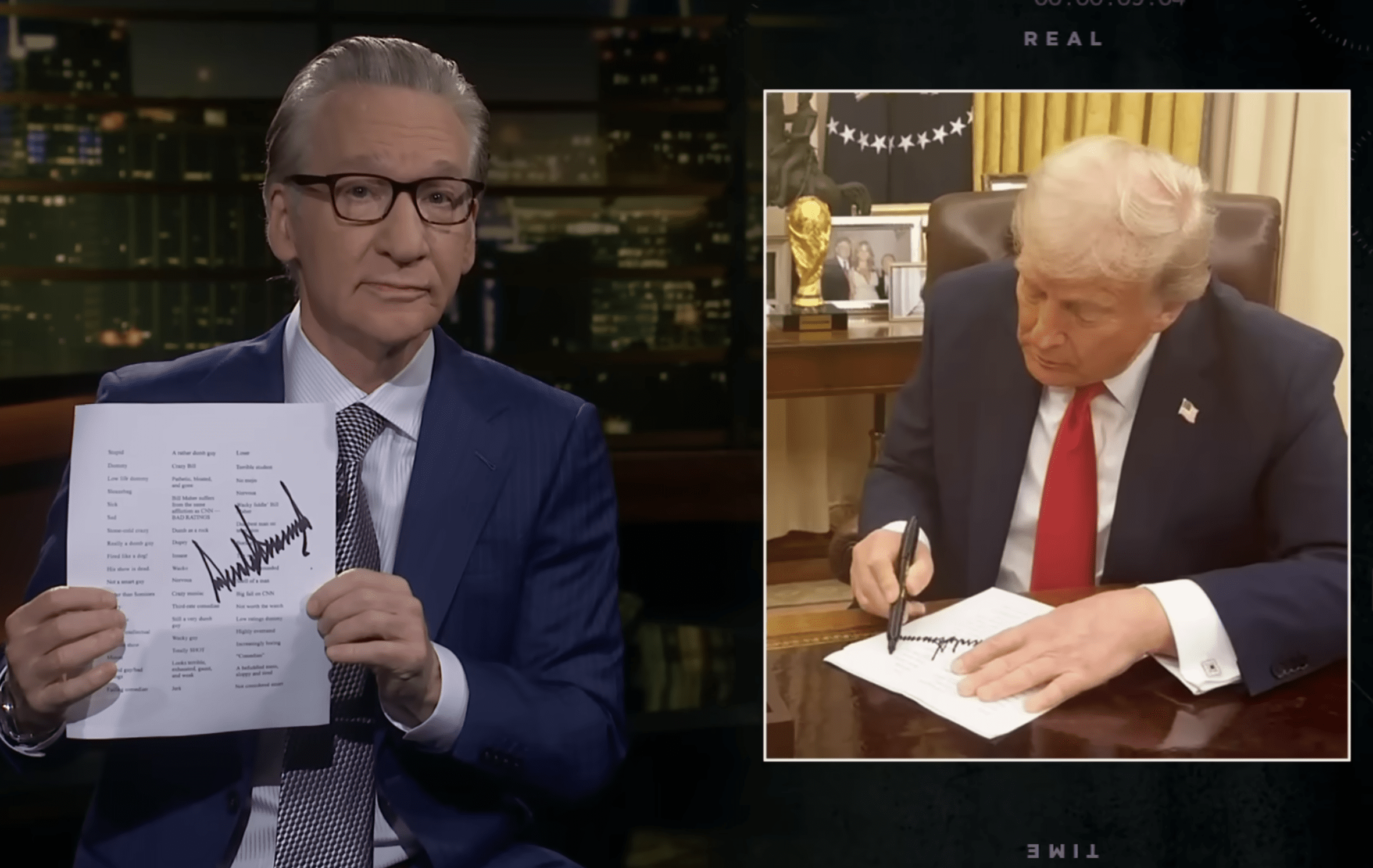
As the United States prepares to celebrate its 250th anniversary in 2026, comedian and political commentator Bill Maher is making an argument that has sparked discussion across the political spectrum: Americans should not allow their feelings about President Donald Trump, or any president, to determine whether they celebrate the nation itself. During a recent “New Rule” segment on HBO’s Real Time with Bill Maher, Maher argued that many Americans, particularly those on the political left, risk making a serious mistake if they choose to disengage from the country’s Semiquincentennial celebrations simply because Trump occupies the White House. His central message was straightforward: America belongs to its citizens, not to any single politician.
“The president is not America,” Maher argued. “The president is America’s employee.”
Separating the Country from Its Leaders
Maher criticized the growing tendency to view national celebrations through a partisan lens. He suggested that refusing to participate in patriotic events because of political disagreements effectively hands ownership of those symbols to political opponents. According to Maher, one of the defining characteristics of authoritarian movements throughout history is the effort to blur the distinction between the government, the leader, and the nation itself. When citizens begin treating those concepts as interchangeable, democratic institutions become weaker.
His warning was directed not only at conservatives but also at liberals who have become increasingly uncomfortable with traditional displays of patriotism in recent years. Maher argued that allowing one political faction to claim exclusive ownership of the American flag, national holidays, or the country’s founding ideals is ultimately self-defeating.
“America Is Ours Too”
A major theme of Maher’s monologue was the belief that patriotism should not belong to one side of the political aisle. He pointed to examples from American history, including 1960s activist Abbie Hoffman, who famously wore an American flag shirt while challenging government authority during the Vietnam era.
For Maher, that example illustrates an important distinction: criticizing the government does not require rejecting the country itself. In his view, the most powerful response to political figures accused of overreach is not declaring that America is irredeemably flawed. Instead, it is insisting that the country’s institutions, values, and future belong to all Americans. The message, Maher argued, should be simple: “America is ours too.”
Arguing That the System Is Still Functioning
While Maher acknowledged concerns about democratic norms, executive power, and what he has previously described as authoritarian tendencies within modern politics, he pushed back against the notion that American institutions have already collapsed. He pointed to numerous examples of checks and balances continuing to operate, including court rulings against Trump administration initiatives, congressional resistance to certain policy proposals, and judicial oversight of executive actions.
Maher argued that while the system may be strained, it remains functional. The distinction matters, he said, because citizens are more likely to disengage when they conclude that democratic institutions are already beyond repair. His argument was not that America’s political system is perfect, but that it remains capable of self-correction.
Looking Back at 1976
One of the most striking sections of Maher’s monologue involved a comparison between today’s political climate and the nation’s Bicentennial celebration in 1976. Many Americans today view the current period as uniquely troubled. Maher challenged that assumption by reminding viewers just how difficult conditions were fifty years ago.
In 1976, the country was still reeling from the Vietnam War and the Watergate scandal. Public trust in government had collapsed. Inflation remained elevated. Mortgage rates were significantly higher than modern norms. Economic uncertainty was widespread. At the same time, many social indicators reflected a nation far less equitable than the United States of today.
Women held only a tiny fraction of congressional seats. There were no women serving on the Supreme Court. Financial discrimination against women remained common, and many legal protections that Americans now take for granted did not yet exist. Public health conditions were also dramatically different. Smoking was permitted on airplanes. Leaded gasoline remained widespread. Environmental regulations were less developed, and many major cities struggled with severe pollution.
Despite all of those challenges, Americans still celebrated the nation’s 200th birthday. Maher used that comparison to argue that patriotism does not require believing the country is perfect. Rather, it requires recognizing progress while continuing to work toward improvement.
The Battle Over Patriotism
Maher’s comments arrive at a time when patriotism itself has become increasingly politicized. Polling over the last decade has shown widening partisan differences in how Americans view national identity, trust institutions, and express pride in the country. For some progressives, displays of patriotism have become associated with nationalism and exclusion. For some conservatives, patriotism has become a defining political identity.
Maher challenged both interpretations. His argument was that patriotism should function as a shared civic value rather than a partisan weapon. The country’s founding principles, constitutional framework, and democratic traditions, he argued, belong equally to every citizen regardless of political affiliation.
America at 250
As preparations continue for the nation’s Semiquincentennial celebrations next year, debates over history, identity, and politics are expected to intensify. Maher’s message was ultimately less about Donald Trump than about the relationship between Americans and their country. He argued that citizens should not allow any president, popular or unpopular, to become synonymous with the nation itself. The United States, he suggested, is larger than any administration, any political movement, or any election cycle.
As America approaches its 250th birthday, Maher’s challenge to viewers was simple: celebrate the country, defend its institutions, criticize its flaws when necessary, but never surrender ownership of it. Because, as he repeatedly emphasized, America belongs to all Americans.














































Want to join the conversation?
Create an account or sign in to share your thoughts, vote,
and reply to other readers.
Showing 0 of 0 comments
Don't have an account?
Already have an account?