

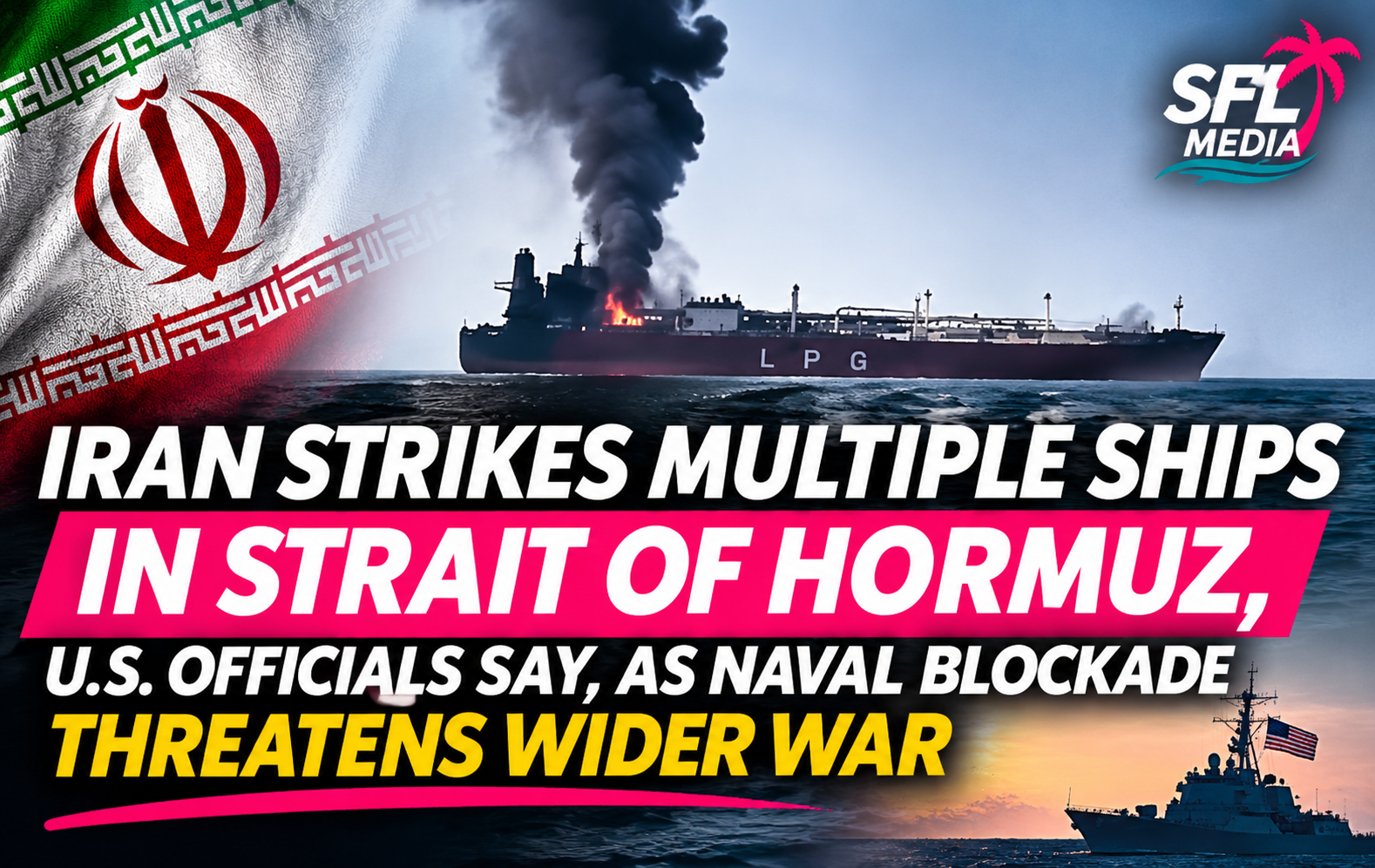
Iran Strikes Multiple Ships in Strait of Hormuz as U.S. Economic and Military Pressure Threatens Wider War
Tensions between the United States and Iran are escalating after American and British officials reported attacks on multiple vessels in the Strait of Hormuz, one of the world’s most strategically important maritime shipping corridors. The reported attacks come as Washington intensifies its economic and military pressure on Tehran, targeting Iranian financial networks, energy exports and international supply routes in an effort to force concessions at the negotiating table.
In an interview with ABC News, former Deputy Assistant Secretary of Defense for the Middle East Mick Mulroy warned that the combination of maritime restrictions, economic sanctions and Iranian military retaliation could trigger a significantly wider confrontation. Although Washington is attempting to use economic pressure as leverage against the Iranian government, the strategy carries substantial risks for American military personnel, regional allies and the global economy.
Attacks on Commercial Shipping Intensify in the Strait of Hormuz
The latest incidents follow a significant increase in maritime attacks since the conflict involving the United States, Israel and Iran began in late February 2026. According to data analyzed by ABC News, the United Kingdom Maritime Trade Operations Centre documented 31 attacks in and around the Strait of Hormuz during October and approximately 19 additional attacks through November 18. The figures reflect a substantial deterioration in maritime security.
Regional security analysts believe Tehran is attempting to undermine American efforts to maintain international oil shipments while restricting Iran’s ability to export its own petroleum products. By increasing the danger associated with commercial shipping, Iran can exert economic pressure on Washington and its regional partners despite facing extensive American sanctions and military restrictions.
The Strait of Hormuz connects the Persian Gulf with the Gulf of Oman and the Arabian Sea, providing a critical export route for several of the world’s largest energy producers, including Saudi Arabia, Iraq, Kuwait, Qatar and the United Arab Emirates. Under normal conditions, approximately one-fifth of global petroleum consumption passes through the waterway, making sustained military activity in the region a significant threat to international energy security.
U.S. Naval Blockade Creates Dangerous Military Flashpoint
The United States has maintained a naval blockade targeting Iranian ports for much of 2026, with restrictions temporarily eased during diplomatic efforts earlier this year. The blockade is intended to restrict Iranian oil revenue and limit Tehran’s ability to finance military operations, acquire weapons and sustain its security apparatus.
However, Mulroy warned that the blockade itself could become the catalyst for a broader military confrontation if Iran attempts to challenge American enforcement through military action. An armed confrontation resulting in the destruction of Iranian vessels could prompt Tehran to retaliate against American forces or regional infrastructure, creating a cycle of escalation that neither government may be able to contain.
Iranian officials have already indicated that Tehran is prepared to challenge the blockade. On Monday, November 23, Iranian Foreign Ministry spokesperson Esmaeil Baqaei reiterated that restoring maritime security depends on Washington meeting Tehran’s conditions, including lifting the blockade, providing sanctions relief and fulfilling commitments associated with a memorandum of understanding reached in June.
Washington Targets Iran’s Shadow Banking Network
The Trump administration is simultaneously expanding financial sanctions against individuals and businesses allegedly involved in Iran’s shadow banking system, a network of financial intermediaries that American officials accuse of helping Tehran circumvent international restrictions and generate revenue from energy exports.
On November 23, the Treasury Department announced sanctions targeting more than two dozen Iranian currency exchange businesses, front companies and associated personnel. Mulroy described the measures as part of a broader government initiative intended to restrict the flow of money to the Iranian government, the Islamic Revolutionary Guard Corps and the country’s military operations.
The combined pressure of sanctions and maritime restrictions threatens to further weaken Iran’s currency, reduce government revenue, disrupt imports and intensify inflationary pressures. While the stated American objective is to undermine Tehran’s ability to finance military activities, ordinary Iranian citizens could also experience significant consequences through rising living costs, unemployment and deteriorating economic conditions.
Washington’s strategy rests on the calculation that mounting financial pressure will eventually force Iranian leaders to make concessions that previous diplomatic and military efforts have failed to secure. Whether that assumption proves correct remains one of the most consequential unanswered questions surrounding the conflict.
Florida Based Task Force Iron Gate Expands Pressure on Iran
The confrontation also has a significant Florida connection. U.S. Central Command, headquartered at MacDill Air Force Base in Tampa, announced the establishment of Task Force Iron Gate earlier this month, expanding American efforts to restrict Iranian military supplies and prohibited trade beyond the country’s maritime borders.
The initiative is designed to coordinate intelligence, sanctions enforcement and cooperation with international partners to disrupt the transportation of advanced weapons and other restricted materials through overland supply routes.
Iran shares land borders with seven countries, making a comprehensive physical blockade an enormously complicated undertaking. Mulroy explained that the initiative should not be interpreted as the deployment of American ground forces to surround Iran. Instead, it represents an effort to extend economic and security pressure beyond existing maritime restrictions.
Iranian Foreign Minister Abbas Araghchi dismissed the prospect of an effective land blockade, arguing that Washington cannot completely isolate a country with extensive borders and numerous regional trading relationships. Araghchi also maintained that diplomatic efforts to negotiate sanctions relief remain ongoing. CENTCOM Commander Adm. Brad Cooper described Task Force Iron Gate as an extension of the existing American maritime pressure campaign.
“The establishment of Task Force Iron Gate reinforces the success of our ironclad blockade against Iran at sea.” — Adm. Brad Cooper, U.S. Central Command Commander
According to CENTCOM’s November 7 announcement, the Tampa-based task force consists of approximately 20 civilian and military personnel tasked with coordinating efforts across federal agencies to prevent Iran from rebuilding its military capabilities and circumventing international restrictions.
Operation Economic Outcast Targets Billions in Iranian Financial Activity
The Treasury Department officially launched Operation Economic Outcast on August 24, 2026, as a coordinated government campaign targeting Iran’s international financial relationships. The initiative’s latest sanctions are intended to dismantle financial infrastructure that American authorities believe helps Tehran maintain access to foreign currencies and international markets. Treasury Secretary Scott Bessent characterized the sanctions as an effort to dismantle the financial networks sustaining the Iranian government.
“Iran’s shadow banking system is the last financial lifeline of a bankrupt regime.” — U.S. Treasury Secretary Scott Bessent
In a separate announcement, the Treasury Department’s Financial Crimes Enforcement Network, or FinCEN, identified approximately $14.7 billion in financial activity potentially connected to Iranian shadow banking between January 2025 and August 2026. The findings illustrate the scale of the international financial networks Washington is attempting to disrupt, although the figure represents potentially suspicious financial activity rather than a confirmed total of illicit transactions.
Iran Threatens a Major Military Response
Iranian military leaders have responded to escalating American pressure with increasingly confrontational rhetoric. In remarks reported on Tuesday, November 24, Iranian Army Chief Maj. Gen. Amir Hatami warned that renewed American military action would provoke a more extensive retaliatory campaign. Hatami threatened retaliation that would be:
“More severe, more crushing and without geographical limitation.”
The warning raises concerns that renewed fighting could extend beyond military installations to include economically significant infrastructure throughout the Middle East. Gulf nations could face additional threats to petroleum production, electrical infrastructure, commercial transportation and international shipping operations. Hatami also reiterated that Iran would not fully reopen the Strait of Hormuz until Tehran’s seven conditions were satisfied, underscoring the substantial diplomatic divide that remains between Washington and Iran.
Three Oil Tankers Reportedly Struck in Latest Maritime Attacks
On Tuesday, British maritime authorities updated a November 22 incident warning, reclassifying previously reported maritime activity as three separate attacks. UK Maritime Trade Operations confirmed that a tanker had been struck by an unidentified projectile while transiting the Strait of Hormuz. The vessel continued its journey, and all crew members were accounted for, although the extent of the damage and potential environmental consequences remained unknown.
Separately, Iran’s Islamic Revolutionary Guard Corps Navy claimed that several tankers had encountered naval mines while attempting to transit the strategic waterway without Iranian authorization. Those claims have not been independently confirmed, and it remains unclear whether they correspond to the incidents documented by British maritime authorities.
The distinction is important because competing military narratives have become a recurring feature of the conflict. Although maritime authorities have documented numerous attacks on commercial vessels, the precise circumstances and responsibility for individual incidents are not always immediately established. The latest incidents demonstrate that the presence of American naval forces has not eliminated the risks facing civilian commercial shipping. For international shipping companies, the ongoing confrontation creates considerable uncertainty surrounding vessel safety, insurance coverage, transportation costs and delivery schedules.
Iran Retains the Ability to Inflict Significant Regional Damage
Despite months of economic pressure and military confrontation, Iran retains the ability to threaten American interests and regional infrastructure. During his ABC News interview, Mulroy assessed that Tehran continues to possess a substantial missile arsenal and remains capable of launching retaliatory military operations. That assessment highlights the limitations of relying exclusively on economic pressure to achieve diplomatic objectives. Although sanctions and maritime restrictions can reduce Iran’s financial resources, they do not immediately eliminate its existing military capabilities or prevent its leadership from ordering retaliatory strikes.
Mulroy also discussed the substantial American naval presence in the region, describing a concentration of aircraft carrier strike groups that provides President Donald Trump with significant military options. However, the availability of those options does not guarantee that further military action would produce a decisive resolution. Both governments possess the ability to impose significant costs on the other, creating a dangerous situation in which an isolated maritime confrontation could develop into a much broader regional conflict.
The Strait of Hormuz and the Threat to the Global Economy
The economic consequences of sustained military activity in the Strait of Hormuz extend far beyond Iran and its immediate neighbors. Disruptions to petroleum and liquefied natural gas shipments can affect international energy markets, transportation expenses, manufacturing costs and consumer fuel prices.
For American consumers, including motorists and businesses across South Florida, prolonged instability in the Persian Gulf could translate into higher gasoline prices, increased airline operating expenses and rising costs for internationally transported goods. Florida’s tourism industry, which depends heavily on air travel, cruise operations and consumer discretionary spending, could be particularly exposed to sustained increases in transportation costs.
Even when commercial vessels remain capable of navigating the Strait of Hormuz, elevated insurance premiums, security expenses and shipping delays can increase the overall cost of moving energy products through the region. These economic repercussions create competing pressures on Washington. Restricting Iran’s petroleum exports may weaken Tehran financially, but a prolonged confrontation that disrupts the exports of neighboring countries could also impose significant costs on American consumers and international allies.
Diplomatic Negotiations Remain Stalled as Military Pressure Mounts
The latest escalation follows months of unsuccessful efforts to establish a durable agreement between Washington and Tehran. A memorandum of understanding signed in June raised hopes that the conflict could be brought under control, but those efforts subsequently deteriorated as military confrontations resumed and American maritime restrictions were reinstated.
Qatar has continued pursuing diplomatic engagement aimed at restoring negotiations, while Iranian officials insist that Washington must address Tehran’s existing demands before normal maritime operations can resume. The United States, meanwhile, continues using financial and military pressure to obtain concessions from the Iranian government.
The fundamental challenge facing American policymakers is whether intensified economic pressure will eventually bring Iran back to the negotiating table or encourage its leadership to escalate militarily before its financial position deteriorates further. Tehran faces a similarly consequential decision about whether continued confrontation will strengthen its negotiating position or invite additional military action and deeper economic isolation.
As American naval forces continue enforcing restrictions, Iranian leaders threaten retaliation and commercial vessels remain exposed to attacks, the margin for diplomatic and military miscalculation is narrowing. The next major confrontation in the Strait of Hormuz could determine whether the conflict moves toward a negotiated settlement or another period of sustained regional warfare.

Sources & Further Reading
-
ABC News – Strait of Hormuz Attacks Have Increased to Highest Level Since Iran War Began
-
ABC News – Three Tankers Attacked in Strait of Hormuz, UKMTO Says
-
Reuters – Iran Says It Will Use All Available Tools to Confront U.S. Naval Blockade
-
U.S. Treasury Department – Operation Economic Outcast Disrupts Iran’s Global Shadow Banking Networks
-
The Washington Post – U.S. Military Seeks to Disrupt Iran’s Land Routes, Expanding on Naval Blockade
-
Al Jazeera – U.S. Task Force to Cut Off Iran’s Transport of Advanced Weapons
-
Euronews – Iran Orders Hormuz Closed Further as Qatar Seeks to Revive Peace Talks
-
UK Maritime Trade Operations – Official November 24 Strait of Hormuz Maritime Attack Warning (PDF)
-
CBS News – Iran Downplays New U.S. Task Force Aimed at Disrupting Ground Transport Routes
-
Reuters – Two Tanker Attack Incidents Reported Near Oman’s Khasab
-
South Florida Media – International News, Politics and Military Affairs















Loading comments…