
CNN Panel Explodes After Byron Donalds Claims Crime Is ‘Massively Up’: ‘You’re Lying!’
A CNN political debate erupted into a shouting match after Republican Rep. Byron Donalds argued that crime was “massively up” in the United States, prompting Democratic commentator Keith Boykin to repeatedly accuse the Florida congressman of lying as host Abby Phillip attempted to bring the discussion back to federal crime statistics. The confrontation occurred on CNN’s “NewsNight” on Sept. 30, 2024, during a discussion about then presidential candidate Donald Trump’s controversial suggestion that allowing police to be “real rough” for a short period could help bring retail theft to an immediate end. What began as a debate over Trump’s rhetoric quickly became a fight over a much more measurable question: Was violent crime actually rising across America?
Trump’s ‘One Rough Hour’ Remark Starts the Fight
The argument initially centered on remarks Trump made during a campaign rally in Erie, Pennsylvania, where he complained about shoplifting and retail crime and suggested aggressive policing could rapidly stop it. Trump proposed “one rough hour” also describing the idea as “one real rough, nasty day” in comments that immediately generated criticism over whether he was advocating excessive police force. On CNN, Donalds rejected the suggestion that the brief remark should be interpreted as a literal policy proposal and argued that Trump’s broader point concerned restoring consequences for criminals and giving police greater ability to combat theft and violent crime. Boykin disagreed, arguing that Trump’s rhetoric could not simply be dismissed as an isolated joke or throwaway line.
The discussion quickly expanded into a broader argument about inflammatory political rhetoric. Boykin pointed to previous episodes of political violence and threats, while Donalds countered by raising violence and threats directed against Trump, including assassination attempts during the 2024 campaign. The two sides fundamentally disagreed over whether Trump’s comments should be interpreted as rhetorical exaggeration, a serious indication of how he wanted police to operate or something in between.
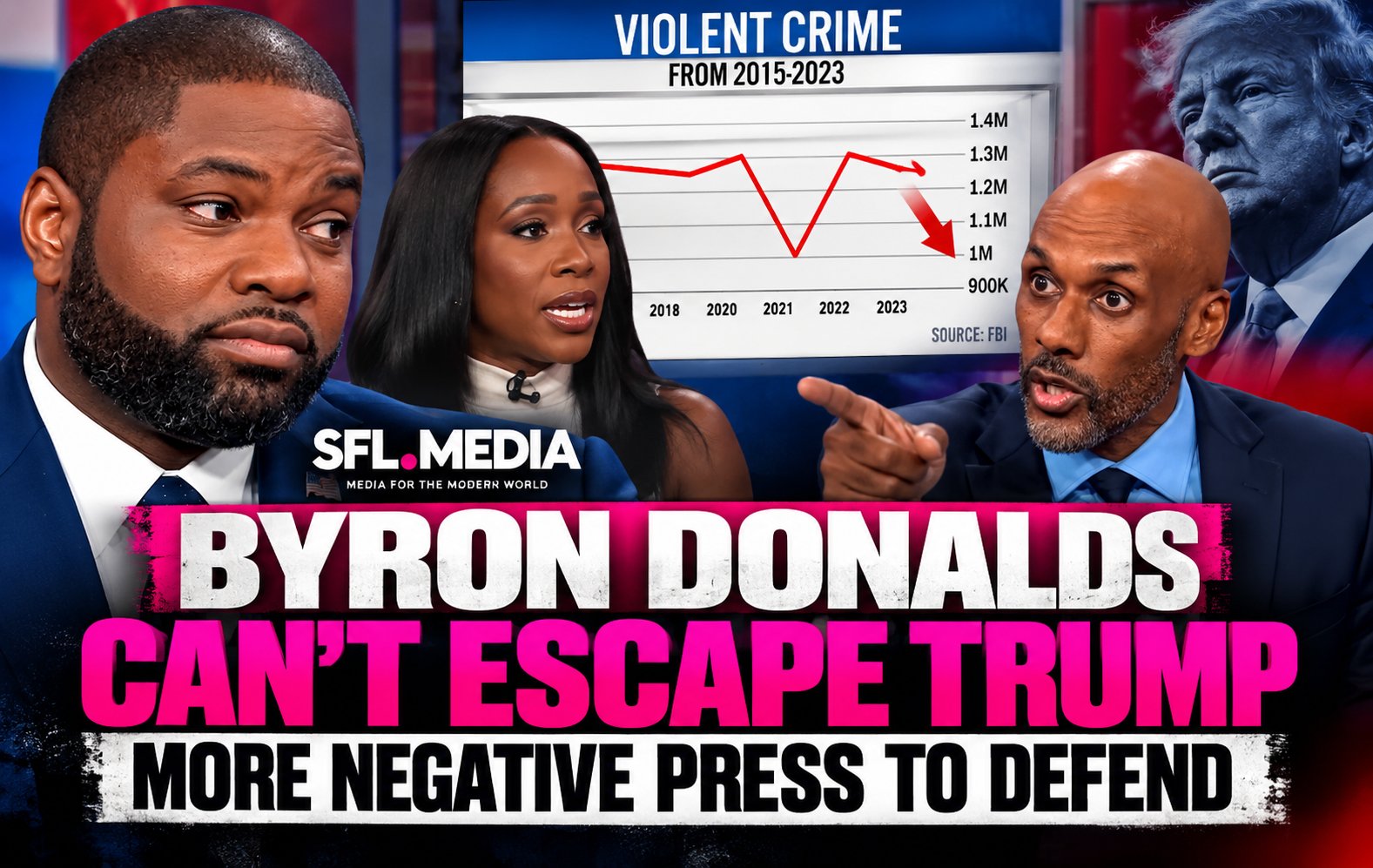
Donalds Says Crime Is ‘Massively Up’
The confrontation reached another level when Donalds attempted to explain Trump’s underlying argument by saying Americans were dealing with serious crime problems in cities across the country. “The reality in America is that crime is massively up,” Donalds said. Boykin immediately challenged him, saying, “Crime is not massively up. That’s a lie,” and pointing toward recently released FBI statistics showing crime moving downward. Moments later, the exchange deteriorated into open accusations, with Boykin telling Donalds, “Congressman, you’re lying,” and questioning why CNN was allowing him to make the claim on national television while Donalds fired back that Boykin was the one misleading Americans.
Phillip intervened and attempted to settle the factual dispute using the data displayed on CNN’s screen, telling Donalds that FBI statistics showed crime declining during the first six months of 2024 and emphasizing that multiple major categories were trending downward. “We have to deal in facts here,” Phillip told the panel, arguing that the direction of the trend lines was clear.
Donalds Points to the Pandemic Era Crime Spike
Donalds did not dispute that crime was declining from its pandemic era peak. Instead, he shifted the argument toward the starting point being used for comparison, arguing that crime had risen substantially during the preceding years and that focusing exclusively on the latest decline obscured what Americans had experienced since the pandemic. He specifically pointed toward 2021, when Joe Biden and Kamala Harris entered office, and argued that violent crime had previously spiked. Phillip acknowledged that there had been a pandemic-era increase but emphasized that the subsequent decline was real and that crime was moving back toward pre-pandemic levels.
That distinction became the factual core of the argument. Donalds was on firmer ground when arguing that violent crime had risen dramatically during the pandemic and that Americans could remain concerned about crime even while the latest statistics were improving. His broader statement that crime was presently “massively up,” however, did not accurately describe the national trend reflected in the FBI data being discussed on the program. Phillip acknowledged that crime had not completely returned to its pre-pandemic baseline at that point but stressed that the direction was unmistakable: it was going down.
Donalds Compares Crime to Inflation
Donalds attempted to explain his argument using inflation as an analogy, arguing that inflation can fall substantially without prices returning to where they were before an inflationary surge and that crime statistics could similarly improve without erasing the impact of earlier increases. The analogy highlighted an important distinction between a rate of change and an absolute level. When inflation declines, prices generally do not return to their previous levels; they simply begin increasing more slowly. Donalds argued that Americans could similarly experience several years of elevated crime and remain concerned even after the trend reversed.
Crime statistics, however, are not economically cumulative in the same manner as a price index, making the comparison imperfect. A declining homicide, robbery or assault rate represents an actual reduction in the number or rate of those crimes rather than merely a slower increase. Phillip nevertheless acknowledged the legitimate political component of Donalds’ argument: Americans can feel unsafe even when national statistics are improving. Her objection was that politicians did not need to mischaracterize the direction of the data to make that case.
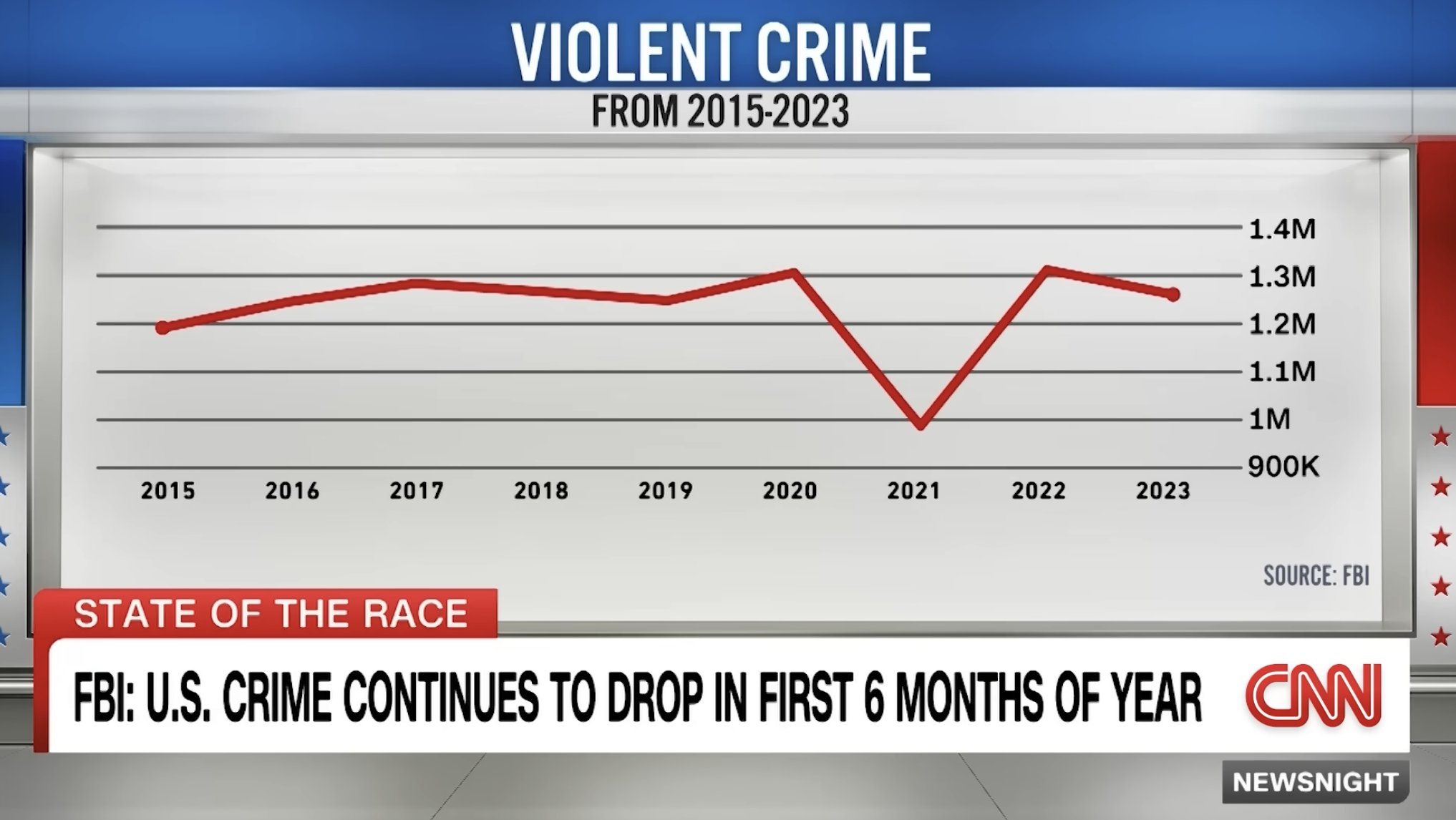
Later FBI Data Made the Downward Trend Even Clearer
The benefit of hindsight makes the factual question considerably easier to evaluate today than it was during the heated CNN exchange. Final FBI statistics subsequently showed that violent crime nationally decreased an estimated 4.5% in 2024, while property crime fell 8.1%. Murder and non-negligent manslaughter dropped an estimated 14.9%, robbery fell 8.9%, aggravated assault declined 3% and motor-vehicle theft plunged 18.6%.
Those final figures reinforced the central point Phillip and Boykin were making during the broadcast: by 2024, the national crime trajectory was downward. That does not mean crime disappeared, that every American city experienced identical conditions or that concerns about public safety were illegitimate. National statistics can obscure significant differences between neighborhoods and cities, while public perceptions of safety frequently lag behind rapidly changing crime rates. But a claim that crime was broadly and currently “massively up” across America was difficult to reconcile with the national trend visible at the time and became even harder to defend once the complete 2024 statistics were available.
A Cable News Brawl Built Around a Question the Data Could Actually Answer
The Donalds and Boykin confrontation was classic cable television, interruptions, accusations, raised voices and political combatants talking past one another, but buried underneath the spectacle was a factual dispute that could actually be tested. The United States experienced a serious increase in homicides during the pandemic period, and Donalds was correct that the spike happened and that simply pointing to a subsequent decline does not erase the violence that occurred during those years. At the same time, Phillip and Boykin were correct about the direction crime was moving when the CNN segment aired: violent crime was declining, murders were falling sharply, and subsequent full year FBI statistics confirmed that the improvement was not simply an artifact of one preliminary report.
That is what transformed the exchange from another subjective argument over political rhetoric into something more concrete. Politicians and commentators can argue endlessly about whether Americans feel safe, whether criminal justice policies are too permissive or whether aggressive political rhetoric resonates with voters. Whether reported violent crime was rising or falling, however, is something the country actually measures. By 2024, the national trend was falling.

Sources & Further Reading
CNN — Full NewsNight transcript, Sept. 30, 2024
Associated Press — Trump suggests “one rough hour” of aggressive policing could end theft
FBI — Uniform Crime Reporting Program: 2024 national crime data













































Want to join the conversation?
Create an account or sign in to share your thoughts, vote,
and reply to other readers.
Showing 0 of 0 comments
Don't have an account?
Already have an account?