
Zelenskyy Reveals the Horrors of Russia’s War: 500 Dead in Bucha, Five Years Without Sleep and a Growing Confrontation With Trump Over Putin
In a deeply personal interview on The Diary of a CEO, Ukrainian President Volodymyr Zelenskyy recounts the atrocities uncovered after Russia’s retreat from Bucha, the emotional toll of leading a country at war and his growing frustration with U.S. President Donald Trump’s approach to Vladimir Putin. The conversation exposes the human cost of Russia’s invasion and the difficult questions surrounding Russian oil revenues, Ukrainian self defense and the search for a lasting peace.
Ukrainian President Volodymyr Zelenskyy has offered a deeply personal account of Russia’s invasion of Ukraine, describing years of interrupted sleep, the anguish of honoring fallen soldiers and the devastation he witnessed after Ukrainian forces liberated Bucha, where hundreds of civilians were found dead following Russian occupation.
In an extensive interview with Steven Bartlett on The Diary of a CEO, Zelenskyy revisited the opening hours of the February 24, 2022, invasion, his decision to remain in Kyiv despite the danger and the discovery of atrocities that transformed international understanding of the conflict. He also addressed the growing diplomatic tensions surrounding President Donald Trump, Russian President Vladimir Putin and the increasingly contentious question of whether Ukraine should be pressured to stop attacking Russian energy infrastructure while Moscow continues striking Ukrainian cities and electrical systems.
The interview provides a rare look at the personal burden of a presidency defined by war. Zelenskyy described the difficulty of presenting military honors to grieving parents, the responsibility of making decisions that affect millions of people and the psychological consequences of confronting destruction on a scale Europe had not experienced in decades.
Beyond the personal reflections, the conversation raises a fundamental geopolitical question: Can the United States broker a lasting peace by encouraging concessions from Ukraine while reducing economic pressure on Russia, or would such an approach risk rewarding the country that launched the invasion?
Five Years of War Have Left Zelenskyy Exhausted but Defiant
Zelenskyy described a presidency in which ordinary routines have largely disappeared. Since Russia launched its full scale invasion in February 2022, he has lived under constant security threats while overseeing military operations, coordinating international assistance and responding to repeated attacks on Ukrainian population centers and infrastructure. The Ukrainian president acknowledged that he has struggled to sleep properly throughout the war. His remarks reflected the extraordinary demands of governing a country fighting for its survival, where military setbacks, civilian casualties and emergency diplomatic decisions can occur at any hour.
Among his most emotionally difficult responsibilities is presenting the Hero of Ukraine award to families whose relatives have been killed. Zelenskyy described the pain of standing before parents who have lost children, recognizing that no medal or official ceremony can compensate for the death of a son or daughter. Those encounters illustrate the human consequences of a conflict often discussed primarily through battlefield maps, military aid packages and territorial negotiations. Behind every reported casualty are families confronting permanent loss, children growing up without parents and communities struggling to rebuild lives interrupted by violence.
Ukraine’s losses extend well beyond those killed in combat. Millions of people have been displaced, substantial civilian infrastructure has been damaged or destroyed, and many survivors face long term physical and psychological consequences. Zelenskyy’s account places those experiences at the center of the debate over how the war should end.
From Soviet-Era Childhood to Comedy Star and Wartime President
Zelenskyy’s journey to the presidency remains one of the most remarkable political transformations of the modern era. Born in 1978 in Kryvyi Rih, an industrial city in Soviet Ukraine, he grew up during the final years of the Soviet Union and witnessed Ukraine’s emergence as an independent country in 1991. Before entering politics, Zelenskyy established a successful entertainment career as a comedian, actor, writer and television producer. He became a prominent figure through the comedy company Kvartal 95, appeared in entertainment programs, won the Ukrainian version of Dancing with the Stars and provided the Ukrainian language voice of Paddington Bear.
His best known television role was in Servant of the People, a political satire in which he portrayed an ordinary history teacher who unexpectedly becomes president after a video criticizing government corruption goes viral. The show’s premise resonated with Ukrainians frustrated by entrenched political interests and corruption. In 2019, Zelenskyy transformed that fictional political success into reality, defeating incumbent President Petro Poroshenko in a landslide election. His campaign emphasized government reform, political accountability and a different approach to resolving the conflict in eastern Ukraine.
Less than three years later, the former entertainer faced an existential national crisis. Russia’s invasion forced him to transition from a political outsider promising domestic reform into a wartime leader responsible for organizing national resistance and securing international military support.
The Morning Russia Invaded and Zelenskyy’s Decision to Stay in Kyiv
On February 24, 2022, Russian forces launched a massive assault against Ukraine, striking military facilities and other targets while advancing from Russia, Belarus and occupied Crimea. The offensive appeared designed to overwhelm Ukrainian defenses, destabilize the government and rapidly seize control of Kyiv. Zelenskyy recalled the confusion and danger of the invasion’s opening hours, when Russian missiles struck across the country and Ukrainian officials confronted the possibility that the capital could fall. A Russian military convoy stretching for dozens of kilometers became an international symbol of the enormous force Moscow had assembled for its campaign.
During that period, reports emerged that American officials had discussed helping Zelenskyy evacuate Kyiv. His widely reported response became one of the defining statements of the early war: “I need ammunition, not a ride.”
The quotation has been widely attributed to Zelenskyy through accounts of the exchange, although no publicly available recording of the original conversation establishes its exact wording. Its significance lies in the decision it represented. Rather than leaving the capital, Zelenskyy remained in Kyiv and continued communicating directly with the Ukrainian public and international leaders. Russia ultimately failed to capture the capital during the initial offensive. Ukrainian resistance, Russian logistical failures and expanding Western military assistance contributed to Moscow’s withdrawal from northern Ukraine in the spring of 2022.
That retreat revealed evidence of atrocities in previously occupied communities, most notably Bucha, where investigators and journalists documented the deaths of civilians under Russian occupation.
Bucha: The Discovery of Hundreds of Dead Civilians
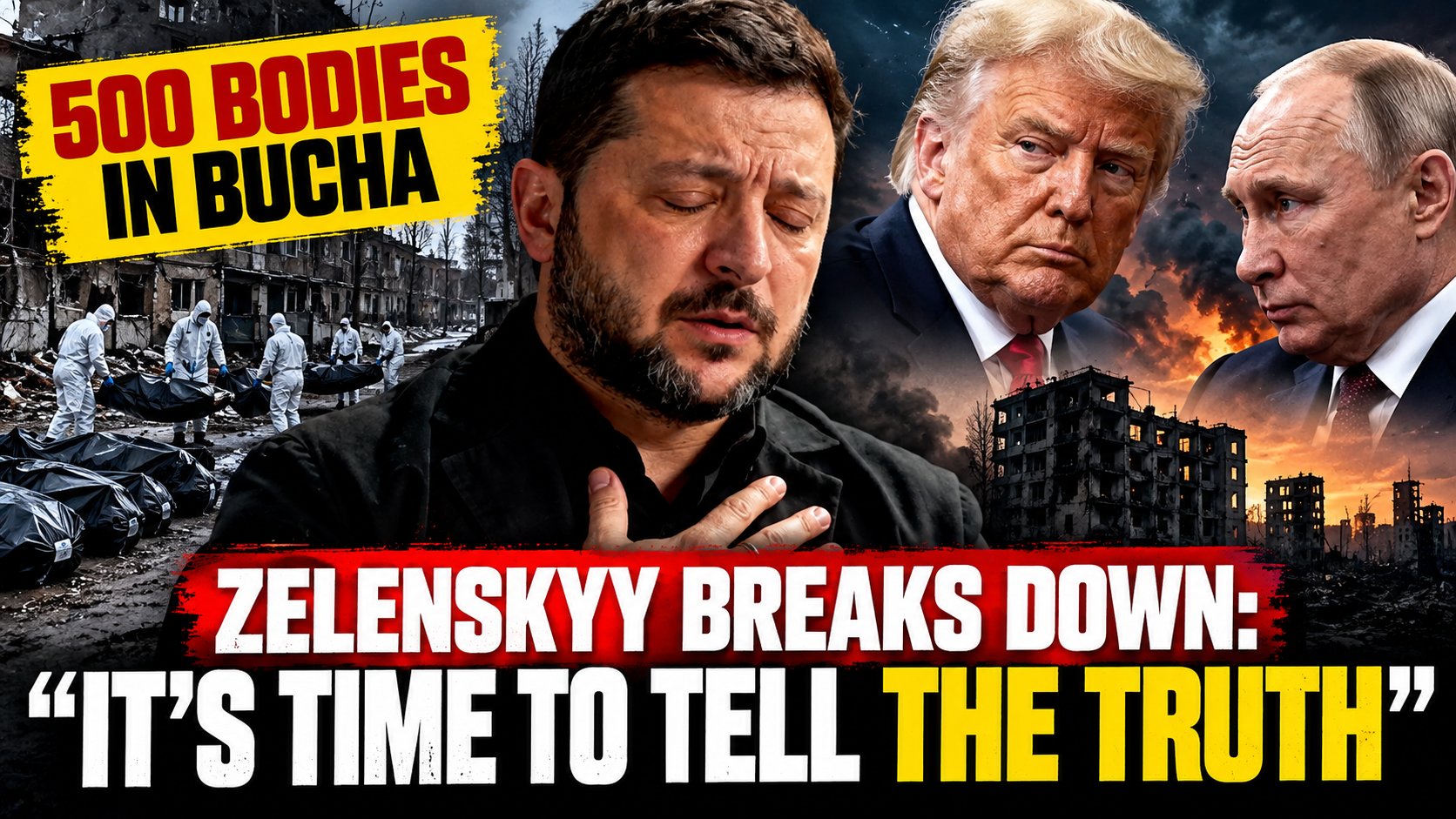
Zelenskyy identified his visit to Bucha after Russian forces withdrew as one of the most devastating experiences of his presidency. The town, located northwest of Kyiv, became a symbol of alleged Russian war crimes after journalists, Ukrainian officials and international investigators documented bodies in streets, burial sites and other locations.
The president described the discovery of approximately 500 dead civilians in the context of the atrocities uncovered in Bucha and surrounding areas. The precise number of victims depends on the geographical area and period being counted, but extensive investigations have established that hundreds of civilians were killed during the Russian occupation of the Kyiv region.
Evidence gathered by journalists, human rights organizations and international investigators includes witness testimony, satellite imagery, photographs, forensic examinations and documentation of apparent executions. The United Nations has reported unlawful killings of civilians in areas occupied by Russian forces, while Ukrainian authorities have pursued investigations into suspected war crimes.
Russia has denied responsibility for the Bucha atrocities and has claimed that evidence of civilian killings was fabricated. Those denials have been contradicted by extensive independent documentation, including imagery showing bodies present while Russian forces controlled the area.
For Zelenskyy, Bucha transformed the moral dimensions of the conflict. The discovery made it impossible to regard the invasion solely as a territorial dispute that could be resolved through negotiations over borders or military positions. His account emphasized that a lasting peace must also confront the suffering of victims and the need for accountability. A ceasefire could stop active fighting, but it would not automatically resolve allegations of torture, unlawful killings, forced displacement and other abuses committed during the occupation.
Trump, Russian Diesel and the Growing Dispute Over Who Should Make Concessions
The final portion of Zelenskyy’s interview turned toward one of the most consequential disagreements between Ukraine and the United States: whether Washington should ease economic restrictions on Russia while pressing Kyiv to reduce attacks on Russian energy infrastructure.
In October 2026, the Trump administration moved to relax sanctions affecting Russian diesel exports, arguing that additional supplies could help relieve high fuel prices. The decision followed discussions between Trump and Putin and came as Washington continued attempting to negotiate an end to the war.
Ukraine reacted sharply. Zelenskyy argued that allowing Russia to increase energy exports could strengthen the Kremlin financially without producing meaningful concessions from Moscow. In an October 9 interview with Axios, he characterized the decision as an unwelcome benefit to Putin and questioned what Russia had offered in return.
The White House has defended its approach as part of an effort to stabilize energy markets and advance peace negotiations. Trump has argued that Ukrainian attacks on Russian refineries contribute to global diesel shortages, creating economic consequences beyond the battlefield. American officials have also emphasized that Washington remains engaged with both Kyiv and Moscow in pursuit of a negotiated settlement.
The disagreement exposes competing priorities. The Trump administration is attempting to address energy prices and secure a diplomatic breakthrough, while Ukraine argues that relaxing pressure on Russia without corresponding commitments risks giving Moscow additional resources to sustain its invasion.
Zelenskyy Says Trump Is Blaming Ukraine for Russia’s War
In the Bartlett interview, Zelenskyy directly challenged Trump’s criticism of Ukrainian refinery strikes and his suggestion that those attacks were responsible for rising American diesel prices. Zelenskyy maintained that Ukraine is striking Russian energy infrastructure because Russia continues attacking Ukrainian power facilities. He argued that the United States should direct greater pressure toward Putin rather than demanding unilateral restraint from the country defending itself. His criticism extended to the language Trump uses when discussing the two leaders. Zelenskyy said the American president possesses the leverage to bring Putin into meaningful negotiations but should apply that leverage more forcefully against Moscow.
The dispute is not merely rhetorical. Russia’s energy industry remains an important source of government revenue, while Ukraine’s attacks on refineries and fuel infrastructure are intended to disrupt Russian military logistics and increase the economic cost of the invasion. Washington’s effort to restrict those strikes therefore has implications for Ukraine’s battlefield strategy.
Zelenskyy also challenged the claim that Ukrainian refinery attacks are the principal cause of American fuel price increases. Global diesel prices are affected by several factors, including refinery capacity, transportation constraints, crude oil supplies and disruptions associated with conflict in the Middle East. Determining the relative contribution of Ukrainian strikes requires broader market analysis rather than attributing price changes to a single cause.
The Ukrainian president’s position is that Russia’s decision to invade Ukraine created the conditions for the conflict and its economic consequences. He argues that Washington should not treat Ukrainian efforts to weaken Russia’s war making capacity as equivalent to Moscow’s attacks on Ukrainian civilian infrastructure.
Ukraine Offers a Reciprocal Halt to Energy Attacks
Zelenskyy has proposed an arrangement under which Ukraine would suspend attacks on Russian refineries if Russia stopped striking Ukrainian energy infrastructure. The proposal would establish reciprocal limits rather than requiring Kyiv to halt its operations without corresponding action from Moscow. In an October 11 interview with ABC News, Zelenskyy reiterated Ukraine’s willingness to pursue an energy ceasefire. He framed the proposal as a practical opportunity to reduce attacks while testing whether Russia was genuinely prepared to de-escalate.
The distinction between reciprocal restraint and unilateral concessions is central to Ukraine’s position. Russian missile and drone attacks have repeatedly damaged power facilities, creating electricity shortages and threatening heating systems, water supplies and other essential services. Ukrainian strikes on Russian refineries, meanwhile, seek to disrupt fuel production and weaken an industry that contributes to Russia’s wartime economy.
International humanitarian law imposes restrictions on attacks by both sides, including rules concerning military objectives, proportionality and civilian protection. The legality of any particular strike depends on its circumstances, not simply on whether the target is located in Russia or Ukraine. The proposed energy ceasefire illustrates how limited agreements might reduce immediate suffering even if broader peace negotiations remain stalled. However, such an arrangement would require clear commitments, reliable monitoring and confidence that violations would carry consequences.
Reports of Intelligence Sharing Pressure Raise Further Concerns
The dispute over Russian refineries has also raised questions about the reliability of American military and intelligence assistance to Ukraine. In an October 13 interview with NPR, Zelenskyy said the Trump administration had warned that intelligence sharing could be reduced unless Ukrainian forces stopped long range attacks against Russian oil facilities. The White House did not confirm the alleged warning, instead pointing to Trump’s public statements that the United States continued assisting Ukraine while seeking an end to the war.
American intelligence support is particularly important for Ukraine’s ability to detect missile launches, assess threats and coordinate defensive operations. Interruptions could create serious operational difficulties, especially during large scale Russian attacks involving ballistic missiles, cruise missiles and drones. The reported warning therefore raised concerns that Washington might use intelligence assistance as leverage in disagreements over Ukrainian military strategy. At the same time, the precise nature of any threatened restrictions and whether they were implemented require independent confirmation.
The episode illustrates the difficult balance confronting Ukraine. Kyiv depends heavily on Western support but also seeks the freedom to conduct military operations it considers necessary to defend its territory and weaken Russia’s ability to continue the invasion.
Why Russian Oil Revenue Matters to the War
Energy exports remain central to Russia’s economy and its ability to finance government spending, including military operations. Sanctions imposed after the invasion were intended in part to restrict Moscow’s access to international markets, financial services and revenue. Relaxing restrictions on Russian diesel could increase opportunities for Russian exporters, although the ultimate financial benefit depends on market prices, export volumes, transaction structures and the extent to which additional revenue reaches the Russian state.
Supporters of Trump’s approach argue that expanding global fuel supplies could relieve economic pressure on consumers and create a more favorable environment for negotiations. Critics contend that providing Russia with additional export opportunities before it makes meaningful concessions reduces the economic pressure intended to discourage continued aggression.
Both arguments involve uncertainties. Additional diesel supplies do not necessarily translate into immediate or proportionate reductions in American retail prices, while the amount of revenue available to support Russia’s military cannot be determined simply by looking at gross export values.
For Ukraine, the concern is strategic. If Russia can maintain substantial energy revenue while continuing its military campaign, Moscow may have less incentive to accept a settlement that protects Ukrainian sovereignty.
Russia Still Controls Nearly One Fifth of Ukrainian Territory
Zelenskyy estimated that Russia occupies approximately 18% to 19% of Ukraine’s internationally recognized territory, including Crimea and parts of eastern and southern Ukraine. That figure underscores the scale of the challenge facing negotiators. The conflict is not simply about ending active combat but also about the future of millions of people living in occupied areas, the status of Ukrainian territory and the security arrangements that might prevent another invasion.
Russia seized and annexed Crimea in 2014 and supported separatist forces in eastern Ukraine before launching its full-scale invasion in 2022. The years between those events included repeated diplomatic efforts and ceasefire arrangements that failed to produce a durable settlement.
Ukraine’s experience with those earlier agreements informs Zelenskyy’s insistence that any new deal must include credible security guarantees. A ceasefire that leaves Russia capable of resuming hostilities without meaningful consequences could create only a temporary interruption in the war. Territorial negotiations also raise difficult humanitarian and legal questions. Families displaced from occupied communities may wish to return home, while residents who remain under Russian control face uncertainty about their political rights, personal safety and future.
For Ukraine, accepting permanent territorial losses under military pressure would also raise broader concerns about the international principle that borders should not be changed through aggressive war.
The Search for Peace Must Address Justice and Accountability
Zelenskyy’s reflections on Bucha reveal why accountability remains central to Ukraine’s vision of a lasting peace. The atrocities documented in occupied communities have created demands for investigations, prosecutions and recognition of the suffering inflicted on civilians. International investigators have documented unlawful killings and other abuses in areas previously occupied by Russian forces. The United Nations Human Rights Monitoring Mission has gathered evidence concerning civilian deaths, including killings in Bucha, while Ukrainian authorities and international judicial bodies have pursued separate investigative efforts.
Not every allegation has resulted in a criminal conviction, and individual responsibility must be established through evidence and appropriate legal proceedings. Nevertheless, the documented abuses demonstrate why many Ukrainians regard accountability as essential to any credible settlement. The challenge extends beyond criminal justice. Ukraine faces the long-term tasks of rebuilding infrastructure, supporting displaced families, treating injured veterans and civilians, locating missing persons and addressing the psychological consequences of years of violence.
A negotiated end to fighting could create the conditions for recovery, but reconstruction and reconciliation would likely take many years. The economic, demographic and social effects of the war may persist long after military operations cease.
A War That Cannot Be Reduced to Fuel Prices or Diplomatic Headlines
Zelenskyy’s interview with Bartlett offered an unusually broad portrait of the conflict, connecting the personal experiences of a wartime president with the geopolitical decisions being made in Washington, Moscow and European capitals. His account of the invasion’s opening hours recalled a moment when Ukraine’s survival appeared uncertain. His description of Bucha emphasized the civilian suffering that followed Russian occupation. His criticism of Trump’s energy policy highlighted the difficulty of maintaining international support when economic and diplomatic priorities begin to diverge.
The United States remains one of the most influential actors in efforts to end the war, and Trump has considerable diplomatic and economic tools available. Whether his approach can produce a durable agreement will depend in large part on Russia’s willingness to make concessions, Ukraine’s security requirements and the ability of international partners to enforce any settlement.
Zelenskyy’s central argument is that peace cannot be achieved by asking Ukraine alone to absorb the consequences of Russia’s invasion. He maintains that Moscow must face meaningful pressure to stop attacking Ukrainian territory and that any settlement must offer protection against renewed aggression. For the families who lost loved ones in Bucha, for parents receiving military honors on behalf of fallen children and for civilians enduring repeated attacks, those questions are not abstract matters of foreign policy. They will determine whether the end of the fighting brings lasting security or merely another pause before the violence resumes.

Sources & Further Reading
The Diary of a CEO — President Zelenskyy: It’s Time to Tell You the Truth About the War. Interview with Steven Bartlett, October 22, 2026.
Steven Bartlett — Zelenskyy Interview Makes International News. October 22, 2026.
Axios — Zelenskyy Criticizes Trump’s Russian Diesel Agreement. October 9, 2026.
Reuters — Trump Criticizes Ukraine’s Renewed Russian Refinery Strikes. October 16, 2026.
Reuters — The Midterms Reach Kyiv. October 22, 2026.
Related SFL Media Reporting
Relevant coverage is available through the SFL Media Ukraine archive, SFL Media Zelenskyy archive and SFL Media Russia reporting archive. Individual related article URLs have not been independently verified, so none have been invented.





































Want to join the conversation?
Create an account or sign in to share your thoughts, vote,
and reply to other readers.
Showing 0 of 0 comments
Don't have an account?
Already have an account?