
Brightline Death Toll Surpasses 190 After Woman Fatally Struck by Train in Fort Lauderdale
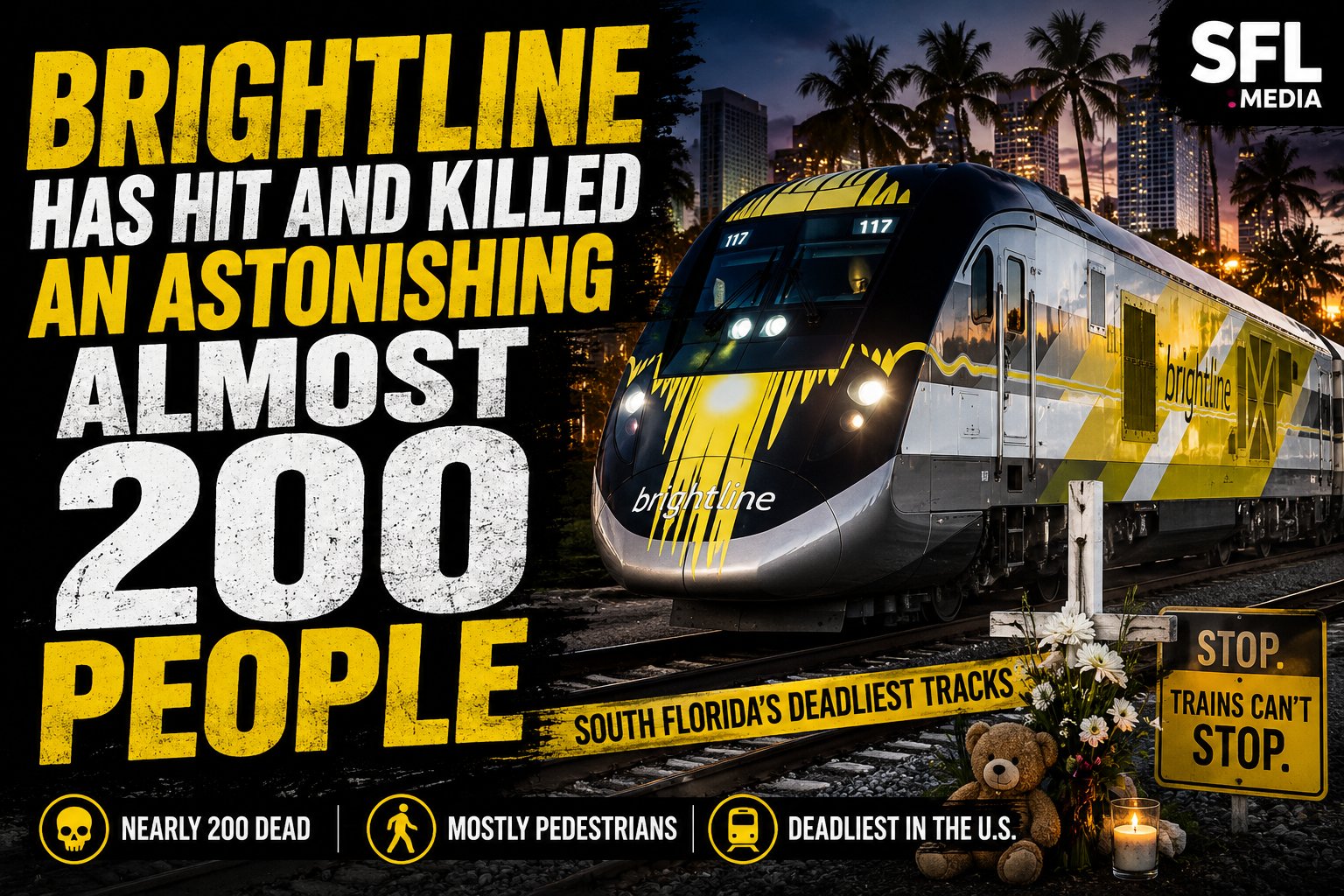
FORT LAUDERDALE, Fla. — A woman was struck and killed by a northbound Brightline passenger train Thursday night in Fort Lauderdale, marking the latest in a growing series of fatal incidents along Florida’s high speed passenger rail corridor and pushing the system’s overall death toll to more than 190 since operations began.
Police and fire rescue crews responded to the scene late on July 2 after reports of a pedestrian being struck by the train. The woman was pronounced dead at the scene. No passengers or crew members aboard the train were injured, and service was temporarily disrupted while investigators processed the area. Authorities have not yet released the victim’s identity or indicated the circumstances that led to the collision. The incident remains under investigation.
Latest in a String of Fatalities
The Fort Lauderdale death comes just two days after another fatal Brightline pedestrian strike in Boynton Beach and follows a double fatality in West Palm Beach on May 24, continuing a troubling pattern of deadly encounters along the Florida East Coast Railway corridor. Those incidents have renewed public attention on Brightline’s safety record, particularly in South Florida, where trains travel through densely populated urban areas with hundreds of street-level crossings.
More Than 190 People Killed
Since Brightline began testing trains in 2017, the railroad has become the deadliest major passenger rail system in the United States on a per mile basis. A joint investigation by the Miami Herald and WLRN, recognized as a Pulitzer Prize finalist in 2026, found that Brightline trains had killed 182 people through mid-2025. With the additional fatalities recorded during late 2025 and the first half of 2026, including Thursday night’s death in Fort Lauderdale, the total has now climbed beyond 190.
The investigation found Brightline averages one fatal strike approximately every 13 to 14 days of service. According to Federal Railroad Administration data, Brightline records roughly 24.5 fatalities per million train miles traveled, significantly higher than other major passenger rail systems nationwide.
Most Victims Are Pedestrians
While many people associate railroad fatalities with vehicles attempting to beat crossing gates, available data tells a different story. Only about 13% of Brightline fatalities involve occupants of motor vehicles. Nearly 85% involve pedestrians or bicyclists who are on or near the tracks when trains approach. The findings suggest that preventing pedestrian access to railroad tracks remains one of the system’s greatest safety challenges.
Questions Over Suicide Versus Accidental Deaths
Brightline has long maintained that the majority of fatalities involve intentional trespassing or suicide. However, the Miami Herald and WLRN investigation found that only about 41% of deaths reviewed by medical examiners were officially ruled suicides. Many of the remaining cases were classified as accidental or undetermined, with investigators concluding that some victims may have underestimated the train’s speed or believed they had enough time to cross safely.
South Florida Remains the Deadliest Stretch
Broward and Palm Beach counties account for nearly 70% of all Brightline fatalities, making the region the railroad’s most dangerous section. Although Brightline trains can reach speeds of up to 125 mph on portions of the route approaching Orlando, trains still travel as fast as 79 mph through downtown Miami, Fort Lauderdale, and West Palm Beach. At those speeds, pedestrians have only seconds to react once a train becomes visible.
Billions Invested, But Safety Concerns Persist
Despite the growing death toll, federal and state investigators have consistently concluded that Brightline itself has not been operationally responsible for the collisions. Investigations have generally found that victims bypassed active crossing gates, entered restricted railroad property, or trespassed onto the tracks. Nevertheless, the increasing number of fatalities has prompted significant investment in additional safety measures.
More than $42 million in federal and state funding has recently been allocated to install enhanced fencing, stronger pedestrian barriers, improved crossing infrastructure, and additional warning systems designed to discourage people from entering the tracks. Whether those improvements will significantly reduce future fatalities remains an open question. For now, Thursday night’s fatal collision in Fort Lauderdale serves as another grim reminder of the dangers posed by one of the nation’s fastest passenger rail systems and the continuing challenge of keeping pedestrians away from active railroad tracks.


















































Want to join the conversation?
Create an account or sign in to share your thoughts, vote,
and reply to other readers.
Showing 0 of 0 comments
Don't have an account?
Already have an account?