
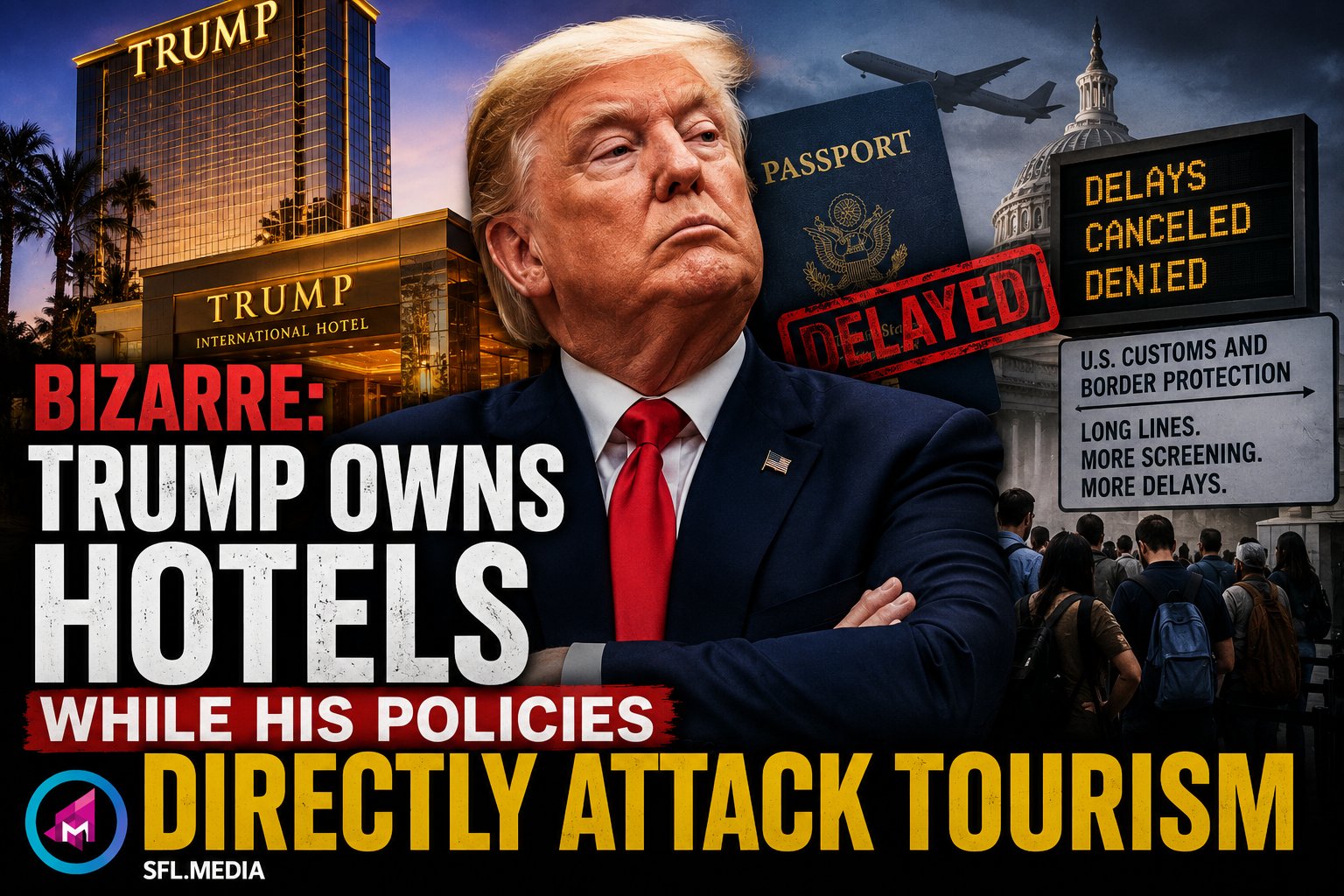
The Hotelier’s Paradox: How Trump’s Travel Policies Are Making America Harder to Visit
Donald Trump built his public image on luxury hotels, golf resorts, and a global hospitality brand. For decades, his business depended on convincing people to travel. Book the room. Fly to the destination. Visit the United States. Spend money. That is what makes one of the defining contradictions of his presidency so remarkable. The administration of a man whose fortune was built on moving people across borders now presides over policies that critics argue have made international travel, immigration, visas, and even passport processing significantly more difficult.
Whether through expanded travel restrictions, more aggressive visa screening, reductions in federal administrative staffing, or disruptions inside the passport system itself, the practical effect has been to inject more friction into nearly every stage of international travel. Ironically, those policies do not simply affect immigrants. They affect tourists. Business travelers. Students. Convention attendees. Families. And American citizens attempting to leave the country.
A Business Built on Travel
The Trump Organization has spent decades selling destinations rather than products. Every occupied hotel room, every golf vacation, every resort stay depends on people feeling confident enough to travel. Hospitality succeeds when borders function efficiently, transportation operates smoothly, and government paperwork stays largely invisible. Travel is the product. Convenience is the service.
Yet since returning to office, the administration has pursued a markedly different philosophy toward international movement. Supporters argue those policies strengthen national security and immigration enforcement. Critics argue they have made America less welcoming, more bureaucratic, and significantly more difficult to visit.
The Passport Breakdown
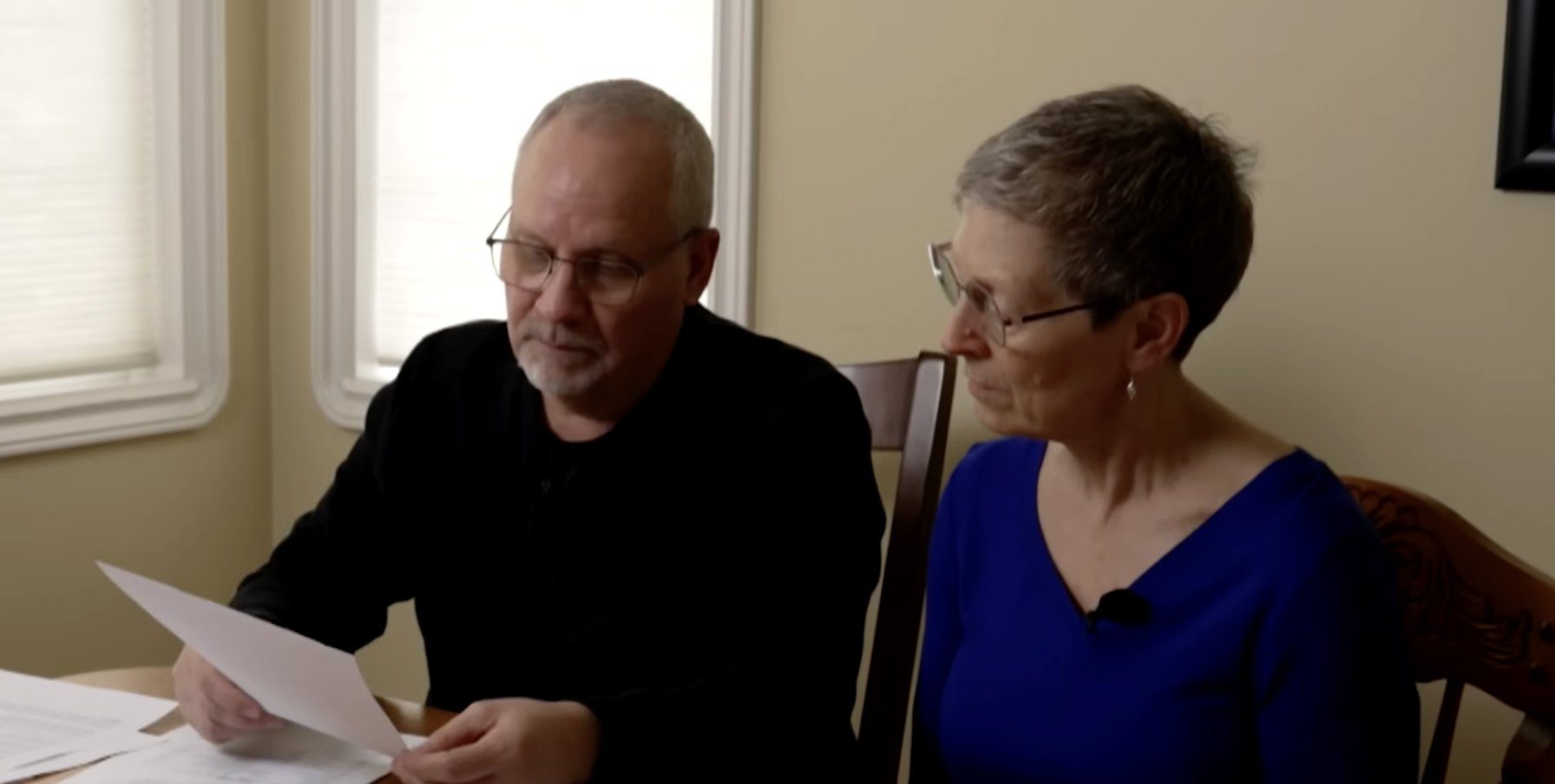
South Florida Media recently spent the day inside the Miami Passport Agency, where employees described what they said was a nationwide disruption affecting passport processing. Travelers told stories of canceled vacations, postponed weddings, delayed medical treatments, and thousands of dollars in non-refundable expenses.
One traveler said he was attempting to fly overseas for cancer treatment. Others simply wanted to take vacations they had spent months saving for. Instead, they found themselves trapped inside a federal backlog. The economic damage extends far beyond individual travelers. Every delayed passport affects airlines, hotels, restaurants, cruise operators, rental car companies, and local tourism economies. When multiplied across thousands of travelers, those losses quickly become measured in millions of dollars.
A Broader Travel Slowdown
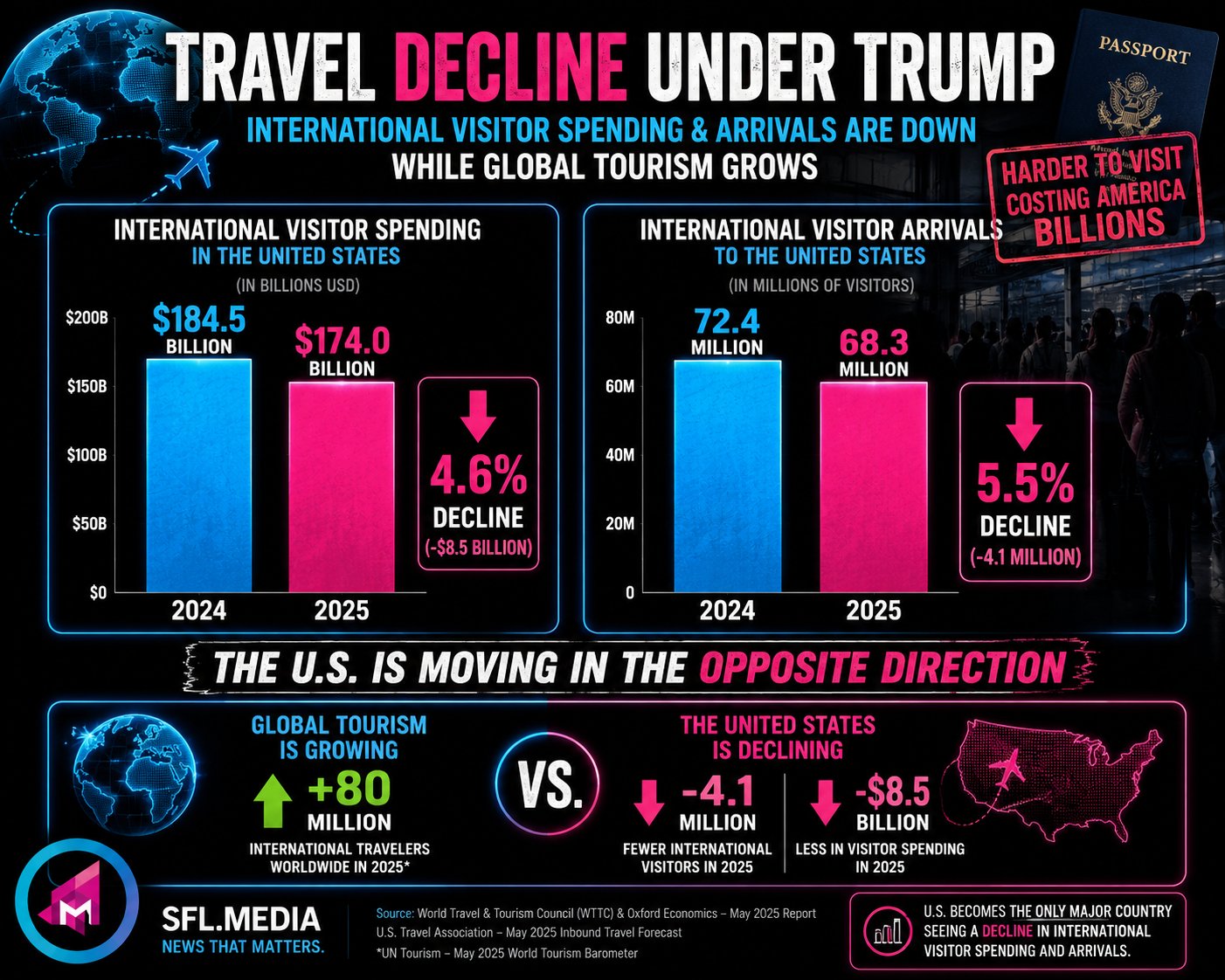
The passport disruptions come as the administration has pursued broader changes affecting international mobility, including expanded travel restrictions, increased visa scrutiny, and more intensive security screening for some categories of travelers. Supporters argue these measures are necessary to protect national security and strengthen immigration enforcement. Critics counter that the cumulative effect is to discourage tourism, reduce business travel, and create additional barriers for visitors who contribute billions of dollars to the American economy each year.
Travel economists have warned that declines in international visitation can ripple throughout hotels, restaurants, entertainment venues, airlines, and convention centers. Communities that depend heavily on tourism, particularly states like Florida, stand to feel those effects first.
The Irony
Perhaps the greatest irony is that no modern president has been more closely associated with the hospitality industry. Donald Trump’s name became synonymous with hotels. Yet many of the policies pursued during his administration have had the practical effect of making travel more complicated, more uncertain, and more expensive for many of the very people who sustain that industry.
Whether viewed as necessary security measures or unnecessary bureaucratic obstacles depends largely on political perspective. What is less debatable is that delays, additional administrative hurdles, and uncertainty impose real costs on travelers and the businesses that serve them. Hotels cannot fill rooms with visitors who never arrive. Airlines cannot sell seats to passengers who cannot obtain passports or visas. Restaurants cannot serve tourists who cancel their trips.
The travel economy depends on movement. When government policies slow that movement, whether intentionally or as an unintended consequence, the costs spread far beyond the immigration debate. They reach hotel workers, restaurant servers, taxi drivers, airline employees, small business owners, and families who simply wanted to take the vacation they spent a year planning. For a president whose business empire was built on hospitality, that may be one of the defining paradoxes of his administration.





























Want to join the conversation?
Create an account or sign in to share your thoughts, vote,
and reply to other readers.
Showing 0 of 0 comments
Don't have an account?
Already have an account?