
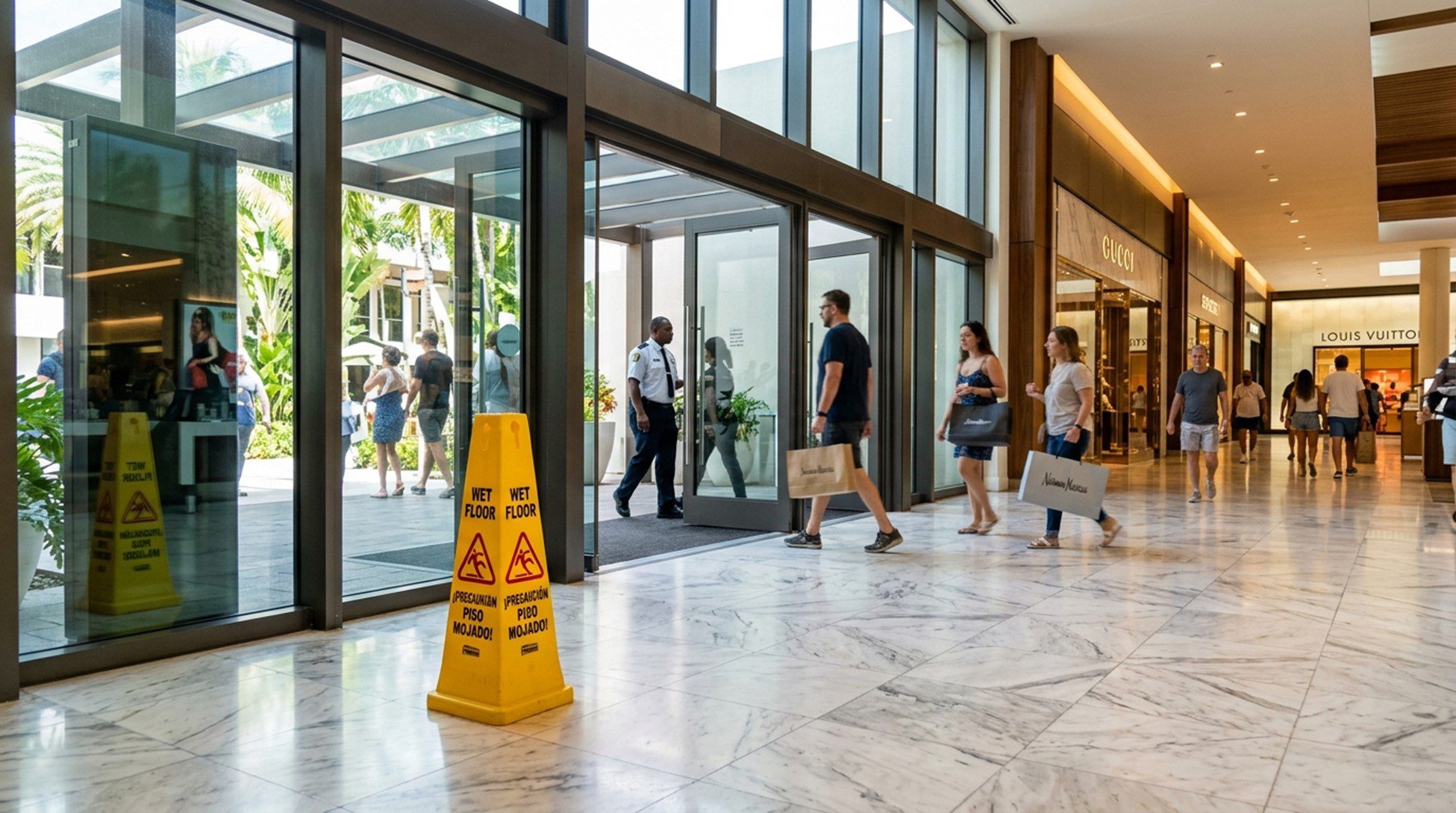
Slipped and Fell on South Florida Commercial Property? Here is What You Need to Know
What happens when a simple trip to a grocery store, hotel lobby, or shopping mall turns into a sudden hospital visit because of an unmarked liquid spill? One moment you are walking off the humid Miami sidewalk into a brightly lit building, focused on your day. The next second, your feet fly out from under you on a slick tile floor, and you land with a violent crash. Beyond the initial shock and physical pain, things get confusing quickly. Store managers arrive with clipboard incident forms, employees start mopping up the hazard around you, and subtle comments get dropped suggesting that you “should have been watching your step.”
If you suffered a fall on commercial property in Miami, Fort Lauderdale, or anywhere in South Florida, you need a clear understanding of how premises liability law works here, because property owners and corporate insurance adjusters rely heavily on victims not knowing their rights.
The “Open and Obvious” Trap Insurance Companies Use
One of the first lines of defense an insurance company uses is claiming that a spill or floor hazard was “open and obvious.” They attempt to convince you that any attentive person would have seen the hazard and walked around it, shifting total fault onto your shoulders.
Florida law views things differently. Commercial property owners owe a basic legal duty of care to keep their walkways reasonably safe for shoppers, guests, and visitors. A customer scanning product shelves or carrying packages isn’t expected to march through a store staring directly at their feet. Even if an adjuster claims you were partially distracted, Florida’s comparative fault rules mean a property owner isn’t automatically off the hook for leaving a dangerous hazard on their floor.
Proving What the Store Knew: Constructive Knowledge
Winning a slip and fall claim in Florida centers around proving what the law calls constructive knowledge. Under Florida Statute Section 768.0755, if you slip on a foreign substance in a business, you must show that the store owner knew, or reasonably should have known, about the spill and failed to clean it up or set out warning signs.
Proving a business should have known about a hazard usually comes down to physical details left behind at the scene:
- Signs of Time: A puddle showing shopping cart tire tracks through the middle, dried footprints around the edges, or a leaking air conditioner that has been dripping for hours proves the hazard sat ignored long enough for staff to fix it.
- Missing Inspection Logs: Most retail stores maintain floor inspection schedules. If store logs reveal that no staff member checked or swept that section of the floor for hours, the business failed its duty of care.
The 7-Day Camera Surveillance Clock
Digital security cameras cover nearly every modern supermarket, resort, and retail store across Miami-Dade and Broward Counties. Video footage is often the strongest evidence in a claim, showing the exact minute a liquid spilled, how many employees walked past without acting, and how long the hazard remained unguarded.
There is a critical catch: Most commercial businesses automatically overwrite their security video footage within 7 to 14 days. Once you walk out the door, risk managers will not hold onto that footage out of goodwill. Having a legal representative send an immediate, formal spoliation of evidence letter places a legal obligation on the store to save all security footage, cleaning logs, and incident reports from the day of your fall.
Don’t Ignore Delayed Joint and Back Pain
Adrenaline from a sudden fall masks physical pain. Many people decline an ambulance ride at the scene because they feel mostly shaken up, only to wake up forty-eight hours later with severe lower back stiffness, knee swelling, or neck pain.
Soft tissue tears, herniated discs, and concussions frequently take two to three days to show full inflammation. If you put off getting medical care, insurance adjusters will use that gap to claim your injuries happened somewhere else after you left their premises. Visiting an urgent care facility or doctor promptly after a fall establishes a clear medical record linking your injuries directly to the incident.
Protecting Your Health and Recovery
A bad fall can lead to unexpected surgery, months of physical therapy, missed paychecks, and real financial stress. You shouldn’t have to carry the burden of a property owner’s negligence or let insurance adjusters pressure you into giving up your claim.
If you or a loved one suffered a fall on commercial property anywhere in South Florida, reach out to an experienced Personal Injury Attorney in Miami, FL for a free case evaluation. Skilled trial lawyers will investigate the incident, demand security video, deal with insurance adjusters, and fight to get you the full compensation you deserve.
















































Want to join the conversation?
Create an account or sign in to share your thoughts, vote,
and reply to other readers.
Showing 0 of 0 comments
Don't have an account?
Already have an account?