
John Oliver and Seth Meyers Explain Why Trump Seems to Hate Jimmy Kimmel More Than Them
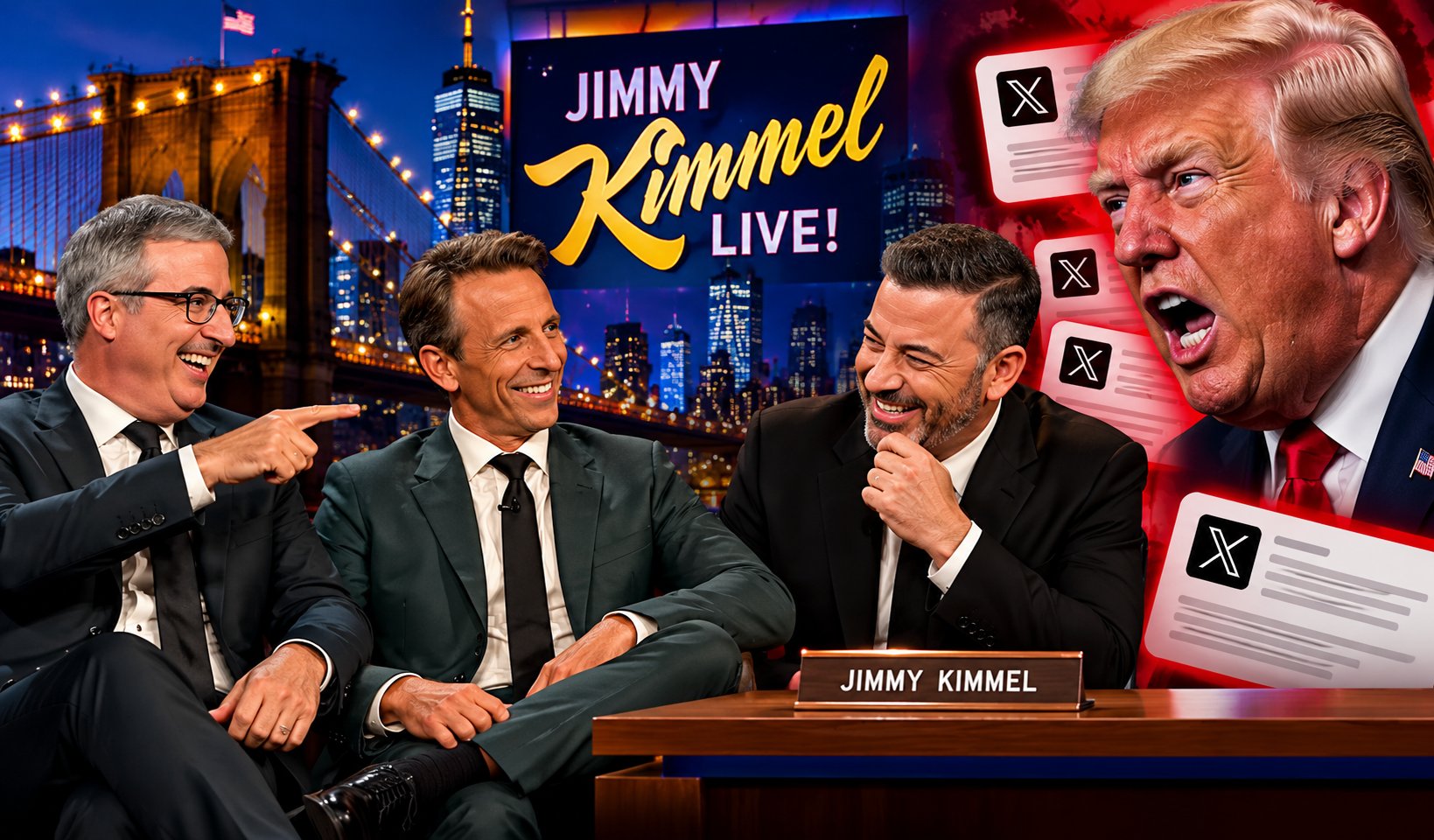
Three of America’s most prominent late night comedians sat down together this week, and what began as a conversation about friendship, stand up comedy and their children eventually turned toward a recurring subject in modern late night television: President Donald Trump’s unusually persistent feud with Jimmy Kimmel.
John Oliver and Seth Meyers joined Kimmel during the New York edition of “Jimmy Kimmel Live!” this week, bringing together three hosts who have spent years making Trump and his administration frequent subjects of their comedy. ABC’s official schedule confirms Oliver and Meyers appeared together during Kimmel’s week of shows in Brooklyn, alongside comedian Robby Hoffman.
The conversation was largely comedic, but it landed against a much more serious backdrop. Trump has repeatedly attacked Kimmel and ABC, while the Federal Communications Commission under Chairman Brendan Carr has subjected ABC stations and political programming to heightened regulatory scrutiny. That history gave a seemingly simple question from Kimmel considerably more weight: Why does Trump appear to spend so much time thinking about him?
Oliver and Meyers Joke That Kimmel Is Their Presidential Shield
Oliver and Meyers said Kimmel regularly comes up during their ongoing stand up residency at New York City’s Beacon Theatre, where the two comedians perform together roughly once a month. The residency grew out of the relationship between the late-night hosts during the 2023 Hollywood writers’ strike and remains active, with Madison Square Garden Entertainment listing Oliver and Meyers performances at the Beacon through December 2026, including shows scheduled for October 25, November 22 and December 13.
Their format is relatively straightforward: both hosts perform extended stand up sets before joining together for an audience question and answer session. Those Q&A sessions inevitably drift toward their television careers, their fellow late night hosts and, increasingly, politics. According to Oliver, audience members regularly ask what it feels like to be disliked by the sitting president. Their answer is essentially that they are doing just fine as long as Kimmel remains around to absorb most of Trump’s attention.
“You draw all the ire,” Meyers joked. Oliver followed with another punchline, telling Kimmel that he and Meyers were fully behind him in much the same way someone might stand behind a bulletproof vest.
The joke worked because it exaggerated something that is readily observable: although Trump has criticized numerous late night comedians, Kimmel has repeatedly become one of his most visible television targets.
Why Does Trump Keep Going After Jimmy Kimmel?
Kimmel eventually asked Oliver and Meyers directly why they believed Trump appears to reserve so much attention for him. Meyers offered perhaps the funniest theory of the conversation: Trump might actually want Kimmel’s life.
According to Meyers, Trump probably looks at him and Oliver as “dorks” he would have little interest in socializing with. Kimmel, however, occupies a more traditional celebrity world filled with famous friends, parties and Hollywood relationships. Meyers joked that Trump might hear about Kimmel’s pizza oven, his friendships with people such as Conan O’Brien and his access to celebrity circles and think Kimmel’s parties sound appealing.
The implication was deliberately absurd but clear: perhaps Kimmel irritates Trump precisely because Kimmel occupies a version of the entertainment establishment that Trump himself has spent decades navigating.
The hosts then developed another, more practical explanation. Kimmel suggested that Trump’s television habits may simply expose him to network television more frequently than premium cable. “Jimmy Kimmel Live!” airs on ABC at 11:35 p.m. Eastern, while Oliver’s “Last Week Tonight” is an HBO program and Meyers’ NBC show airs later in the evening. That, the comedians joked, could explain the hierarchy. Kimmel suggested Trump might simply not have HBO, giving Oliver some protection, while Meyers’ program airs too late for Trump to consistently watch.
Meyers then pointed out a detail that undermined that theory: when Trump posts about “Late Night,” the president sometimes appears to do so while the program is actually airing. For Meyers, that realization became its own punchline. In an increasingly fragmented streaming era, he joked that knowing Trump was watching traditional linear television with commercials “means the world” to him.
“It’s viewers like him that keep the show going,” Kimmel replied.
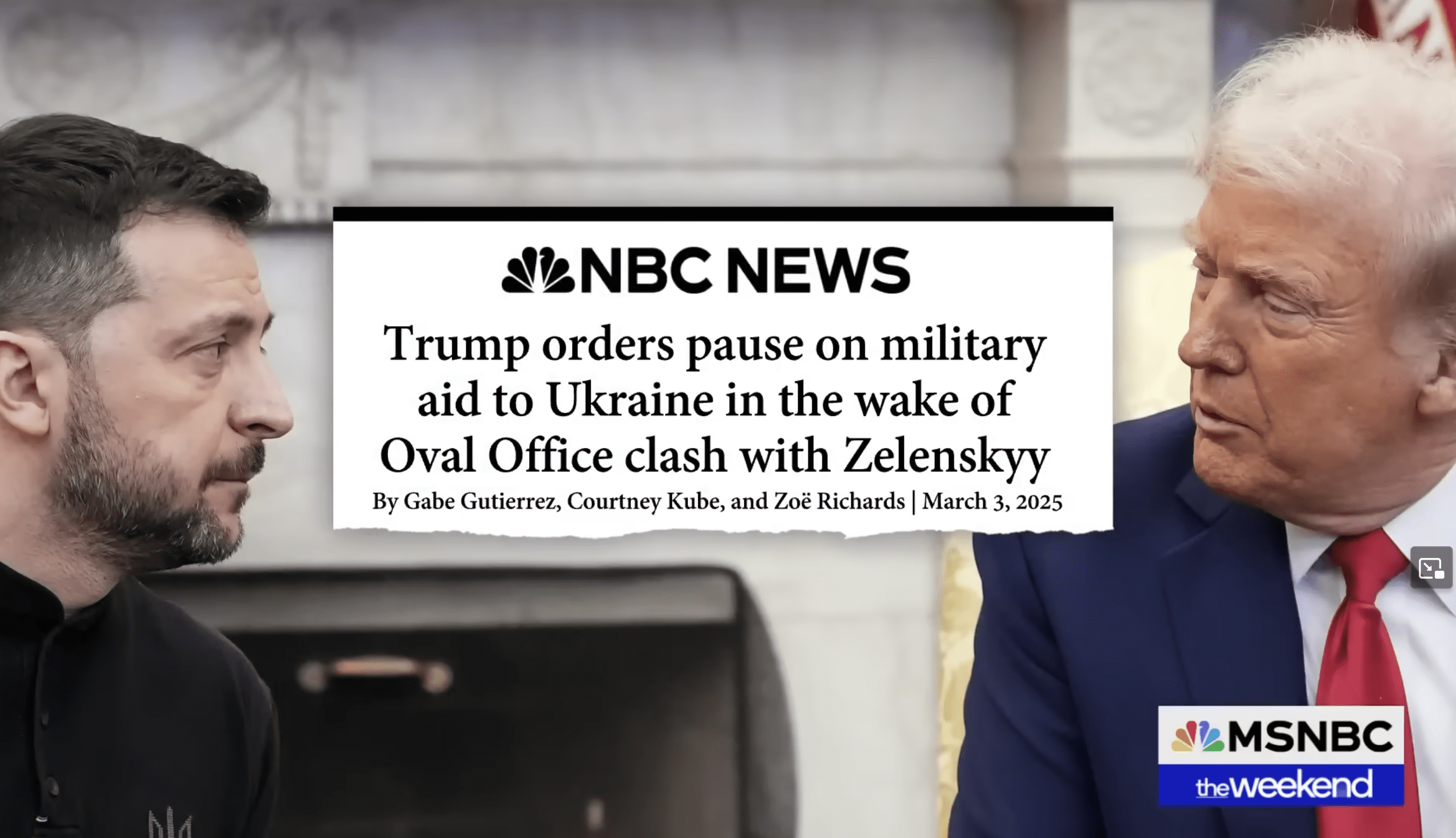
Behind the comedy is a political and regulatory conflict that has become considerably more consequential than the typical war of insults between a president and television comedians. Trump has publicly attacked Kimmel and questioned why ABC continues to employ him. In April, Trump told Newsmax he could not understand how Kimmel remained on television and said ABC was putting itself in “great jeopardy” by continuing to air the program. At the same time, the FCC under Carr has increased scrutiny of ABC and its programming. The commission launched an early review of licenses held by Disney owned ABC stations, drawing criticism from Democratic senators who characterized the unusual timing as political retaliation. Carr and the FCC have also changed how the agency treats certain late-night and daytime talk shows under federal equal time rules.
Those changes have already had practical consequences. In September, Kimmel announced that an interview with Democratic U.S. Senate candidate James Talarico would be released on YouTube rather than broadcast on ABC. Kimmel attributed the decision to the FCC’s interpretation of equal time requirements and argued that the regulatory environment was making conventional candidate interviews more difficult for late night television. The FCC maintains authority over broadcast licensees and enforcement of federal communications law. Critics of Carr’s approach, including Democratic FCC Commissioner Anna Gomez and some lawmakers have argued that recent actions risk using regulatory power to pressure broadcasters over political content. Carr and his allies have defended the commission’s authority to enforce broadcast rules and reconsider longstanding interpretations of exemptions.
The dispute has therefore moved well beyond Trump simply posting insults about a comedian he dislikes. It has become part of a larger fight over the boundaries between presidential criticism, federal regulatory authority, political programming and broadcasters’ First Amendment protections.
Oliver Has Already Made Kimmel’s FCC Battle a Major Story
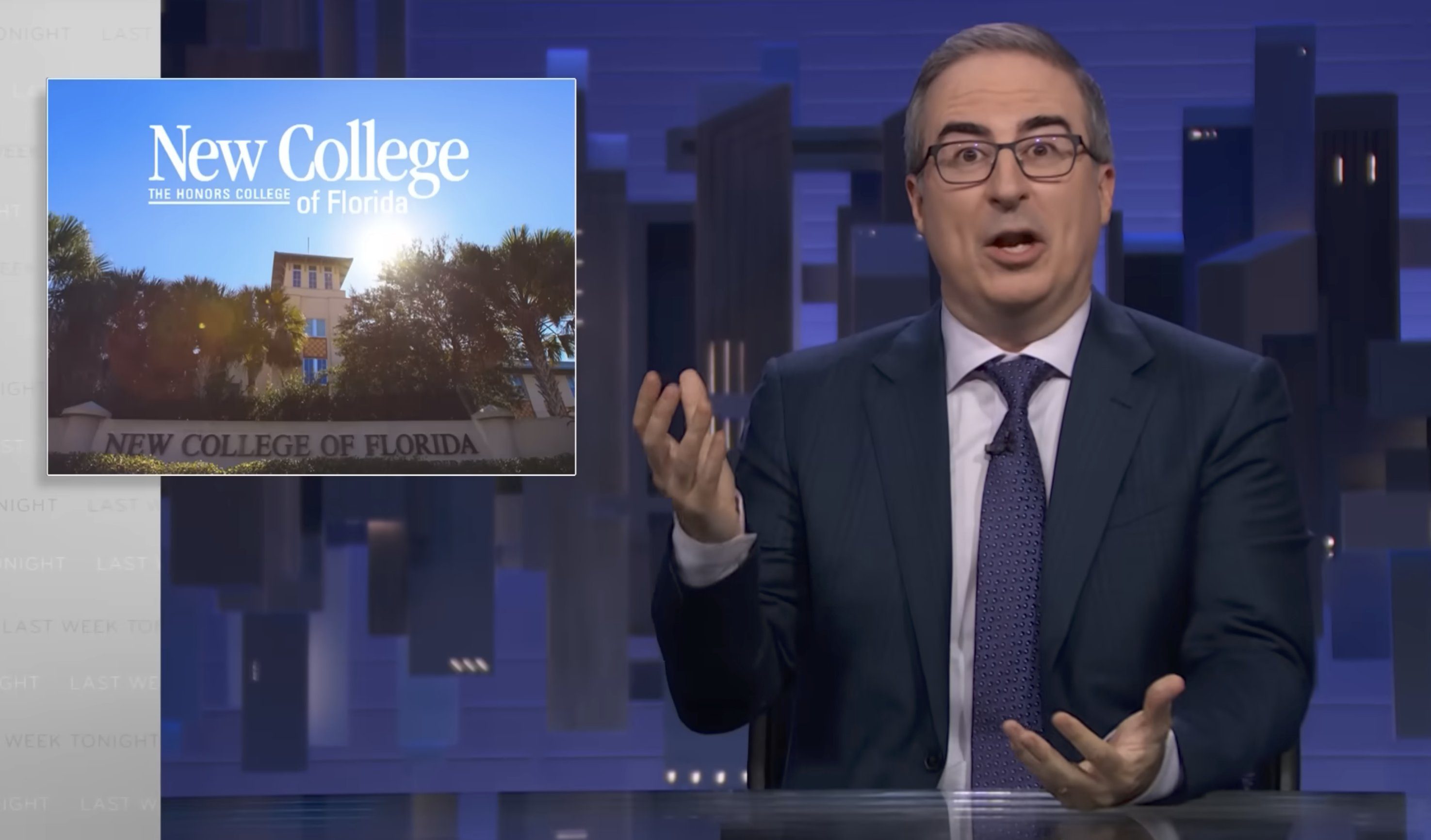
Oliver has not merely watched the dispute from the sidelines. In September 2025, “Last Week Tonight” devoted a major segment to Kimmel, the FCC and the pressure placed on broadcasters after ABC temporarily suspended “Jimmy Kimmel Live!” amid controversy over comments Kimmel made following the killing of conservative activist Charlie Kirk.
Oliver used the episode to examine Carr’s role, the power of television station groups and the broader implications of government officials threatening regulatory consequences over speech. That history made Oliver’s bulletproof vest joke on Kimmel’s couch more pointed than it might initially appear. The three comedians were laughing about Trump’s attacks, but Oliver has previously devoted significant airtime to arguing that government pressure on broadcasters represents a serious free-speech issue.
Even some Republicans have raised concerns about that principle. Sen. Ted Cruz publicly criticized Carr’s threats against broadcasters during the 2025 Kimmel controversy, despite sharply criticizing Kimmel’s underlying comments. Cruz argued that government officials threatening regulatory retaliation against broadcasters created a dangerous precedent.
From Trump to Soap Operas and “GMO”
Not everything about the interview was political. Oliver also discussed his appearances on daytime soap operas, where he said he approached the roles with a simple set of comedic requirements: he wanted an absurd character name, an aggressively styled wig and an opportunity either to slap someone or be slapped.
The conversation also turned to Guillermo Rodriguez, Kimmel’s longtime sidekick, whose appearance on “Dancing with the Stars” has apparently created a surprisingly intense following among the other hosts’ children. Meyers said his 8 year old son had become so invested in Guillermo, whom the children apparently call “GMO” that he would wake up extremely early to find out whether Guillermo survived elimination.
It was exactly the kind of bizarre domestic story that demonstrated why the chemistry between the hosts worked. Despite competing for audiences in the same shrinking and increasingly complicated late-night television business, Oliver, Meyers and Kimmel have developed an unusually public friendship.
Late Night Television Has Become a Strange Political Battleground
The conversation also illustrated how dramatically the role of late-night comedy has changed. For decades, presidents complained about comedians, comedians mocked presidents and television networks generally treated the exchange as part of American political culture. Trump’s relationship with late-night television has been different because criticism of individual hosts has repeatedly intersected with his criticism of the networks employing them and, during his presidency, with actions taken by federal regulators overseeing broadcasters.
That does not mean every regulatory decision involving ABC is necessarily the result of Trump’s anger toward Kimmel. The FCC has statutory responsibilities independent of the White House, and disputes over equal-time requirements and broadcast licensing involve legal questions extending beyond any individual television host. But the overlap is significant enough to have generated sustained scrutiny from lawmakers, media organizations and free-speech advocates.
Against that backdrop, Oliver and Meyers managed to reduce the entire conflict to one brutally efficient comedy premise: as long as Trump remains focused on Jimmy Kimmel, they are perfectly happy standing behind him, preferably several feet behind him.
Sources & Further Reading
John Oliver & Seth Meyers — Beacon Theatre
Reuters — Trump Says ABC Is in “Jeopardy” for Keeping Kimmel on Air
Reuters — Kimmel Says Senate Candidate Interview Will Not Air on ABC Amid FCC Dispute
Reuters — Democratic Senators Challenge Early FCC Review of Disney Station Licenses
Reuters — Ted Cruz Criticizes Government Threats Against Broadcasters










































Want to join the conversation?
Create an account or sign in to share your thoughts, vote,
and reply to other readers.
Showing 0 of 0 comments
Don't have an account?
Already have an account?