
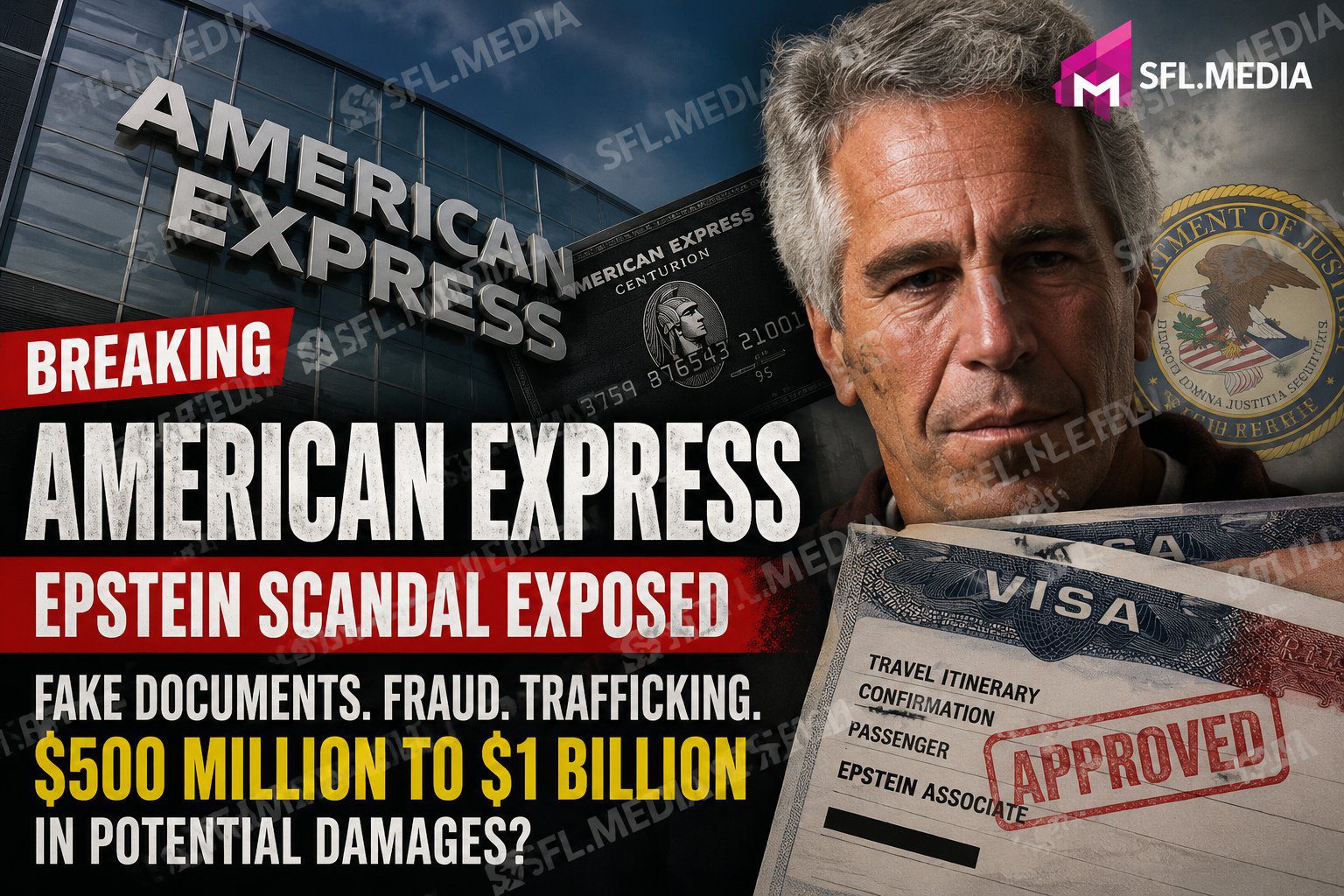
American Express May Be Facing an Existential Crisis Over Epstein Allegations And Wall Street Knows It
For years, the financial industry treated the Jeffrey Epstein scandal as something survivable. A reputational disaster, yes. A legal headache, absolutely. But ultimately manageable. The formula became familiar across Wall Street, settle the lawsuits, deny intentional wrongdoing, promise stronger compliance systems, and move on before the public outrage fully calcified into regulatory destruction. That strategy worked for several major financial institutions tied to Epstein’s operation.
But the allegations now surrounding American Express are fundamentally different and potentially far more dangerous.
Because this is no longer merely about allegedly ignoring suspicious financial activity.
The emerging allegations suggest something far worse: that employees tied to the ultra exclusive Centurion “Black Card” division may have actively helped create or process travel documentation allegedly used by women seeking visas to enter the United States through Jeffrey Epstein’s trafficking network. If federal investigators eventually conclude those documents knowingly were created to assist fraudulent visa applications, American Express may no longer be facing merely civil liability exposure. The company could be staring at one of the largest corporate legal crises in modern banking history.
The Other Banks Paid Big for “Looking Away”
The financial world already has watched multiple institutions get financially demolished by Epstein related litigation.
JPMorgan Chase paid roughly $365 million tied to settlements and government claims alleging the bank ignored obvious warning signs while continuing to process Epstein-linked transactions. Internal emails exposed during litigation reportedly showed compliance officials raising concerns involving suspicious activity and references to minors years before the bank severed ties with Epstein.
Deutsche Bank paid approximately $225 million through regulatory penalties and survivor settlements after taking Epstein on as a client after his 2008 conviction already made him internationally infamous as a sex offender. Regulators accused the bank of major anti-money-laundering and oversight failures connected to Epstein accounts.
Bank of America reportedly settled claims involving suspicious withdrawals, transaction oversight failures, and allegations the bank provided legitimacy to Epstein-linked financial activity.
But those cases centered primarily around omission. The accusations were that banks saw red flags and failed to act aggressively enough. That is ugly. That is expensive. But it is survivable. What now allegedly surrounds American Express is potentially much worse because the allegations involve operational involvement rather than passive negligence.
Why the Embassy Allegations Change Everything
According to reports tied to newly surfaced records, Epstein associates allegedly used American Express Centurion travel services to create temporary or refundable flight itineraries for women from Eastern Europe seeking U.S. visas. The trips allegedly often were never intended to happen.
Instead, the itineraries reportedly were generated so the women could present proof of travel arrangements to embassies or consulates before the reservations later were canceled.
That distinction is legally explosive.
Because if investigators determine employees knowingly helped create documents intended to be presented to U.S. immigration authorities under false pretenses, prosecutors could argue the company crossed the line from negligence into facilitation. And prosecutors historically treat fraud involving government documentation very differently than ordinary compliance failures. Especially when immigration systems, trafficking allegations, and a convicted sex offender are involved.
This is the legal territory that terrifies corporate defense attorneys. Banks can survive accusations that they failed to stop suspicious conduct. It becomes far harder to survive allegations involving active assistance, manipulated records, conspiracy exposure, or fraudulent government facing documentation tied to trafficking operations.
The Timing Makes the Allegations Even More Dangerous
One of the most devastating aspects of the allegations is that the conduct reportedly continued well after Epstein’s 2008 conviction. That timing matters enormously.
This allegedly was not happening before Palm Beach police investigated Epstein. It allegedly was not before his plea deal. It allegedly was not before media investigations exposed him globally. This allegedly continued after the entire world already knew exactly who Jeffrey Epstein was.
That destroys one of the most common corporate defenses: ignorance.
A jury may look very differently at a company maintaining extraordinary concierge style support for Epstein after his conviction than before it. And according to reports, Epstein allegedly remained one of Amex’s prized elite customers, with 17 American Express cards, including nine Centurion cards, and millions of Membership Rewards points flowing through the accounts. That level of client servicing allegedly bought him highly customized treatment inside one of the world’s most exclusive financial concierge systems.
The “Against AMEX Policy” Email Could Become Catastrophic Evidence
One internal communication reportedly included an American Express representative allegedly acknowledging:
“It is against AMEX policy, to be honest.”
That sentence may become one of the most legally dangerous lines uncovered anywhere in the Epstein financial ecosystem. Because it suggests awareness. Not confusion. Not oversight. Awareness. Plaintiffs’ attorneys already extracted hundreds of millions from banks using arguments centered around “willful blindness” and failure to intervene. But evidence allegedly suggesting employees understood conduct violated internal company policy, and continued anyway, fundamentally changes the legal landscape. It potentially transforms the story from negligence into willful participation. That is the line corporations desperately try to avoid crossing.
The “Scrubbing Epstein’s Name” Allegation Could Devastate Amex Publicly
Perhaps the most politically toxic allegation involves claims that Amex personnel allegedly helped remove or conceal Epstein’s identity from travel related paperwork and confirmations.
If proven true, investigators and juries likely will ask an obvious question: why would employees allegedly need to hide the client’s identity unless they already understood the reputational or legal danger surrounding the transactions? That detail could become catastrophic because concealment changes public perception instantly. The company no longer appears merely negligent. It begins appearing potentially complicit. And in the Epstein era, public tolerance for elite institutional complicity has almost completely evaporated.
The Financial Exposure Could Reach Into the Billions
The legal exposure facing American Express now potentially stretches in every direction simultaneously.
The company could face:
- Survivor lawsuits tied to trafficking facilitation allegations
- Federal investigations involving visa fraud or documentation issues
- Regulatory enforcement actions
- Shareholder derivative lawsuits
- Congressional scrutiny
- International cooperation requests
- Banking compliance investigations
- Anti-trafficking enforcement reviews
The settlement math alone becomes terrifying. JPMorgan’s exposure already reached hundreds of millions largely for allegedly processing Epstein linked activity while ignoring obvious warning signs. If Amex is accused of helping facilitate travel documentation allegedly used in visa applications tied to trafficking operations, plaintiff attorneys almost certainly will argue the conduct was substantially more direct. That opens the door to punitive damage arguments at a completely different scale. Some legal observers privately believe total exposure eventually could climb into the $500 million to $1 billion range if multiple legal fronts begin converging simultaneously. And that estimate may not even include long term reputational destruction.
Stephen Squeri and the Board Could Soon Face Serious Pressure
Eventually, scandals stop being about frontline employees. Pressure climbs upward. That means scrutiny likely will intensify around Stephen Squeri, the Amex board of directors, senior compliance executives, and leadership tied directly to Centurion operations. Corporate boards can survive rogue employee scandals. They struggle far more when allegations suggest systemic cultural failures benefiting ultra wealthy clients. And American Express specifically built its prestige around exclusivity, elite access, personalized treatment, and extraordinary service for high net worth individuals.
Critics now may argue that same culture allegedly created a two tier compliance system: one set of rules for ordinary Americans and another for billionaire clients generating enormous prestige and revenue. If internal communications eventually show executives were warned about suspicious travel activity, embassy facing documentation issues, or attempts to conceal Epstein’s identity from records, resignation pressure could emerge rapidly. That is how executive collapses begin in corporate America. Not necessarily through criminal convictions first. But through internal emails. Board panic. Institutional investor pressure. Regulators circling. And the realization that the scandal may continue expanding for years.
This Is Bigger Than One Bank
The Epstein scandal already shattered public trust in elite institutions across finance, politics, academia, and intelligence circles. But the American Express allegations hit differently because they allegedly involve the operational mechanics of international movement itself. Not merely wire transfers. Not passive account management. But the alleged creation or handling of documentation potentially used in embassy and immigration processes tied to one of the largest trafficking operations in modern history.
If investigators ultimately conclude employees knowingly assisted that process, the fallout could become historic. Because ordinary Americans get flagged by banks every day for small paperwork discrepancies, suspicious deposits, or technical irregularities. Meanwhile, according to these allegations, one of the world’s most notorious sex offenders allegedly received customized concierge-style assistance from one of Wall Street’s most prestigious financial brands long after his conviction already made him globally infamous. That contradiction may become impossible for the public, or regulators to ignore.

















































Want to join the conversation?
Create an account or sign in to share your thoughts, vote,
and reply to other readers.
Showing 0 of 0 comments
Don't have an account?
Already have an account?