
Another Crazy Case That Comes Out of Florida… This Time it’s a “Florida Woman”
One of the most closely watched criminal cases involving a social media influencer appears to be nearing its conclusion. Courtney Clenney, the former OnlyFans model and Instagram personality once known online as “Courtney Tailor,” has agreed to a plea deal in connection with the 2022 fatal stabbing of her boyfriend, Christian “Toby” Obumseli. While the exact terms of the agreement have not yet been publicly released, the deal brings an end to a legal battle that has captivated both the true crime community and millions of social media followers for more than four years.
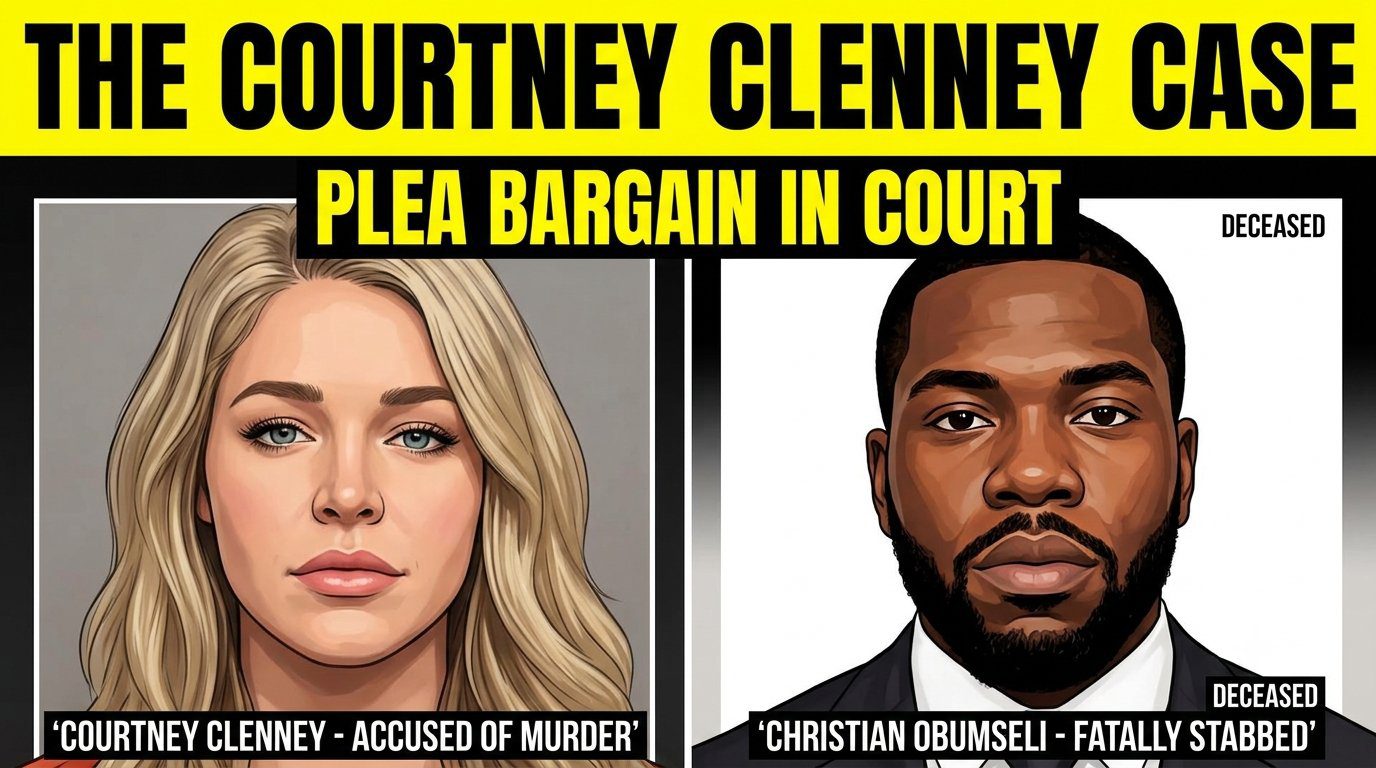
Clenney, now 30, was charged with second-degree murder after Obumseli was found with a fatal stab wound inside the luxury Edgewater condominium the couple shared in Miami on April 3, 2022. At the time, Clenney claimed she acted in self-defense during a violent domestic dispute. Prosecutors, however, argued that the evidence did not support her version of events and maintained that the stabbing constituted second-degree murder. She was arrested several months later while undergoing treatment at a rehabilitation facility in Hawaii and has remained behind bars ever since awaiting trial.
An Interracial and Violent Love Story
The relationship between Clenney and Obumseli had reportedly been volatile for months before the killing. Police were called to their apartment on multiple occasions over reports of domestic disturbances, and neighbors frequently described hearing loud arguments coming from the couple’s residence. During pretrial hearings, Clenney’s defense team sought to introduce evidence they claimed showed Obumseli had physically abused her throughout the relationship.
Obumseli’s family strongly rejected those allegations, insisting that Christian was the victim of abuse rather than the aggressor. Those competing narratives became one of the central issues in the case and fueled years of public debate over whether the fatal stabbing was an act of self-defense or a criminal homicide.
The case also attracted enormous media attention because of Clenney’s online fame. Before her arrest, she had built a massive following across Instagram and OnlyFans, where she earned substantial income posting adult content and lifestyle videos. Like many influencer-driven criminal cases, the investigation quickly became a spectacle online, with social media users dissecting police body camera footage, surveillance videos, 911 recordings, and courtroom filings. Every new development generated millions of views and endless debate across YouTube, TikTok, and X.
Courtney Cops a Plea
Perhaps the biggest surprise came just weeks before what was expected to be a lengthy murder trial. Rather than proceeding before a jury, attorneys confirmed that a plea agreement had been reached with prosecutors. At this time, neither prosecutors nor Clenney’s legal team have disclosed whether she will plead guilty to a reduced charge or what sentence she may ultimately receive. A judge must still review and approve the agreement before it becomes official.
Plea deals are common in high-profile criminal cases, even when prosecutors believe they have a strong case. Trials involving conflicting witness testimony, self-defense claims, and extensive forensic evidence can be unpredictable, expensive, and emotionally taxing for everyone involved. A negotiated resolution provides certainty for both sides while avoiding the risks associated with a jury trial. Whether the public ultimately agrees with the outcome is another matter entirely.
The tragedy also serves as another reminder that domestic violence cases are often far more complicated than they initially appear. Public opinion frequently forms within hours of an incident, but criminal investigations can take years to uncover evidence, interview witnesses, analyze forensic findings, and evaluate competing claims. In Clenney’s case, both sides maintained dramatically different accounts of what occurred inside that Miami condominium, making it one of the most controversial homicide prosecutions in recent Florida history.
The final chapter has not yet been written. Once the plea agreement is formally presented in court, the public will finally learn exactly what charges Clenney admits to, what punishment she faces, and whether the years-long legal saga has truly come to an end. Until then, the case remains a sobering example of how relationships marked by repeated conflict can end in irreversible tragedy, regardless of which version of events ultimately prevails in the courtroom.







































Want to join the conversation?
Create an account or sign in to share your thoughts, vote,
and reply to other readers.
Showing 0 of 0 comments
Don't have an account?
Already have an account?