
WWE Crown Jewel: A Dangerous Gamble in Saudi Arabia
Written By: Joshua Weiss | October 28th
Missile attacks, worried employees, a U.S. government travel warning and a reported $50 million payday have turned WWE’s upcoming Crown Jewel event into something far more serious than a wrestling show. TKO boss Ari Emanuel says the situation is being monitored daily, but with some employees reportedly reluctant to travel and major questions surrounding the company’s contingency plans, one question deserves an answer, and that is, is the WWE putting its people at unnecessary risk to protect a lucrative business relationship?
Professional wrestling has always thrived on spectacle. Bigger entrances, louder crowds, outrageous rivalries and the promise that anything can happen when the bell rings. But the biggest question surrounding WWE’s November 7th, 2026, Crown Jewel event in Riyadh, Saudi Arabia, has nothing to do with who walks away with a championship. It is whether WWE should be sending a large contingent of wrestlers, production workers and other employees into a region facing serious security concerns while missile and drone attacks have reportedly struck critical infrastructure.
WWE is still advertising the event at Riyadh Season Stadium at King Abdullah Financial District, despite reports of deadly attacks involving Saudi Arabia and warnings from the U.S. government. The company’s parent organization, TKO Group Holdings, has publicly maintained that the show remains on schedule while its leadership evaluates developments.
This is not simply a debate about whether a professional wrestler is brave enough to get on an airplane. A major WWE production involves far more than the people seen on television. Wrestlers, referees, camera operators, stage crews, technicians, medical personnel, security teams and other employees must travel, work and eventually get home. If the security situation deteriorates, every one of those people could be caught in circumstances they have little ability to control. And unlike a wrestling storyline, a missile strike does not care whether the event is sold out.
The U.S. Government is Telling Americans to Reconsider Travel
The strongest evidence that these concerns are not merely wrestling fan speculation comes from the U.S. State Department itself. Its October 23rd, 2026, travel advisory classifies Saudi Arabia as Level 3: Reconsider Travel. The department specifically cites the risk of missile and drone attacks, armed conflict, terrorism and possible travel disruptions. It also ordered non emergency U.S. government employees and their family members to leave the country because of safety risks. That is a remarkable backdrop for a company preparing to fly a large entertainment operation into Riyadh.
Reuters reported on October 12th that four Houthi attacks on Riyadh’s King Khalid International Airport had killed at least 18 people and injured more than 300. The report also raised questions about Saudi Arabia’s public warning system, which had failed to issue alerts before those attacks. The Associated Press separately reported that attacks on the airport and a Saudia aircraft killed three Saudi citizens and injured others in another incident. Some airlines suspended or canceled flights to Saudi cities as the security situation deteriorated.
These are not abstract concerns about a conflict happening somewhere on the other side of the planet. Airports are essential to getting an international production into a country and, more importantly, getting everybody back out. An airport disruption could strand employees, interfere with medical evacuations or make it difficult to change travel plans quickly. Missile interceptions introduce another danger: debris can fall even when an incoming weapon is successfully intercepted. The State Department explicitly identifies falling debris as a risk. It also warns that large gatherings, hotels, transportation hubs and entertainment venues can be potential targets for terrorist violence.
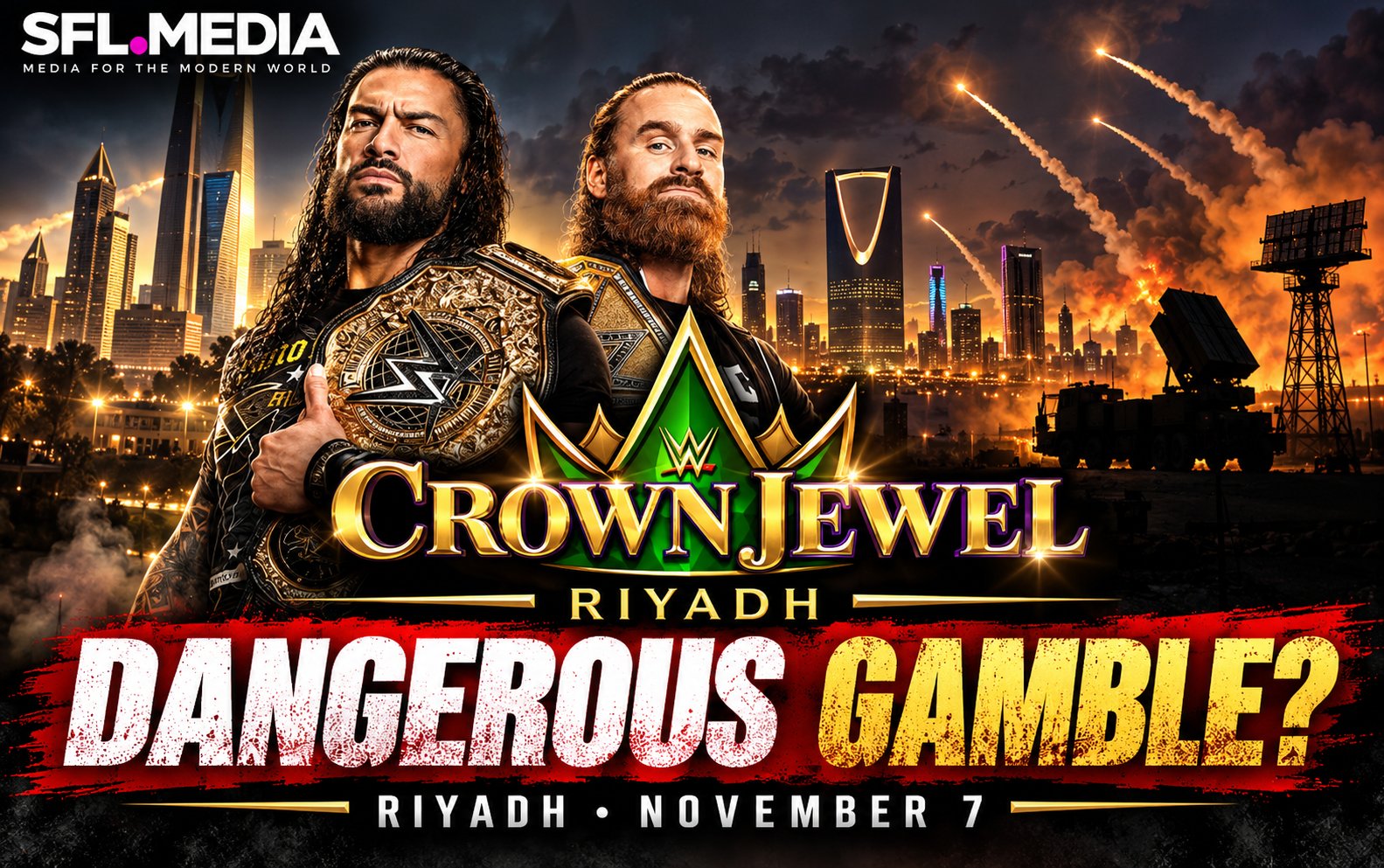
None of this proves that Riyadh’s stadium will be attacked during Crown Jewel. It does establish that WWE is planning an event against a documented background of serious security risks. Those are two very different statements, and responsible reporting should keep them separate. The practical question is not whether Saudi Arabia can guarantee absolute safety. No country can. The question is whether the risk is acceptable for an entertainment event that could be relocated, postponed or canceled, and whether WWE’s employees have adequate protection if circumstances change.
Which Wrestlers Reportedly Do Not Want to Go?
The backstage situation is becoming another problem for WWE, although the reporting requires some careful distinctions. As of October 28th, there is no verified public statement from the wrestlers named in the latest reports confirming that they have refused to travel.
Athlon Sports reported that former WWE announcer Jonathan Coachman had identified Kevin Owens as one of the wrestlers allegedly unhappy about traveling to Saudi Arabia. Owens has not publicly confirmed that account, and WWE has not verified that his booking was changed because of travel concerns.
Coachman also named Danhausen among those reportedly opposed to making the trip. That claim has not been independently confirmed by WWE or Danhausen. It should be treated as a reported backstage position, not an established refusal.
Sami Zayn was also named by Coachman as someone allegedly unhappy about the trip. The report is especially notable because Zayn is advertised to face Roman Reigns in Riyadh. However, there is no independently verified public statement from Zayn refusing to participate.
The broader concern is not limited to the names above. On October 15th, the Wrestling Observer’s Dave Meltzer reported that some non wrestling WWE employees had expressed reluctance to travel and that the company was reportedly unhappy about those concerns becoming public. Meltzer also discussed the pressure on wrestlers to remain silent. Fightful reported on October 26th that talent and staff it had contacted were reasonably concerned, even though sources at the event location reportedly offered a less alarming assessment of conditions on the ground.
That distinction matters. A company can have employees who believe the situation is manageable and others who genuinely fear for their safety. Neither perspective should automatically be dismissed. Wrestlers are employees, not action figures. They have families, personal responsibilities and the same legitimate interest in returning home safely as anyone else. Production workers, who are less visible to fans, face the same basic question. If employees believe raising safety concerns could damage their standing with management, that creates a separate workplace problem. Silence in public is not proof of confidence in a company’s decision.
Ari Emanuel Addresses the Crown Jewel Controversy
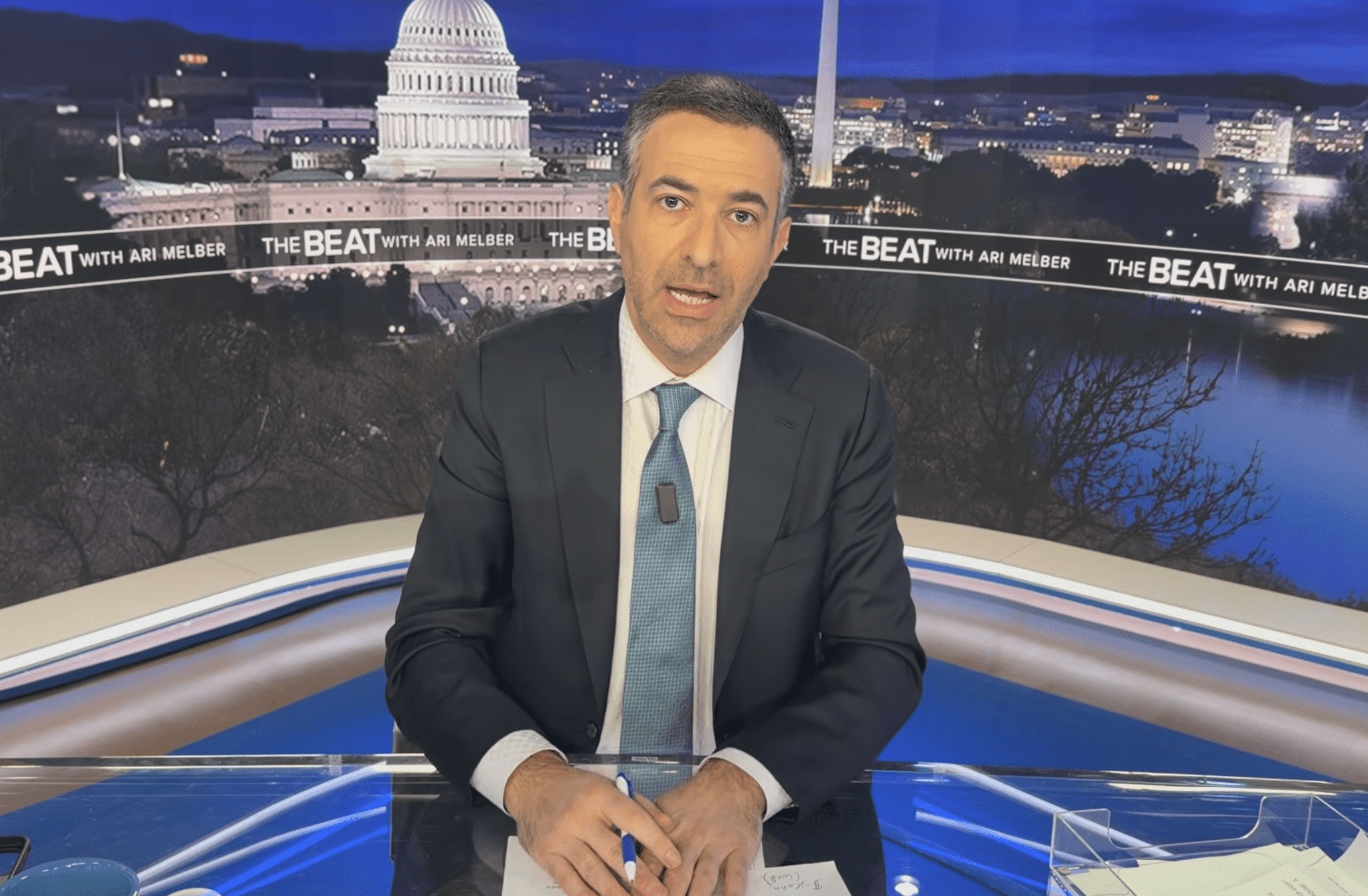
TKO chief executive Ari Emanuel addressed the situation in an October 23rd interview with Fox News. His comments offered the clearest public indication that WWE’s parent company is evaluating alternatives, even while it continues to advertise Crown Jewel in Riyadh. Emanuel said the event remained on schedule, explaining that a team was working on the question of whether the show might need to be moved. He described the process as daily monitoring.
That is an important admission. If the location were unquestionably settled, there would be little reason to discuss where the event could be moved. Emanuel’s remarks indicate that relocation is at least a contingency being considered. But daily monitoring is not the same thing as a publicly explained evacuation plan. It does not tell fans or employees what specific conditions would trigger a cancellation, how much advance notice workers would receive, or what arrangements would be made if commercial flights were disrupted.
Emanuel’s position is understandable from a corporate standpoint. Announcing a relocation prematurely could create contractual complications, disrupt ticketing and production, and damage relationships with Saudi partners. Yet continuing to promote the event without explaining the decision-making process leaves employees and the public with unanswered questions. The company does not necessarily need to disclose sensitive security information. It could, however, explain its general safety thresholds, identify who has authority to make the final call and clarify how it would protect staff if travel conditions deteriorate. That would be more reassuring than simply telling everyone that executives are watching the news every day.
The Crown Jewel Card: Four matches & Enormous Stakes
As of October 28th, WWE is advertising four matches for Saturday, November 7th, at Riyadh Season Stadium. The card combines championship matches with a major grudge style showdown, giving the company plenty of star power to promote.
Roman Reigns vs. Sami Zayn
WWE World Heavyweight Champion Roman Reigns faces WWE Champion Sami Zayn in a champion versus champion contest for the men’s Crown Jewel Championship.
Liv Morgan vs. Chelsea Green
Women’s World Champion Liv Morgan takes on WWE Women’s Champion Chelsea Green for the women’s Crown Jewel Championship.
Cody Rhodes vs. Randy Orton
Two of WWE’s biggest names are scheduled for a Last Man Standing match, a stipulation designed to deliver a particularly physical spectacle.
Bron Breakker and Austin Theory vs. Penta and Je’Von Evans
The Vision’s champions defend their tag team titles against Penta and Je’Von Evans. WWE added this match following the October 26th episode of Raw.
These are substantial matches with championship implications and major names. But a strong card can also become a liability when a company has committed to a specific location and is reluctant to change course. WWE has a vast production operation.
The show requires staging, lighting, sound, cameras, broadcast infrastructure, transport, rehearsals, security coordination and medical support. Relocating a production of this scale at short notice is expensive and difficult. That is precisely why the decision should be driven by a clearly defined safety assessment rather than by the hope that conditions remain stable. There is also a difference between the people who appear on the card and everyone who makes the event possible. A wrestler might be the public face of a show, but the people operating cameras, assembling the stage and coordinating the broadcast are equally important to getting the production on the air.
Does WWE Even Have a Backup Plan?
This is where the controversy gets especially interesting. Reports from wrestling journalist Bryan Alvarez and the Wrestling Observer have indicated that WWE has considered a backup venue in the United States. Dave Meltzer discussed why the company might avoid publicly acknowledging that option: doing so could be interpreted as wavering on its commitment to Saudi Arabia and could upset its business partners.
So the available reporting does not establish that WWE has no backup plan. It suggests the opposite. Contingency arrangements may exist, but the company has not publicly confirmed a replacement venue or disclosed the precise conditions under which it would use one. This is important because it changes the criticism. The problem may not be an absence of planning. It may be the absence of public clarity about how that planning will protect employees.
WWE has continued promoting Crown Jewel, and reports published October 27th indicated that construction and stage preparations were underway at the Riyadh venue. Once money has been spent on travel, production equipment, temporary infrastructure and local arrangements, management faces increasing pressure to continue. The closer the event gets, the more expensive a last-minute move can become.
But there is a trap here. The more a company spends preparing for an event, the more tempting it becomes to proceed even when the circumstances change. Economists call part of this the sunk-cost problem. Money already spent cannot be recovered simply by accepting additional risk. A contingency plan is only useful if management is prepared to activate it.
WWE should be able to answer several basic questions. Who makes the final decision to relocate the show? What security developments would trigger that decision? How will employees be informed? Are alternate flights and transportation arrangements available? What happens if the airport becomes temporarily inaccessible after the production arrives? The public does not need classified intelligence or a detailed security blueprint. It does deserve confidence that the plan is more substantial than hoping for the best.
Follow the Money: Why Saudi Arabia Matters so Much to WWE
The financial explanation is difficult to ignore. WWE’s Saudi partnership began in 2018 and has grown into a major component of its international business. The relationship has delivered large events, lucrative arrangements and a continuing presence in the Kingdom’s sports and entertainment expansion. WWE’s own corporate announcement confirmed the partnership and the November 7th Riyadh event.
A report published by Yahoo Sports on October 21st, citing the broader financial significance of the relationship, estimated that Crown Jewel could involve a payment of approximately $50 million. That figure should be treated as a reported estimate, not a publicly verified contractual amount. The same report discussed the much larger strategic stakes associated with WWE’s planned WrestleMania 43 in Riyadh in 2027.
That future event could make the present decision even more consequential. WWE is not merely protecting one night’s revenue. It is managing a long-term relationship with Saudi Arabia at a time when the Kingdom is investing heavily in international sports and entertainment. Canceling or relocating Crown Jewel could bring contractual disputes, lost revenue, production expenses and diplomatic friction. It could also raise questions about the future of WrestleMania 43.
Those are legitimate business considerations. But they are not safety guarantees. If WWE estimates that canceling would cost tens of millions of dollars, management has an obvious financial incentive to keep the show in Riyadh. That does not prove executives are deliberately disregarding the safety of their employees. It does mean there is a potential conflict between the financial incentive to proceed and the responsibility to reconsider travel when conditions deteriorate.
The public should not confuse a lucrative arrangement with a risk-free one. And there is a broader business lesson here. When a company becomes heavily dependent on one partner, especially one whose events and operations are vulnerable to regional instability, it can become harder to make decisions independently. Walking away from a single event may have consequences for a much larger relationship. That is the price of concentration risk. It applies to businesses just as it does to investments.
The Saudi Government is Continuing Other Events. Does This Make Crown Jewel Safe?
Not necessarily. Saudi Arabia has powerful incentives to demonstrate that its economy, tourism sector and entertainment calendar can continue despite regional hostilities. Major events bring international attention, visitors and investment. Canceling them can damage the image of stability that organizers want to project.
At the same time, the postponement of other events shows that organizers are not treating every commitment as untouchable. The Six Kings Slam tennis tournament, originally scheduled for October 21-24 in Riyadh, was postponed until December 27-30, according to reporting by the Wrestling Observer.
The fact that one event is postponed while another remains scheduled does not establish that one organizer is correct and the other is wrong. Each event has its own contracts, security arrangements, logistics and risk assessments. However, it does raise a fair question: if a major international event can be postponed when conditions warrant it, why should WWE’s commitment be viewed as irreversible? The answer may be financial, contractual or operational. Whatever the explanation, WWE should be able to justify its decision on the merits of the current security situation.
It is also worth distinguishing the Saudi population from the government’s event strategy. Ordinary people in Riyadh are not responsible for the decisions of every militant group operating in the region. Nor does concern about traveling to Saudi Arabia mean that the country is uniformly unsafe everywhere at all times. The concern is that the current threat environment has become serious enough for the U.S. government to issue explicit warnings and impose restrictions on its own personnel. That is a meaningful standard of evidence, not a political talking point.
What Happens if the Situation in The Middle East Gets Worse?
This is the question WWE needs to answer before the production team boards its flights, not after a crisis begins. A missile attack near an airport could disrupt commercial aviation. A temporary closure could leave workers stranded. An escalation in hostilities could force authorities to impose new movement restrictions or change security arrangements. Even without an attack directly targeting the event, transport and communication disruptions could complicate the operation.
The consequences would extend beyond the stadium. Employees could be spread across hotels, airports, rehearsal facilities and production locations. A large group traveling together may be harder to evacuate quickly than a single executive or athlete. And if the company has to relocate at the last minute, it would need a venue capable of accommodating the event, available staff, transport, equipment, broadcast facilities and a workable schedule. The existence of a possible backup location is reassuring, but only if that option can be activated in time.
WWE’s management also has to consider the people who do not have the same financial security or public profile as its top stars. A superstar may command a large salary and have considerable negotiating power. A production worker may have far less ability to challenge a travel decision. A responsible plan should account for all of them. There is no need to predict disaster to recognize that a preventable crisis would be devastating. The point of risk management is to make decisions before the worst-case scenario becomes reality.
The Bottom Line: Crown Jewel is a Business Decision with Real Human Consequences
WWE has built an extraordinary entertainment machine. It knows how to sell a spectacle, turn rivalries into global attractions and convince audiences that every major event is too important to miss. But the real world does not follow a wrestling script. There is no referee who can stop a missile, no backstage official who can call an audible after an airport closes, and no championship belt worth risking someone’s life to protect.
Ari Emanuel’s acknowledgment that the situation is being monitored daily is significant. Reports suggest WWE has considered alternatives and is maintaining contingency arrangements. That is better than having no plan at all. Still, the company has a responsibility to explain how its safety decisions are being made. If the threat becomes unacceptable, the right move may be to relocate the event, postpone it or cancel it, regardless of the financial consequences.
The November 7th card may be loaded with stars. Roman Reigns versus Sami Zayn, Liv Morgan versus Chelsea Green, Cody Rhodes versus Randy Orton, and the tag-team title match give WWE plenty to sell. But the most important question is not who wins the Crown Jewel Championship.
It is whether WWE’s leadership can demonstrate that its commitment to putting on a show does not outrank its responsibility to the people who make that show possible. The company may be able to absorb the financial cost of moving Crown Jewel. Its employees should not have to absorb an avoidable security risk simply because the business relationship is too valuable to disrupt.
Sources and Further Reading
U.S. State Department: Saudi Arabia Travel Advisory – Official travel guidance and security warnings.
Reuters: Saudi warning system stayed silent before deadly airport attacks – Reporting on airport attacks and public warning procedures.
Fightful: Ari Emanuel discusses Crown Jewel’s status – Emanuel’s comments about daily monitoring and potential relocation.
PWInsider: WWE Saudi Arabia update – Reporting on WWE’s current plans and contingency arrangements.
Wrestling Observer/F4W: WWE reportedly unhappy with employee concerns – Backstage concerns and the reported backup-location issue.
Pro Wrestling Dot Net: Updated Crown Jewel card – The advertised matches as of October 27.
- Yahoo Sports: Crown Jewel’s financial and security dilemma – Analysis of the financial stakes and the broader Saudi partnership.




















Want to join the conversation?
Create an account or sign in to share your thoughts, vote,
and reply to other readers.
Showing 0 of 0 comments
Don't have an account?
Already have an account?