
Swedish House Mafia Rock 90,000 Fans at Head Trip 2026 With Epic Festival Set of EDM Anthems and House Classics
Axwell, Steve Angello, and Sebastian Ingrosso close Goldenvoice’s massive California dance music festival with a spectacular performance featuring “Don’t You Worry Child,” “Leave the World Behind,” “Miami 2 Ibiza,” and a finale that pushed beyond the city’s midnight curfew.
INDIO, CALIFORNIA — Swedish House Mafia delivered one of the defining performances of Head Trip 2026, bringing their unmistakable combination of progressive house, explosive electronic production, emotional sing alongs, and genre bending mashups to an enormous crowd at the Empire Polo Club in Indio, California. The legendary Swedish trio, consisting of Axwell, Steve Angello, and Sebastian Ingrosso, closed the October 10–11 electronic music festival with a spectacular performance that celebrated nearly two decades of dance music history while demonstrating why they remain among the most influential acts in modern electronic music.
Performing before a festival audience estimated at approximately 90,000 people, Swedish House Mafia delivered a set that blended their biggest international hits with underground house influences, hip hop samples, classic rock vocals, and contemporary electronic productions. The performance featured landmark records including “Miami 2 Ibiza,” “Greyhound,” “Save the World,” “Leave the World Behind,” and “Don’t You Worry Child,” alongside unexpected musical crossovers involving The Killers, Whitney Houston, and other influential artists. The officially released performance recording runs approximately 71 minutes, capturing the trio’s high energy closing appearance and the remarkable atmosphere surrounding the festival’s final night.
The performance carried additional significance because Head Trip had experienced a dramatic disruption just 24 hours earlier, when severe weather forced organizers to evacuate the festival grounds and cancel the remainder of Saturday’s programming. Rather than allowing the interruption to define the event, Goldenvoice reorganized Sunday’s schedule, creating an extraordinary closing night sequence featuring Skrillex, Calvin Harris, and Swedish House Mafia. The resulting celebration brought together three of the most recognizable names from electronic dance music’s international explosion during the early 2010s, giving longtime fans an opportunity to experience a generation of festival anthems in a single evening.
Head Trip 2026 Brings Electronic Dance Music’s Biggest Names to the California Desert
Head Trip was conceived as a one time electronic music event from Goldenvoice, the influential concert promoter behind Coachella and several other major music festivals. Held at the Empire Polo Club, the sprawling Indio venue synonymous with some of the world’s largest music events, the festival assembled an ambitious lineup that included Swedish House Mafia, Calvin Harris, Skrillex, Peggy Gou, Four Tet, Chris Lake, FISHER, Dom Dolla, and KETTAMA. The programming combined internationally recognized festival headliners with respected underground DJs, offering a broad representation of contemporary electronic music and the artists who helped popularize it.
The festival’s first night took an unexpected turn when lightning associated with a storm system forced organizers to stop the music during the Under Construction performance by Chris Lake and FISHER. The interruption occurred before Calvin Harris could take the stage for his scheduled Saturday headline appearance, leaving thousands of attendees facing an early departure and considerable uncertainty about the remainder of the weekend. Organizers subsequently confirmed that Harris would perform Sunday, requiring adjustments to an already packed lineup and creating an unusually concentrated sequence of major performances.
Sunday’s revised schedule placed Skrillex, Calvin Harris, and Swedish House Mafia together during the festival’s final stretch. For audiences who experienced the first major American EDM boom, the combination carried considerable nostalgic weight. All three acts helped introduce electronic music to mainstream audiences through festival appearances, radio hits, and productions that transformed dance music from a predominantly club-centered culture into a global live entertainment industry.
By the time Swedish House Mafia took the stage, the atmosphere had shifted from the uncertainty of Saturday’s evacuation to the excitement of a festival determined to finish on a high note. The trio ultimately performed beyond Indio’s midnight sound curfew, exceeding the deadline by approximately 33 minutes. City officials subsequently declined to impose the potential noise-related penalty, taking the previous evening’s weather disruption into account. The decision allowed the festival’s unusual conclusion to become part of the event’s story rather than ending in a dispute over its extended running time.
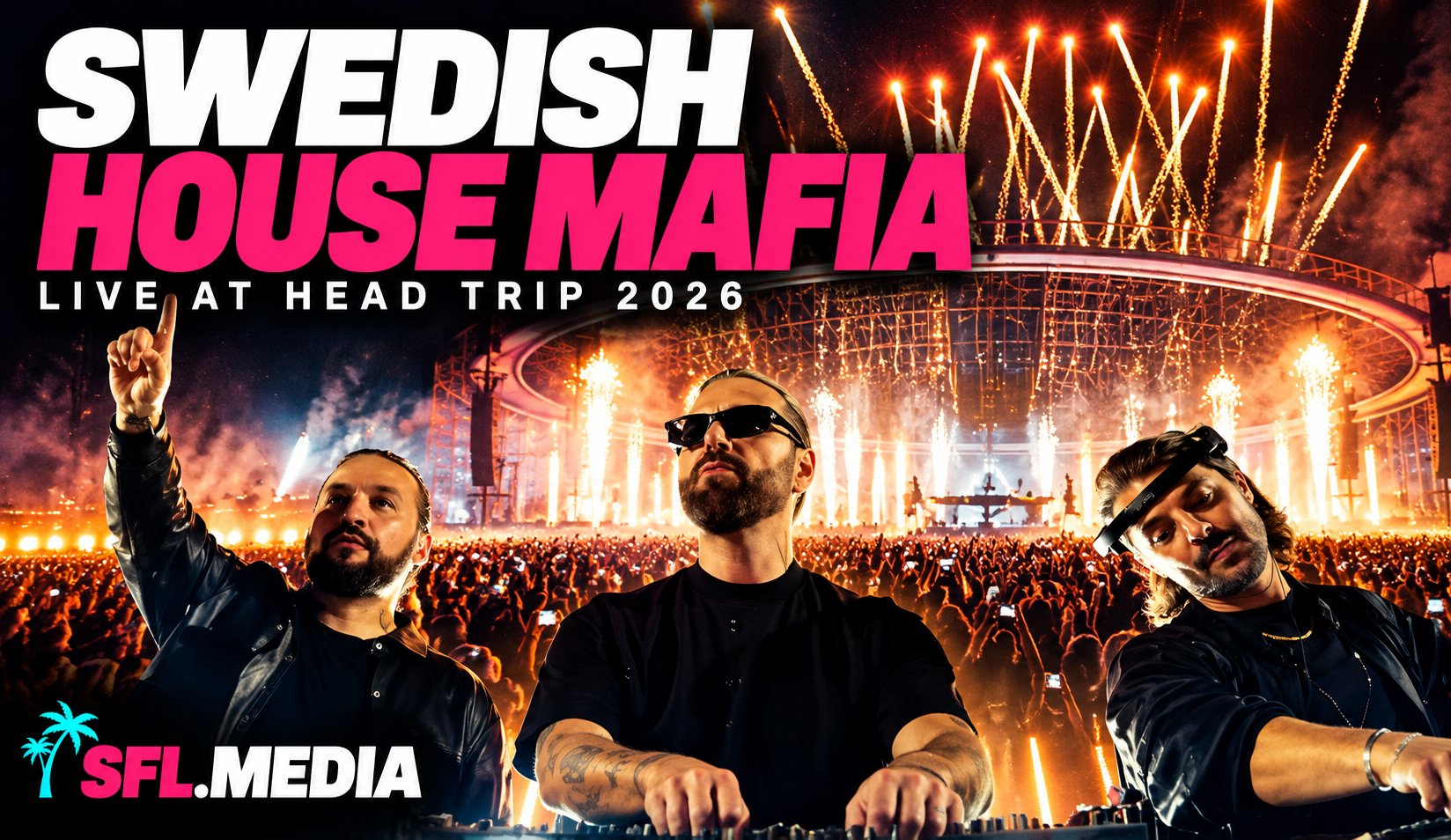
Swedish House Mafia Open With a Message of Musical Unity Before Unleashing “Miami 2 Ibiza”
The performance began with a spoken word introduction emphasizing music’s ability to bring people together across genres, cultures, and backgrounds. The message established a theme that would run throughout the set, as the trio repeatedly moved between musical styles that are often treated as separate categories. Rather than immediately opening with one of their most emotional progressive house anthems, Swedish House Mafia launched into the hip hop infused energy of “Miami 2 Ibiza,” their collaboration with British rapper Tinie Tempah, setting an aggressive tone for the opening portion of the performance.
Originally released in 2010, “Miami 2 Ibiza” helped establish Swedish House Mafia’s reputation for combining the rhythmic intensity of house music with the swagger and vocal delivery of hip hop. Its inclusion as the opening selection provided a direct connection to the group’s early commercial breakthrough while creating immediate momentum through driving percussion, rap vocals, and powerful electronic drops. The track also carries a geographic connection to Miami, a city that played an important role in the trio’s international rise and remains one of the world’s most influential destinations for electronic dance music.
The opening sequence continued with tracks including “Hooligans,” “Greyhound,” “Where’s Your Head At,” and “Antidote,” maintaining a relentless pace through distorted synthesizers, aggressive basslines, and recognizable vocal samples. “Greyhound,” one of Swedish House Mafia’s most celebrated instrumental productions, remains particularly effective in large-scale performances because of its dramatic progression and instantly recognizable electronic melody. The incorporation of Basement Jaxx’s “Where’s Your Head At” added another layer of dance music history, connecting the trio’s modern festival sound to the British electronic scene that helped shape the genre during the late 1990s and early 2000s.
The early portion of the set also featured “Wait So Long,” “Turn On the Lights again..,” and “Can U Feel It,” illustrating the group’s willingness to move between different generations of electronic production. Rather than presenting a conventional concert built around isolated songs, Swedish House Mafia approached the performance as a continuous DJ mix, using familiar melodies and vocals as building blocks for extended transitions and high impact musical sequences.
Axwell, Steve Angello, and Sebastian Ingrosso Remind Fans Why Their Chemistry Changed Dance Music
Approximately 21 minutes into the recording, Axwell addressed the crowd and introduced the three members of Swedish House Mafia, acknowledging Sebastian Ingrosso, Steve Angello, and himself. The moment reinforced the collective identity that has distinguished the group from the many solo DJs who dominate electronic music’s international festival circuit. Although each member maintains an independent career, Swedish House Mafia’s reputation has always depended on the combination of their individual production styles, shared musical history, and ability to create an experience larger than any one performer.
Axwell built his reputation through melodic house music and his Axtone label, becoming known for emotionally driven productions and polished electronic arrangements. Steve Angello developed his own distinctive sound through Size Records, combining progressive house with harder edged club influences, while Sebastian Ingrosso established himself through energetic festival productions and collaborations with other leading electronic artists. Together, their work helped define the musical formula that dominated major dance festivals during the early 2010s, combining powerful kick drums, enormous synthesizer melodies, emotional vocal performances, and carefully timed drops designed to create collective moments of release.
Their Head Trip performance demonstrated how that formula has evolved. The trio moved through contemporary electronic textures, darker club arrangements, and recognizable pop influences without abandoning the euphoric melodies that originally made them international stars. The result was a performance that acknowledged their commercial legacy while maintaining the unpredictability of a DJ set, with unexpected transitions and musical contrasts preventing the show from becoming a straightforward retrospective.
“Save the World” and “Leave the World Behind” Bring the Festival Back to Swedish House Mafia’s Golden Era
As the performance progressed into its middle section, Swedish House Mafia began revisiting the records that helped establish their place in electronic music history. “Save the World,” their 2011 single featuring John Martin, provided one of the set’s major melodic moments, combining the emotional appeal of its vocals with the uplifting production that became synonymous with the group’s early festival performances. The track helped expand Swedish House Mafia’s audience beyond traditional house music fans and remains one of the defining records of the progressive house era.
The trio followed with “Leave the World Behind,” the influential 2009 collaboration involving Axwell, Ingrosso, Angello, and Laidback Luke, featuring Deborah Cox. The record occupies a particularly important place in the group’s history because it emerged during the period when the three Swedish producers were developing the collective identity that would eventually become Swedish House Mafia. Its combination of soulful vocals, driving house percussion, and uplifting melodic production established a musical foundation that would influence countless electronic dance records over the following decade.
The surrounding sequence incorporated “Reload,” the Sebastian Ingrosso and Tommy Trash collaboration featuring John Martin, along with “Show Me Love,” the classic house anthem associated with Robin S. and later reworked by Steve Angello and Laidback Luke. These selections connected the group’s stadium-sized progressive house productions to the broader traditions of vocal house music, demonstrating how their commercial success grew from sounds that had been developing in clubs long before electronic dance music became a mainstream festival phenomenon.
For longtime fans, this section of the performance represented a return to the music that defined an entire era of international dance culture. For newer listeners, it offered a condensed introduction to the records and production techniques that helped transform progressive house into one of the dominant sounds of the early 2010s.
“Don’t You Worry Child” and The Killers’ “Mr. Brightside” Create a Massive Sing-Along
One of the performance’s most memorable moments arrived during the final third of the set, when Swedish House Mafia brought back “Don’t You Worry Child,” their 2012 global hit featuring John Martin. The record remains one of the most recognizable electronic dance songs of its generation, combining emotionally charged lyrics with soaring progressive house melodies and the kind of explosive drop that became a defining feature of the group’s original live performances.
Released during the period surrounding Swedish House Mafia’s first major farewell, “Don’t You Worry Child” developed an emotional significance that extended beyond its commercial success. The song became closely associated with the group’s initial departure from touring together, and its continued presence in their performances provides a direct connection between their original rise, eventual reunion, and current creative direction. At Head Trip, the audience’s participation transformed the track into a communal sing-along, with thousands of voices accompanying the familiar melody.
The trio added an unexpected twist by incorporating vocals from “Mr. Brightside,” the 2003 breakout hit by American rock band The Killers. The mashup brought together two songs from different musical traditions that share an extraordinary ability to generate audience participation. Although “Mr. Brightside” originated in alternative rock, its recognizable chorus and emotional intensity have made it a popular selection for DJs looking to connect with audiences beyond the boundaries of electronic music.
The transition reflected a broader trend in modern festival performances, where DJs increasingly use recognizable material from rock, hip-hop, pop, and older dance records to create moments that connect different generations of listeners. For Swedish House Mafia, the combination worked particularly well because both songs rely on dramatic melodic development and powerful emotional release, allowing the group to move between styles without sacrificing the momentum of the performance.
Whitney Houston, “Calling,” and “One” Bring the Performance Toward an Explosive Finale
The final stretch of the set shifted toward a combination of classic vocals and landmark electronic productions, giving the performance a celebratory atmosphere as the festival approached its conclusion. Whitney Houston’s “I Wanna Dance with Somebody (Who Loves Me)” provided a recognizable pop moment, connecting the energy of contemporary festival music to a record that has remained a dance-floor favorite since its original release in 1987. The selection reinforced the performance’s opening message about musical unity, demonstrating how songs from different decades and genres can find new life through electronic music.
The closing sequence also featured “Calling,” the celebrated collaboration between Sebastian Ingrosso and Alesso, a record closely associated with the progressive house explosion of the early 2010s. Its uplifting melody and emotional structure made it a natural fit for the performance’s final moments, particularly as the trio moved away from the aggressive club oriented sound of the opening and toward the euphoric atmosphere that helped define their international reputation.
Swedish House Mafia also revisited “One,” one of their most influential early singles. Released in 2010, the record became a landmark production because of its distinctive synthesizer hook, minimalist arrangement, and enormous impact on the emerging festival house sound. Its success helped establish the trio as a global force and demonstrated that electronic music could command massive audiences even without relying entirely on conventional pop songwriting.
The performance ultimately concluded with “Happiness Is So Sad,” the group’s collaboration with Swedish singer Lykke Li, bringing a more contemporary emotional dimension to the finale. The closing selection provided a contrast to the older anthems that had dominated portions of the performance, illustrating the group’s continued interest in combining atmospheric electronic production with distinctive vocal collaborations. As the set approached its conclusion, Axwell encouraged the crowd to activate their phone flashlights, creating a sea of illuminated screens across the enormous festival grounds. Combined with the production’s lighting, drones, and other visual effects, the moment transformed the closing performance into a large-scale spectacle before the trio acknowledged the audience and brought Head Trip 2026 to an end.
From Miami’s Ultra Music Festival to Head Trip: The Rise, Breakup, and Reunion of Swedish House Mafia
Swedish House Mafia’s appearance at Head Trip carried historical significance because the trio played a central role in transforming electronic dance music from a club centered movement into a major international concert industry. Their emergence coincided with the rapid expansion of dance festivals, the growing commercial influence of DJs, and the increasing popularity of electronic music among mainstream audiences in the United States and Europe.
Miami played an especially important role in that transformation. Ultra Music Festival became one of the central stages for the EDM explosion, helping introduce American audiences to European electronic artists whose music had already achieved substantial popularity overseas. Swedish House Mafia’s appearances in Miami became closely associated with the group’s international success, and their relationship with the city would eventually produce one of the most memorable reunions in modern dance music history.
Following a string of successful singles and increasingly ambitious live performances, the trio announced their separation in 2012 and embarked on their One Last Tour, which concluded at Ultra Music Festival in Miami in March 2013. Their departure came at a time when electronic dance music was experiencing extraordinary commercial growth, leaving fans wondering whether the three artists would ever perform together again.
Five years later, Swedish House Mafia reunited during a surprise closing performance at Ultra Music Festival 2018 in Miami, generating enormous attention across the electronic music industry. The reunion helped launch a new chapter for the group, eventually leading to additional performances, new recordings, and the release of their debut studio album, Paradise Again, in 2022.
The album marked an evolution in the group’s creative direction, incorporating darker electronic textures, more experimental arrangements, and collaborations with artists outside the traditional progressive house scene. Songs including “Moth to a Flame,” featuring The Weeknd, demonstrated their interest in expanding beyond the formula that had originally made them international stars, while later releases such as “Ray of Solar” continued exploring contemporary club sounds.
Their Head Trip performance brought these different eras together, combining the aggressive energy of their early productions, the emotional impact of their biggest commercial hits, and the more experimental approach that has characterized their work since reuniting. The result was a performance that celebrated their legacy without treating it as a limitation.
Swedish House Mafia’s Influence Continues Across a Changing Electronic Music Industry
The importance of Swedish House Mafia extends beyond the success of their individual records. The trio helped establish a model for modern electronic music performances that combined sophisticated production, dramatic musical arrangements, and the scale of traditional rock concerts. Their influence can be heard across progressive house, melodic electronic music, and the festival-oriented productions that continue to dominate major international events.
At the same time, the electronic music industry has evolved considerably since the group’s original commercial breakthrough. House and techno have experienced renewed mainstream attention, while artists increasingly blend underground club influences with pop, hip hop, and experimental electronic sounds. Major festivals now feature a wider variety of musical styles, reflecting an audience that is less interested in strict genre classifications and more interested in distinctive live experiences.
That evolution is evident in the broader range of performances receiving attention across the international electronic music scene. Recent SFL Media coverage has examined Maceo Plex’s genre-spanning performance at Kappa FuturFestival in Italy, Alesso’s rooftop set above New York City’s Empire State Building, and Mau P’s nearly seven hour Baddest Behaviour performance in Brooklyn. Each represents a different approach to contemporary electronic music, from underground-oriented selections and melodic festival production to extended club performances built around long-form musical progression.
Swedish House Mafia occupies a distinctive position within that landscape because the group helped establish the commercial foundation upon which much of today’s festival industry was built. Their Head Trip performance demonstrated that the same artists who helped popularize enormous progressive house anthems can still adapt to changing musical tastes, incorporate contemporary sounds, and maintain a powerful connection with audiences who have followed their careers for more than a decade.
Head Trip 2026 Ends With a Celebration of Electronic Music’s Past, Present, and Future
Swedish House Mafia’s closing performance ultimately provided a fitting conclusion to a festival that had faced significant challenges before delivering an extraordinary final night. What began with a weather-related evacuation and the cancellation of a major headline performance ended with Skrillex, Calvin Harris, and Swedish House Mafia sharing the same stage across a remarkable sequence of performances.
For longtime electronic music fans, the evening offered a rare opportunity to revisit the artists and records that helped define the genre’s international breakthrough. For newer audiences, it demonstrated how the music of that era continues to influence contemporary productions and major festival performances. The combination of classic progressive house, modern electronic arrangements, recognizable pop vocals, and spectacular stage production created an experience that connected multiple generations of dance music culture.
Swedish House Mafia’s contribution was particularly significant because their performance did more than revisit familiar hits. Through unexpected mashups, aggressive club transitions, emotional vocal moments, and a carefully constructed finale, Axwell, Steve Angello, and Sebastian Ingrosso demonstrated the versatility that has allowed them to remain relevant through substantial changes in the electronic music industry. More than a decade after their original farewell in Miami, Swedish House Mafia continues to command some of the world’s largest dance music audiences. Their Head Trip 2026 performance served as both a celebration of the group’s extraordinary history and evidence that their musical identity remains capable of evolving.
For a festival built around the enduring appeal of electronic music’s most influential performers, there could hardly have been a more appropriate conclusion.

Sources & Further Reading
Official Performance, Setlist & Festival Information:
Independent Festival Reporting
SFL Media Related Music Coverage





































Want to join the conversation?
Create an account or sign in to share your thoughts, vote,
and reply to other readers.
Showing 0 of 0 comments
Don't have an account?
Already have an account?