

Claptone Delivers Epic 90 Minute House Set at elrow XXL Lima as Latin America Hosts Its First Massive XXL Festival
The mysterious golden masked DJ brings his signature blend of house, tech house, disco, and soulful club anthems to Peru for a spectacular edition of elrow XXL, transforming Lima into a destination for electronic dance music fans.
Electronic dance music has always been about more than the music. At its best, it creates an immersive world where thousands of strangers become part of the same experience, connected by hypnotic basslines, infectious rhythms, and the collective energy of a dance floor. Few festival brands have embraced that philosophy more enthusiastically than elrow, the internationally recognized party phenomenon known for combining world-class DJs with elaborate stage productions, theatrical characters, extravagant decorations, and overwhelming bursts of confetti.
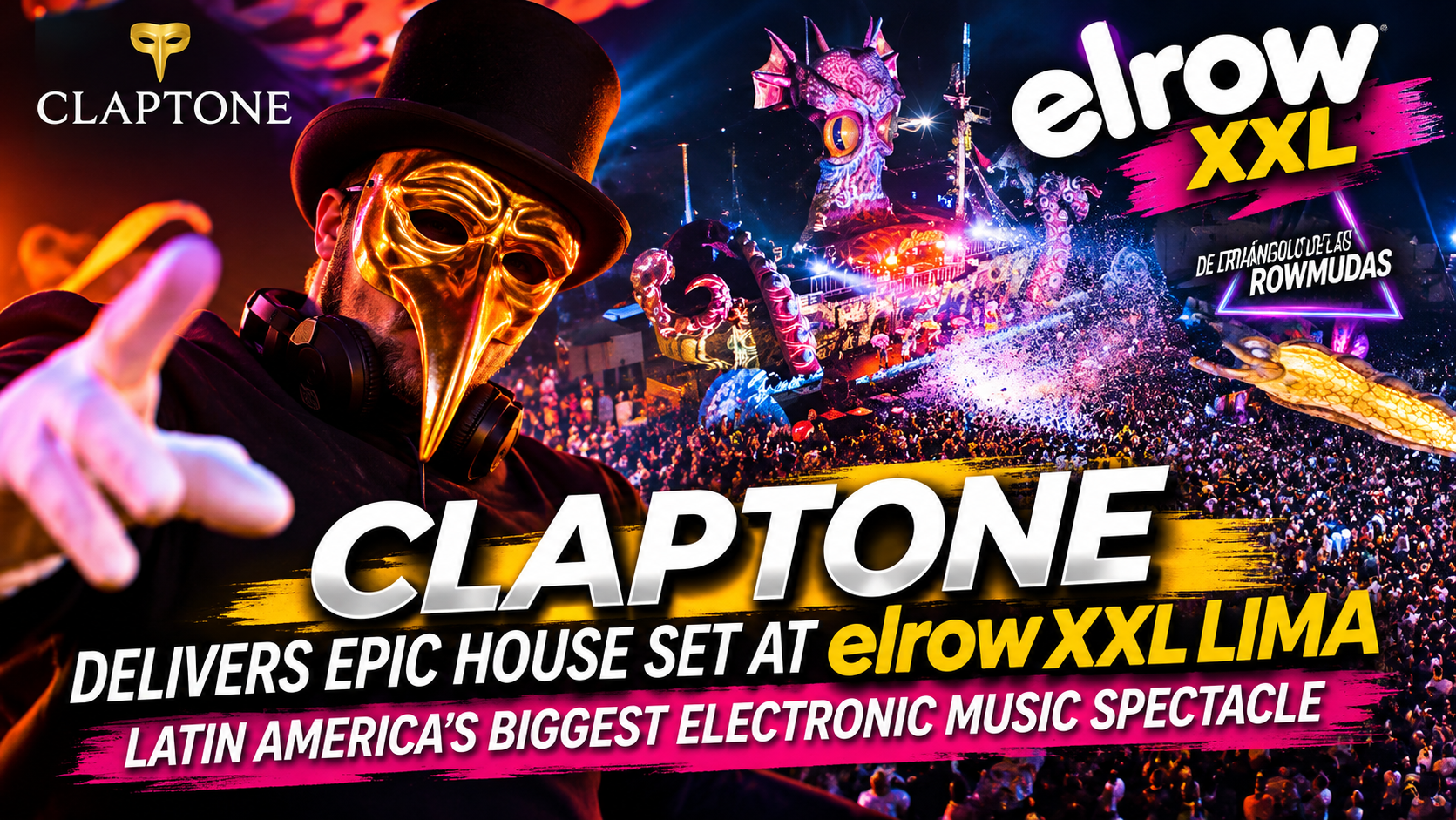
On October 10, 2026, that spectacle arrived in Lima, Peru, for what organizers billed as Latin America’s first elrow XXL edition, bringing the brand’s larger-than-life production to Lurín Live. Presented by Superclub Peru, the event featured an impressive international lineup led by the mysterious golden-masked house music superstar Claptone, alongside Armand Van Helden, Chelina Manuhutu, Lee Foss, Anabel Englund, Tini Gessler, Easttown, and Chinonegro.
The festival embraced elrow’s imaginative El Triángulo de las Rowmudas theme, a surreal interpretation of the Bermuda Triangle designed to transport attendees into a fantastical world of theatrical spectacle and electronic music. At the center of the celebration was Claptone, whose approximately 90-minute performance delivered a carefully evolving journey through soulful house, funky disco rhythms, Latin-influenced percussion, driving tech-house, and euphoric vocal anthems.
The full performance, released on YouTube by Superclub on November 12, captures a DJ whose appeal lies not simply in playing recognizable dance records, but in building a musical atmosphere that constantly shifts between emotional melodies, hypnotic grooves, and explosive dance-floor moments. For fans of sophisticated house music, the Lima appearance offered another example of why Claptone has become one of the genre’s most recognizable international performers.
elrow XXL Makes Its Latin American Debut in Lima, Peru
The arrival of elrow XXL in Lima represented an ambitious expansion of the festival’s large-scale entertainment concept into Latin America. Originally rooted in Spain’s electronic music culture, elrow has developed an international reputation for turning ordinary dance events into elaborate theatrical experiences, incorporating immersive stage designs, costumed performers, surreal visual environments, and an almost relentless celebration of dance-floor excess.
Unlike conventional electronic music festivals, where production often centers primarily on lighting, video screens, and pyrotechnics, elrow builds entire imaginary worlds around its events. The El Triángulo de las Rowmudas concept draws inspiration from the mystery and mythology of the Bermuda Triangle, using the theme as a creative foundation for a colorful, unpredictable environment where music and visual storytelling become part of the same experience.
For the Lima edition, organizers assembled a lineup spanning several generations and styles of house music. Legendary American producer Armand Van Helden brought decades of influence in house and dance music, while Lee Foss represented the modern intersection of house, tech-house, and underground club culture. Chelina Manuhutu, Tini Gessler, Easttown, and Chinonegro contributed additional contemporary club sounds, while vocalist and electronic artist Anabel Englund added another dimension to the festival’s musical identity.
The combination reflected elrow’s broader programming philosophy: Rather than limiting the experience to one narrow interpretation of electronic music, the brand brings together artists capable of delivering different variations of the same essential dance-floor energy. Claptone’s melodic instincts, recognizable visual identity, and ability to move between underground grooves and accessible vocal records made him a natural fit for the event.
Claptone Opens With Soulful House Before Building Into Heavy Club Grooves
Claptone’s performance began with a soulful, percussion-driven introduction that established the musical direction of the evening without immediately relying on an explosive opening drop. The first minutes featured warm vocal loops, steady house rhythms, and a gradually developing low-end groove, allowing the music to establish its momentum before moving into more aggressive territory.
By approximately the four-minute mark, the set had developed into a heavier bass-driven sound, incorporating rhythmic vocal samples and a more pronounced club atmosphere. The transition demonstrated one of Claptone’s defining strengths as a DJ: his ability to maintain a consistent house music foundation while introducing new textures, emotional tones, and rhythmic ideas.
Rather than treating every track as an isolated moment, Claptone approached the performance as a continuous musical progression. The opening section established a steady pulse that could accommodate everything from classic house vocals to modern tech-house percussion, creating a foundation for the stylistic changes that followed.
Around the 12-minute mark, the set moved into a more uplifting and melodic passage, using soaring vocal elements and an increasingly euphoric arrangement to create one of the performance’s early emotional peaks. The contrast between the opening grooves and the brighter musical atmosphere illustrated how Claptone uses vocal house music to give his sets a sense of personality beyond the repetitive mechanics of conventional club tracks.
Caribbean Rhythms and Classic House Samples Bring a Playful Energy
One of the most distinctive sections arrived approximately 19 minutes into the performance, when Claptone introduced a Caribbean-influenced house edit built around a familiar dancehall vocal associated with the classic track Who Let the Dogs Out? era of Caribbean crossover club music, specifically the recognizable Work vocal popularized by artists such as Masters at Work and related dancehall house interpretations.
The moment highlighted the musical connections between Caribbean dance music, Latin rhythms, and contemporary house production. While the underlying beat maintained the structure of a modern club record, the vocal sample introduced a playful rhythmic character that contrasted with the more conventional European house grooves heard earlier in the set.
Claptone continued building on that energy with a driving tech house section around the 23 minute mark, emphasizing repetitive vocal commands, rolling percussion, and bass-heavy arrangements designed to maintain the dance floor’s momentum. The combination of recognizable vocal material and contemporary production techniques gave the performance a sense of familiarity without allowing it to become predictable.
By approximately 31 minutes, the musical direction shifted again, this time toward funky disco-house. The section featured brighter rhythmic patterns, upbeat vocal phrases, and a more playful groove reminiscent of classic disco’s influence on modern electronic dance music. These transitions demonstrated how Claptone can move between different generations of club culture while maintaining a consistent musical identity.
A Soulful Mid Set Reset Shows Claptone’s Musical Range
At approximately 43 minutes, the performance entered a more emotional phase, with Claptone introducing lush vocal house arrangements and a deeper, more atmospheric sound. The shift provided a contrast to the harder club grooves that dominated much of the preceding section, allowing melodic elements and romantic vocal themes to take a more prominent role.
This type of musical reset is an important component of long-form DJ programming. Maintaining maximum intensity throughout an entire performance can diminish the impact of individual peaks, while carefully introducing moments of restraint allows the music to rebuild tension and anticipation. Claptone’s transition into a more soulful sound demonstrated an understanding of that dynamic, creating space for the performance to develop rather than relying entirely on constant escalation.
The section also reflected the longstanding relationship between house music and emotionally expressive vocals. From the genre’s origins in Chicago and New York to its contemporary international variations, soulful singing has remained a defining element of house music’s identity. Claptone’s willingness to incorporate those traditions alongside modern tech-house production gives his sets a musical character that appeals to listeners beyond the most narrowly defined club audiences.
By the time the performance approached the one hour mark, the sound had gradually returned to a more hypnotic, driving rhythm, using repetitive vocal fragments and increasingly insistent percussion to prepare for another major change in energy.
Gospel Inspired House and Explosive Tech House Deliver the Set’s Biggest Moments
Around the 60-minute mark, Claptone moved into one of the performance’s most uplifting passages, introducing gospel-influenced house vocals built around themes of unity, love, and togetherness. The arrangement brought a distinctly emotional dimension to the set, combining soulful melodies with the driving percussion that had defined much of the performance. It was a reminder of house music’s roots in communities where the dance floor represented freedom, inclusion, and collective celebration.
The emotional atmosphere soon gave way to a more aggressive club sound. Approximately 64 minutes into the performance, Claptone introduced a high energy tech house section featuring rhythmic countdown vocals, forceful basslines, and an aerobic style chant encouraging the audience to jump. The arrangement was particularly well suited to elrow’s theatrical environment, where dramatic musical peaks provide opportunities for visual effects, confetti explosions, and coordinated crowd interaction.
The contrast between these sections illustrated the balance that makes Claptone’s performances effective. He can move from emotionally expressive house music into driving, almost mechanical club rhythms without abandoning the musical continuity of the set. Instead of simply increasing the tempo or volume, he creates changes in mood and texture that make each new passage feel like a distinct chapter in the performance.
Indie Dance, Hip-House, and Nostalgic Vocals Keep the Final Stretch Unpredictable
As the performance entered its final 15 minutes, Claptone continued experimenting with musical styles, introducing an indie-dance and synth-pop-influenced passage around the 75 minute mark. The section featured nostalgic vocal melodies and a more reflective atmosphere, offering another contrast to the percussion-heavy arrangements that had dominated the previous portion of the set.
By approximately 80 minutes, the music had shifted toward a hip house inspired groove, combining rhythmic rap style vocal loops with rolling tech house basslines. The transition demonstrated Claptone’s ability to incorporate elements of hip hop, disco, and contemporary electronic production into a cohesive house music performance. Rather than remaining confined to one musical formula, he repeatedly introduced recognizable influences from different eras of dance music.
The closing minutes took a more atmospheric direction, with Claptone moving into a moody vocal house arrangement around the 85 minute mark. Instead of ending exclusively with maximum-intensity club music, the final passage introduced a more reflective emotional tone, providing a sense of resolution after nearly 90 minutes of constantly evolving rhythms.
The performance’s structure demonstrated the importance of musical storytelling in extended DJ sets. From its soulful opening to its high-energy middle sections and atmospheric conclusion, Claptone’s Lima appearance presented house music as a genre capable of delivering far more than repetitive beats and predictable drops.
The Golden Mask That Made Claptone a Global House Music Star
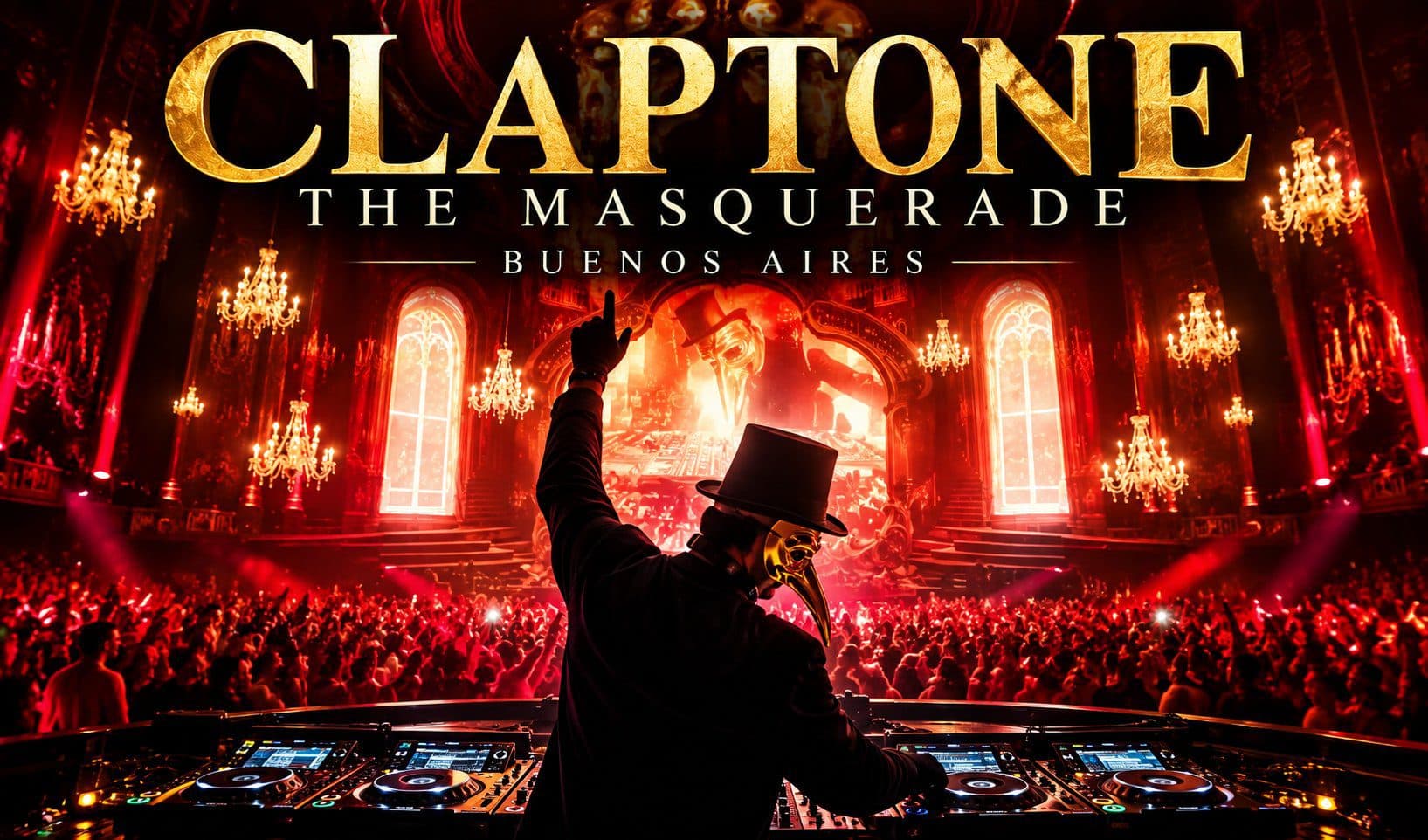
Claptone has become one of electronic music’s most recognizable figures through a combination of musical consistency, visual mystery, and an instantly identifiable stage persona. His signature golden bird like mask, often paired with dark clothing and white gloves, has become a defining symbol of his artistic identity, allowing the music and the character to occupy center stage rather than the personal life of the performer behind it.
That anonymity has played an important role in Claptone’s international appeal. In an industry where social media personalities and celebrity culture frequently compete with the music itself, the masked DJ has maintained a distinctive brand built around mystery, theatricality, and an unmistakable house music sound.
His productions and performances frequently combine deep house grooves, disco influences, soulful vocals, and contemporary club arrangements, creating a style that can work equally well in intimate nightclubs and enormous festival environments. The approach has helped establish Claptone as a fixture on the international electronic music circuit, where his performances attract audiences interested in both accessible vocal house and more underground dance floor sounds.
The elrow XXL appearance demonstrated why that combination works so effectively. The festival’s extravagant production complemented Claptone’s theatrical image, while his musical versatility allowed him to adapt to the energy of a large-scale event without abandoning the distinctive sound that made him successful.
Latin America’s Electronic Music Scene Continues Its International Expansion
The Lima event also reflected the growing importance of Latin America within the global electronic music industry. Cities across the region, including Buenos Aires, Bogotá, Medellín, São Paulo, Mexico City, and Lima, have developed increasingly prominent club cultures and festival communities, attracting international DJs while supporting expanding networks of local producers, promoters, and venues.
House and tech-house music have found particularly enthusiastic audiences throughout Latin America, where the genres’ rhythmic foundations connect naturally with regional musical traditions. Latin percussion, Afro Caribbean influences, and vocal-driven dance records frequently appear in contemporary electronic sets, helping create a musical environment that bridges international club culture and local identity.
For elrow, bringing its XXL production concept to Peru represented an opportunity to expand its presence in a market with an established appetite for large scale electronic entertainment. The involvement of Superclub Peru and an international lineup underscored the ambitions behind the event, positioning Lima as a destination capable of hosting major productions associated with the global festival circuit.
For Claptone, the performance offered an opportunity to showcase his music within that expanding scene, bringing his signature combination of European house influences, disco-inspired rhythms, and globally recognizable club sounds to a Latin American audience.
Claptone’s elrow XXL Performance Captures the Spirit of Modern House Music
The most compelling aspect of Claptone’s Lima performance was its refusal to remain confined to a single interpretation of house music. Across approximately 90 minutes, the set moved through soulful vocal arrangements, Caribbean influenced rhythms, disco-house grooves, hypnotic tech-house, gospel-inspired anthems, and atmospheric electronic passages without losing its underlying musical direction.
That versatility is especially important at a festival such as elrow, where audiences arrive expecting both exceptional music and an immersive entertainment experience. The most effective performances must complement the production while maintaining enough musical substance to stand independently of the elaborate visuals surrounding them.
Claptone delivered a set designed around those demands, balancing recognizable vocal hooks with driving club rhythms and carefully placed changes in intensity. The result was a performance that reflected both the enduring appeal of traditional house music and the increasingly diverse influences shaping contemporary electronic dance culture.
For fans who were unable to attend the October 10 event, the full recording offers an opportunity to experience the musical journey from beginning to end. More importantly, it captures a moment in the continuing international expansion of electronic music, with Lima hosting a major festival production and one of house music’s most recognizable performers providing the soundtrack.
Nearly four decades after house music emerged from the underground clubs of Chicago, its ability to unite audiences across cultures, countries, and generations remains one of the genre’s greatest strengths. Claptone’s elrow XXL performance in Peru is another example of that enduring appeal, proving that a great house set still depends on the same essential ingredients: rhythm, emotion, creativity, and the irresistible desire to dance.


Loading comments…