
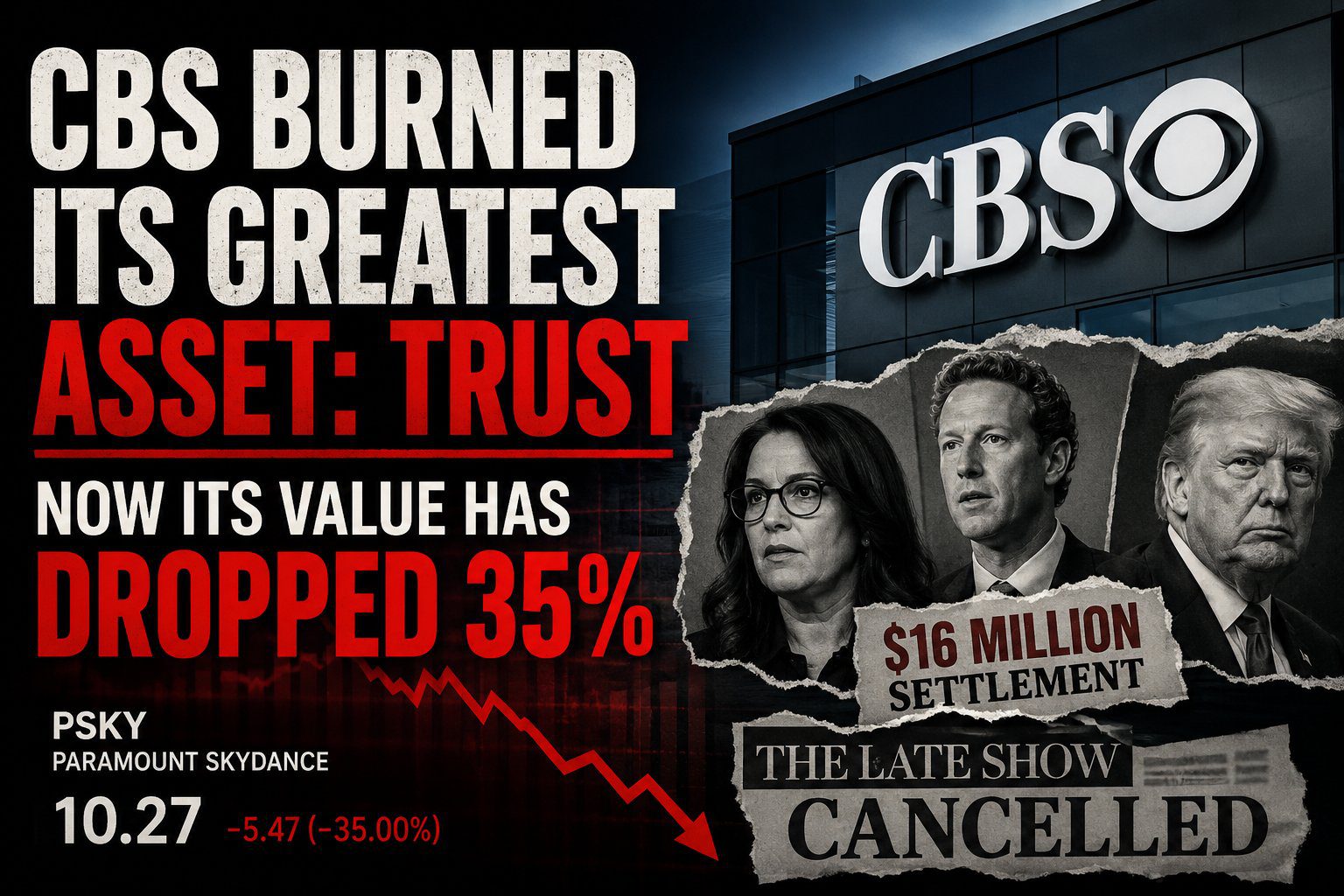
CBS Burned Its Greatest Asset: Trust, And Now Wall Street Is Pricing In the Damage…
For more than half a century, CBS News sold something far more valuable than television programming. It sold credibility. That credibility helped build one of the most powerful media brands in American history. It helped justify premium advertising rates, affiliate relationships, investor confidence, and the perception that CBS News existed independently from the political forces it covered.
Today, much of that value appears to be evaporating.
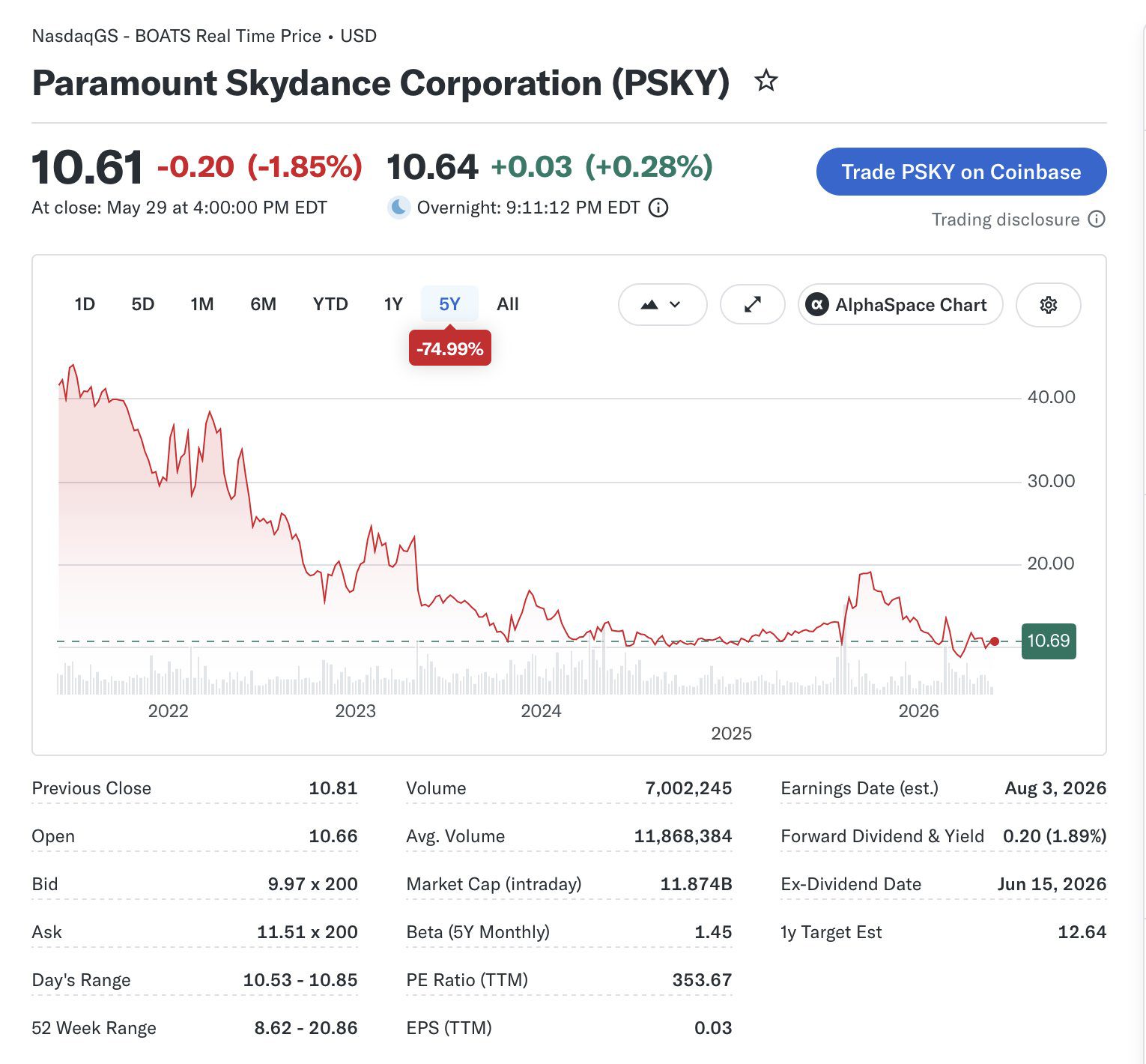
Since David Ellison’s Skydance takeover of Paramount Global in August 2025, the company now known as Paramount Skydance has become a case study in what happens when Wall Street, politics, and journalism collide in public view. The stock tells the story.
Paramount Skydance (NASDAQ: PSKY) now trades near $10 per share, a fraction of the levels investors once associated with the old Paramount empire. The company currently sits near the lower end of its 52 week range after a prolonged collapse in market confidence. Analysts have largely shifted toward “Hold” ratings as investors question whether the company can successfully integrate its sprawling media assets while carrying enormous debt obligations.
The problem goes deeper than earnings.
Wall Street is increasingly questioning whether CBS News still represents an independent journalistic institution or whether it has become another political and corporate bargaining chip.
The Settlement That Changed Everything
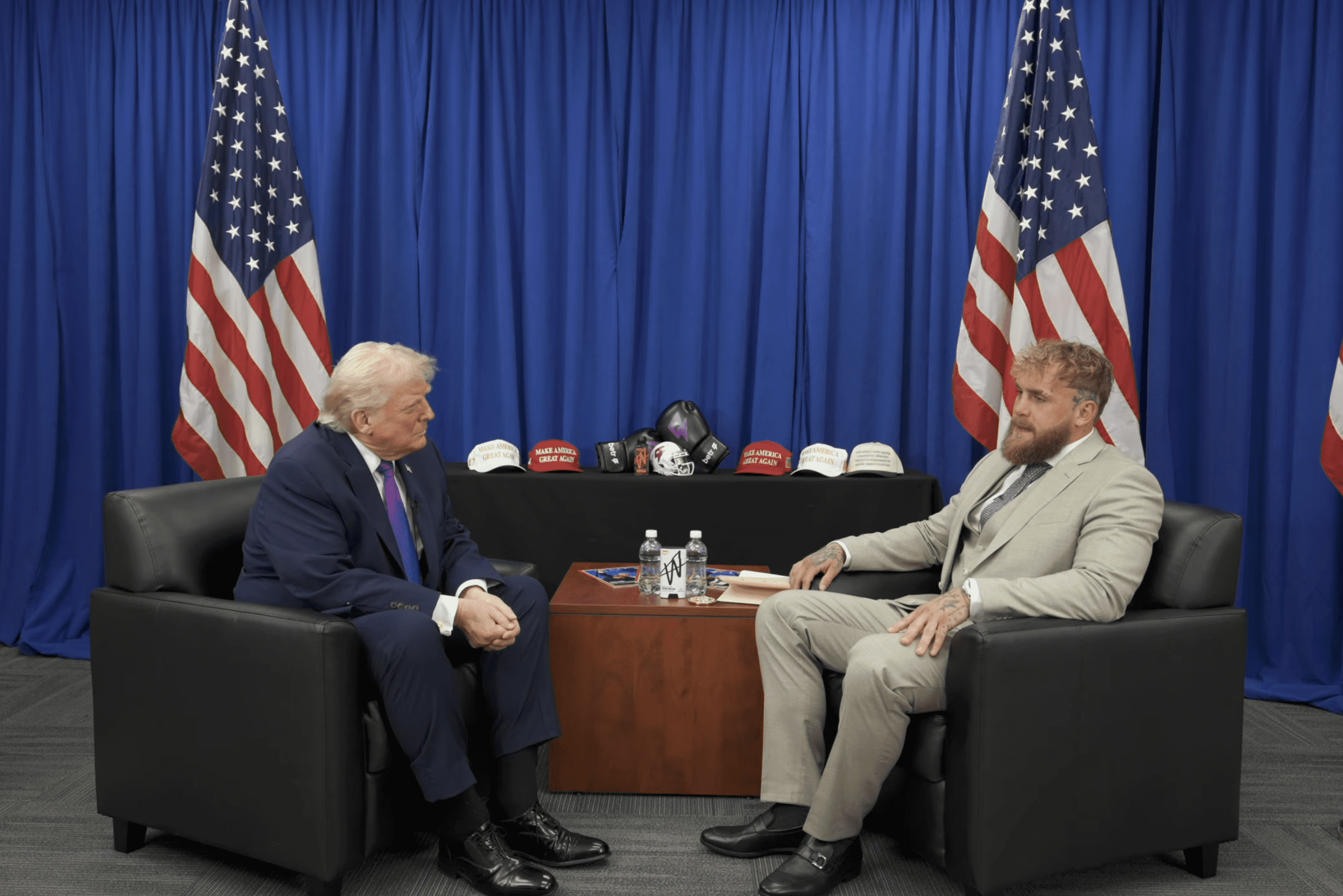
The turning point came during the final stages of the Skydance merger. In July 2025, Paramount agreed to pay $16 million to settle Donald Trump’s lawsuit against CBS over a “60 Minutes” interview. The settlement arrived just weeks before federal regulators approved the $8 billion Skydance acquisition of Paramount. Critics immediately questioned whether the payment was designed to smooth the path toward regulatory approval. The optics were catastrophic. Media lawyers across the industry widely viewed the lawsuit as weak. Yet Paramount chose settlement over litigation. Then things got worse.
Only days after Stephen Colbert publicly mocked the settlement on-air as a “big fat bribe,” CBS announced the cancellation of “The Late Show.” While the company insisted the decision was financial, the timing ignited a firestorm that continues to follow the company today. Whether the cancellation was politically motivated almost became irrelevant. The public perception had already solidified. CBS suddenly looked less like an independent news organization and more like a corporation negotiating favorable treatment with powerful political actors. For a news company, that perception is poison.
Bari Weiss and the Corporate Reinvention of CBS News
The next phase came when David Ellison acquired Bari Weiss’ publication, The Free Press, and installed Weiss as Editor in Chief of CBS News. The move represented one of the most dramatic leadership shifts in modern television news history. Ellison framed the appointment as a modernization effort. Many inside CBS viewed it differently. Weiss entered the role without a traditional television news background, immediately overseeing one of the largest news organizations in the world. Internal tensions emerged almost instantly as veteran journalists questioned the new direction.
Those concerns exploded publicly when a “60 Minutes” segment involving a Salvadoran mega-prison was delayed after editorial intervention from Weiss. The dispute ultimately contributed to CBS declining to renew correspondent Sharyn Alfonsi’s contract and fueled accusations of political censorship from within the organization itself. The controversy did not end there.
Recent leadership changes at “60 Minutes” have continued to fuel concerns that CBS News is moving away from traditional investigative journalism and toward a more curated corporate model designed to avoid political conflict. For investors, none of this is reassuring. News organizations derive value from audience trust. Once viewers begin questioning whether coverage decisions are being influenced by mergers, regulators, political pressure, or billionaire ownership interests, the economic value of the news division starts to deteriorate.
The Ellison Strategy: Bigger, Riskier, More Political
The stock market’s anxiety is not limited to CBS News. David Ellison’s broader vision appears built around massive consolidation. The company is now tied to discussions involving enormous merger activity and expansion plans that would dramatically increase leverage across the media empire. Investors are watching billions in new borrowing, refinancing activity, and acquisition speculation while legacy television revenues continue to shrink industry wide.
That combination is dangerous. Traditional media companies are already fighting cord-cutting, declining linear television audiences, streaming losses, and shifting advertising markets. Adding political controversy and newsroom instability to that equation only increases the perceived risk. Every public fight involving CBS News becomes another headline reminding investors that management appears focused on political optics, newsroom restructuring, and mega-mergers instead of rebuilding audience trust.
Why Wall Street Is Applying a Discount
There was a time when CBS News represented a premium asset. Walter Cronkite. Edward R. Murrow. “60 Minutes.” Those brands carried enormous intangible value. Today, investors appear increasingly unwilling to assign the same premium.
The market is instead treating Paramount Skydance like a heavily leveraged entertainment conglomerate facing major execution risks, newsroom controversies, declining television audiences, and uncertain integration challenges. That reality is reflected directly in the stock price.
The company now trades closer to distressed legacy media valuations than the premium multiples once associated with elite news institutions. Analysts continue to point toward restructuring, cost-cutting, and operational synergies as the primary path to future growth rather than organic brand expansion. That is a warning sign. When investors stop believing a media company’s journalism adds value and start believing its only future lies in layoffs, consolidation, and financial engineering, the market has already delivered its verdict.
CBS Didn’t Just Lose Viewers. It Lost Scarcity.
The real tragedy for CBS is that credibility is extraordinarily difficult to build and remarkably easy to destroy. Media companies can recover from bad quarters. They can recover from failed shows. They can even recover from management mistakes. What they rarely recover from is the perception that their journalism can be bought, pressured, negotiated, or politically managed. The old CBS understood that trust was its product. The new CBS appears willing to treat trust as a negotiable asset in pursuit of regulatory approvals, political relationships, and corporate expansion. Wall Street noticed. The audience noticed. And increasingly, the stock price reflects that reality.















































Want to join the conversation?
Create an account or sign in to share your thoughts, vote,
and reply to other readers.
Showing 0 of 0 comments
Don't have an account?
Already have an account?