
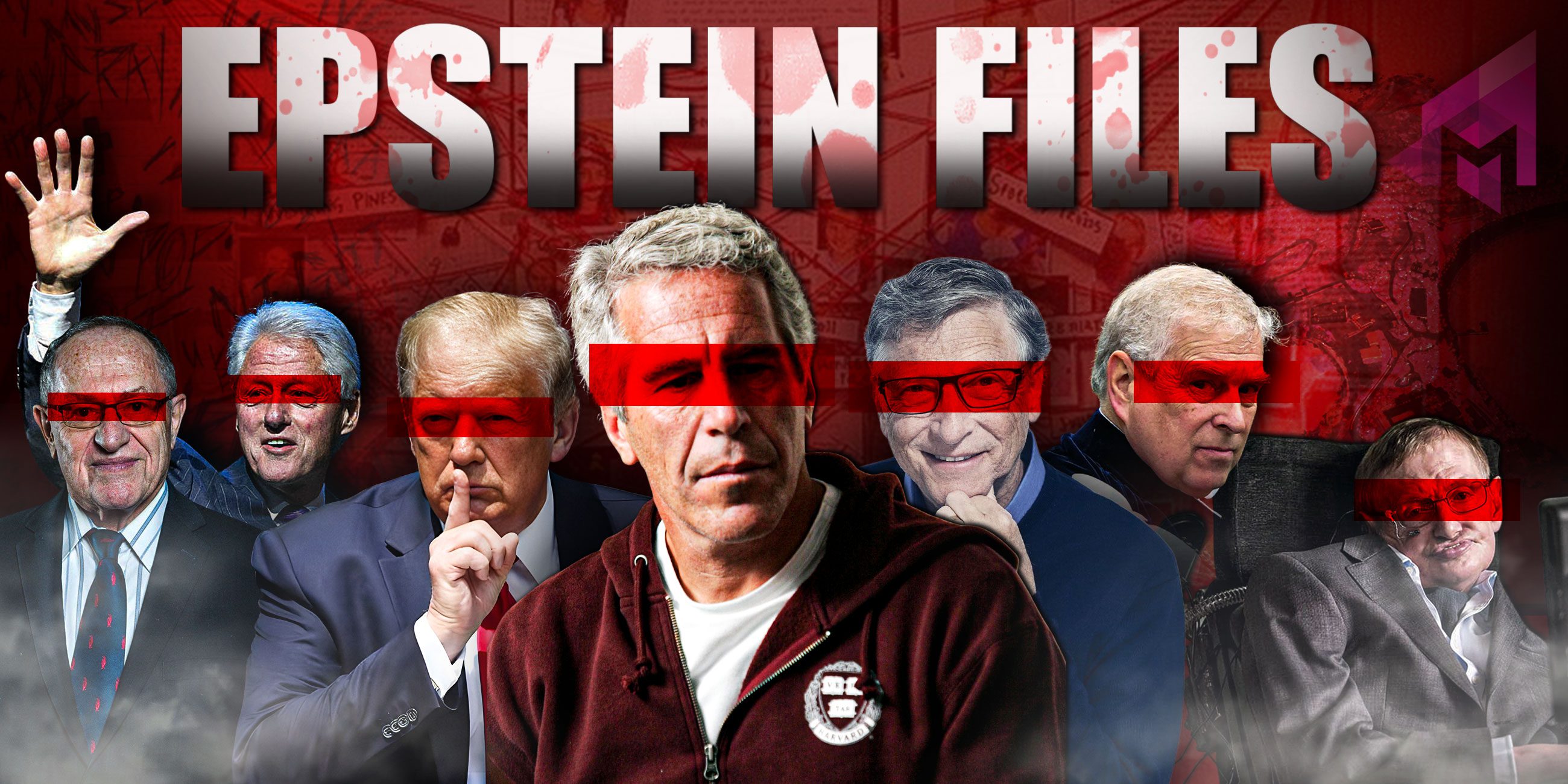
Federal Emails Referencing an “Epstein Debrief” in 2021 Add Fresh Suspicion to a Case That Never Stopped Smelling Wrong
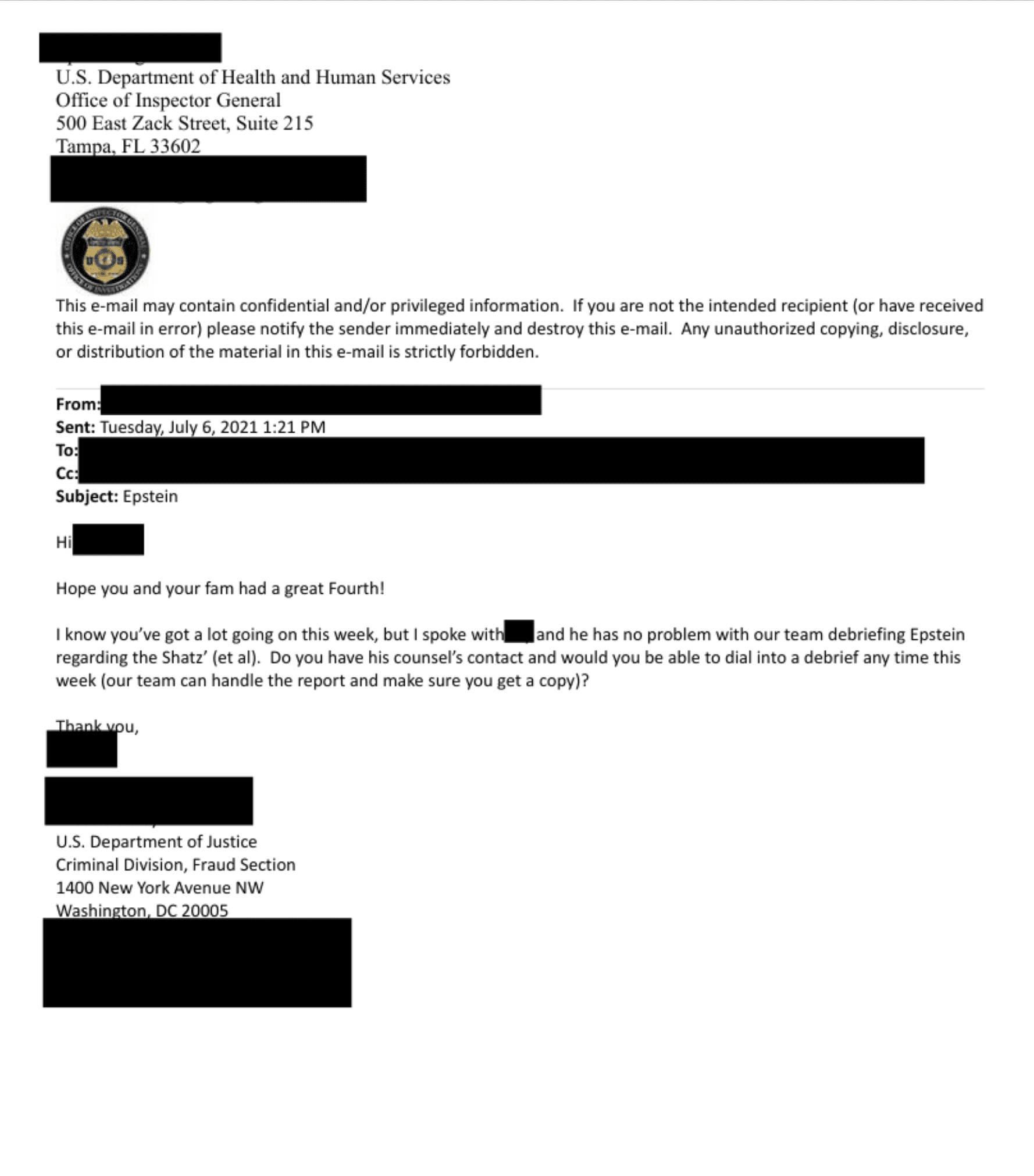
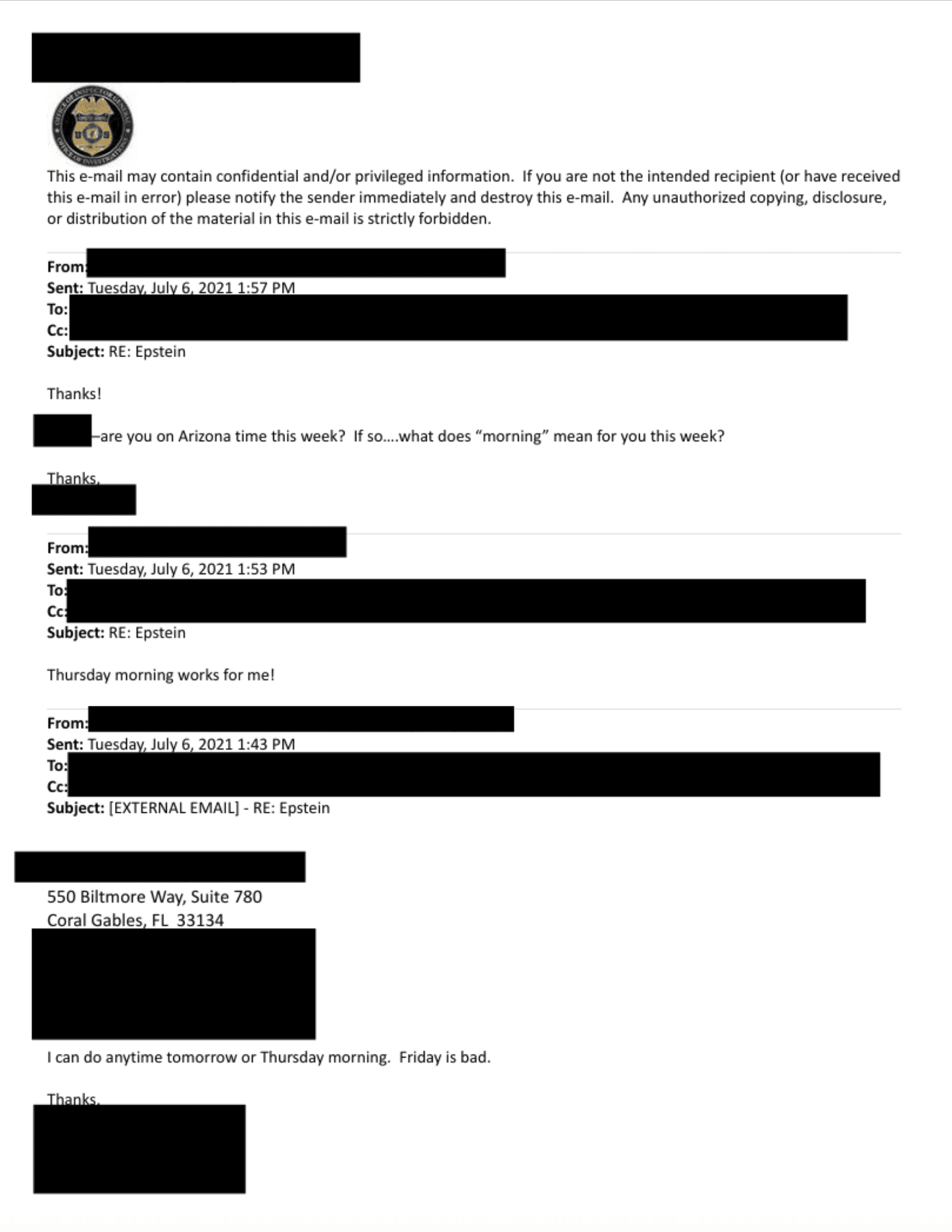
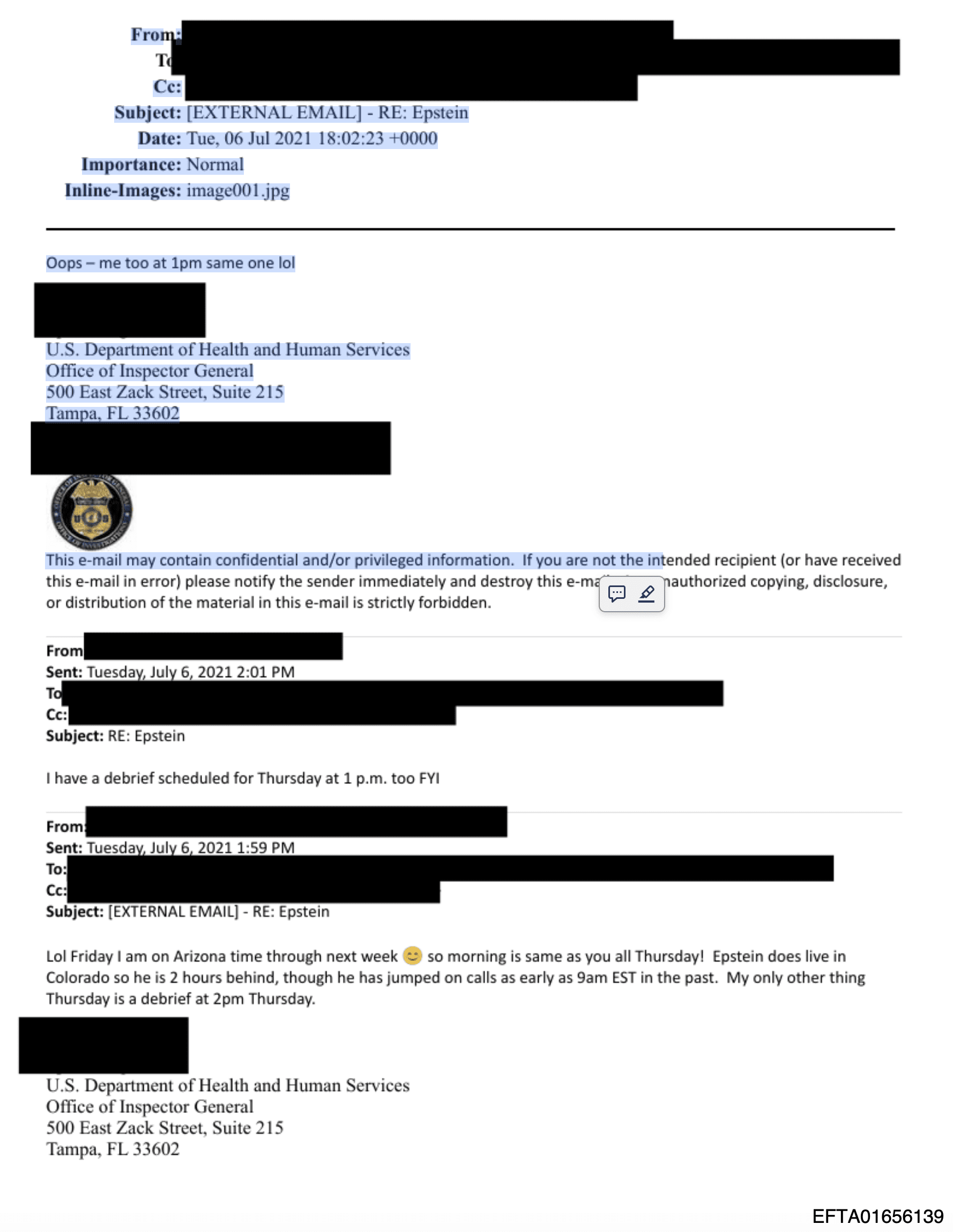
A newly circulated set of internal federal emails is reigniting one of the most volatile questions in modern American scandal history: if Jeffrey Epstein officially died in a Manhattan jail cell on August 10, 2019, why do emails dated July 6, 2021 appear to discuss “debriefing Epstein” as if he were alive, available, and living in Colorado?
The language is what makes the material hard to ignore. One email says there is “no problem with our team debriefing Epstein regarding the Shatz (et al.),” while another says, in present tense, that “Epstein does live in Colorado so he is 2 hours behind.” On their face, those are not the words of people discussing a dead man, a historical file, or a closed matter. They read like routine scheduling around a living participant. That does not prove Jeffrey Epstein survived. It does mean the wording is unusual enough that it cannot be waved away without scrutiny.
The Timeline Problem That Won’t Go Away
The timing matters because Epstein’s death has never existed inside a normal factual environment. The official account remains that he died by suicide in federal custody, and federal investigators later documented serious failures inside the Metropolitan Correctional Center, including staffing breakdowns and missed supervision checks.
But the same history that produced the official ruling also produced years of public disbelief, precisely because so many things around Epstein were irregular long before he ever entered that cell. His wealth, his protection, his access, and the slow unraveling of his network all contributed to a scandal that has never fully settled. In that context, references that appear to treat an “Epstein” as a living investigative participant in mid-2021 inevitably attract attention.
Why the Term “Debrief” Carries Weight
The word “debrief” is not casual language in federal practice. It typically refers to a structured information-gathering session involving a witness, cooperating subject, insider, or someone believed to have relevant knowledge about an ongoing matter.
The agencies visible in the email chain make that point sharper. The Department of Justice Fraud Section and the Health and Human Services Office of Inspector General regularly collaborate on complex investigations involving financial misconduct, healthcare fraud, federal program abuse, and multi-party enforcement actions. These are environments where information is currency — and debriefings are one of the tools used to obtain it.
The emails suggest officials were discussing briefing an “Epstein” about another case or investigation described as “Shatz (et al.),” a legal shorthand indicating multiple parties. That detail alone is notable. It implies the individual being discussed was viewed not merely as a historical subject of a scandal, but as someone potentially capable of providing insight into a separate matter.
Colorado and the Geography of Speculation
One line in the correspondence states that “Epstein does live in Colorado,” adding another layer to the intrigue. The Rocky Mountain region has long been associated with privacy, secluded estates, and the kind of geographic isolation that lends itself to speculation about disappearances and reinventions.
Epstein did have documented Western ties, and recent reporting tied to newly released files has noted connections between individuals in his orbit and Colorado. That does not establish that he was living there in 2021. But the phrasing in the emails, operational, present-tense, and logistical, makes the reference difficult to dismiss outright.
Critics argue that treating the possibility of mistaken identity as the most likely explanation requires an unusual degree of institutional trust in a case where official narratives have repeatedly been challenged.
Intelligence Questions That Continue to Hover
Jeffrey Epstein’s life intersected with some of the most powerful political and financial figures in the United States and abroad. His documented relationship with former Israeli Prime Minister Ehud Barak and connections to elite donors and global business figures have fueled persistent speculation about whether he operated within or alongside intelligence networks.
No government investigation has publicly concluded that Epstein was an intelligence operative. Multiple public figures have rejected that narrative as unsupported. Yet the structure of his activities, unexplained financial flows, extraordinary access to influential individuals, and allegations that his properties were equipped with surveillance systems, has ensured the theory remains part of the broader conversation surrounding his legacy.
Emails that appear to treat an “Epstein” as a living source years after his death inevitably intensify that debate, even if they do not resolve it.
The Heavy Redactions Only Deepen the Suspicion
Another striking feature of the emails is the sheer volume of redactions. Names, titles, and in some cases entire lines appear blacked out, making it difficult to determine exactly who was participating in the discussion or what institutional roles they held. While redactions are common in federal document releases, often used to protect privacy, preserve ongoing investigative integrity, or shield sensitive internal processes, the extent of the omissions here creates its own set of questions.
In high-profile cases involving public trust, heavy redaction can unintentionally fuel skepticism by leaving readers with fragments instead of context. Without knowing who authorized the proposed “debrief,” who was expected to attend, or what precise matter was being discussed, observers are left to interpret tone and timing without the benefit of full factual grounding. That dynamic does not prove wrongdoing, but it does underscore why transparency battles continue to define the Epstein fallout. When key identifiers are removed from already unusual correspondence, the result is a document that raises more questions than it resolves and in a case already saturated with doubt, that absence of clarity can be as consequential as any explicit revelation.
A Case Built on Ambiguity
There is a plausible mundane explanation. Large government document productions often capture emails through keyword searches, legacy subject lines, or surname only references. Another individual named Epstein, particularly one connected to a fraud or regulatory case, could easily have been the intended subject of the correspondence. But the Epstein scandal has never existed in a mundane environment. From plea deals that drew criticism to institutional breakdowns surrounding his death, the case has repeatedly demonstrated how ambiguity can coexist with power. Each new disclosure has reinforced the sense that Epstein was not an isolated offender but part of a wider ecosystem of influence and leverage. That is why even circumstantial anomalies matter. They do not prove a conspiracy. They do, however, justify further verification.
The July 2021 emails referencing an “Epstein debrief” do not establish that Jeffrey Epstein was alive after his death. They do not prove intelligence involvement or government misconduct. They remain ambiguous, incomplete, and open to interpretation. What they do show is that years after Epstein’s official death, federal agencies were still engaged in investigative work intersecting with individuals or cases tied to his name. In a scandal defined by unanswered questions, that alone is enough to demand clarity. Until authorities identify the specific individual referenced and explain the context of the correspondence, the material will continue to fuel suspicion, not because it provides definitive proof of a hidden narrative, but because the Epstein story has always been shaped by the uneasy space between official conclusions and public doubt.















































Want to join the conversation?
Create an account or sign in to share your thoughts, vote,
and reply to other readers.
Showing 0 of 0 comments
Don't have an account?
Already have an account?