
Epstein Death Deep Dive: Broken Cameras, Missed Checks, and Lingering Questions Still Haunt One of America’s Most Suspicious Jail Deaths
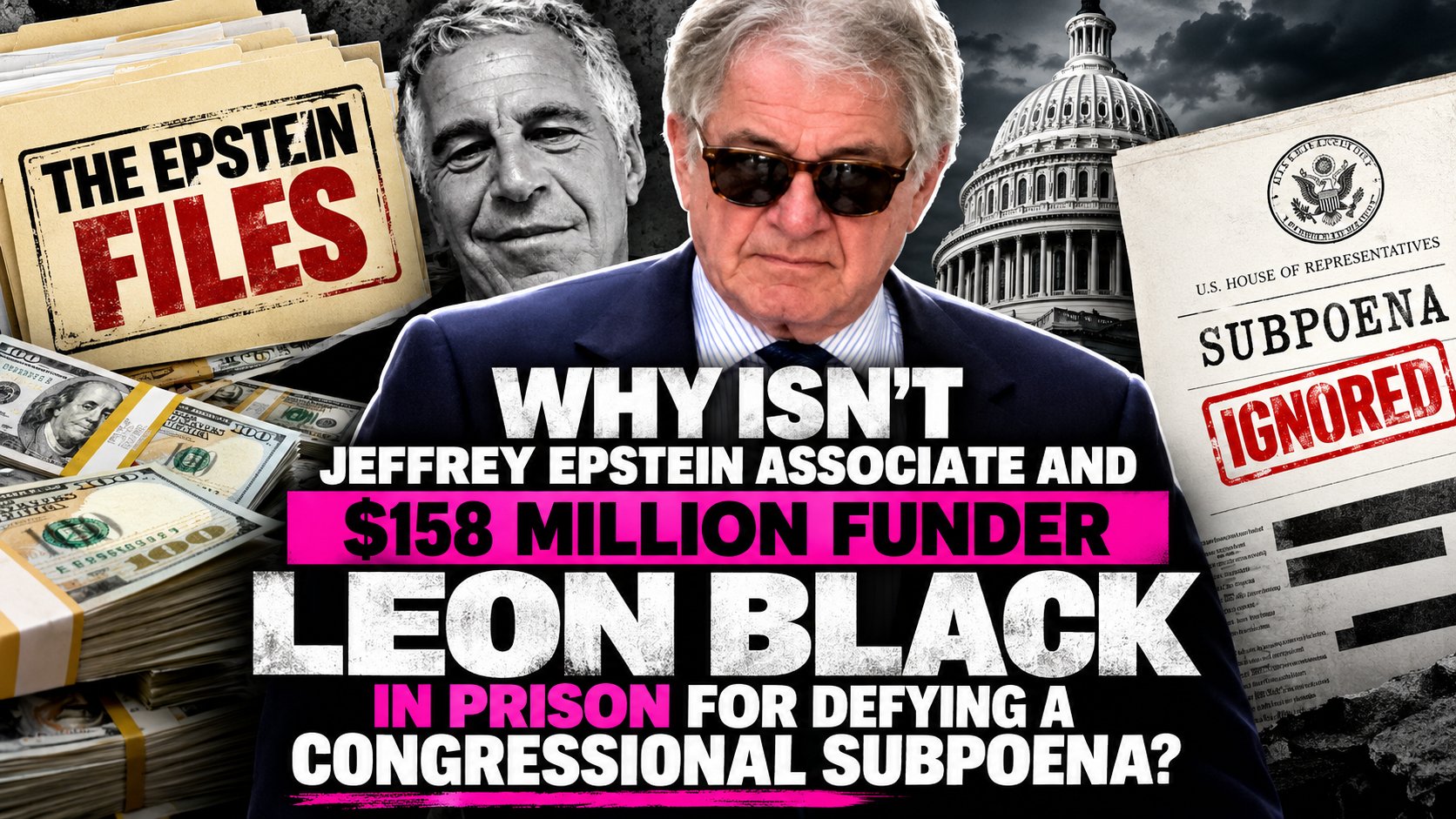
Nearly seven years after financier and convicted sex offender Jeffrey Epstein was found dead inside a federal jail cell, the official conclusion has not changed: suicide by hanging. But the facts surrounding his final hours documented failures, missing surveillance, disputed forensic interpretations, and evolving government disclosures, continue to fuel one of the most consequential trust crises in modern American justice. For a prisoner who potentially held compromising information on powerful figures across politics, business, and global elite networks, the conditions of his death remain as controversial as his crimes.
“He was left alone when he should not have been. The checks were not done. Records were falsified.”
The Official Finding vs. Public Doubt
The New York City Office of the Chief Medical Examiner ruled Epstein’s death a suicide. A later investigation by the U.S. Department of Justice Inspector General found no evidence of homicide and concluded that systemic failures inside the Metropolitan Correctional Center (MCC) in Manhattan created the opportunity for Epstein to take his own life.
Federal investigators have repeatedly reaffirmed that position, including in subsequent DOJ-FBI reviews. But official findings have not resolved the broader credibility crisis. Instead, each new disclosure has tended to reinforce a different narrative, not necessarily murder, but dysfunction so severe that certainty itself became impossible.
Surveillance Failures and the Missing Camera Problem
One of the most damaging facts in the case is the incomplete video record. Multiple cameras that should have captured Epstein’s housing area were not functioning properly due to hard-drive failures. The surviving footage did not directly show Epstein’s cell entrance and only captured limited angles of nearby stairways and corridors. Later independent reviews of released footage suggested movement consistent with a person wearing prison-style orange clothing on the stairs near Epstein’s tier, a detail that was not emphasized in early government accounts that suggested no one entered the area. The discrepancy did not prove that someone accessed Epstein’s cell. But it significantly undermined confidence in how conclusively officials described what the video showed.
Missed Rounds, False Logs, and Guard Failures
The strongest confirmed failures involve prison staffing and monitoring procedures. Epstein had previously been placed on suicide watch but was later moved to a Special Housing Unit where he was supposed to have a cellmate and receive regular observation checks every 30 minutes.
On the night before his death:
- His cellmate had been transferred and not replaced.
- Required inmate counts were not conducted.
- Overnight observation rounds were not performed.
- Correctional staff later admitted falsifying records to indicate checks had occurred.
Investigators concluded these breakdowns allowed Epstein to remain unobserved for hours.
“None of the required counts were conducted… and staff did not perform any rounds after approximately 10:40 p.m.”
For critics, the issue is not whether the failures happened. It is whether they were purely negligent or something more.
Crime Scene Handling and Forensic Disputes
Further controversy surrounds how Epstein’s cell was processed after his death. Reporting based on investigative records suggests the scene showed signs of disorder and that only limited physical evidence was formally collected. Some experts later noted there was no clear documentation of comprehensive fingerprint or DNA testing on items inside the cell.
Additionally, photographs indicated multiple improvised ligatures made from bedsheets, raising questions about which was ultimately identified as the fatal instrument.
The autopsy itself also sparked a rare public dispute among forensic specialists. Epstein’s family-hired pathologist argued that certain neck fractures were more typical of strangulation, while the official medical examiner maintained that the injuries were consistent with suicidal hanging, particularly given Epstein’s age and physical condition.
The Will, the Phone Call, and His Final Days
Just days before his death, Epstein signed a new will transferring his assets into a trust. Investigators later noted prison mental-health staff were unaware of the document and suggested knowledge of it might have influenced suicide-risk assessments. Records also show Epstein was allowed to make at least one unmonitored phone call shortly before he died, contrary to facility policy. These details do not prove foul play. But they add to a timeline that appears increasingly irregular the closer it is examined.
Allegations of Cover-Up Talk
More recently released internal interview notes have revealed that at least one inmate claimed to overhear correctional officers discussing how Epstein’s death could be covered up and how alibis might be created. Such accounts remain unverified hearsay and have not been substantiated by prosecutors or formal findings. Still, their existence in investigative files underscores how chaotic and contested the immediate aftermath of Epstein’s death was.
Separately, witnesses reported hearing officers shouting attempts to revive Epstein, including calls for him to “breathe,” reflecting panic among staff who quickly understood the potential consequences of the situation.
Why This Case Still Matters
Jeffrey Epstein’s death sits at the intersection of multiple institutional vulnerabilities:
- Federal prison staffing shortages
- Surveillance infrastructure failures
- Inconsistent investigative transparency
- Elite criminal networks and public distrust
- Political polarization and conspiracy culture
Whether Epstein died by suicide or something else, the conditions that allowed his death have already had lasting consequences. They damaged confidence in federal detention oversight, intensified suspicion toward government narratives, and ensured that one of the most important criminal defendants in decades would never testify in open court.
The official record still says suicide. No prosecutor has charged anyone with killing Jeffrey Epstein. Federal watchdogs concluded that negligence and procedural breakdown, not a coordinated murder, explain his death. But the case remains unresolved in the court of public opinion because too many failures occurred at once. Broken cameras. Missed checks. Falsified logs. Conflicting interpretations. Incomplete evidence trails. In high-stakes justice, perception can matter nearly as much as proof. And in the Epstein case, the perception of uncertainty has proven nearly impossible to bury.












































Want to join the conversation?
Create an account or sign in to share your thoughts, vote,
and reply to other readers.
Showing 0 of 0 comments
Don't have an account?
Already have an account?