
A New Battle Emerges After U.S. Iran Framework Agreement
Just days after President Donald Trump announced a framework agreement designed to end months of conflict between the United States, Israel, and Iran, a new dispute has emerged over one of the world’s most strategically important waterways: the Strait of Hormuz.
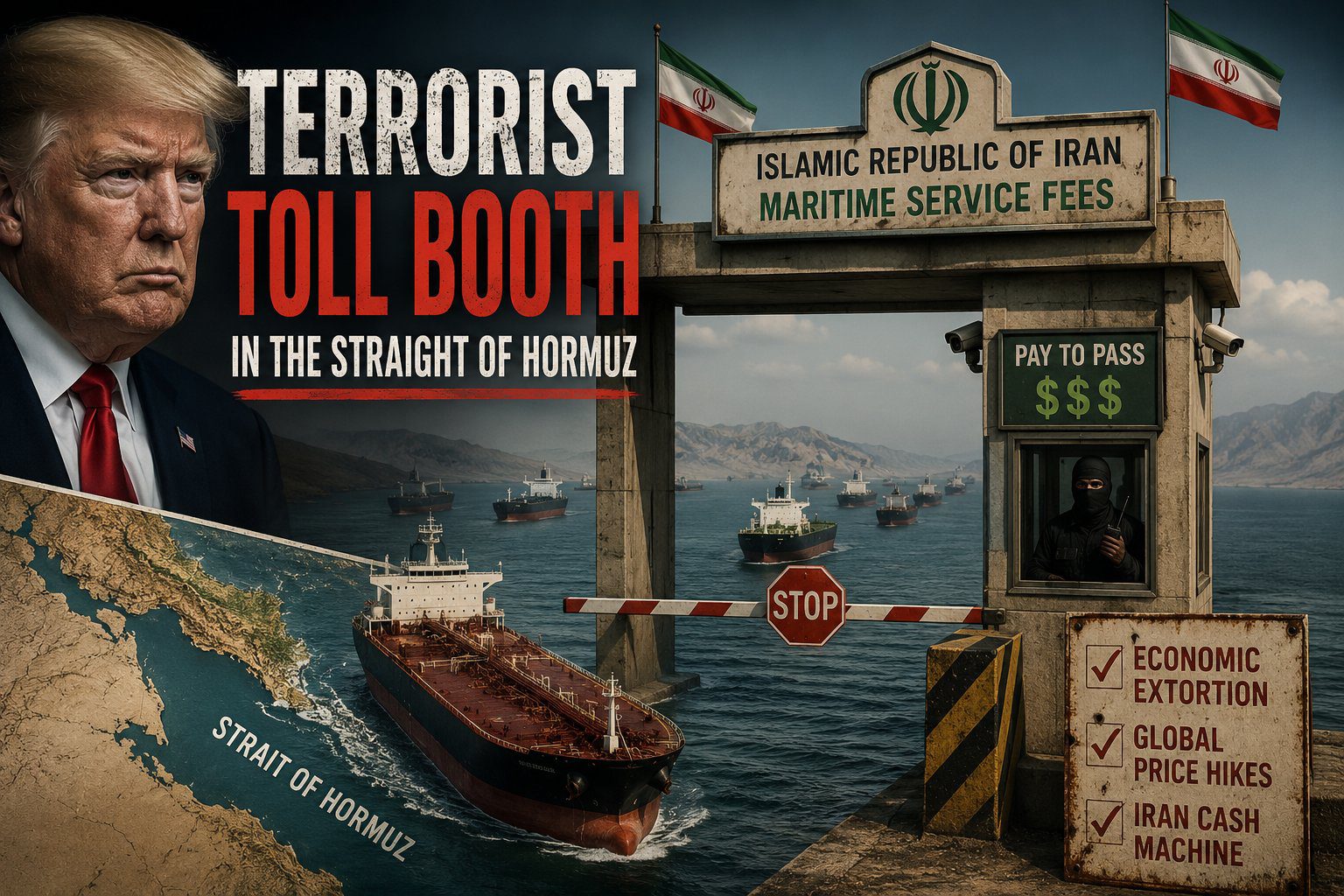
While the White House insists the agreement guarantees free passage for global shipping, Iranian officials are signaling that vessels traveling through the narrow maritime chokepoint may soon face new charges labeled as “maritime service fees.” The disagreement has quickly evolved into a high stakes economic and legal fight that could impact global energy markets, international shipping, and the future stability of the Persian Gulf.
Trump Administration Draws a Red Line
President Trump has repeatedly stated that the Strait of Hormuz must remain free and open to international commerce.
“We want it free. We don’t want tolls,” Trump said while discussing the agreement. “It’s an international waterway.”
The administration’s position is straightforward: commercial ships should not be required to pay Iran for the right to transit one of the world’s most important shipping lanes.
Vice President JD Vance and Secretary of State Marco Rubio have echoed that position, arguing that any attempt by Tehran to monetize passage through the strait would undermine both international law and the broader diplomatic framework that ended the recent conflict. According to administration officials, one of the central goals of the agreement is restoring normal maritime traffic and preventing future disruptions to global energy supplies.
Iran Says Fees Are Coming
Iranian officials are publicly rejecting the word “toll” while simultaneously arguing that ships may be required to pay fees for services provided within the strait. Iranian Foreign Ministry spokesman Esmaeil Baghaei stated that Iran is not seeking transit tolls but intends to charge vessels for services rendered. What those services would actually include remains unclear.
Iranian officials have floated possibilities ranging from environmental monitoring programs to maritime safety operations. Critics argue that the distinction is largely semantic and that any mandatory payment tied directly to passage through the strait would effectively function as a toll regardless of how it is labeled. The dispute highlights a growing struggle over who gets to define the rules governing one of the world’s most important waterways.
Why the Strait of Hormuz Matters
Few locations on Earth hold as much economic significance as the Strait of Hormuz. The narrow waterway serves as the primary gateway between the Persian Gulf and global markets. Roughly one-fifth of the world’s oil supply moves through the strait, making it one of the most important energy corridors on the planet. Any disruption in shipping traffic can quickly ripple through international energy markets. Even small increases in transportation costs can translate into higher fuel prices for consumers worldwide.
For decades, the global shipping industry has operated under the assumption that vessels could transit the strait without paying passage fees. That longstanding status quo is now being challenged.
The Legal Debate
Maritime law experts argue there is an important distinction between tolls and legitimate service fees. Charging vessels for actual services, such as port operations, pilotage, waste disposal, or emergency assistance, is common throughout the world. Charging ships simply for the right to pass through an international waterway is a different matter entirely.
Critics of Iran’s proposal argue that international law does not permit a coastal state to demand payment merely because ships are traveling through a naturally occurring strait used for international navigation. Supporters of the Iranian position contend that security, environmental protection, and maritime management activities could justify certain charges. The issue is expected to become one of the most contentious topics in upcoming negotiations.
The Economic Stakes
Reports circulating during negotiations suggested Iranian officials had explored imposing significant transit fees on vessels moving through the strait. While no formal fee structure has been announced, economists warn that even modest charges could increase transportation costs throughout global energy markets. Energy analysts have estimated that any meaningful fee regime could increase the cost of crude oil shipments and ultimately raise fuel prices for consumers. Because millions of barrels of oil pass through the strait each day, even small per-vessel charges could generate substantial revenue while creating additional costs for importers and exporters worldwide.
The concern among Western governments is not simply the financial burden but the precedent it could establish. If one nation successfully monetizes passage through a critical international waterway, other strategic maritime chokepoints could face similar disputes in the future.
What Happens Next?
The reported framework agreement appears to have stopped the immediate military confrontation, but many of the most difficult questions remain unresolved. Naval forces continue clearing maritime hazards from the region while diplomats prepare for follownup negotiations aimed at transforming the framework into a permanent agreement.
One of the most important unresolved issues is whether Iran will retain any authority to collect payments from vessels operating in the Strait of Hormuz. For now, Washington says the answer is no. Tehran appears to disagree. The result is a new geopolitical showdown that could determine not only the future of the Strait of Hormuz but also the rules governing international shipping for decades to come.
As negotiators head back to the table, the battle is no longer being fought with missiles and warships. It is being fought over legal definitions, economic leverage, and a single question that could affect global trade: Is it a toll or merely a fee?












































Want to join the conversation?
Create an account or sign in to share your thoughts, vote,
and reply to other readers.
Showing 1 of 1 comment
Don't have an account?
Already have an account?