
Is This Legal, an Invasion of Privacy, or Neither?
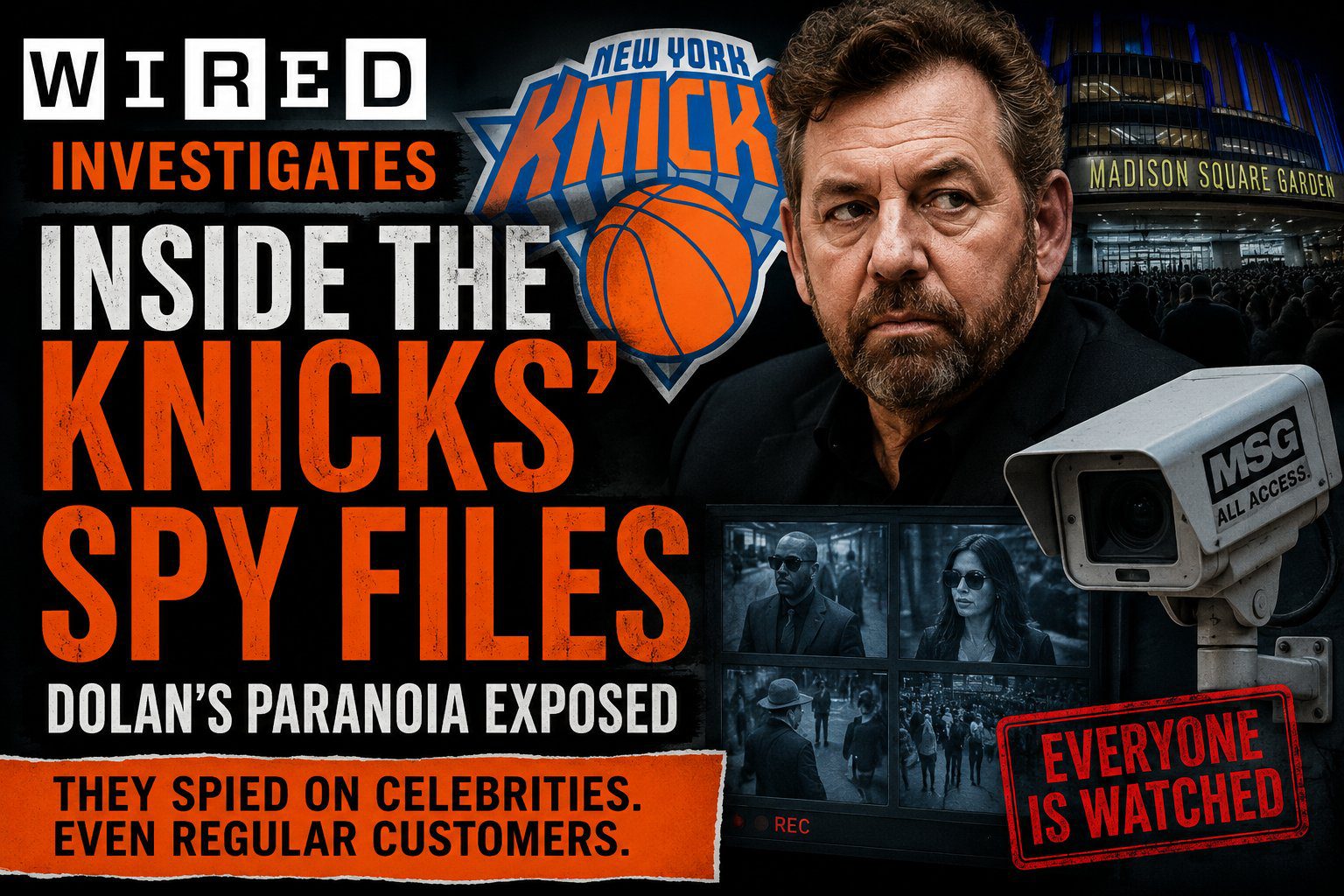
A stunning new investigation by WIRED Magazine has ignited a firestorm over privacy, surveillance, and the lengths one of America’s most iconic sports and entertainment venues allegedly went to monitor celebrities. According to the report, Madison Square Garden (MSG), home of the NBA’s New York Knicks and owned by James Dolan, maintained an internal database containing nearly 40,000 public figures, with roughly 400 of them assigned internal “risk” ratings. Even more controversially, the database reportedly categorized some celebrities by sexual orientation, race, gender identity, and other personal characteristics, raising serious questions about privacy, discrimination, and corporate surveillance. The information was allegedly exposed after the hacker group ShinyHunters breached MSG’s systems and leaked internal files.
According to WIRED, the database was far more than a simple VIP guest list. It allegedly served as an internal intelligence file on celebrities, politicians, athletes, musicians, journalists, and business leaders who attended events at Madison Square Garden or had relationships with the organization. Around 400 individuals received internal labels ranging from “Flag” to “Low Risk,” “Medium Risk,” and “High Risk.”
Sources familiar with the system claimed these ratings were not based on physical security threats, but rather on social media activity and public comments about James Dolan or Madison Square Garden itself. Even mild criticism of the Knicks, complaints about customer service, or association with outspoken critics could reportedly earn someone a higher risk designation.
The List of Celebs is Jaw Dropping
Some of the names reportedly assigned risk scores surprised many observers. Rapper Fat Joe, one of the Knicks’ most loyal celebrity fans and a frequent defender of Dolan, was allegedly labeled “Medium Risk.” Country star Morgan Wallen, actress Lily Allen, Vogue editor Anna Wintour, and actor David Harbour reportedly carried similar designations.
Hip-hop artists Freddie Gibbs, Lil Jon, DaBaby, and A Boogie Wit Da Hoodie were allegedly listed as “High Risk,” while rapper Lil Tjay was reportedly marked as “BANNED FROM MSG” following a previous altercation at the venue. Meanwhile, celebrities including Selena Gomez, Ice Spice, Benson Boone, Mariska Hargitay, Michael Strahan, Ben Stiller, Tracy Morgan, and Edie Falco were reportedly classified as “Low Risk.”
Perhaps the most controversial aspect of the report involves the database’s tracking of personal identity. WIRED found that at least 93 celebrities were labeled “LGBTQIA,” including singer Ricky Martin, musician Phoebe Bridgers, and Emily Green of the band Geese. Other entries reportedly noted race and gender identity, although not consistently across every profile.
Civil liberties advocates immediately questioned why a private entertainment company would maintain such classifications, particularly when there appeared to be no obvious operational need for recording someone’s sexual orientation. Privacy experts cited in the report argued that collecting and categorizing this type of information creates obvious ethical concerns and could expose organizations to allegations of discrimination.
It Wasn’t Just Celebs… Over 10 Million Guests of the Garden Were Leaked as Well
The leaked documents also suggest Madison Square Garden’s surveillance operation extended beyond celebrities. WIRED magazine reports that the company’s systems contained more than 10.5 million customer records, including millions of email addresses, phone numbers, and thousands of birth dates, allegedly stored within the company’s Salesforce platform.
The publication also described previous incidents in which MSG security allegedly monitored social media posts critical of James Dolan, including one case where local law enforcement reportedly visited a teenager after negative online comments about the arena. Critics argue the latest revelations reinforce longstanding concerns over MSG’s aggressive use of facial recognition technology and surveillance throughout its venues.
Madison Square Garden has forcefully denied the allegations. The company says WIRED’s reporting is “inaccurate and false” and insists the leaked information has been misrepresented. MSG argues that the data came from a standard customer management system and that the publication falsely portrayed its purpose. The company has now filed a defamation lawsuit against WIRED, seeking damages while demanding corrections and a retraction of the story. WIRED, however, has stood firmly behind its reporting and says it intends to vigorously defend its investigation.
*****Editor’s Note*****
Whether the lawsuit succeeds or not, the controversy has once again placed James Dolan and Madison Square Garden under intense scrutiny. The allegations raise broader questions about how much information corporations collect on public figures and ordinary customers alike, how those profiles are used behind closed doors, and whether businesses should be maintaining internal dossiers that include sensitive personal characteristics such as sexual orientation or race. In an era where data has become one of the world’s most valuable commodities, the leaked MSG database serves as another reminder that behind nearly every ticket purchase, VIP invitation, or customer interaction, companies may be gathering far more information than the public ever realizes.































































Want to join the conversation?
Create an account or sign in to share your thoughts, vote,
and reply to other readers.
Showing 0 of 0 comments
Don't have an account?
Already have an account?