
Have you ever seen a child out in public? Especially at restaurants? You can almost guarantee that they will be staring at a tablet or a smartphone. These devices have become the modern-day “babysitter” for irresponsible parents. And it is actually so common that it is now a scourge.
Reports have come out, and the results are staggering. More than two-thirds of babies under two years old use screens, and some are exposed for up to eight hours a day.
Nearly a third of NEWBORNS were found to watch screens for more than three hours a day, while almost 20% of infants of four to eleven months used screens for more than an hour a day.
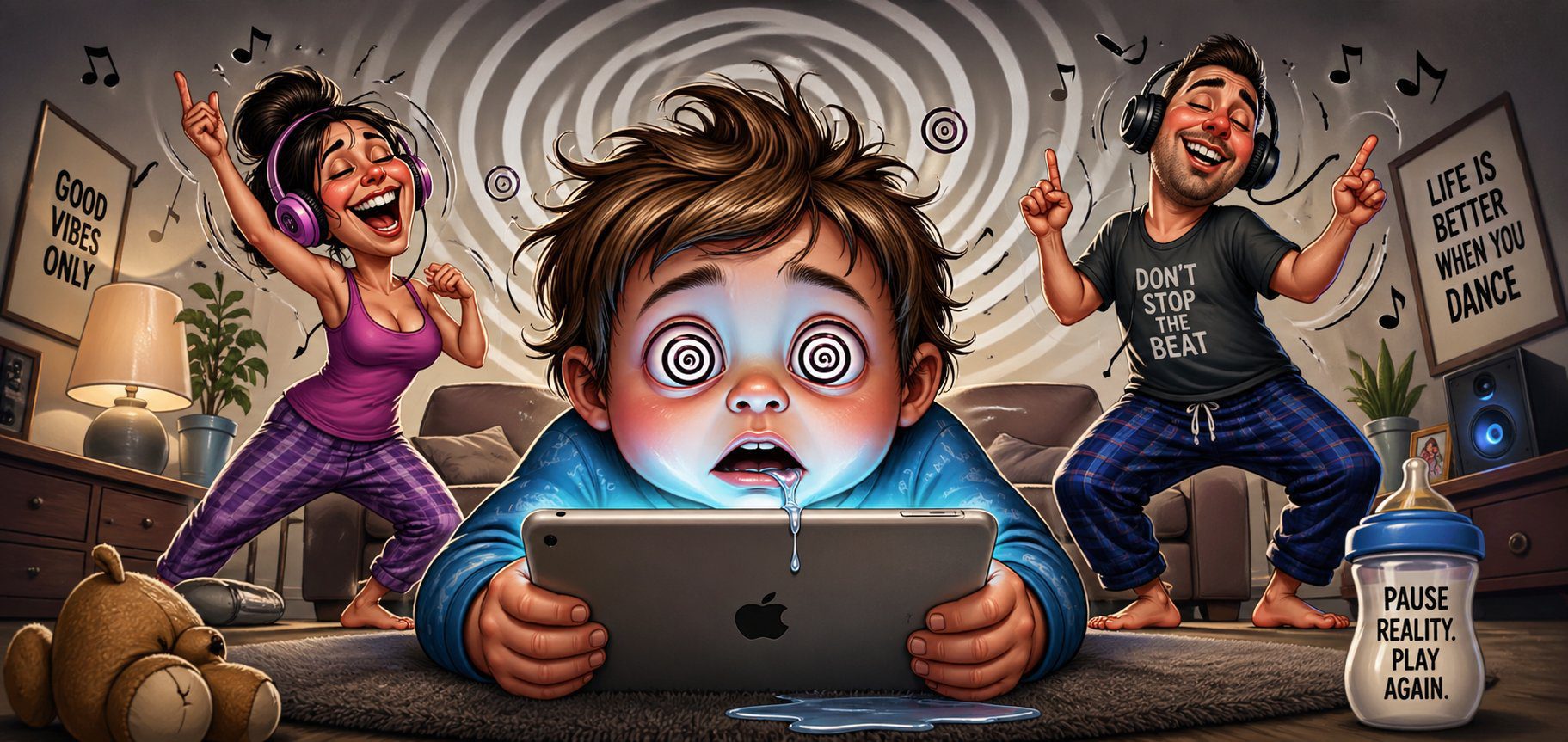
The report comes after the UK government issued guidance that children under two do not use screens at all! Video calling Grandma doesn’t count in these cases.
The report, from the 1001 Critical Days Foundation and the iAddict research group, involved a survey, a focus group, and a literature review to examine the extent and potential impact of infant screen use.
Will Quince, the former education and health minister and the chief executive of the Foundation, added: “The burden of screen time cannot fall solely on parents. Tech companies must wake up to the realities of the impact of screen time on babies. Content ratings are currently misleading parents, rating content as ‘suitable for all ages’ or ‘suitable for 0+’. We are calling on major tech companies to urgently review these standards.”
Personally, I don’t see how you can ask the tech companies to do anything. Their whole goal is to have everybody glued to their platforms. So to even suggest that they would be helpful in correcting this is laughable.
The review of the research found some very serious findings. They found evidence linking screen time to poorer outcomes for children, including an increased risk of obesity, short-sightedness, sleep and behavioural difficulties, and later challenges with friendships.
The research also revealed why children and parents use screens so much. Families reported that children use them for educational purposes, entertainment, play, and to communicate and bond with others. Parents, meanwhile, used screens to occupy or distract children, which helped caregivers to complete domestic duties, paid employment, and other caring responsibilities.
And that is the crux of the problem. This is completely about distraction. You can say learning. You can say educational. But that is a total stretch. Maybe, just maybe, a small percentage of parents will actually sit down with their kids and let them learn and quiz them on what they have learned. But if that is happening, it is a very small percentage.
At the end of the day, this falls on the parents. The reason why these kids are so addicted is that the distraction actually works. It’s not that hard to stimulate children. And usually, the content that they are watching will easily stimulate their senses and keep them glued for long periods of time.



















































Want to join the conversation?
Create an account or sign in to share your thoughts, vote,
and reply to other readers.
Showing 0 of 0 comments
Don't have an account?
Already have an account?