
Trump Confirms Covert CIA Strike on Venezuelan Port, Expanding U.S. Pressure Without Ground War
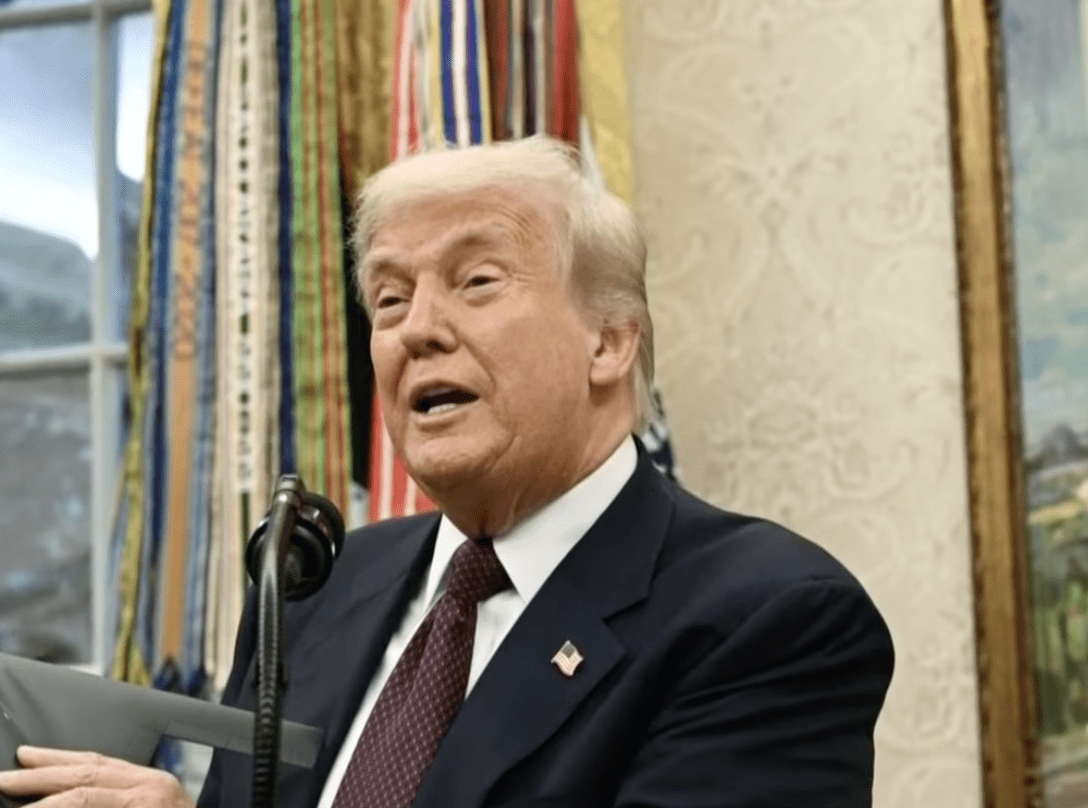
President Donald Trump has confirmed that the United States carried out a covert drone strike on a port facility along Venezuela’s coast, a move that quietly expands U.S. military action onto Venezuelan territory while stopping short of a full-scale invasion.
The strike, which multiple reports say was conducted by the Central Intelligence Agency, targeted a remote dock believed to be used by the Venezuelan-based transnational criminal group Tren de Aragua to store and move illicit drugs. U.S. officials familiar with the operation say the facility was empty at the time of the strike and no casualties were reported.
The operation reflects a strategic escalation: applying direct force on land to disrupt criminal networks while preserving flexibility and avoiding the political, military, and legal consequences of deploying U.S. troops.
A Covert Strike Publicly Acknowledged?
What has raised alarms among former intelligence and defense officials is not just the strike itself, but Trump’s decision to publicly disclose the covert operation during a radio interview last week. Covert actions are designed to remain classified precisely to protect personnel, sources, and methods. By acknowledging the strike, critics argue, the president may have undercut that protection.
“The purpose of a covert operation is for it to remain classified, so that those who are involved in that kind of operation are protected,” said Leon Panetta, who served as CIA director and later as Pentagon chief during the Obama administration. “And when it’s announced, it basically undermines the covert operation itself, because it then jeopardizes lives.”
Panetta’s warning underscores a core tension in intelligence operations: covert authority depends on secrecy, and public acknowledgment, even without operational details, can expose personnel to retaliation and compromise future missions.
Why the CIA, Not the Military
According to reporting from multiple outlets, the strike was conducted under Title 50 authority, which governs U.S. intelligence activities and covert action. That distinction matters.
Title 50 allows the CIA to conduct covert missions with presidential authorization and congressional notification.
Title 10, by contrast, governs U.S. armed forces and overt military operations.
By using Title 50 authority, the administration avoided formally committing the U.S. military to combat operations inside Venezuela, while still carrying out a kinetic strike on land. Strategically, it keeps Trump’s options open, pressure without invasion, escalation without boots on the ground.
Target: A Criminal Network, Not the Venezuelan State
U.S. officials say the dock was linked to Tren de Aragua, a violent criminal organization that U.S. law enforcement and intelligence agencies have increasingly tied to drug trafficking, human smuggling, and organized crime networks operating across Latin America and beyond.
By framing the strike as an anti-narcotics operation, the administration positions the action as law enforcement–adjacent rather than a direct act of war against the Venezuelan government. Still, critics argue that any U.S. strike on sovereign Venezuelan territory raises serious international law questions, particularly absent clear public evidence of imminent threat or host-nation consent.
Legal and Strategic Questions Multiply
While no court or international body has ruled on the legality of the strike, legal experts note that covert action inside another country, especially one with which the U.S. is not formally at war, sits in a legally gray area under international law. At the same time, Trump’s disclosure of the operation introduces a separate concern: whether publicly discussing covert intelligence actions undermines congressional oversight frameworks and operational security. The administration has not detailed what notifications were provided to Congress, nor has the CIA publicly commented on the strike.
The Bigger Picture n the Region
The Venezuelan port strike fits a broader pattern of Trump-era foreign policy: maximum pressure paired with unconventional tactics, relying on secrecy, deniability, and limited force rather than sustained military engagement.
But by publicly acknowledging a covert operation, Trump may have crossed an internal red line, one less about foreign adversaries and more about how intelligence power is supposed to be used, and protected, inside the U.S. system. Whether the strike deters criminal networks or invites retaliation remains unclear. What is clear is that the decision to speak openly about it has reignited debate over the risks, legality, and limits of covert U.S. action abroad.

































Want to join the conversation?
Create an account or sign in to share your thoughts, vote,
and reply to other readers.
Showing 0 of 0 comments
Don't have an account?
Already have an account?