
Trump Mobile’s “Ghost Phone”: Deposits Collected, Promises Made, and a Device That Never Arrived
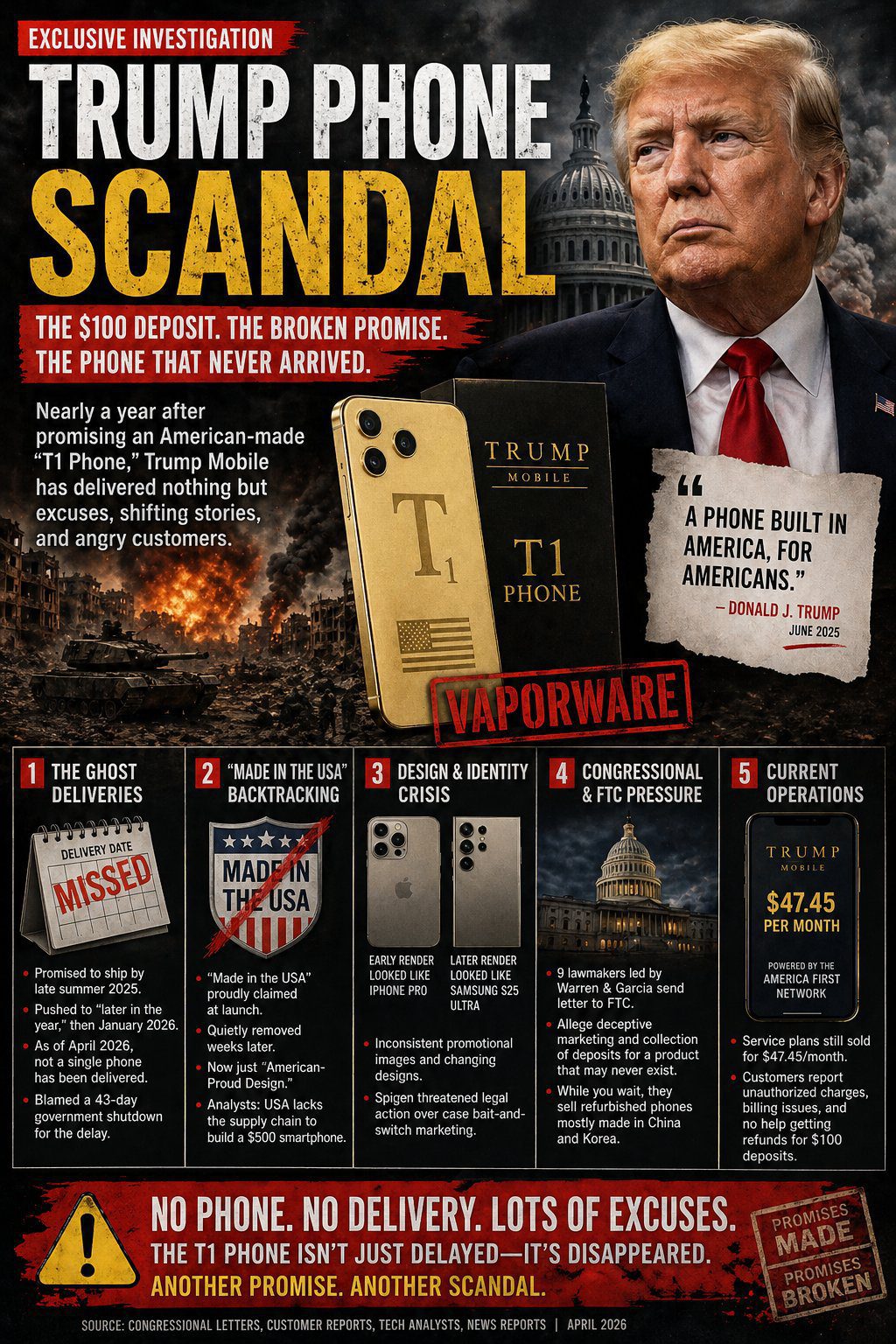
Nearly a year after its high-profile launch, the flagship device behind the Trump Organization’s wireless venture still doesn’t exist in the hands of customers. The so called “T1 Phone” marketed as a patriotic, American built alternative in a crowded smartphone market has become something else entirely, a case study in missed deadlines, shifting narratives, and mounting scrutiny from lawmakers. At the center of it all is a simple question with no clear answer: where are the phones?
“Customers paid for a product that never showed up and the explanations only got worse over time.” — Patrick Zarrelli
The Promise: A $100 Deposit for an “American-Made” Device
When Trump Organization launched Trump Mobile in mid-2025, the pitch was clean and politically on-brand. A premium smartphone. Built in America. Priced competitively. Delivered quickly. Consumers were asked to put down a $100 deposit to secure the T1 Phone, with initial shipping promised for late summer 2025. For a company leveraging the political brand of Donald Trump, the rollout drew immediate attention and early demand. But that timeline didn’t hold.
The Reality: Missed Deadlines and “Ghost” Deliveries
The first delay moved shipments from August 2025 to “later in the year.” Then came another push January 2026. Then silence. As of late April 2026, no confirmed T1 devices have been delivered to customers. Customer complaints have piled up across forums and social platforms, with users reporting unreturned deposits, vague customer service responses, and an inability to get clear answers about fulfillment.
At one point, support representatives reportedly blamed a 43-day federal government shutdown for delays, an explanation that industry analysts quickly dismissed as irrelevant to private sector hardware production.
The result: a product launch with no product.
The Marketing Shift: “Made in the USA” Disappears
Early marketing leaned heavily on a powerful claim “Made in the USA.” But within weeks of scrutiny from supply chain experts, that language quietly vanished. In its place came softer branding: “American Proud Design” and “Brought to life right here in the USA.” Subtle changes, but meaningful ones.
Analysts, including those tracking global electronics manufacturing, pointed out a fundamental issue: the United States does not currently have the infrastructure to produce a fully domestic $500 smartphone at scale. That raised a new possibility, that the T1 was never going to be a ground up American built device at all, but rather a rebadged model sourced from overseas manufacturing partners.
The Design Confusion: What Is the T1, Exactly?
Even the identity of the phone itself became unclear. Early promotional images showed a device resembling an Apple iPhone Pro. Later renders shifted toward a design closer to a Samsung flagship. The inconsistencies didn’t go unnoticed.
At one point, phone accessory maker Spigen reportedly threatened legal action after a promotional image appeared to feature a generic phone placed inside one of its branded cases, marketed as the T1. For a consumer product, visual consistency is basic. For Trump Mobile, it became another red flag.
Washington Steps In: FTC and Congressional Pressure
By early 2026, the issue had moved beyond consumer frustration and into federal oversight. A group of lawmakers, led by Elizabeth Warren and Robert Garcia, formally requested an investigation by the Federal Trade Commission.
The concerns are direct:
• Potentially deceptive “Made in the USA” claims
• Collection of deposits for a product with no clear delivery timeline
• Continued marketing despite lack of fulfillment
Lawmakers also pointed to an apparent pivot in Trump Mobile’s business model. While customers waited for the T1, the company began selling refurbished iPhones and Samsung devices, many manufactured overseas, under the same “American” branding umbrella. That contradiction is now part of the scrutiny.
The Business That Still Exists
Despite the hardware failure, Trump Mobile hasn’t disappeared. The company continues to sell wireless service plans priced at $47.45 per month, a number clearly tied to Trump’s presidential branding. Those services appear to function, but even here, some users report billing issues, including unauthorized recurring charges and difficulty securing refunds. The core product, however, the T1 Phone, remains absent.
In tech industry terms, it has a name: Vaporware.
The Bottom Line: A Brand, a Promise, and a Missing Product
What started as a politically charged tech launch has turned into a credibility test. No phones. Shifting claims. Federal scrutiny. Growing consumer frustration. Whether this ends in refunds, regulatory action, or a delayed product release remains to be seen. But nearly a year after taking customer money, the fundamental reality hasn’t changed:
The T1 Phone was promised. It was marketed. It was paid for. And it never showed up.






























Want to join the conversation?
Create an account or sign in to share your thoughts, vote,
and reply to other readers.
Showing 1 of 1 comment
Don't have an account?
Already have an account?