
Straight Out of a Science Fiction Movie
Just when you think you’ve heard it all, the FBI pulls back the curtain on something that sounds like it came straight out of a science fiction movie.
Hidden away in Huntsville, Alabama, the FBI has built a massive 22,000-square-foot indoor “town” complete with homes, businesses, a hospital, hotel rooms, a gas station, a power company, roads, and even a data center. But nobody actually lives there. Instead, it’s one giant training environment designed to prepare agents for the cyber wars of the future.
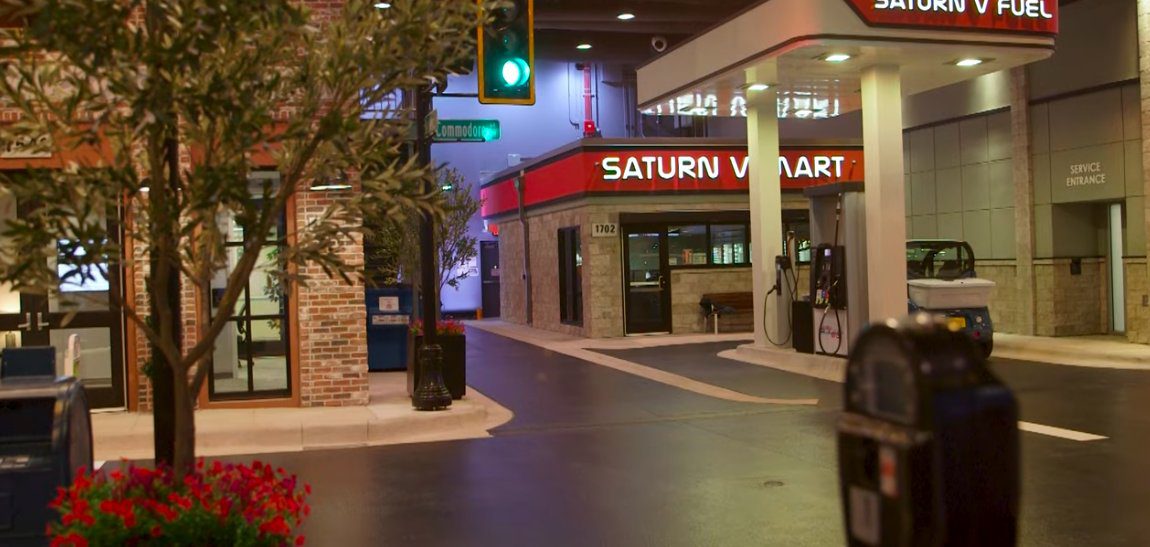
The facility is called the Kinetic Cyber Range, and it looks remarkably similar to a real American town. The difference is that every building is packed with functioning computers, networks, servers, security systems, smart devices, and digital infrastructure designed to mimic the real world. FBI trainees can walk through a house filled with internet-connected devices, investigate a cyberattack at a hospital, or execute a search warrant on a business network exactly as they would in a real criminal investigation.
According to the FBI, the goal is simple: stop teaching cybercrime solely from textbooks and start putting investigators into realistic situations before they hit the field. More than 1,400 students have already gone through the facility since it opened in February 2025. The students include FBI personnel as well as investigators from other agencies.
A Fake Town Like Nothing You Have Ever Seen
What makes this place fascinating is how detailed it is. The fake town contains fully furnished homes, corporate networks, hotel systems, critical infrastructure, and a data center running more than 200 servers. Some run Windows, others Linux, giving investigators exposure to the kinds of systems they may encounter during actual cybercrime investigations.
One training exercise simulates a ransomware attack against a hospital. Another involves extracting data from a vehicle’s electronic control unit—the digital brain of modern cars. Investigators learn how to piece together digital evidence that can reveal where a vehicle traveled, how it was used, and potentially who was driving it.
Now, if you’re like me, your first thought might be, “Wait a second… a fake town?” It sounds eerily similar to the mock cities the military has used for decades to train soldiers before deployment. In fact, the U.S. military has long built entire simulated communities to prepare troops for urban warfare and modern battlefield scenarios.
The difference is that the battlefield today isn’t always overseas. Increasingly, it’s online.
Cybercrime Costs Americans in the Billions
Cybercrime has exploded into a multi-billion-dollar problem. According to reporting on the FBI’s new facility, Americans lost a record $20.9 billion to cybercrime in 2025 alone. Ransomware attacks continue to target hospitals, schools, governments, and critical infrastructure.
That reality helps explain why the Bureau is investing so heavily in hands-on cyber training. A classroom can teach theory. It can’t replicate the pressure of a hospital system going dark because hackers locked up patient records, or the chaos of a business network being compromised while investigators race to preserve evidence. The FBI wants its agents to experience those scenarios before they’re responsible for handling them in real life.
Of course, this kind of facility will also raise questions among privacy advocates and civil libertarians. Some critics have long expressed concerns about the growing capabilities of law enforcement when it comes to digital forensics, device extraction, and cyber investigations. As technology becomes more integrated into every aspect of daily life, the line between fighting cybercrime and protecting privacy will continue to be a topic of debate.
What’s interesting is the public reaction online. Some people are impressed by the realism and see it as a necessary evolution in law enforcement training. Others question the cost or joke that the FBI built itself a real-life version of a movie set. One commenter summed up the concept by saying that cyberattacks don’t happen in isolation—a hack against one part of a community can quickly cascade into other systems, something that’s difficult to appreciate in a traditional classroom setting.
Whether you find it impressive or unsettling, one thing is clear: the FBI understands that the next generation of crime fighters will need a different skill set than the agents of the past. Today’s investigators aren’t just chasing bank robbers or organized crime figures. They’re tracing ransomware gangs, digital fraud networks, international hackers, and cybercriminals operating halfway around the world.
And apparently, they’re practicing for it in a fake town hidden inside a giant warehouse in Alabama.
That’s a sentence I never expected to write. Stick with SFL.media for more about all types of cybercrime


















































Want to join the conversation?
Create an account or sign in to share your thoughts, vote,
and reply to other readers.
Showing 0 of 0 comments
Don't have an account?
Already have an account?