

Pete Hegseth Awards Medal to Soldier Who Publicly Reprimanded Him at Arlington National Cemetery After Veterans Day Controversy
WASHINGTON, D.C. — Defense Secretary Pete Hegseth awarded a prestigious military decoration Thursday to the Army soldier who publicly reprimanded him and members of his entourage for talking and laughing near the Tomb of the Unknown Soldier at Arlington National Cemetery, transforming an embarrassing Veterans Day confrontation into an extraordinary Pentagon ceremony less than 24 hours later.
Army Specialist Thomas Iglesias, a sentinel assigned to the U.S. Army’s elite 3rd Infantry Regiment, known as The Old Guard, received the Joint Service Commendation Medal after video of his forceful warning to the defense secretary’s group spread across social media and national news broadcasts. The incident occurred Wednesday following a Veterans Day observance attended by President Donald Trump, Vice President JD Vance, senior military officials, and members of the administration.
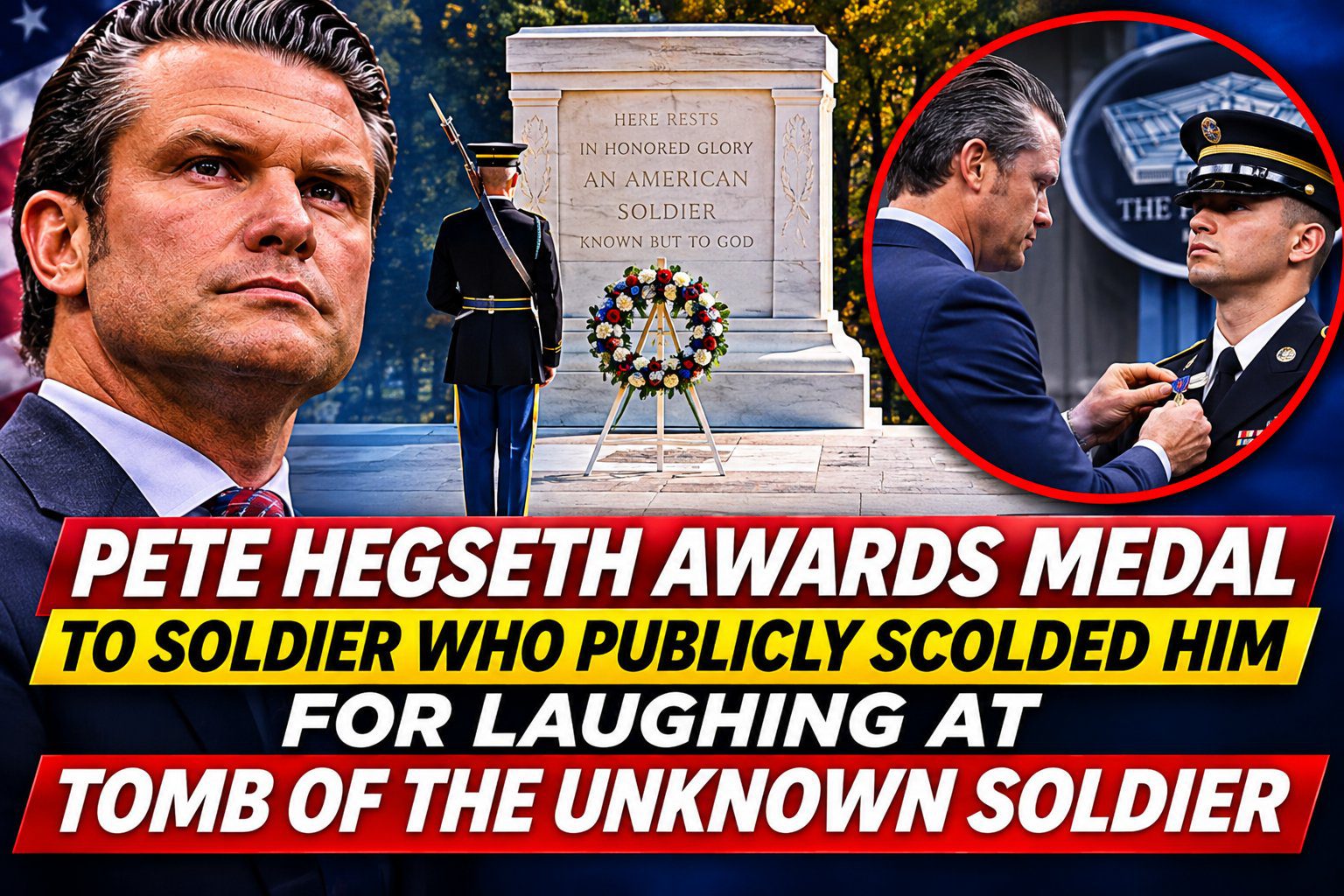
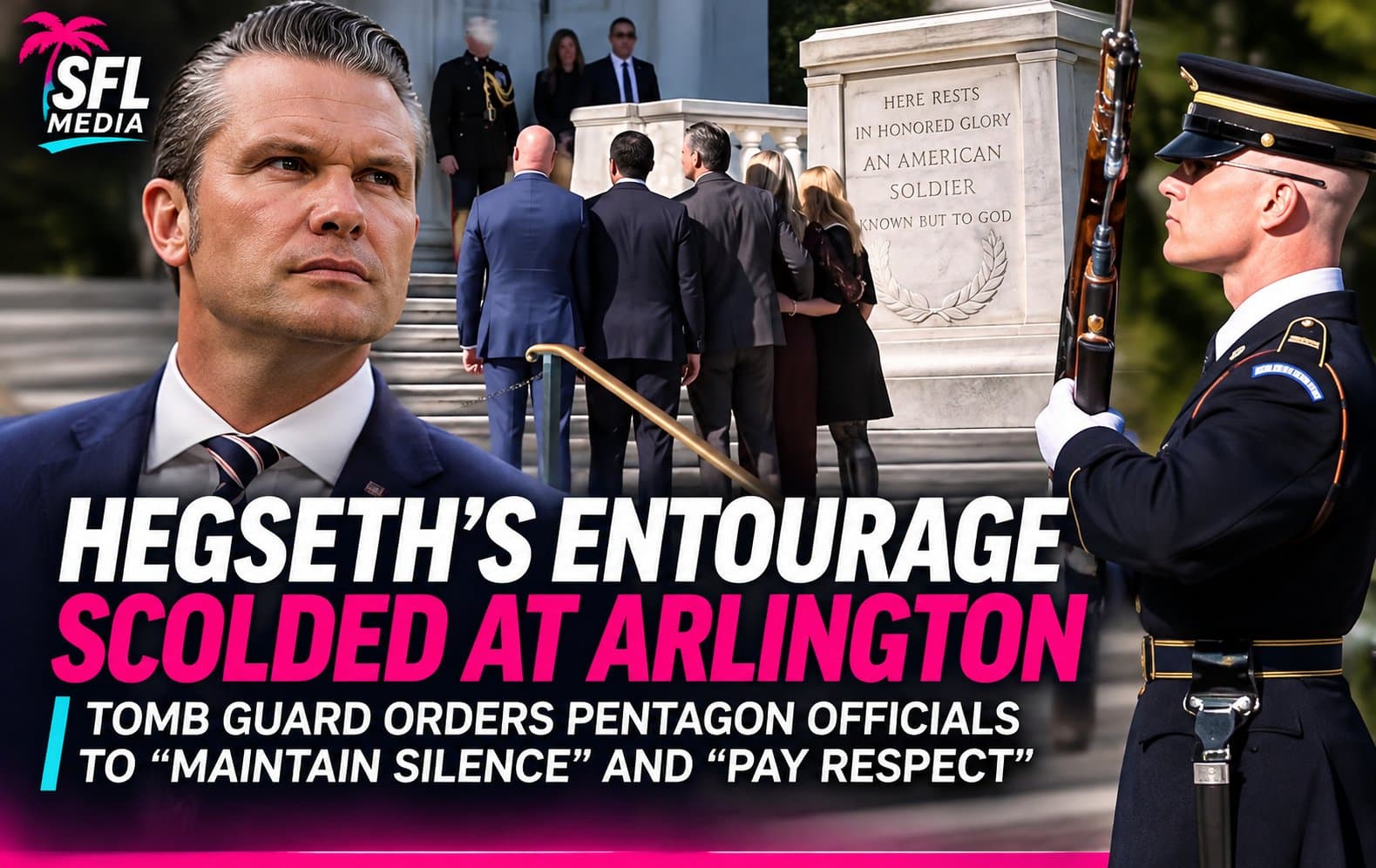
The footage showed Hegseth, his wife Jennifer, and several senior aides posing for photographs near one of the nation’s most sacred military memorials. As the group began leaving, laughter and conversation could be heard, prompting Iglesias to stop his ceremonial patrol, turn toward the visitors, and issue a commanding reminder of the rules governing conduct at the tomb.
“All visitors will maintain an atmosphere of silence and respect at all times!”
The reprimand quickly became a political controversy, drawing criticism from veterans, former lawmakers, and military observers who questioned why the nation’s highest-ranking civilian defense official and his staff needed to be reminded of basic cemetery protocol. By Thursday morning, however, Hegseth had invited Iglesias and fellow members of The Old Guard to the Pentagon, where he personally presented the soldier with a commendation and publicly praised his professionalism.
The rapid reversal attracted attention because Hegseth was already confronting substantial political pressure, including an impeachment effort that House Republicans had moved to committee just one day before the Arlington incident. Although the medal ceremony was widely interpreted as an attempt to contain the public-relations fallout, there is no independently established evidence that the award was organized specifically as political damage control.
A Veterans Day Ceremony Turns Into an Embarrassing Public Confrontation
The incident unfolded Wednesday after the annual Veterans Day wreath-laying ceremony at Arlington National Cemetery, where senior government and military leaders gathered to honor Americans who died serving their country. Following the formal observance, Hegseth and members of his staff remained near the Tomb of the Unknown Soldier to take photographs, including images on the memorial’s steps.
Among those accompanying the defense secretary were his wife, Jennifer Hegseth; chief of staff Ricky Buria; deputy chief of staff Patrick Weaver; and senior adviser Tami Radabaugh. Video recorded by television cameras showed the group posing together before laughter and conversation became audible as they began to depart. The footage does not clearly establish who laughed or whether Hegseth himself made the noise that prompted the warning.
Iglesias, who was patrolling in front of the monument, immediately responded by turning toward the group and delivering the same authoritative instruction that tomb guards routinely issue when visitors disrupt the solemn atmosphere. The soldier’s intervention was neither a spontaneous insult nor a political statement; maintaining silence and respect is an established responsibility of the sentinels assigned to the memorial.
The moment nevertheless carried unusual significance because the visitors included the defense secretary, the civilian leader responsible for overseeing the United States military. Rather than ignoring the disturbance because of the group’s status, Iglesias enforced the rules without making an exception for the senior official standing nearby.
Video of the exchange spread rapidly online, drawing widespread attention to the contrast between the soldier’s discipline and the conduct of the visiting delegation. Critics argued that Hegseth and his aides should have understood the solemnity of the location without requiring a public reminder, particularly during a national observance dedicated to honoring military service and sacrifice.
The Pentagon Defends the Soldier as Criticism Mounts
The Pentagon moved quickly to address the controversy, acknowledging that the sentinel had acted appropriately and rejecting any suggestion that he should face consequences for reprimanding the defense secretary’s group. Chief Pentagon spokesperson Sean Parnell defended the soldier’s conduct Wednesday, explaining that the department continued to honor the sacrifices of American service members and that Iglesias had properly enforced the memorial’s standards.
“A soldier correctly and respectfully reminded everyone to maintain decorum,” Parnell said.
The statement was significant because it publicly affirmed the authority of a junior enlisted soldier to enforce military standards even when senior government officials were involved. It also helped address speculation that Iglesias might face retaliation for embarrassing the defense secretary in front of television cameras.
Former Republican Rep. Adam Kinzinger, an Air National Guard veteran and outspoken critic of Hegseth, condemned the episode and praised the sentinel for maintaining the dignity of the memorial. Kinzinger described the conduct of the visiting group as inappropriate and argued that the defense secretary should have demonstrated greater awareness of the setting.
The controversy also highlighted the strict traditions surrounding the Tomb of the Unknown Soldier, where guards are expected to maintain ceremonial precision and intervene whenever visitors become disruptive. Such corrections are not unusual, but they rarely involve someone with the defense secretary’s authority or attract national political attention.
Hegseth Invites the Soldier to the Pentagon and Awards Him a Medal
By Thursday, the confrontation had taken an unexpected turn. Hegseth welcomed Iglesias and members of the 3rd Infantry Regiment to the Pentagon and personally presented the specialist with the Joint Service Commendation Medal for his performance at Arlington National Cemetery the previous day. Photographs released after the ceremony showed Hegseth pinning the decoration on Iglesias and shaking his hand. The defense secretary subsequently posted images of the presentation on social media, offering a brief statement praising the soldier’s professionalism and commitment to military standards.
“We love soldiers. We love standards. Well done, Specialist. Carry on Patriots.”
The Joint Service Commendation Medal recognizes meritorious achievement or service involving joint military activities and is a substantial decoration, particularly for a junior enlisted soldier. It is not a combatonly award, but its presentation by the defense secretary for a single incident involving enforcement of ceremonial standards made Thursday’s ceremony especially notable.
The Pentagon said the award recognized Iglesias for carrying out his duties at the Tomb of the Unknown Soldier on November 11. The public presentation also sent a message that the soldier’s conduct was not merely tolerated but formally celebrated by the senior official whose entourage had been reprimanded. The gesture effectively shifted the immediate narrative from a confrontation between a defense secretary and an enlisted sentinel to a public demonstration of respect for military discipline. Whether that outcome was the administration’s primary intention remains a matter of interpretation rather than an established fact.
Was the Medal Ceremony an Act of Leadership or Political Damage Control?
The speed of the Pentagon ceremony raised an obvious question: Would Iglesias have received such a prominent decoration if the confrontation had not been recorded and widely circulated?
The timing fueled criticism that Hegseth was attempting to neutralize an embarrassing story before it caused additional political damage. A public medal ceremony allowed the defense secretary to demonstrate support for the soldier, eliminate concerns about possible retaliation, and present himself as a leader who respects military standards even when those standards are enforced against his own delegation.
There is also a less cynical interpretation. Hegseth could have viewed the incident as an opportunity to recognize a soldier who performed his duties correctly under unusual circumstances, reinforcing the principle that military regulations apply regardless of rank or political influence.
Both explanations are consistent with the publicly documented sequence of events. The video shows the reprimand, the Pentagon publicly supported Iglesias, and Hegseth awarded him a medal the following morning. What has not been established is whether political advisers recommended the ceremony as a response to the backlash or whether the defense secretary independently decided that the soldier deserved recognition.
The distinction matters because the incident involves both legitimate military leadership questions and political optics. A senior official publicly acknowledging that a subordinate acted correctly can reinforce institutional discipline, even when the recognition follows an embarrassing episode involving that official. Nevertheless, the unusually rapid award ceremony ensured that a moment of public criticism became an opportunity for the Pentagon to deliver a different message about Hegseth’s relationship with the troops.
The Tomb of the Unknown Soldier and the Standards Its Guards Enforce
The Tomb of the Unknown Soldier is among the most revered memorials in the United States, honoring unidentified American service members whose sacrifices represent generations of military personnel killed in war. Located at Arlington National Cemetery, the monument serves as a national place of remembrance for those who died without their identities being established.
Soldiers have maintained a continuous military watch at the tomb since 1937, with members of the 3rd U.S. Infantry Regiment assuming responsibility for the ceremonial guard mission in 1948. The sentinels are selected and trained to uphold exacting standards of appearance, movement, discipline, and conduct, performing their duties in all weather conditions and throughout the year.
Their responsibilities extend beyond ceremonial marching. Guards are also authorized to correct visitors who speak loudly, laugh, approach restricted areas, or otherwise interfere with the solemn atmosphere. Former tomb guards have explained that such interventions occur regularly, often because visitors become distracted or fail to appreciate how far their voices carry across the memorial.
That tradition is what made Iglesias’ response both ordinary and extraordinary. His warning was consistent with established procedure, but the presence of the defense secretary transformed a routine enforcement action into a nationally televised political moment.
The incident demonstrated that the tomb’s standards are intended to apply equally to ordinary tourists, military personnel, elected officials, and senior members of the federal government. Iglesias’ responsibility was to protect the dignity of the memorial, not to determine whether the people violating its rules were powerful enough to receive an exception.
Arlington Controversy Comes Amid Hegseth’s Impeachment Battle
The episode unfolded during an especially difficult week for Hegseth, who had faced a House impeachment effort just one day earlier over allegations involving unauthorized military operations and controversial strikes against suspected drug trafficking vessels.
On November 10, Republican Rep. Thomas Massie of Kentucky introduced eight articles of impeachment accusing Hegseth of abusing military authority and violating constitutional restrictions on the use of force. The allegations included operations involving Iran, Yemen, Venezuela, and a maritime campaign in which American forces have killed suspected traffickers, including survivors of a disabled vessel.
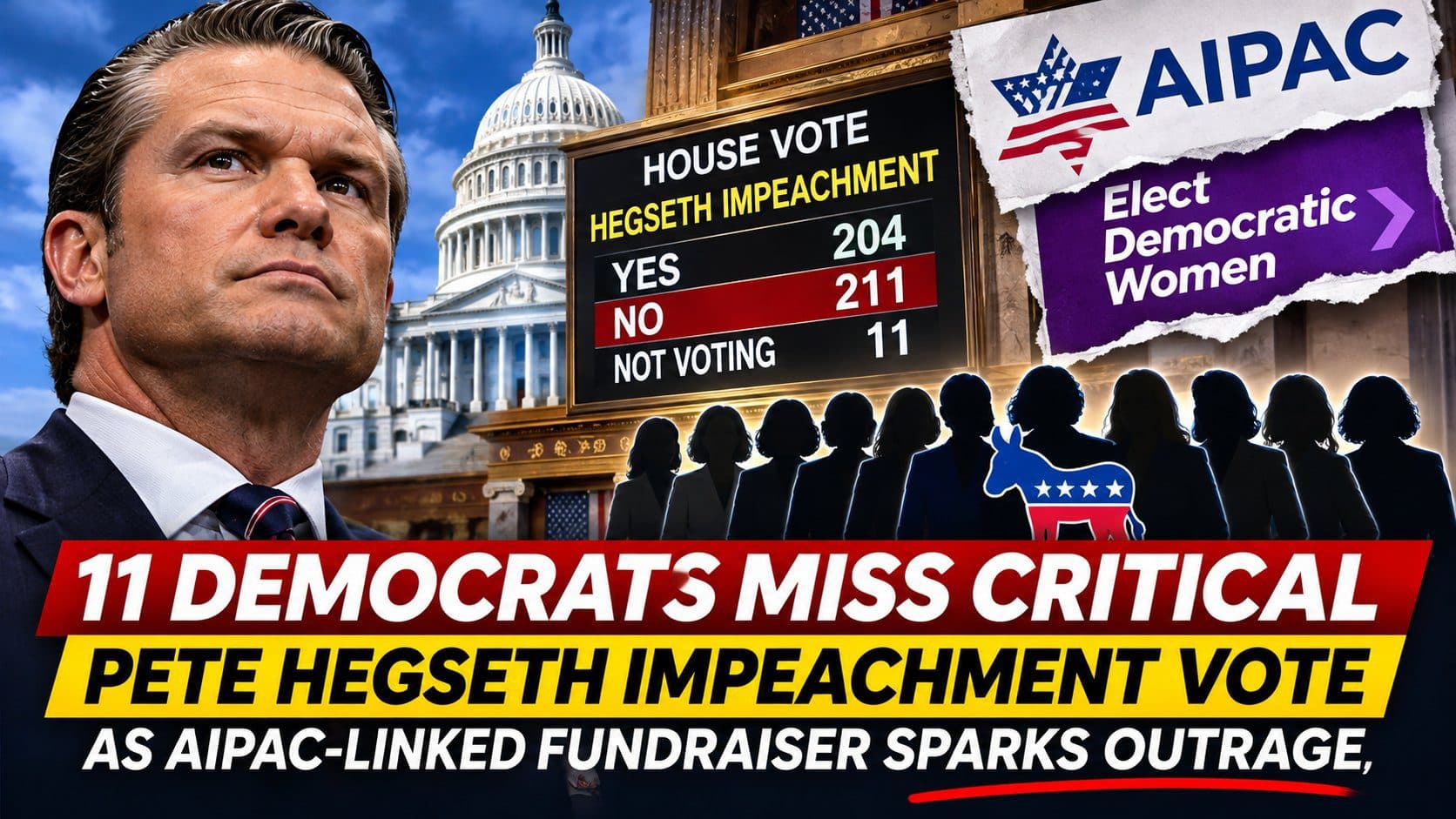
House Republicans voted 211–204 to refer the impeachment resolution to the Judiciary Committee, effectively delaying further action. Eleven Democratic lawmakers missed the procedural vote, contributing to the outcome, although the referral did not constitute a legal judgment on the underlying allegations. Hegseth rejected the impeachment effort, maintaining that his military decisions were lawful and accusing political opponents of undermining American service members. The controversy remains politically significant because the incoming Democratic congressional majority could revisit the allegations and demand additional oversight of Pentagon operations.
The Arlington incident was unrelated to the substance of those impeachment charges. However, it added another public controversy to an already contentious period for the defense secretary and placed renewed attention on his judgment, leadership, and treatment of military traditions.
A Junior Soldier’s Reminder Becomes a National Lesson in Military Discipline
What began as a routine Veterans Day observance ultimately produced an unusual reversal of military hierarchy: A junior enlisted soldier publicly corrected the defense secretary’s delegation, and the defense secretary personally honored that soldier the following morning.
For Iglesias, the incident demonstrated the responsibilities entrusted to members of The Old Guard, whose ceremonial duties require them to enforce standards without regard to the prominence of visitors. His actions were consistent with the expectations of his assignment, and the Pentagon’s decision to recognize him reinforced the authority of the sentinels responsible for protecting the memorial.
For Hegseth, the episode created both an embarrassing public moment and an opportunity to demonstrate respect for the military standards his own group had been reminded to observe. Whether the medal ceremony was motivated by genuine admiration, political necessity, or a combination of both, the result was a rare public acknowledgment that even the defense secretary’s entourage is subject to the rules governing Arlington National Cemetery.
The controversy also offered a reminder that the Tomb of the Unknown Soldier is not simply a backdrop for official photographs. It is a place dedicated to Americans who died serving their country, including those whose names and identities were never recovered.
Specialist Thomas Iglesias did not need to know who was standing behind him to carry out his duty. He only needed to recognize that the standards protecting the dignity of the Tomb of the Unknown Soldier were being violated.
The Pentagon’s decision to award him a medal may have changed the political conversation surrounding the incident, but it did not change the underlying lesson. At Arlington, the obligation to honor the fallen does not disappear when the nation’s most powerful military officials arrive.

Sources & Further Reading
- Associated Press — Hegseth Awards Soldier Who Reprimanded Him at Tomb of the Unknown Soldier
- CBS News — Hegseth’s Group Reprimanded for Making Noise at Tomb of the Unknown Soldier
- CNN — Hegseth Awards Medal to Soldier Who Reprimanded Him at Arlington Cemetery
- Reuters / Defense News — Guard Appears to Rebuke Hegseth’s Delegation at Tomb of the Unknown Soldier
- The Guardian — Hegseth and Aides Scolded by Guard for Laughing at Tomb of the Unknown Soldier
- The Washington Post — Hegseth and Entourage Reprimanded by Military Sentinel at Arlington
- CBS News — Original Video Report
- South Florida Media — National News and Political Reporting









Loading comments…