
P.F. Chang’s at Fort Lauderdale’s Galleria Mall Hit With Emergency Closure After Sewage Backup, Live Roaches Found
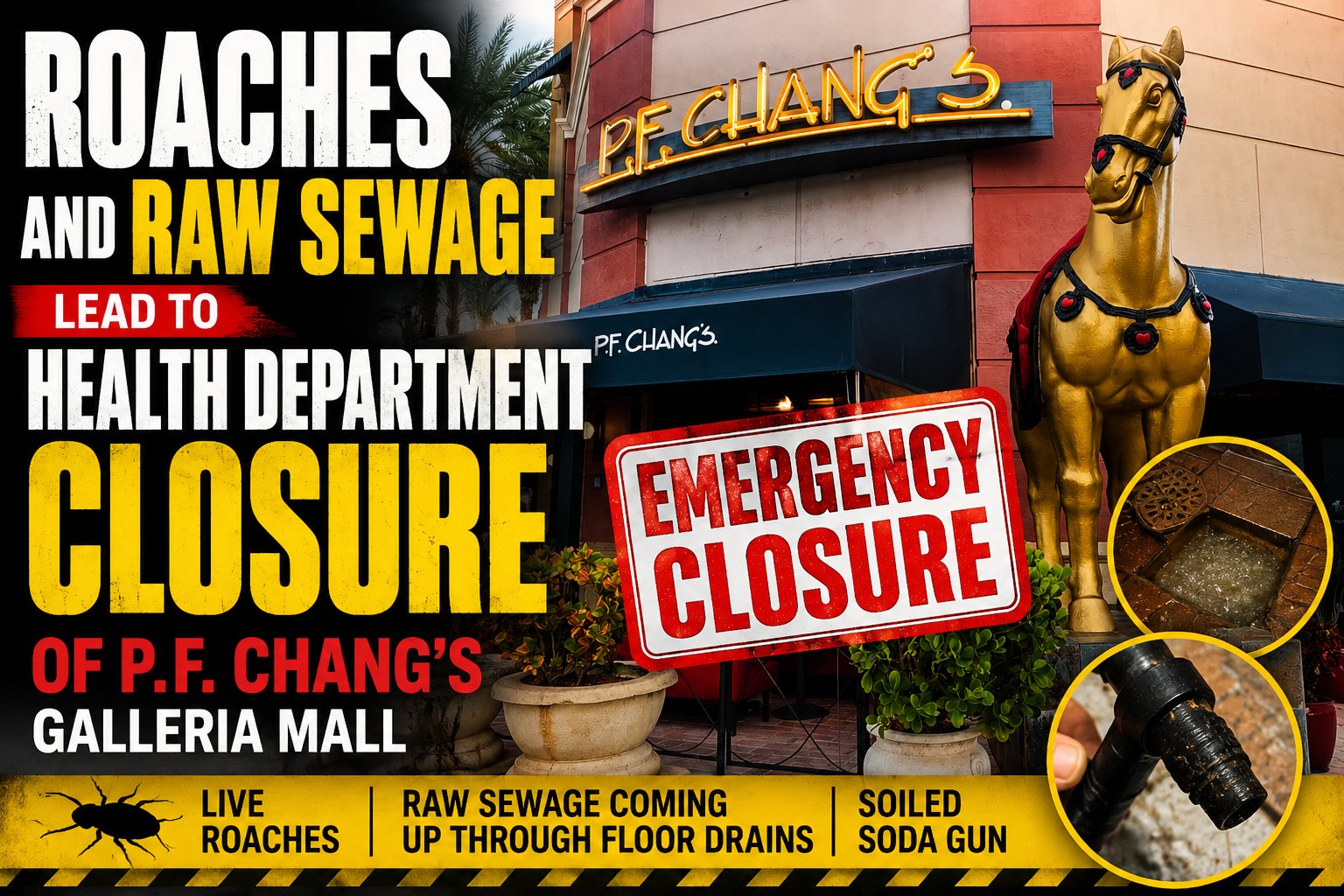
FORT LAUDERDALE, Fla. — A popular Broward County restaurant has landed on South Florida’s latest “Dirty Dining” list after state inspectors ordered an emergency closure over serious health and sanitation violations. According to a recent inspection by the Florida Department of Business and Professional Regulation (DBPR), the P.F. Chang’s location inside The Galleria at Fort Lauderdale was temporarily shut down after inspectors documented raw sewage backing up through kitchen floor drains, live roach activity, and multiple other highmpriority health violations. The findings were first highlighted in an investigative report by WPLG Local 10 News consumer investigator Jeff Weinsier.
Raw Sewage Triggered Emergency Shutdown
The most serious violation involved wastewater backing up through floor drains in the kitchen. Under Florida health regulations, sewage backups are considered an immediate public health hazard because contaminated water can spread dangerous bacteria and viruses throughout food preparation areas. When inspectors encounter sewage or wastewater entering an active kitchen, restaurants are typically required to cease operations immediately until the contamination has been eliminated and the facility can be safely sanitized. The violation resulted in an emergency closure of the restaurant.
Live Roaches Found in the Kitchen
Inspectors also documented live roaches inside food preparation and service areas. Cockroach activity is classified as a high priority violation because the insects can contaminate food, utensils, and food contact surfaces while spreading bacteria and other pathogens throughout a kitchen. Live pest activity, especially when combined with sewage contamination, significantly increases health risks and often results in immediate corrective action by state inspectors.
Additional Sanitation Issues
The inspection report identified several other sanitation concerns, including a heavily soiled beverage soda dispensing gun. Soda nozzles and dispensing equipment require routine cleaning because moisture and sugar residue can quickly become breeding grounds for bacteria, mold, and yeast when not properly maintained. Combined with the sewage backup and pest activity, inspectors determined the overall sanitation conditions warranted an emergency shutdown.
What Happens After an Emergency Closure?
Florida restaurants ordered closed by the DBPR cannot reopen until they correct all violations and pass a follow-up inspection conducted by state officials.
Typically, operators must:
- Eliminate the source of the sewage backup.
- Professionally clean and sanitize all affected food preparation areas.
- Address pest activity through approved extermination measures.
- Correct any remaining health code violations.
- Pass a successful reinspection before serving customers again.
Many establishments are able to reopen within days after completing the required corrective actions, although reopening depends entirely on state inspectors verifying that all health hazards have been resolved.
Part of South Florida’s Latest ‘Dirty Dining’ Report
The P.F. Chang’s inspection was one of several restaurants featured in Local 10’s latest “Dirty Dining” investigation, which also highlighted restaurants across Broward, Miami Dade, and the Florida Keys that accumulated serious health violations during recent inspections. Among the issues uncovered across the region were emergency closures, repeated employee food safety training deficiencies, wastewater problems, pest infestations, and restaurants accumulating more than 30 health violations during a single inspection. The findings serve as a reminder that Florida restaurants undergo routine unannounced inspections throughout the year, with state inspectors empowered to immediately close establishments when conditions pose an imminent threat to public health.
Restaurant inspection reports are public records maintained by the Florida Department of Business and Professional Regulation, allowing consumers to review sanitation histories before dining.






































Want to join the conversation?
Create an account or sign in to share your thoughts, vote,
and reply to other readers.
Showing 0 of 0 comments
Don't have an account?
Already have an account?