
A Huge Acquisition for Fox Corp.
In one of the biggest media deals in recent years, Fox Corporation has announced plans to acquire streaming giant Roku in a cash-and-stock transaction valued at approximately $22 billion. The blockbuster acquisition marks Fox’s largest deal ever and signals a dramatic shift in how traditional media companies are positioning themselves for the future of television.
For years, Fox has remained one of the few major media companies that resisted pouring tens of billions of dollars into subscription streaming services. While competitors such as Disney, Warner Bros. Discovery, and Paramount raced to build direct-to-consumer platforms, Fox focused heavily on live sports, news programming, and free ad-supported content through its acquisition of Tubi in 2020. Now, the company appears to be taking a different approach. Not by building another streaming service, but by purchasing one of the largest gateways through which Americans already watch television.
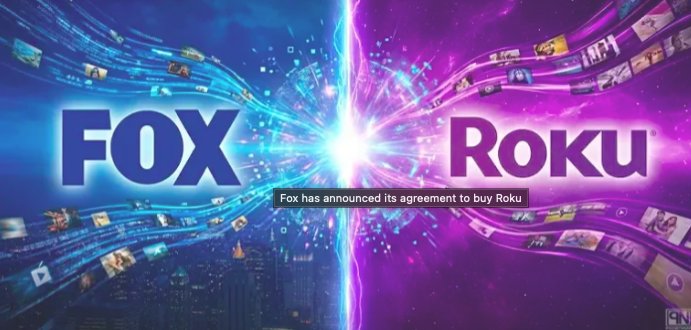
Roku is far more than a streaming device manufacturer. The company has evolved into one of the most influential platforms in connected television, reaching roughly 100 million households through its streaming devices, smart TV operating system, advertising network, and The Roku Channel. By acquiring Roku, Fox gains direct access to a massive audience and valuable advertising data while securing a powerful position in the rapidly growing connected-TV marketplace.
The History of Roku: From Netflix Side Project to Streaming Giant
Long before Roku became one of the biggest names in streaming television, it began as a relatively small technology project with a simple goal: helping people watch digital content on their televisions.
The company was founded by entrepreneur Anthony Wood, a technology executive who had already enjoyed success in the digital video industry. Wood believed that internet-delivered television would eventually replace traditional cable and satellite services, a prediction that seemed far-fetched to many observers in the early 2000s. In 2002, he founded Roku in Silicon Valley and began developing products designed to bridge the gap between the internet and the living room television.
Roku’s big break came when Wood worked closely with Netflix during the early days of streaming video. Netflix wanted a simple device that would allow subscribers to stream movies and television shows directly to their televisions without needing a computer. The result was the first Roku streaming player, released in 2008. What began as a Netflix-focused device quickly evolved into a broader platform capable of supporting multiple streaming services. As online video consumption exploded, Roku found itself perfectly positioned to benefit.
During the following decade, Roku transformed from a hardware company into a platform business. Instead of relying solely on profits from streaming devices, Roku developed software for smart televisions, built an advertising network, and created partnerships with content providers. The company’s operating system became embedded in televisions manufactured by multiple brands, helping Roku reach millions of households without requiring consumers to purchase a separate streaming device.
One of Roku’s most important strategic decisions was remaining largely neutral in the streaming wars. Unlike Netflix, Disney, or Amazon, Roku did not focus on producing massive amounts of original content. Instead, it positioned itself as the gateway through which consumers could access virtually every major streaming service. Whether viewers subscribed to Netflix, Hulu, Disney+, Max, Peacock, or dozens of smaller platforms, Roku wanted to be the front door to that experience. This neutral-platform approach helped fuel extraordinary growth.
As the company expanded, advertising became increasingly important. Roku discovered that the real money wasn’t necessarily in selling streaming sticks and devices. Instead, it came from digital advertising, subscription partnerships, and the vast amount of viewer data generated by its platform. By the mid-2020s, the overwhelming majority of Roku’s revenue came from its platform business rather than hardware sales.
Roku also launched The Roku Channel, a free ad-supported streaming service that offered movies, television shows, live channels, and original programming. The channel became one of the company’s fastest-growing assets and helped Roku compete more directly in the content business while maintaining its position as a neutral platform.
Today, Roku reaches tens of millions of households and has become one of the most influential companies in connected television. What started as a small streaming box has evolved into a major advertising, software, and media platform that sits at the center of the modern television experience.
That success is precisely why Fox was willing to spend $22 billion to acquire the company. Roku is no longer simply a gadget maker. It is one of the primary gateways through which Americans discover, watch, and interact with television. In an era when controlling distribution may be just as important as creating content, Roku has become one of the most valuable strategic assets in media.
Fox’s Biggest Acquisitions: How the Media Giant Built Its Digital Empire
The announcement that Fox Corporation will acquire Roku for approximately $22 billion marks the largest acquisition in the company’s history. While the price tag grabbed headlines, the deal is actually the latest chapter in a strategy that Fox has been quietly pursuing since its modern incarnation was created in 2019 following the breakup of Rupert Murdoch’s media empire.
When Disney purchased most of 21st Century Fox’s entertainment assets in 2019, the remaining businesses—including Fox News, Fox Sports, and the Fox broadcast network—were spun off into the newly formed Fox Corporation. Under the leadership of Executive Chairman and CEO Lachlan Murdoch, the company took a very different approach from many of its media competitors. Rather than spending billions creating a subscription streaming service to compete directly with Netflix and Disney+, Fox focused on acquiring strategic digital assets that could expand its reach while maintaining profitability.
One of Fox’s first major acquisitions came in 2019 when it purchased financial technology company Credible Labs for approximately $397 million. The acquisition signaled that Fox was interested in expanding beyond traditional media and exploring digital businesses capable of generating recurring revenue streams. Around the same time, Fox also acquired animation studio Bento Box Entertainment, the company behind popular animated shows including “Bob’s Burgers.” The purchase strengthened Fox’s animation portfolio and gave the company greater control over content production.
However, Fox’s most significant move before Roku arrived in 2020 when it purchased the free streaming service Tubi for $440 million. At the time, many analysts questioned whether a free ad-supported streaming platform could compete in a market increasingly dominated by subscription services. Fox executives saw things differently. They believed consumers would eventually experience subscription fatigue and begin seeking free alternatives supported by advertising.
That gamble paid off. Tubi grew rapidly under Fox ownership and became one of the leading free ad-supported streaming services in the United States. By 2023, Fox had elevated Tubi to the center of its digital strategy, creating the Tubi Media Group to oversee not only the streaming service but also several of Fox’s digital properties and initiatives. Lachlan Murdoch described the acquisition as a cornerstone of Fox’s streaming strategy, and the service has continued to expand its audience and content offerings.
The Roku acquisition takes Fox’s strategy to an entirely new level. While previous acquisitions focused on content, advertising, or digital services, Roku gives Fox something even more valuable: distribution. Instead of simply owning programming, Fox now gains control of one of the primary platforms through which millions of Americans access television and streaming services.
Viewed together, Fox’s acquisitions reveal a consistent pattern. The company has largely avoided the costly subscription-streaming arms race and instead invested in businesses that generate advertising revenue, collect audience data, and provide direct access to consumers. The acquisition of Roku may be the culmination of that strategy, transforming Fox from a traditional media company into one of the most powerful gatekeepers in the streaming ecosystem.
If the deal receives regulatory approval and closes as expected in 2027, Fox will own not only some of the most-watched news and sports programming in America, but also one of the most influential platforms delivering that content to viewers. That combination could reshape the media landscape for years to come.
A Defining Moment for Fox Corp.
Fox CEO Lachlan Murdoch described the acquisition as a “defining moment” for the company, arguing that the combination of Fox’s live sports, news, and entertainment programming with Roku’s distribution platform creates a unique opportunity in the streaming era. Rather than simply owning content, Fox is now moving to control both the content and the platform that delivers it.
The strategic logic behind the deal is clear. Traditional cable television continues to lose subscribers each year, forcing media companies to find new ways to reach viewers. Roku’s operating system has become one of the dominant platforms in connected TV, serving as the digital front door for millions of households. By owning Roku, Fox gains influence over one of the most important distribution channels in modern media. Analysts have described the acquisition as Fox’s recognition that controlling the platform may be just as important as controlling the programming itself.
The acquisition also creates significant opportunities in advertising. Connected television advertising has become one of the fastest-growing segments in media, attracting marketers who are shifting budgets away from traditional cable and broadcast television. Combining Roku’s advertising technology and audience data with Fox’s extensive sports and news programming could create a powerful advertising ecosystem capable of competing with streaming giants such as Netflix, YouTube, and Amazon.
Another major component of the deal involves free ad-supported streaming television, often referred to as FAST. Roku already operates The Roku Channel, while Fox owns Tubi, one of the largest free streaming services in the United States. Bringing those platforms together could create a dominant player in the growing free-streaming market, providing viewers with an alternative to increasingly expensive subscription services.
Not everyone is celebrating the merger, however. Some Roku users have already expressed concerns online about Fox’s ownership of the platform. Critics worry that Fox could prioritize its own content, particularly Fox News and Fox Sports, over competing services. Others fear that advertising and content recommendations could become more heavily influenced by Fox’s corporate interests. While Roku executives have emphasized that the platform will remain open and neutral, industry observers are watching closely to see whether the acquisition ultimately changes the way content is presented to viewers.
Industry analysts are also debating what the future of Roku could look like under Fox ownership. Some expect deeper integration of Fox Sports and Fox’s streaming initiatives into Roku’s user interface. Others predict that Roku will abandon side businesses such as smart-home products and focus more heavily on streaming, advertising, and international expansion. If those predictions prove accurate, Roku could become an even more central player in the battle for television audiences.
The transaction is expected to close during the first half of 2027, pending regulatory approval. Once completed, Fox shareholders are expected to own approximately 73 percent of the combined company, while Roku shareholders will own the remaining 27 percent. Roku founder and CEO Anthony Wood is expected to join Fox’s board and continue playing an active role in the company’s future.
Whether the deal proves to be a visionary move or an expensive gamble remains to be seen. What is clear is that Fox is making a bold statement about the future of media. In a world where streaming platforms increasingly control how audiences discover and consume content, owning the digital gatekeeper may ultimately be more valuable than owning the shows themselves. With Roku now under its umbrella, Fox is betting $22 billion that the future of television belongs not just to content creators, but to the companies that control the screen viewers see first when they turn on their TVs.




















































Want to join the conversation?
Create an account or sign in to share your thoughts, vote,
and reply to other readers.
Showing 0 of 0 comments
Don't have an account?
Already have an account?