
SIDEPIECE Turns Radius Chicago Into a Two Hour Tech House Pressure Cooker
CHICAGO — SIDEPIECE delivered nearly two hours of relentless basslines, vocal flips and tightly controlled dance floor escalation during a full length performance at Radius Chicago, showcasing why the Grammy nominated duo has become one of the most dependable forces in modern tech house.
The set, released online as “SIDEPIECE @ Radius Chicago 2026,” captures producers Ricky Mears and Dylan Ragland, better known individually as NITTI and Party Favor, working through a fast moving blend of tech house, hip hop edits, pop vocals and heavier club production. The performance runs approximately one hour and 57 minutes and had attracted roughly 100,000 YouTube views within several months of its release. (YouTube)
Rather than treating the night as a parade of isolated drops, SIDEPIECE constructs the performance as one sustained groove. Tracks overlap, vocals appear and disappear, and transitions arrive before the audience has fully processed the last record. That approach gives the set its central strength: momentum.
SIDEPIECE Builds the Set Around Movement, Not Spectacle
The video begins with a brief fan interview that establishes the atmosphere surrounding a SIDEPIECE show before the duo settles into a driving opening sequence. Within the first several minutes, the performance establishes its essential formula, thick kick drums, rolling basslines, recognizable vocal fragments and carefully timed releases of tension.
The production is built for physical response. There are few extended pauses, few sentimental introductions and little interest in stopping the night so the performers can address the audience at length. SIDEPIECE instead communicates through sequencing. A familiar vocal may pull the crowd toward a song it recognizes, but the surrounding beat rarely follows the original arrangement. Pop and dance references are stripped down, rearranged and placed over heavier club foundations. The result is music that feels immediately recognizable without becoming predictable.
A Duo Created From Two Established Dance-Music Careers
SIDEPIECE was formed by Ragland and Mears after both had already developed separate careers within electronic music. Ragland built Party Favor around bass music, trap and festival ready production, while the Miami based Mears became known for working across electronic, Latin and hip hop records under the Nitti Gritti and later NITTI names.
The two formally launched SIDEPIECE in 2019. Their collaboration with Diplo, “On My Mind,” became the project’s breakthrough release and earned a nomination for Best Dance Recording at the 2021 Grammy Awards. (Instagram) Their partnership works because neither producer appears trapped by the genre that first made him successful.
The Radius performance is grounded in house music, but traces of the duo’s broader backgrounds remain audible. Hip hop phrasing, aggressive low end production and festival scale transitions repeatedly cut through the cleaner tech house framework. That combination has allowed SIDEPIECE to occupy a lucrative middle ground between underground club music and accessible mainstream dance production.
Radius Chicago Gives the Set Room to Breathe
The venue is an important part of the performance.
Radius Chicago is a 55,000 square foot, multiroom entertainment complex inside a converted industrial building in the city’s East Pilsen area. Its main room uses a large scale d&b audiotechnik KSL sound system designed for high-output electronic performances, while the venue’s capacity has been listed at approximately 4,000 people. (Radius Chicago)
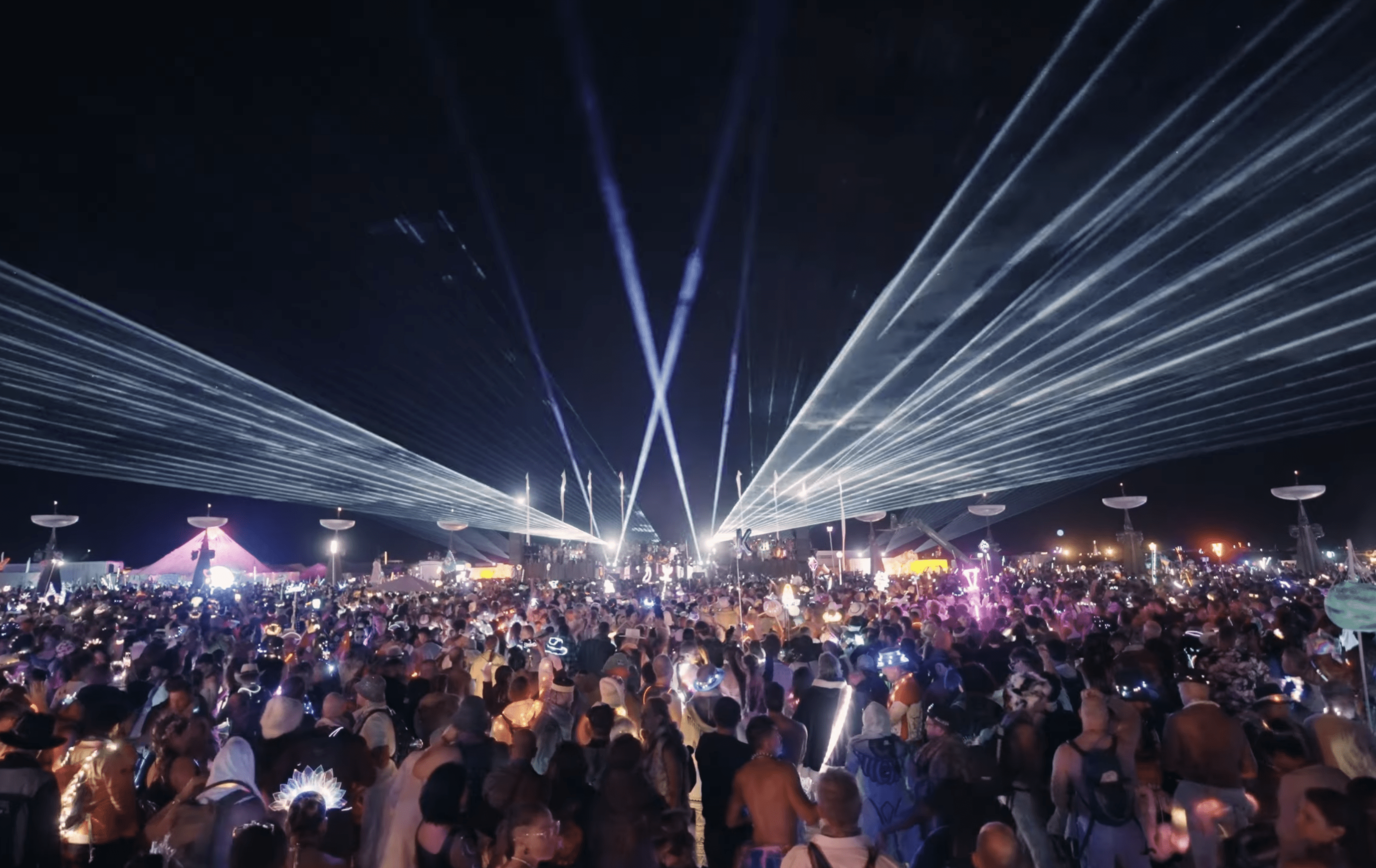
That scale gives SIDEPIECE enough space to deliver a festival sized sound without losing the enclosed intensity of a nightclub. The room appears packed but not visually chaotic. Lighting cuts through the dark industrial space while the crowd stretches far beyond the DJ booth, creating the sense of one continuous dance floor rather than a conventional concert divided between performers and spectators.
For tech house, that distinction matters. The genre is not usually built around watching a musician perform a song from beginning to end. Its power comes from repetition, shared anticipation and the collective reaction that occurs when a DJ extends or disrupts a groove. Radius provides exactly that environment.
The Opening Stretch Establishes the Night’s Core Identity
The first major sequence is direct and efficient. SIDEPIECE introduces the crowd to a steady four on the floor rhythm before layering in brighter vocals and increasingly forceful bass movement. Recognizable phrases, including variations on “Turn on the lights” function as signals inside the mix rather than as complete pop songs.
The duo repeatedly allows a vocal to rise just long enough for the room to recognize it, then pulls the arrangement back into percussion. That technique keeps the crowd engaged without surrendering control of the set to nostalgia. It also reflects one of SIDEPIECE’s clearest strengths: knowing how much familiarity to give an audience. Too little recognition can make a two-hour house set feel anonymous. Too much can turn it into a predictable collection of remixes. SIDEPIECE stays between those extremes.
The Mid-Set Sequence Pushes Deeper Into Tech House
Around the 20 minute mark, the set begins moving into a heavier and more hypnotic phase. Basslines become more prominent, vocal samples become shorter, and the music relies increasingly on repetition. References to Tokyo, New York and Los Angeles flash through the mix, reinforcing the international club atmosphere without interrupting the underlying rhythm.
The performance is at its most technically effective here. The tracks do not feel like separate selections lined up in a playlist. They behave like components inside a larger arrangement, with one bassline replacing another while vocal loops and percussion bridge the transitions. This section demonstrates the difference between playing popular dance records and programming a coherent DJ set.
SIDEPIECE is not simply searching for the biggest immediate reaction. The duo is managing the energy of the room across a much longer timeline.
Hip-Hop Edits Add Texture Without Breaking the Groove
Near the 35 minute point, the duo works hip-hop vocal chops including a “Cash Out” reference into the house framework. These moments connect the project to both artists’ earlier work and help prevent the performance from becoming stylistically flat.
Tech house can become repetitive when producers rely too heavily on the same kick, bass and spoken-vocal formula. SIDEPIECE avoids that trap by changing the character of the vocals even when the rhythmic structure remains consistent. A rap sample creates a different kind of tension than a melodic pop refrain. One adds attitude and rhythmic aggression; the other creates release and emotional familiarity. The duo uses both.
Melodic Vocals Break Up the Heavier Club Pressure
Approximately 44 minutes into the performance, the set moves through a more melodic vocal passage built around the phrase “I could be a bad girl.” The shift is not dramatic enough to stop the dancing, but it changes the emotional temperature.
After an extended stretch of hard edged basslines and rhythmic vocal fragments, the brighter hook gives the room space to reset. SIDEPIECE then uses that reset to begin another gradual climb. This structure repeats across the performance: pressure, recognition, release and reconstruction. It is a basic dance-music formula, but execution matters. The duo rarely allows any one phase to continue long enough to exhaust the crowd.
SIDEPIECE Understands the Value of the Vocal Hook
The strongest moments in the Radius set often arrive when an emotional or familiar vocal is placed over a comparatively hard club beat. Late in the performance, a version of “You’ll never see me again” provides one of the night’s clearest melodic refrains. The lyric brings a momentary sense of vulnerability to a set otherwise dominated by swagger, movement and physical impact. But SIDEPIECE does not allow the song to become a full ballad-like detour.
The vocal remains inside the machinery of the club. That contrast, emotion above an uncompromising rhythm, is one of house music’s oldest and most effective devices. SIDEPIECE uses it without overplaying it.
The Final Stretch Returns to Full Party Mode
By the final third of the set, the duo has little interest in subtlety. The energy moves upward again, with larger vocal edits, sharper transitions and increasingly direct crowd triggers. A late sequence featuring the phrase “I got your boyfriend” lands as one of the performance’s most obvious party records.
The selection fits the SIDEPIECE identity: playful, provocative and designed to be shouted back by a crowd. The duo’s branding has always contained a degree of deliberate excess. Even its current touring identity leans openly into sexually charged humor and uncomplicated dance-floor release. The official SIDEPIECE tour platform presents the act through the same high energy club persona visible throughout the Chicago performance.
Yet the set itself is more controlled than the branding might suggest. Behind the jokes and party imagery is disciplined programming. Nearly two hours pass without the performance collapsing into random peak-time records.
The Set Shows Why SIDEPIECE Works
SIDEPIECE succeeds because the project combines accessibility with credible club instincts. The duo can use a recognizable pop vocal without sounding like a wedding DJ. It can play muscular tech house without descending into faceless repetition. It can draw from hip hop and bass music without destroying the continuity of a house set.
That flexibility has taken SIDEPIECE from a side collaboration between two established producers to a major touring act capable of playing festivals, large clubs and high profile events. The duo has described house music as rooted in Black and queer culture while emphasizing that its shows are intended to welcome a broad audience.
The Radius Chicago set demonstrates what that broad appeal sounds like in practice. It is polished enough for casual dance fans, heavy enough for a large club and varied enough to hold attention across nearly two hours.
Radius Chicago Captures SIDEPIECE at Full Strength
A filmed DJ set can easily lose the electricity of the room. Without the volume, physical bass and crowd density, repetitive music may feel smaller on a screen than it did inside the venue. This performance largely survives that translation.
The camera work gives viewers enough of the audience to understand the scale of the night while keeping the focus on Mears and Ragland’s interaction behind the decks. Their energy remains active but not theatrical; they appear to be enjoying the crowd without pretending that button pushing is a rock concert.
More importantly, the music remains the center of the production. The full set documents SIDEPIECE doing what it does best: taking familiar sounds, rebuilding them for the club and sustaining enough pressure to keep thousands of people moving. At Radius Chicago, the duo did not need an elaborate narrative or endless microphone speeches. It needed a large sound system, a willing crowd and almost two hours of uninterrupted house music.
SIDEPIECE had all three.














































Want to join the conversation?
Create an account or sign in to share your thoughts, vote,
and reply to other readers.
Showing 0 of 0 comments
Don't have an account?
Already have an account?