
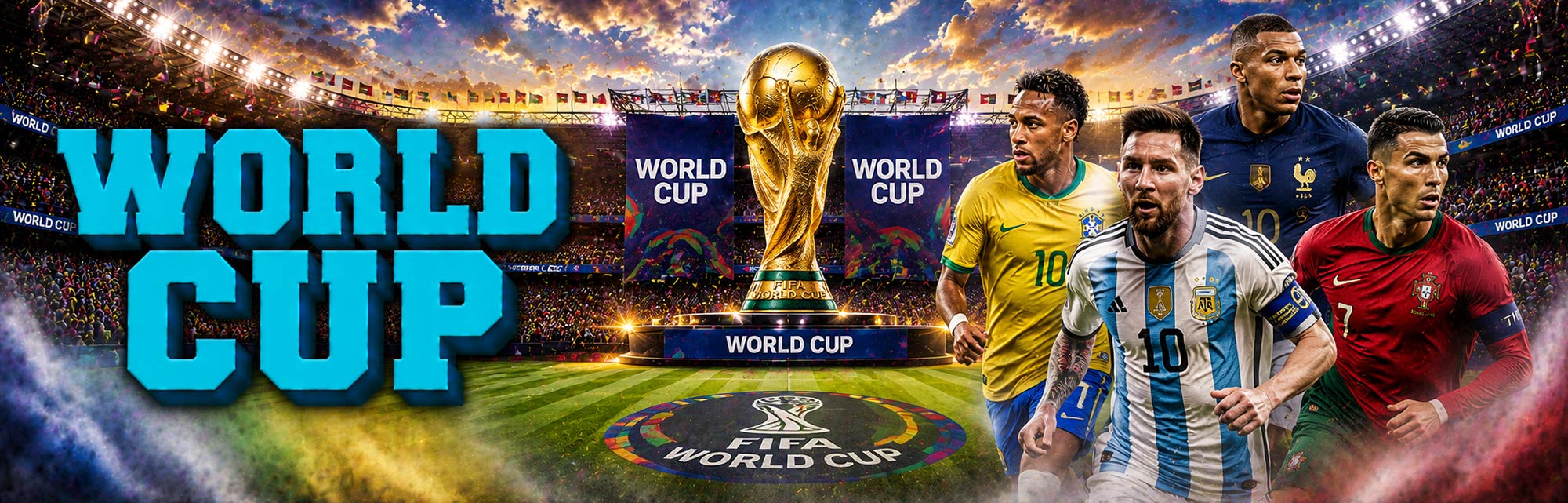
The stage is set for the most important tournament in the modern history of American soccer. With the 2026 FIFA World Cup coming to the United States, Canada, and Mexico, the pressure and excitement surrounding the U.S. Men’s National Team have reached unprecedented levels. Playing before home crowds and led by internationally renowned manager Mauricio Pochettino, Team USA enters the expanded 48-team tournament with ambitions that stretch well beyond simply advancing from the group stage.
Seeded as hosts in Group D alongside Paraguay, Australia, and Türkiye, the Americans possess one of the most talented rosters ever assembled in the program’s history. After years of being labeled a “golden generation,” this summer presents their greatest opportunity to prove they belong among the world’s elite.
One of the tournament’s most recognizable coaching figures, Mauricio Pochettino arrived in 2024 following the disappointing group-stage exit at Copa América under Gregg Berhalter.
The former Argentina international brought instant credibility to the program. Pochettino earned worldwide acclaim during his tenure at Tottenham Hotspur, guiding the club through the most successful period of its modern era, including a run to the UEFA Champions League Final.
Now, after testing himself in international football, Pochettino faces the defining challenge of his U.S. tenure. Widely expected to return to club management following the World Cup, his legacy with the Americans could be determined by what happens over the next month.
The United States opens its World Cup campaign with three matches designed for prime-time American audiences.
USA vs. Paraguay
June 12 – 9:00 PM ET
SoFi Stadium
USA vs. Australia
June 19 – 3:00 PM ET
Lumen Field
Türkiye vs. USA
June 25 – 10:00 PM ET
SoFi Stadium
On paper, the group is favorable. However, none of the three opponents should be underestimated. Paraguay brings South American grit and organization, Australia remains a physically demanding opponent with significant World Cup experience, and Türkiye enters as one of Europe’s emerging powers.
For years, U.S. soccer fans have waited for a generation capable of competing with the world’s best. That generation has arrived.
Christian Pulisic enters the tournament in arguably the finest form of his career. The AC Milan star remains the team’s creative centerpiece and emotional leader. His ability to create chances, beat defenders one-on-one, and deliver in big moments will be essential if the Americans hope to make a deep run.
For decades, the United States struggled to find a truly elite striker. Folarin Balogun appears to have solved that problem. The AS Monaco forward provides a clinical finishing touch that previous American teams often lacked. His goals could be the difference between another Round of 16 appearance and something far greater.
Weston McKennie remains the heartbeat of the midfield. His relentless energy, aerial ability, and box-to-box presence make him one of the team’s most influential players.
When healthy, Tyler Adams is among the best defensive midfielders the United States has ever produced. His ball-winning ability and leadership provide balance for an attack-minded squad.
At the back, Chris Richards has emerged as America’s most dependable defender. Alongside veteran Tim Ream, Richards will be tasked with organizing a defense that must withstand the pressure of the world’s biggest stage.
Historically, American teams built their reputation on goalkeeping excellence, defensive discipline, and relentless work rate. This squad is different.
The strength of the 2026 United States team lies in attack. Dynamic fullbacks Antonee Robinson and Sergiño Dest are expected to push high up the field, creating width and opportunities for Pulisic, Balogun, and the rest of the attack.
The challenge will be maintaining balance. Adams and McKennie must protect the midfield and prevent opponents from exploiting the spaces left behind by the aggressive system.
If there is one historical trend that concerns American supporters, it is the nation’s long-standing struggles against UEFA opposition.
The United States owns an all-time record of 58 wins, 103 losses, and 44 draws against European nations. While those numbers span decades and include vastly different eras of American soccer, they highlight a challenge that still exists.
Should the United States advance deep into the knockout rounds, it will almost certainly have to eliminate one or more European powers. For a program seeking global respect, defeating elite UEFA competition remains a critical benchmark.
The Americans have also struggled historically against South America’s traditional giants. Against Brazil, the United States holds a record of just one win, 18 losses, and one draw. Against Argentina, the record stands at two wins, seven losses, and two draws.
Those numbers underscore the gap the program is still attempting to close.
The stakes extend far beyond wins and losses.
When the United States hosted the World Cup in 1994, it sparked a soccer boom that transformed the sport’s landscape nationwide. The 2026 tournament is expected to serve as another watershed moment, potentially elevating soccer to unprecedented heights in the American sports market.
For Major League Soccer, youth academies, and local clubs across the country, a successful World Cup could create a lasting wave of interest and participation. For the national team, the objective is simpler.
The United States has reached the Round of 16 in 2010, 2014, and 2022 but has not advanced to a World Cup quarterfinal since 2002. A trip to the last eight would represent the program’s greatest achievement in a generation. A semifinal appearance would forever alter perceptions of American soccer worldwide. After years of promise, investment, and development, the moment has arrived.
The United States enters the 2026 FIFA World Cup with its deepest talent pool, an internationally respected manager, home-field advantage, and expectations unlike any team before it. Whether this golden generation fulfills its potential or falls short will be one of the defining stories of the tournament.
For American soccer, the future begins now.


























































Want to join the conversation?
Create an account or sign in to share your thoughts, vote,
and reply to other readers.
Showing 0 of 0 comments
Don't have an account?
Already have an account?