
America’s 250th Birthday Weekend Ends in Turbulence as World Cup Exit Caps Days of Political and Sporting Controversy
The United States entered the Independence Day weekend expecting a celebration unlike any in its history. Instead, the nation’s 250th birthday became defined by extreme weather, partisan political rhetoric and, just two days later, a stunning World Cup elimination that followed one of the most controversial interventions in modern international soccer. The sequence of events has sparked debate far beyond sports, with critics arguing the weekend became an illustration of how politics increasingly intersects with, and at times overshadows, major national institutions.
A Historic Birthday Marked by Heat, Storms and Division
The centerpiece of America’s semiquincentennial celebration took place on the National Mall in Washington, D.C., where hundreds of thousands gathered for concerts, exhibits and the annual Independence Day festivities.
The celebration quickly ran into trouble. Dangerous heat blanketed the nation’s capital, with multiple attendees requiring medical attention before severe thunderstorms forced officials to temporarily evacuate large portions of the National Mall for public safety. The disruptions delayed portions of the evening’s programming and added logistical challenges to what had been promoted as a historic national celebration. (Wikipedia)
President Donald Trump also delivered speeches at both the National Mall and earlier at Mount Rushmore, using the anniversary to celebrate American history while sharply criticizing his political opponents. Rather than offering a broadly unifying Independence Day address, Trump framed the election year political environment as a struggle against what he described as radical ideological threats, continuing the combative tone that has defined much of his presidency.
Then Came the World Cup Controversy
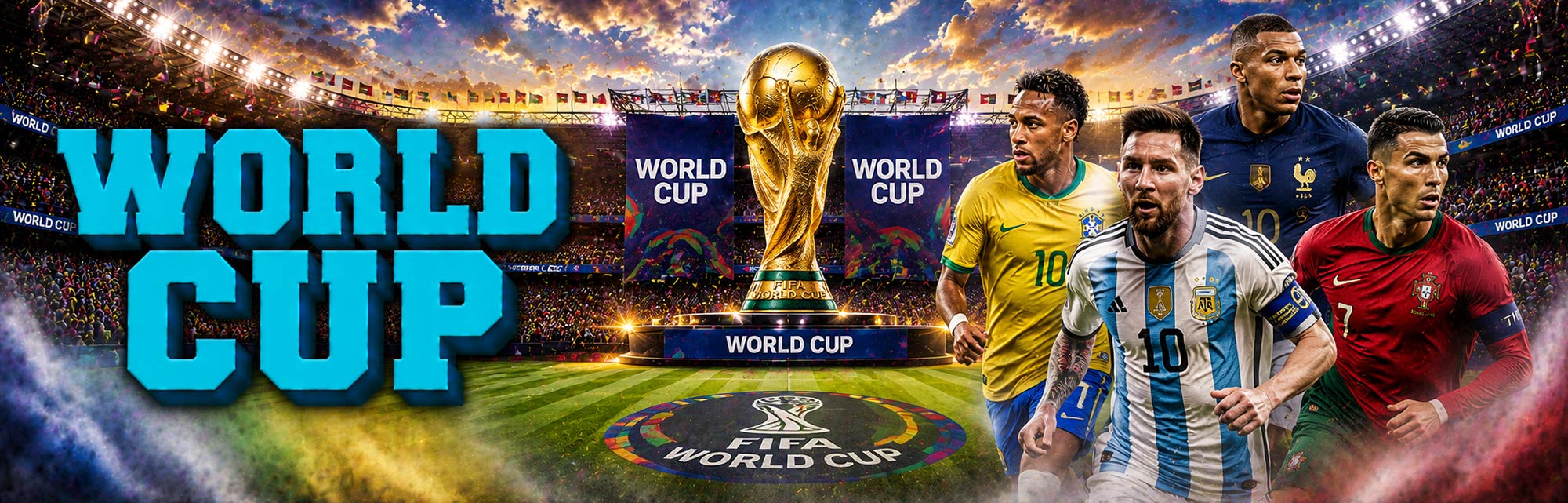
While the July Fourth celebrations dominated headlines, another controversy was quietly building inside the FIFA World Cup. The U.S. Men’s National Team entered its Round of 16 matchup against Belgium amid extraordinary attention surrounding striker Folarin Balogun. Balogun had received a red card in the previous round against Bosnia and Herzegovina, triggering what normally would have been an automatic one-match suspension. Then something unprecedented happened.
According to multiple reports, President Trump personally urged FIFA President Gianni Infantino to review the decision. FIFA’s independent disciplinary process ultimately suspended Balogun’s ban for a one-year probationary period, allowing him to play against Belgium, a decision that immediately ignited criticism throughout international football. (Reuters)
Global Backlash
The decision drew criticism from football officials, commentators and governing bodies across Europe. Belgium’s football federation formally challenged Balogun’s eligibility before kickoff, arguing FIFA had undermined its own disciplinary rules. UEFA officials and former players questioned whether political pressure had compromised the integrity of the tournament, while FIFA maintained that the disciplinary committee acted independently under its regulations. (Reuters)
Trump defended his involvement, saying he simply believed the original red card deserved another look. For many observers, however, the optics proved almost as controversial as the decision itself.
Belgium Delivers a Reality Check
Whatever advantage the United States hoped to gain from Balogun’s reinstatement never materialized. Belgium dominated the Round of 16 matchup from the opening whistle, defeating the United States 4-1 to eliminate the host nation from its home World Cup.
Charles De Ketelaere scored twice before halftime, putting the Americans on the defensive almost immediately. Malik Tillman briefly gave U.S. supporters hope by cutting into the deficit, but Belgium regained complete control after halftime through goals from Hans Vanaken and substitute Romelu Lukaku.
Balogun’s controversial return ultimately had little impact on the outcome, with Belgium’s players later downplaying suggestions that the FIFA controversy affected their preparation. (Reuters)
Executive Power Meets Global Sport
The Balogun controversy represents one of the rare instances in modern World Cup history in which a sitting U.S. president publicly intervened in an active FIFA disciplinary matter. Whether Trump’s phone call directly influenced the final outcome remains disputed. FIFA has insisted the disciplinary committee reached its decision independently, while critics argue the timing created the appearance that political influence had entered one of the world’s most important sporting competitions. (AP News)
That perception may prove almost as consequential as the ruling itself. International football has long promoted itself as being insulated from political interference, making any suggestion of executive involvement particularly sensitive.
A Weekend of High Expectations and Harsh Outcomes
Taken together, the events created an extraordinary four-day stretch for the United States. A once in a generation national birthday celebration struggled against dangerous weather and political polarization. An unprecedented presidential intervention into an international sporting dispute generated worldwide controversy. And despite successfully getting America’s leading striker back onto the field, the U.S. Men’s National Team suffered one of its most decisive defeats of the tournament. For supporters, the weekend demonstrated the unpredictable nature of sports and public events. For critics, it became something larger, a reminder that political influence can shape headlines, dominate institutions and command global attention, but it cannot guarantee victory once the whistle blows.
















































Want to join the conversation?
Create an account or sign in to share your thoughts, vote,
and reply to other readers.
Showing 0 of 0 comments
Don't have an account?
Already have an account?