
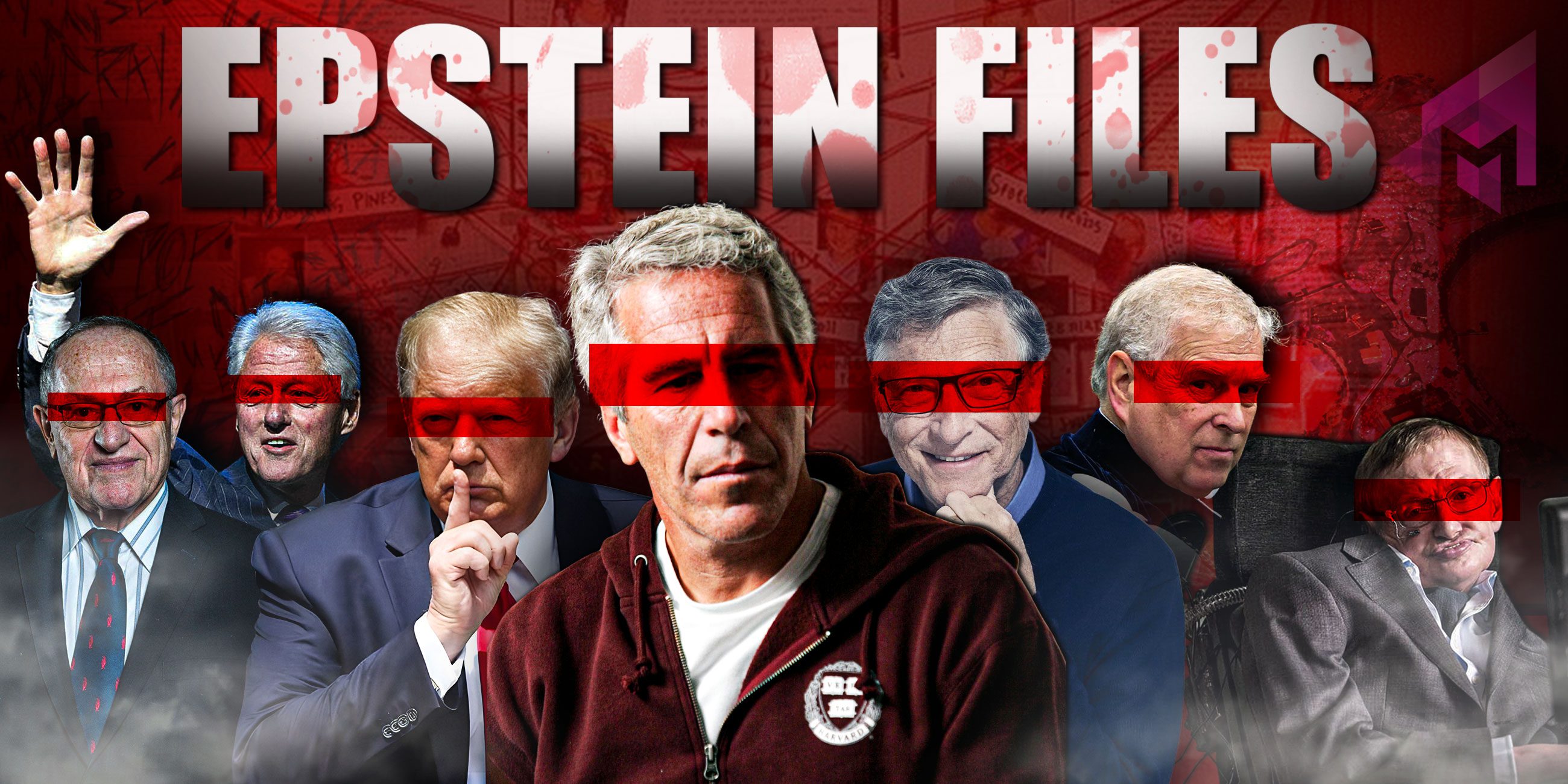
Extreme Redactions in Epstein Deposition Raise New Questions About Secret Structures and Hidden Spaces on His Private Island
Newly surfaced deposition pages tied to the Jeffrey Epstein investigation are triggering fresh outrage among transparency advocates and victims’ advocates after large portions of testimony were heavily blacked out, obscuring what appears to be a detailed discussion of a mysterious structure referred to as “the temple” and what witnesses described as unusual architectural features on Epstein’s private island.
The document, part of previously sealed testimony connected to civil litigation involving Epstein’s trafficking operation, shows extensive redactions covering names of individuals, descriptions of structures, and entire sections of a witness’s account. The result is a record that raises disturbing questions while simultaneously preventing the public from understanding the full context. And in this case, the missing information appears potentially significant.
Testimony References Epstein’s “Temple”
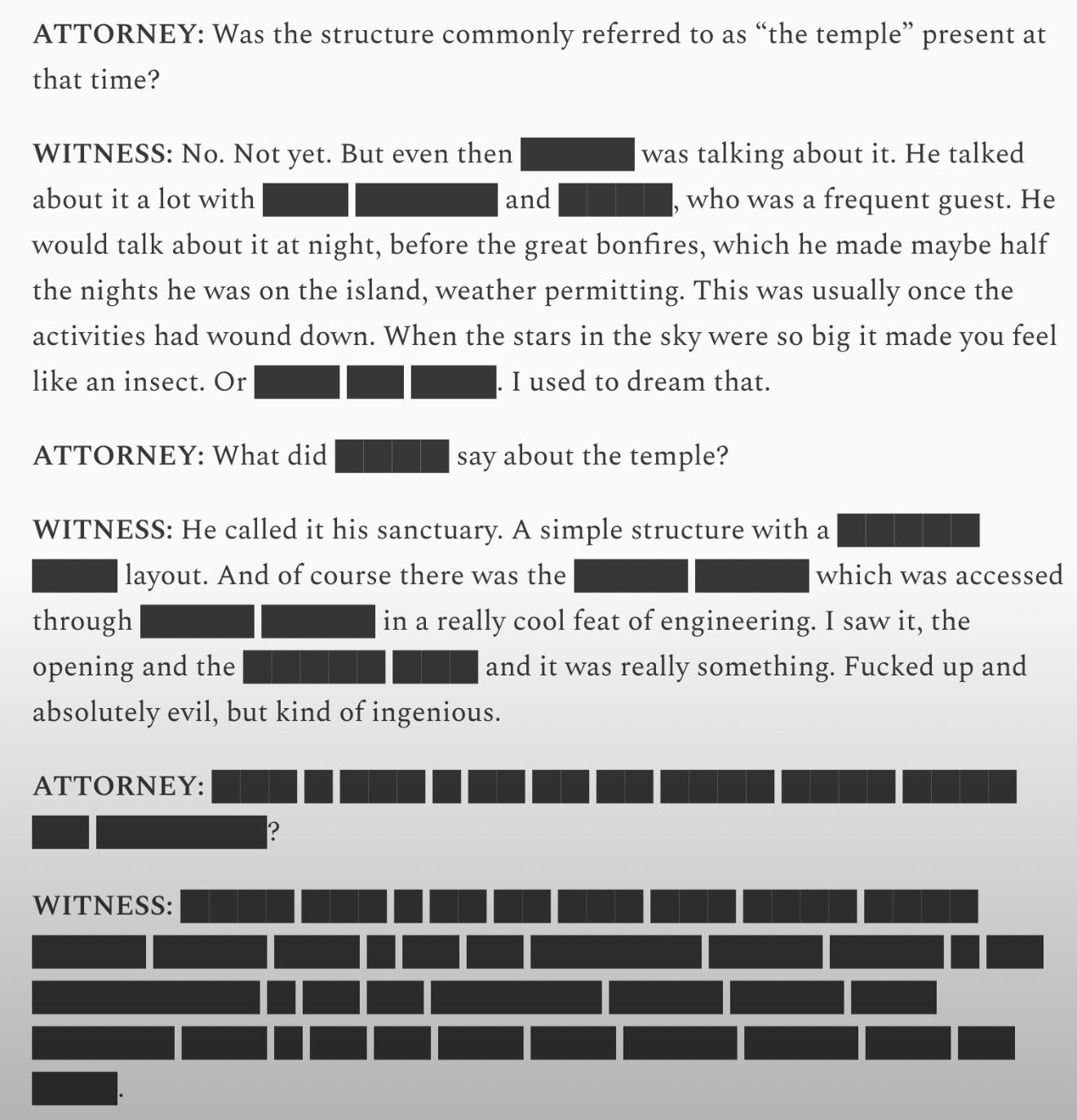
In the partially visible portions of the deposition, an attorney asks a witness whether a structure commonly referred to as “the temple” existed on Epstein’s island at the time of the witness’s visits. The witness responds that it had not yet been built but that Epstein had frequently talked about it.
“He called it his sanctuary,” the witness said in the deposition.
The testimony indicates Epstein discussed the structure repeatedly during nighttime gatherings on the island, often after social activities had ended. The witness describes Epstein hosting late night bonfires and conversations under the night sky, scenes that, according to the testimony, occurred frequently while guests stayed on the island. But much of the surrounding detail has been blacked out. Multiple names of people allegedly present during these conversations are fully redacted.
Mentions of Hidden Spaces and “Ingenious” Engineering
The most striking passage in the visible text references what appears to be an underground or concealed component connected to the structure. While key details are redacted, the witness describes seeing an “opening” and what appears to be some form of hidden or mechanical feature associated with the building.
“I saw it, the opening and the [redacted], and it was really something,” the witness said.
“F***ed up and absolutely evil, but kind of ingenious.”
The wording strongly suggests the witness was describing some form of concealed architectural element, though the exact nature of it is obscured by redactions. Large sections of the deposition that follow this passage are completely blacked out.
Names of Alleged Participants Removed
Another notable feature of the document is the number of names removed from the testimony. Several individuals appear to have been referenced in connection with discussions about the structure, yet every one of those names has been redacted. This has fueled speculation among investigators and independent researchers that the missing text may reference powerful individuals who visited Epstein’s island. Without the unredacted material, however, the public has no way of evaluating those claims.
Growing Criticism Over Epstein File Redactions
The Epstein files have long been the subject of controversy because large portions of evidence and testimony have remained sealed or heavily redacted for years. Victims’ advocates and transparency groups argue that excessive redactions have prevented the public from understanding how Epstein’s trafficking network operated and who may have been involved.
The issue has gained renewed attention in recent months as lawmakers push for greater transparency under new disclosure laws aimed at releasing additional Epstein related records. Critics argue that when entire paragraphs and names are removed, particularly in testimony involving possible criminal activity, it undermines public trust in the investigation.
Why the Document Matters
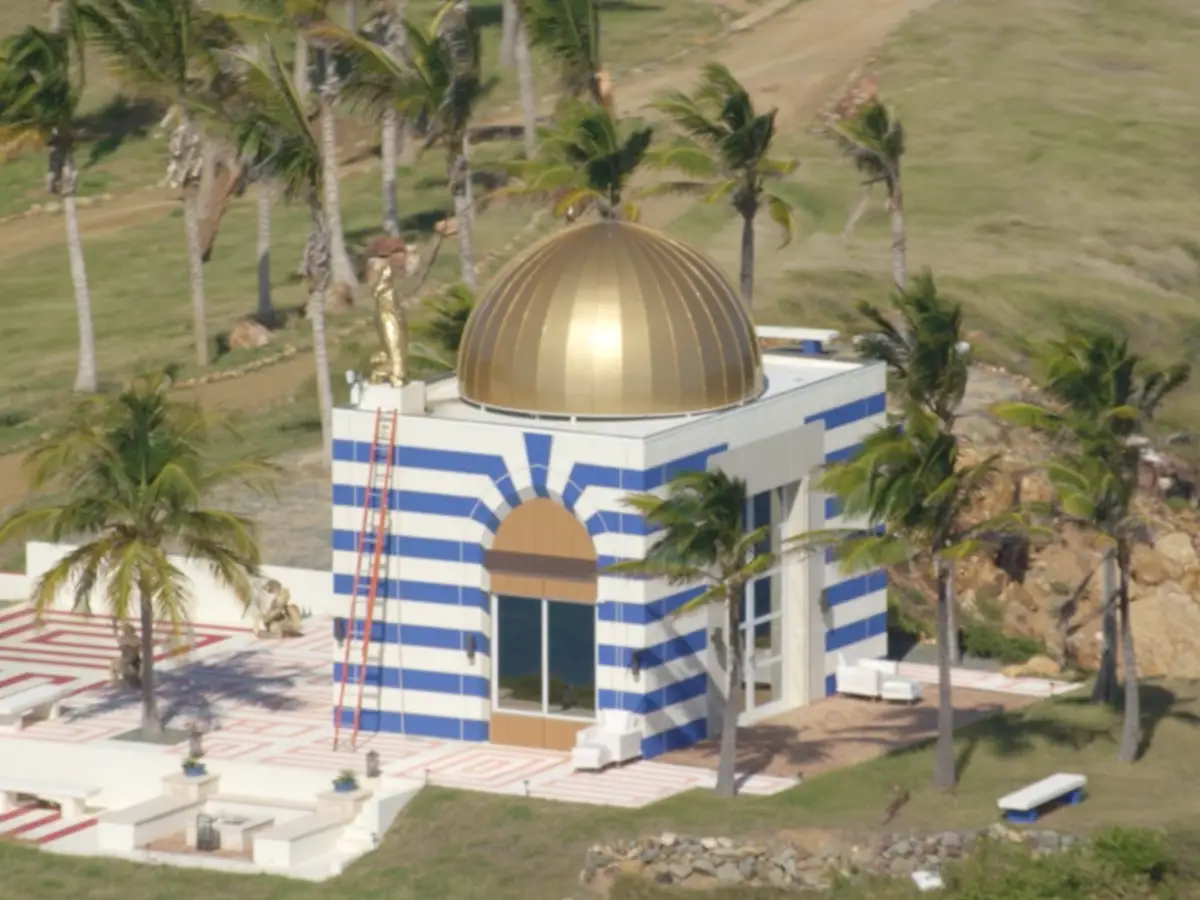
The testimony appears to reference the controversial temple like structure that stood on Epstein’s private island in the U.S. Virgin Islands, a building that for years has fueled speculation about its purpose. Drone footage, court filings, and investigative reporting have previously documented the existence of the structure, which featured a distinctive dome and unusual design.
However, the deposition suggests the building may have had additional internal features not previously documented publicly. If the redacted sections of the testimony contain further details, or identify individuals connected to the conversations described, the information could provide valuable insight into how Epstein’s private island functioned and who participated in activities there.
Calls for Full Disclosure
Advocates for victims say that with Epstein dead and several key figures connected to his network also deceased, the public interest in releasing the remaining documents has only grown. The argument is simple: transparency is necessary to understand the full scope of the trafficking operation and to determine whether powerful individuals were protected from scrutiny.
In the case of this particular deposition page, the scale of the redactions makes that understanding impossible. What remains visible suggests the witness was describing something disturbing, possibly hidden infrastructure associated with Epstein’s island compound.
But the details that would clarify the story remain locked behind thick black bars. Until those redactions are lifted, the full truth behind what the witness described, and who was involved, remains hidden.
Verified Epstein File:















































Want to join the conversation?
Create an account or sign in to share your thoughts, vote,
and reply to other readers.
Showing 0 of 0 comments
Don't have an account?
Already have an account?