
The Pentagon’s Paranormal Program: Inside AAWSAP, Skinwalker Ranch, and America’s Secret UFO Investigation
For years, the U.S. government publicly dismissed UFOs as conspiracy theory fuel, tabloid bait, or the obsessive hobbyhorse of late-night radio callers. But buried deep inside the Pentagon during the late 2000s was a classified intelligence operation that did something radically different: it took the phenomena seriously.
Not just unidentified flying objects. Not just advanced aerospace threats. But alleged portals, poltergeist activity, biological injuries, and what investigators called the “Hitchhiker Effect.” The program was known as the Advanced Aerospace Weapon System Applications Program or AAWSAP, and it remains one of the strangest officially documented intelligence initiatives ever funded by the United States government.
Unlike later Pentagon UFO efforts focused primarily on military encounters in restricted airspace, AAWSAP ventured into territory that sounded less like Top Gun and more like The X-Files. At the center of the operation sat one of the most controversial paranormal locations in America, Skinwalker Ranch. What emerged from the shadows over the next decade would permanently reshape the modern UFO disclosure movement and force serious questions about how far elements of the U.S. intelligence community were willing to go in pursuit of unexplained phenomena.
The Birth of AAWSAP
AAWSAP officially launched in 2007 under the Defense Intelligence Agency with approximately $22 million in government funding approved through a supplemental appropriations bill. The political force behind the program was former Senate Majority Leader Harry Reid, who partnered with Republican Senator Ted Stevens and Democratic Senator Daniel Inouye to quietly establish the initiative. The catalyst reportedly came from DIA scientist Dr. James Lacatski after reading the book Hunt for the Skinwalker by investigative journalist George Knapp and scientist Colm Kelleher.
According to multiple accounts from former officials connected to the program, Lacatski visited Skinwalker Ranch personally and experienced an unexplained event significant enough to convince senior officials the site represented a potential national security concern. That decision triggered a classified intelligence contract awarded to Bigelow Aerospace subsidiary Bigelow Aerospace Advanced Space Studies, commonly known as BAASS. The company was owned by billionaire aerospace entrepreneur Robert Bigelow, who already owned Skinwalker Ranch at the time.
More Than UFOs
One of the biggest misconceptions surrounding AAWSAP is that it was simply an early version of AATIP, the Advanced Aerospace Threat Identification Program later associated publicly with former Pentagon official Luis Elizondo. It was not. AAWSAP’s mandate was dramatically broader and significantly stranger. While AATIP largely focused on military pilot encounters with unidentified aerial phenomena, including incidents like the now-famous 2004 Tic Tac encounter off the coast of California, AAWSAP investigated a sprawling spectrum of anomalies.
That included alleged electromagnetic disturbances, unexplained biological injuries, cattle mutilations, paranormal manifestations, and persistent reports of consciousness related phenomena tied directly to Skinwalker Ranch. Investigators essentially treated the Utah property as a live national security laboratory. The underlying fear was not necessarily aliens. The fear was that America’s adversaries might discover breakthrough technologies or unknown physical principles first.
The Skinwalker Ranch Experiments
At the ranch, investigators deployed advanced sensor systems including infrared imaging equipment, radiation detectors, electromagnetic monitoring arrays, and surveillance systems designed to capture anomalous activity in real time. What they reportedly encountered became the stuff of modern UFO legend. Perhaps the most disturbing element documented within the program was the so-called “Hitchhiker Effect.”
Multiple investigators and intelligence personnel claimed phenomena appeared to follow them home after visiting the ranch. Family members allegedly reported shadow figures, poltergeist like disturbances, electronic malfunctions, and psychological effects thousands of miles away from Utah. The implications terrified some officials inside the program because the phenomena appeared less like conventional aerospace technology and more like something interacting directly with human consciousness.
AAWSAP also documented alleged medical consequences experienced by personnel exposed to anomalous events. Reports included radiation-like burns, neurological symptoms, sleep disruption, immune system abnormalities, and long-term physiological effects that investigators attempted to categorize under what became known internally as the “Infectious Agent Model.” Even more bizarre were reports of transient physical structures or “portals” appearing briefly on sensors while remaining invisible to human observers.
Critics have argued many of these claims remain anecdotal and scientifically unverified. Supporters counter that the consistency of reports across intelligence, military, and scientific personnel made them impossible to ignore completely. That tension remains at the center of the entire UFO disclosure debate today.
The Pentagon’s Secret Physics Papers
While field investigations captured public attention years later, one of AAWSAP’s most important outputs may have been its theoretical research program. The initiative commissioned 38 classified Defense Intelligence Reference Documents, known as DIRDs, authored by respected scientists and physicists exploring advanced propulsion and aerospace concepts. The papers examined whether breakthrough technologies could theoretically exist within undiscovered or poorly understood areas of physics. Topics included warp drives, dark energy manipulation, invisibility cloaking, traversable wormholes, negative energy systems, biomaterials, and advanced propulsion concepts based on spacetime engineering.
Several titles sounded indistinguishable from science fiction:
• “Warp Drive, Dark Energy, and the Manipulation of Extra Dimensions”
• “Traversable Wormholes, Stargates, and Negative Energy”
• “Advanced Space Propulsion Based on Vacuum Engineering”
• “Invisibility Cloaking”
The documents were not confirmations that such technologies existed. But they revealed something extraordinary nonetheless: The Pentagon was willing to spend taxpayer money seriously studying concepts long mocked by mainstream science and media.
Internal Pentagon Resistance
By 2010, AAWSAP reportedly faced mounting opposition within sections of the Defense Department. Some officials believed the program had drifted too far into paranormal territory and away from legitimate defense priorities. Others reportedly viewed investigations into supernatural phenomena as spiritually dangerous or “demonic.” Those objections have become one of the strangest aspects of the entire AAWSAP story.
According to several accounts from former insiders, some Pentagon personnel objected not because they thought the phenomena were fake, but because they believed the phenomena might be real in a religious or metaphysical sense. Eventually, funding dried up. Attempts to transition portions of the program into the Department of Homeland Security reportedly failed, and AAWSAP formally dissolved around 2012. But the infrastructure, databases, and investigative groundwork did not disappear.
The Road to Modern UFO Disclosure
AAWSAP’s collapse directly fed into the next generation of government UFO investigations. The data architecture and investigative frameworks developed under BAASS became foundational elements for later efforts including AATIP and eventually the Pentagon’s modern UFO office, the All-domain Anomaly Resolution Office, or AARO.
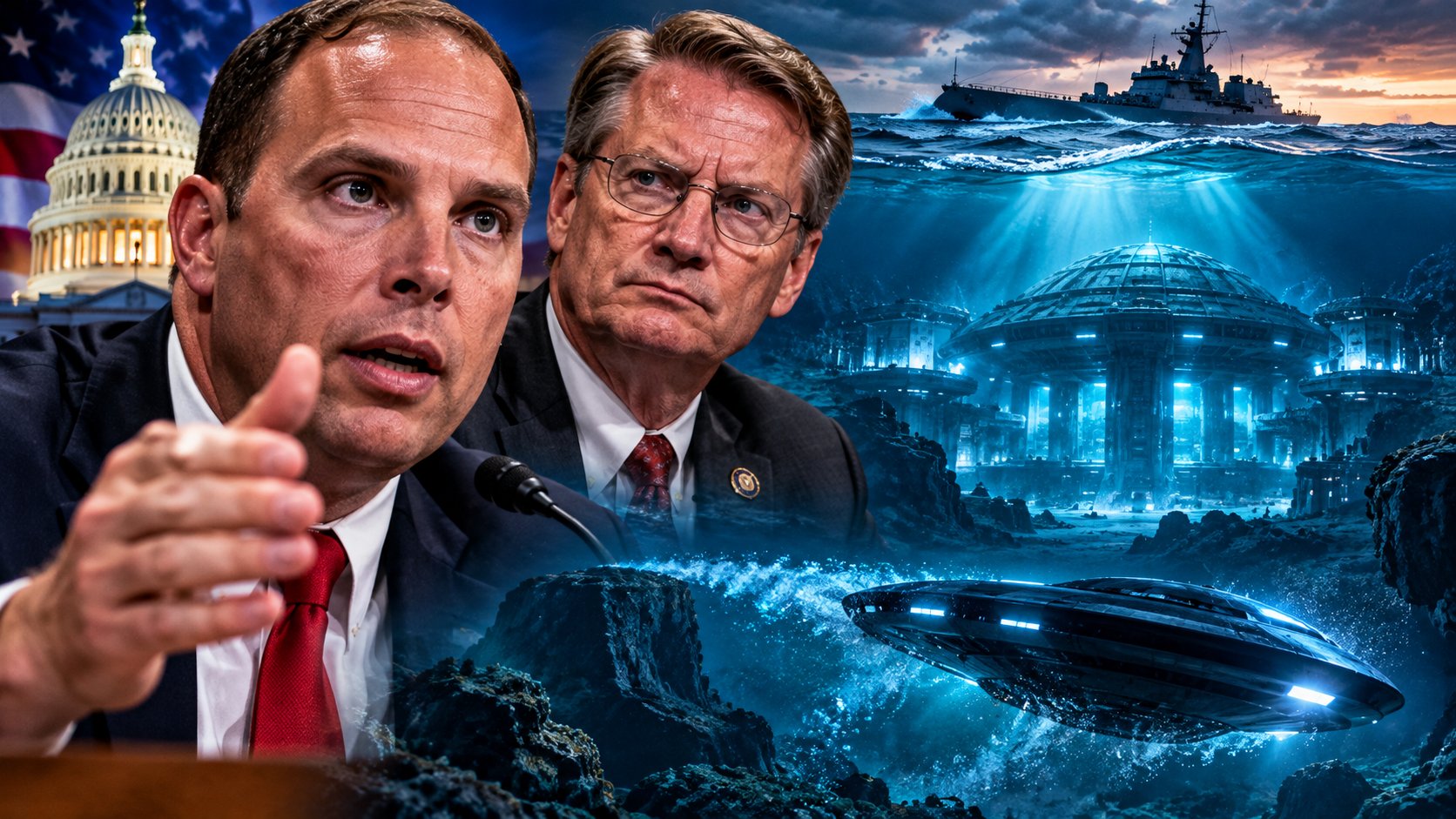
Today, Congress openly holds hearings on UAPs. Military pilots publicly discuss encounters once hidden behind classification walls. Government agencies now maintain official portals for anomaly reporting and document declassification. That evolution can be traced directly back to AAWSAP and the decision by a small group of senators and intelligence officials to investigate one of the most controversial ranches in America.
Whether Skinwalker Ranch ultimately represents misunderstood psychology, classified technology testing, folklore amplified by fear, or something genuinely unknown remains unresolved. But one fact is no longer debatable: The United States government spent years and millions of dollars quietly investigating phenomena most Americans were told did not deserve serious attention at all.
Sources
• Defense Intelligence Agency Historical Records
• AARO Official Department of Defense Portal
• George Knapp Investigative Reporting Archive
• Congressional Statements by Harry Reid Archive














































Want to join the conversation?
Create an account or sign in to share your thoughts, vote,
and reply to other readers.
Showing 0 of 0 comments
Don't have an account?
Already have an account?