
Max Styler Brings Dark, Driving Tech House to Lollapalooza Chicago 2026
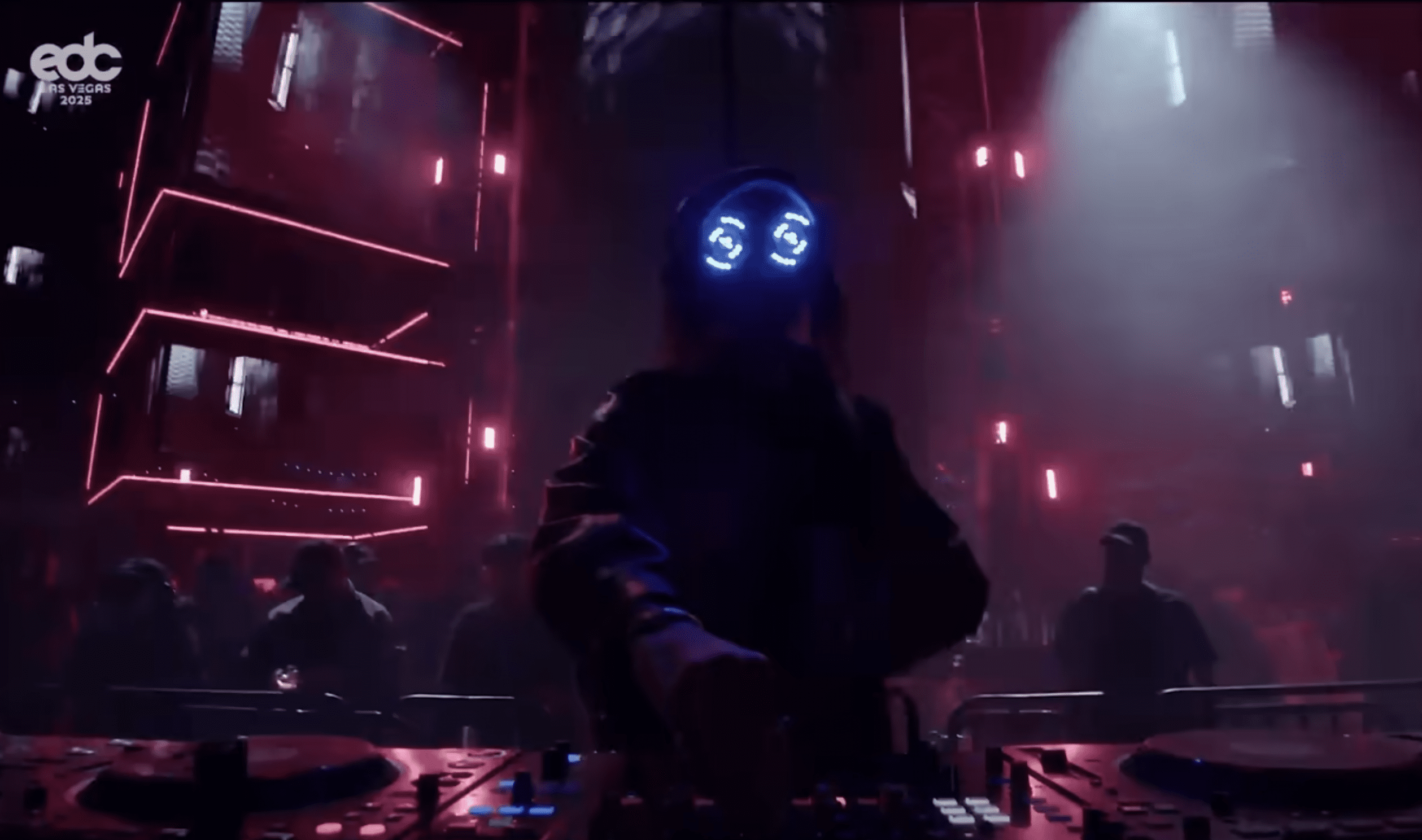
Max Styler delivered nearly an hour of relentless tech house at Lollapalooza Chicago 2026, bringing a darker corner of electronic dance music into Grant Park with pounding basslines, chopped vocals, acid tinged synths and the kind of tightly controlled momentum that has helped turn the California producer into one of house music’s increasingly recognizable names.
Styler performed as part of Lollapalooza’s Saturday, August 1 lineup in Chicago, joining a sprawling festival bill that included JENNIE, Olivia Dean, The Neighbourhood, Ethel Cain, Alison Wonderland, Disco Lines, AYYBO, OMNOM and others. The four day festival ran from July 30 through August 2 and featured more than 100 artists spread across eight stages in Grant Park. (Ticketmaster US)
A roughly 53 minute recording of Styler’s festival performance was released online August 14, giving fans a full look at a set that rarely slows down long enough to breathe.nThis was not a crossover EDM performance built around oversized pop choruses and predictable festival drops. Styler spent much of the set digging into the darker, more physical side of contemporary house music, using repetition, vocal fragments and thick low-end grooves to steadily ratchet up the pressure.
From Teenage Prodigy to House Music Mainstay
Styler’s appearance at Lollapalooza comes more than a decade after he entered the electronic music industry unusually young. The California producer signed with Steve Aoki’s Dim Mak Records when he was 18, an early break that quickly pushed him onto major stages. Insomniac’s retrospective on Styler notes that he signed with Dim Mak on his 18th birthday and soon landed an opening slot for Above & Beyond before accelerating his high school studies to pursue music full time. (Insomniac)
His sound has changed substantially since then. The harder electro and festival-oriented production associated with his early career gradually gave way to a more sophisticated house sound built around darker grooves, muscular percussion and club focused arrangements. Today, Insomniac categorizes Styler primarily as a house artist and describes him as an electronic producer with more than a decade of experience who also operates his own Nu Moda label. (Insomniac)
That evolution was on full display in Chicago. Rather than treating Lollapalooza like an opportunity to simply cycle through recognizable tracks, Styler constructed the performance as a continuous club set, building tension, releasing it and then immediately rebuilding the groove.
The Opening Minutes Establish the Mission
From the beginning, Styler wastes little time establishing the musical vocabulary for the next 53 minutes. The opening section is driven by vocal heavy tech house, aggressive percussion and a thick low end pulse. Short vocal fragments function less like traditional lyrics and more like rhythmic instruments, appearing and disappearing around bass drops and transitions.
The approach gives the opening minutes an almost mechanical momentum. Tracks do not simply stop and start. They bleed into one another as Styler layers vocals, percussion and bass, keeping the crowd locked into essentially one continuously evolving groove. It is festival music, but the DNA remains rooted in the club. That distinction matters. Electronic festival sets can sometimes become a collection of individual “moments” designed for social media, buildup, drop, fireworks, repeat. Styler’s Chicago performance feels considerably closer to a DJ constructing a long form dance floor experience.
The Set Gets Darker as Styler Pushes Toward Peak Time
Around the middle of the performance, the set begins moving deeper into the sound that has increasingly defined Styler’s career. The basslines become heavier. Vocal samples become stranger and more hypnotic. Acid style synthesizers begin cutting through the mix. At roughly the 19 minute mark, a rave centered vocal provides one of the set’s clearest mission statements before the production dives back into the groove. A few minutes later, another hypnotic vocal passage gives way to acidic synth textures and another punishing low end sequence.
The result is music designed around movement rather than spectacle. There are hooks throughout the performance, but Styler repeatedly avoids allowing them to overwhelm the rhythm section. Vocals appear just long enough to create familiarity before the kick drum and bass regain control. For listeners familiar with Styler’s more recent output, the approach should sound familiar. His 2026 releases include “One More” featuring Ad Apt, a Solomun remix of the track, a reworking of Three Drives’ “Greece 2000,” “Freaky 1” with Vintage Culture and Ali Love, and “Oldskool Flavor” with Greggio. (Beatport)
“Oldskool Flavor,” released through Styler’s Nu Moda imprint in May, is particularly relevant to the direction of the Lollapalooza performance because the Chicago set repeatedly reaches backward toward warehouse and old-school dance-music aesthetics while maintaining modern production weight. (Beatport)
Old School Warehouse Energy Meets Modern Festival Production
The section beginning around the 26 minute mark is arguably where the performance develops its strongest personality. Styler begins incorporating rougher, old-school textures and warehouse-inspired vocal loops, including references to MPC sampling and smoky underground club environments. It is an effective contrast. The production remains enormous enough for a Lollapalooza crowd, but the aesthetic deliberately references an earlier era of house music when records were built around drum machines, samplers, repetitive vocals and grooves rather than massive cinematic drops.
Styler then begins pulling those influences back toward modern tech house. By approximately the 35 minute mark, the set has returned to vocal-driven club material, with repeated phrases bouncing against increasingly aggressive percussion. Instead of dramatically resetting the energy between tracks, Styler keeps stacking one groove onto another. That continuity becomes one of the strongest elements of the performance.
The Final Stretch Goes for Maximum Pressure
By the final 10 minutes, subtlety is largely over. Styler drives the set into its peak-time closing stretch with heavier bass, increasingly aggressive percussion and party-centered vocals engineered for a massive outdoor crowd. Yet even here, the performance avoids becoming completely one dimensional. Near the closing minutes, melodic vocal textures briefly emerge over the darker production before being swallowed again by the bassline. The contrast gives the finale some emotional texture without abandoning the club first philosophy of the previous 40 plus minutes.
Then Styler brings the set home essentially the same way he began it: rhythm first. No unnecessary detours. No prolonged speech. No attempt to transform the performance into something it is not. Just house music delivered at festival scale.
Lollapalooza 2026 Shows How Far House Music Has Moved Into the Mainstream
Styler’s presence at Lollapalooza also reflects a larger shift happening across American festival culture.
Lollapalooza remains one of the country’s largest multi-genre festivals, but electronic music occupied significant real estate on the 2026 lineup. John Summit was among the festival’s headliners, while artists including Major Lazer, Boris Brejcha, Alison Wonderland, Disco Lines, AYYBO, OMNOM and Styler represented different corners of dance music across the weekend. (Live Nation Newsroom)
Styler’s trajectory is particularly interesting because he has effectively experienced multiple generations of American electronic music during a career that began while he was still a teenager. He arrived during the explosive American EDM boom of the 2010s. Rather than remaining trapped in that sound, he evolved with the scene, increasingly embracing house music and club culture as American dance audiences moved in the same direction. More than a decade later, he is playing Lollapalooza while simultaneously operating his own label and releasing records that sit comfortably alongside some of the biggest names in contemporary house and techno. That is not an overnight success story. It is what surviving electronic music’s constantly changing trends looks like.
Max Styler’s Lollapalooza Set Is 53 Minutes of Controlled Chaos
Styler’s Lollapalooza Chicago performance ultimately works because it understands exactly what it wants to be. It is dark without becoming inaccessible, repetitive without becoming stagnant and aggressive without relying entirely on enormous festival drops. For longtime electronic fans, there are enough warehouse references, acid synths and old school influences buried throughout the performance to keep things interesting. For casual festivalgoers, there are enough vocal hooks, bass drops and high energy transitions to keep thousands of people moving.
And for Styler, the performance serves as another marker in a career that has quietly transformed from teenage EDM prodigy into established house producer, DJ and label boss. More than a decade after signing his first major record deal at 18, Max Styler no longer sounds like an artist trying to figure out where he belongs. At Lollapalooza 2026, he sounded like he already knew.
Sources
Lollapalooza 2026 Announcement and Lineup — Live Nation
Lollapalooza at Grant Park — 2026 Lineup
Max Styler Artist Profile — Insomniac
Max Styler Career Profile — Insomniac Metronome
































Want to join the conversation?
Create an account or sign in to share your thoughts, vote,
and reply to other readers.
Showing 0 of 0 comments
Don't have an account?
Already have an account?