
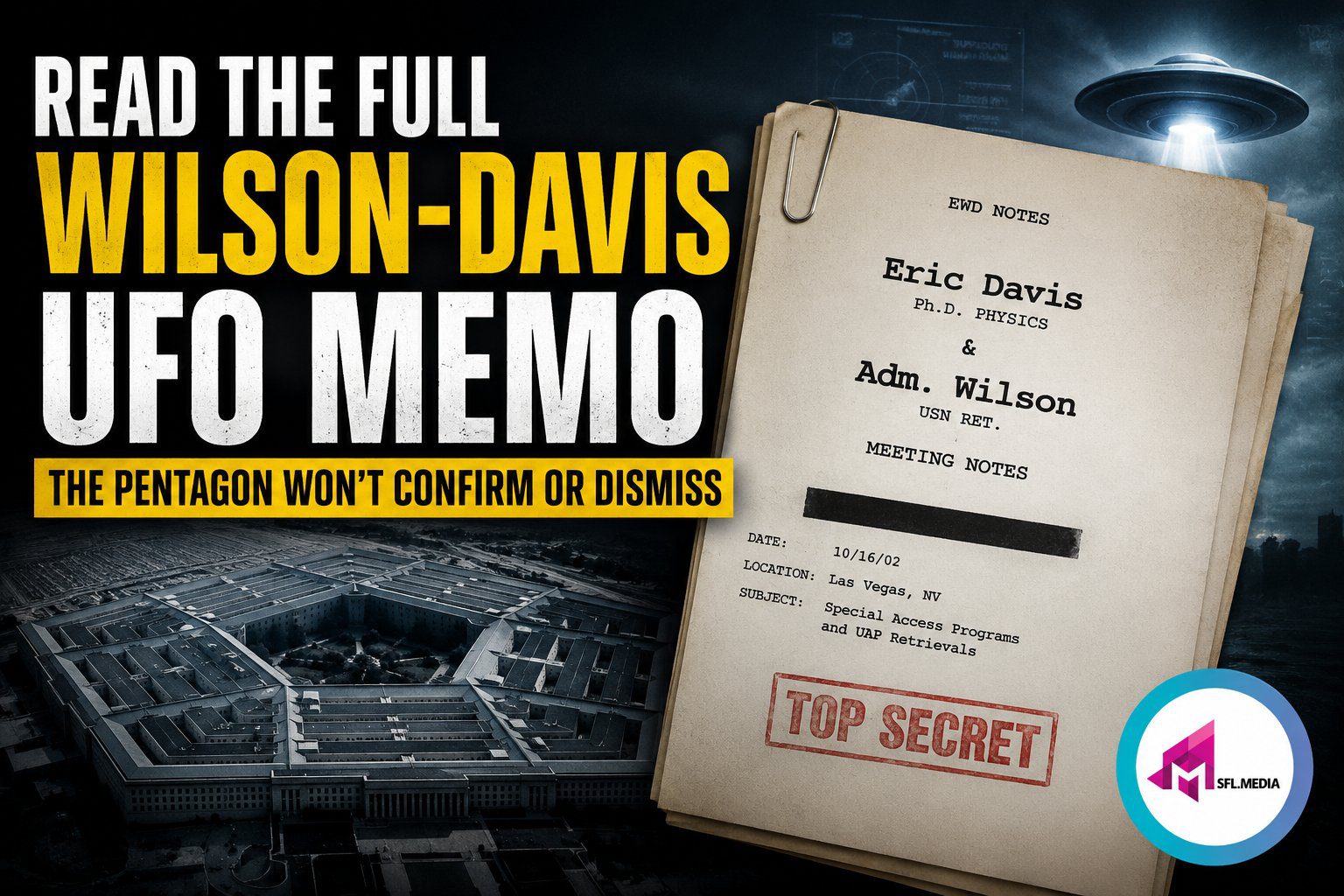
The Wilson, Davis Memo: Inside The Full Pentagon UFO Document That Refuses to Die
In the world of UFO disclosure, there are thousands of blurry videos, anonymous whistleblowers, grainy photographs, and conspiracy theories stacked endlessly on top of one another. Most collapse under scrutiny almost immediately, either because the evidence falls apart, the witnesses disappear, or the stories mutate every few years into something unrecognizable.
The Wilson, Davis Memo is different.
For more than two decades, this single document has haunted the Pentagon, the intelligence community, aerospace contractors, and now Congress itself. It is not famous because it claims aliens exist. It is famous because of the people attached to it, the caliber of individuals whose names appear throughout the notes and the deeply classified world they inhabited.
A former Director of the Defense Intelligence Agency. A Pentagon physicist later tied directly to the government’s secret UFO programs. An Apollo astronaut. Senior Special Access Program officials. And a story that, if true, represents one of the largest constitutional crises in modern American history.
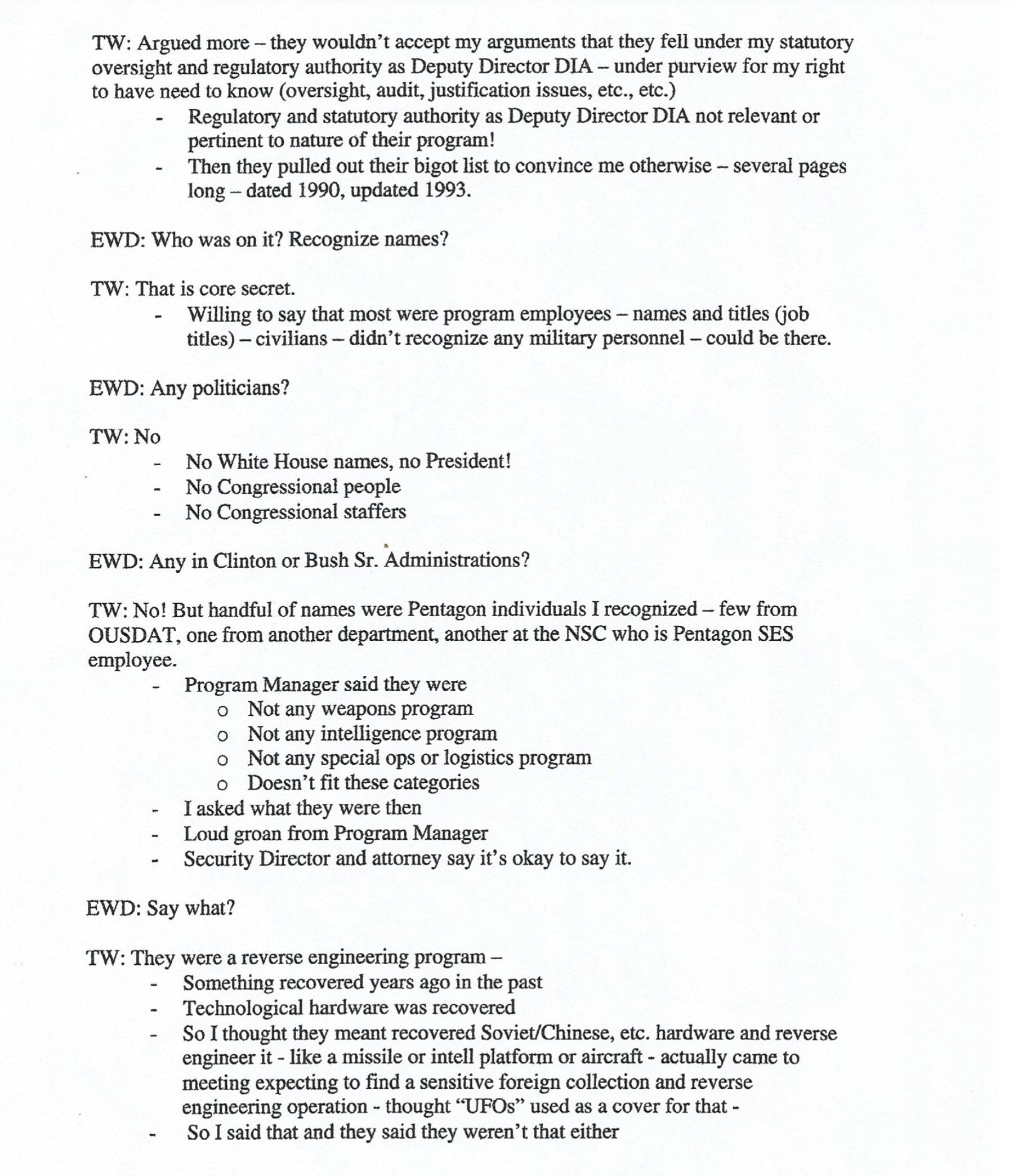
At the center of the memo is a deeply unsettling allegation: that a private aerospace contractor running an unacknowledged reverse engineering program involving recovered non-human technology became so powerful it denied access to the sitting head of U.S. military intelligence. Not a senator. Not a journalist. Not a civilian activist. The actual Deputy Director of the DIA. And according to the memo, the Pentagon ultimately sided with the contractor.
A Meeting in a Las Vegas Parking Lot
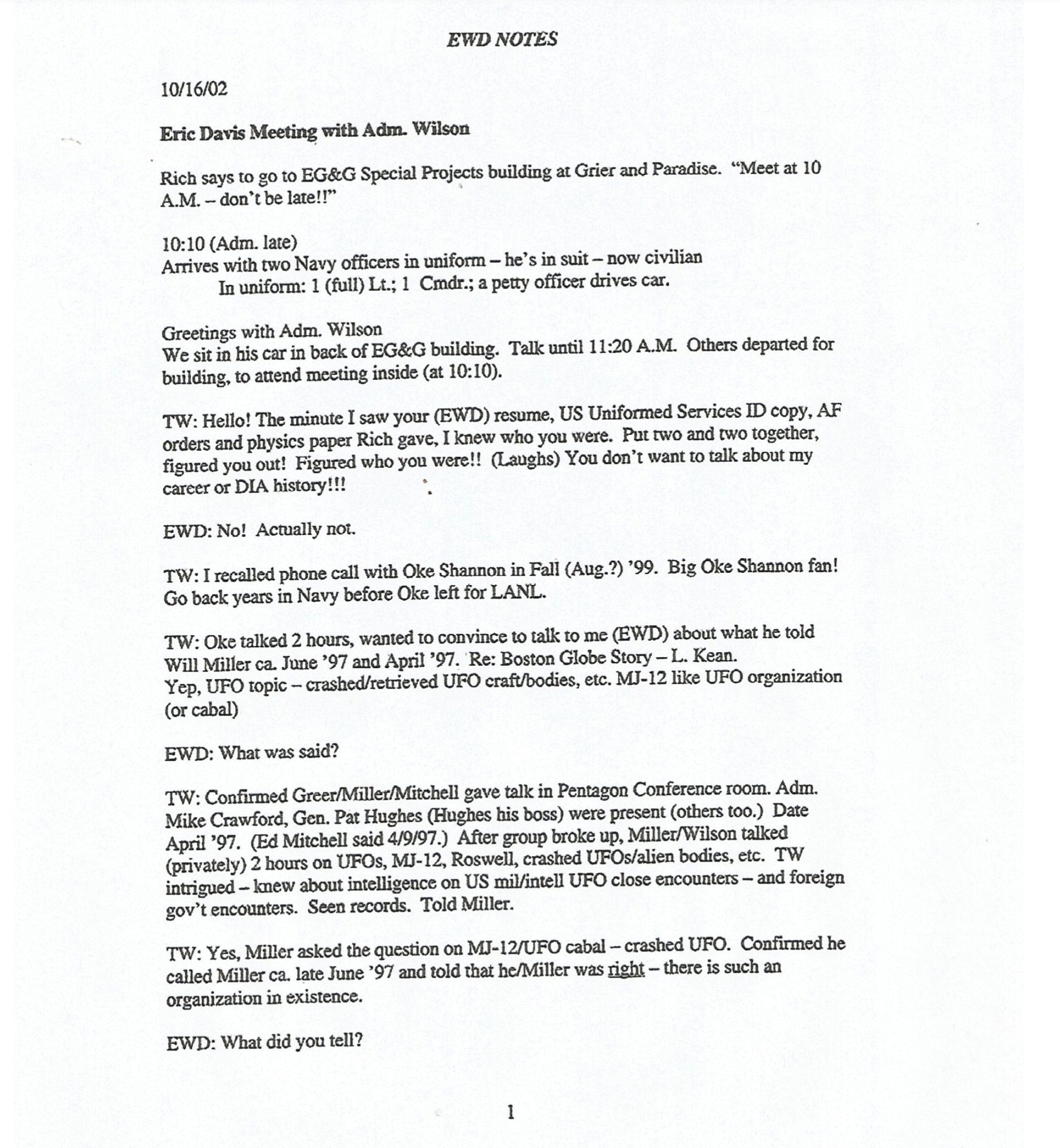
The alleged meeting took place on October 16, 2002.
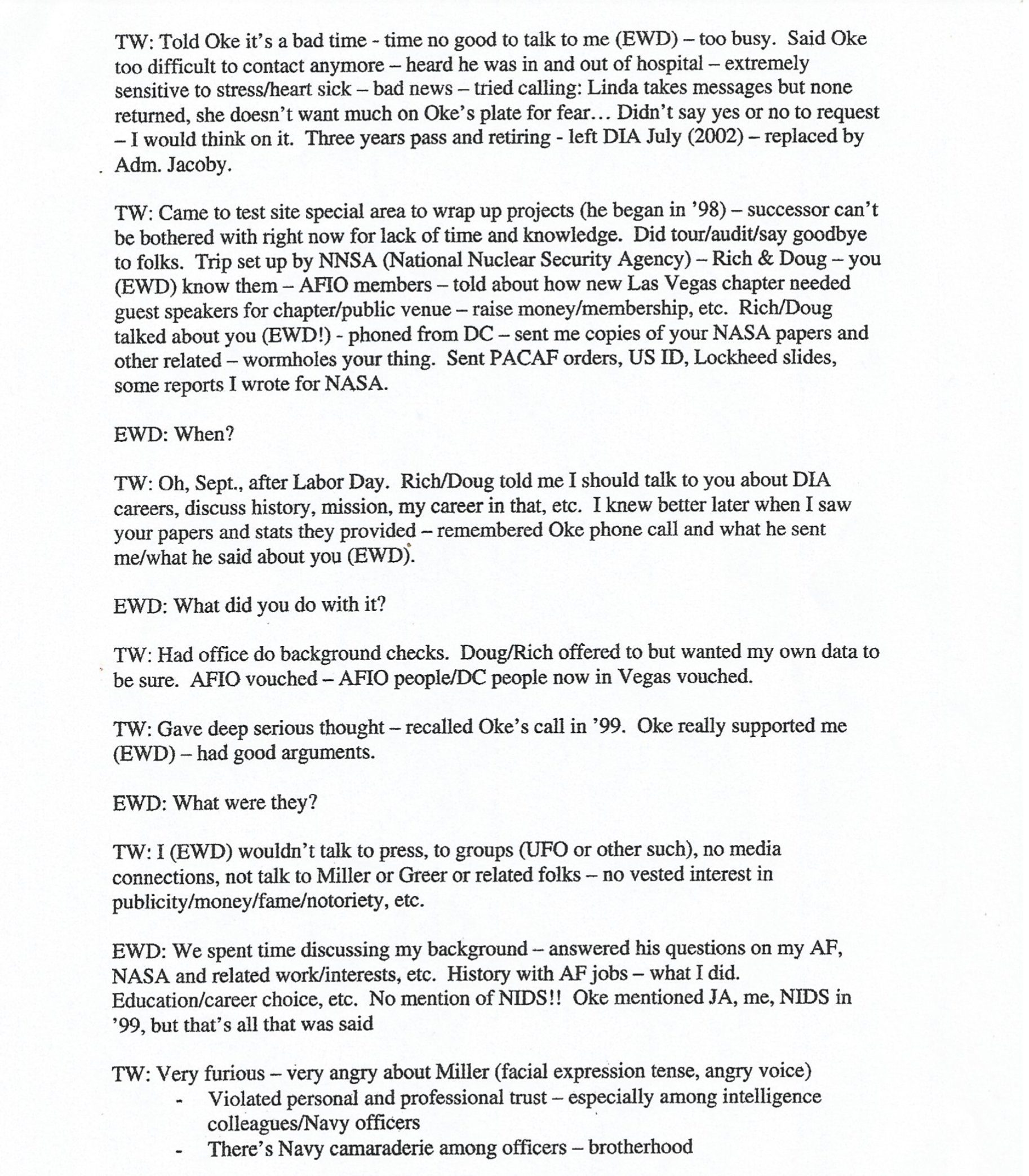
According to the notes, physicist Dr. Eric Davis met retired Vice Admiral Thomas Wilson in Las Vegas near the EG&G Special Projects facility, one of the legendary names long associated with Area 51 operations and deeply classified aerospace work. The conversation allegedly unfolded inside Wilson’s vehicle parked behind the building while Davis frantically documented the discussion in handwritten-style notes that would later become one of the most debated documents in modern UFO history.
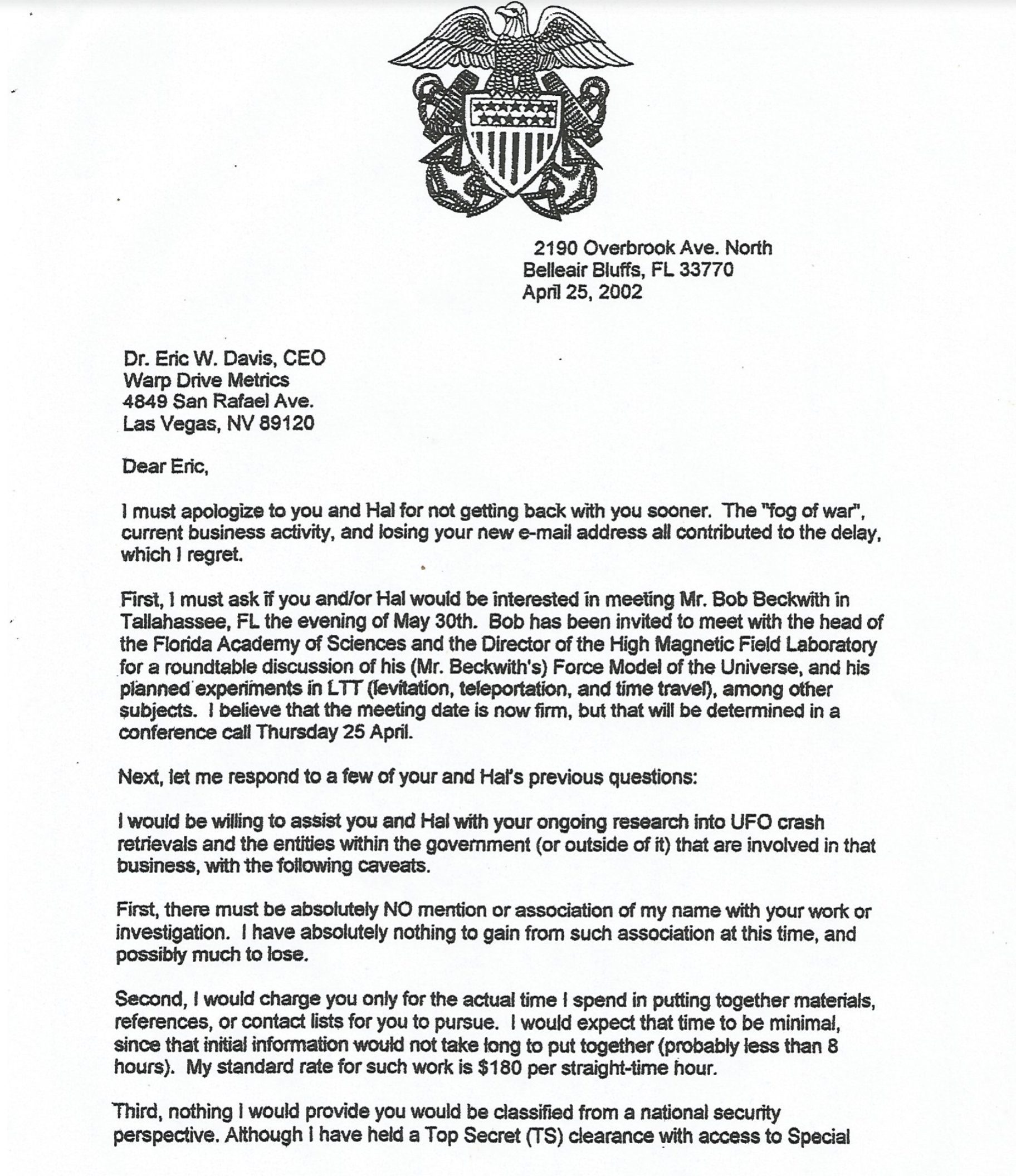
Davis was not some fringe UFO personality chasing internet fame. He was a respected theoretical physicist with government contracts, high level clearances, and direct involvement in later Pentagon UFO efforts including AAWSAP and AATIP. He worked alongside major intelligence linked figures like Dr. Hal Puthoff, Kit Green, and Jacques Vallée.
Wilson was even more significant. Before retiring, Thomas Wilson served as Director of Intelligence for the Joint Chiefs of Staff, the J-2 position, while also leading the Defense Intelligence Agency. In practical terms, he operated at the absolute summit of American military intelligence.
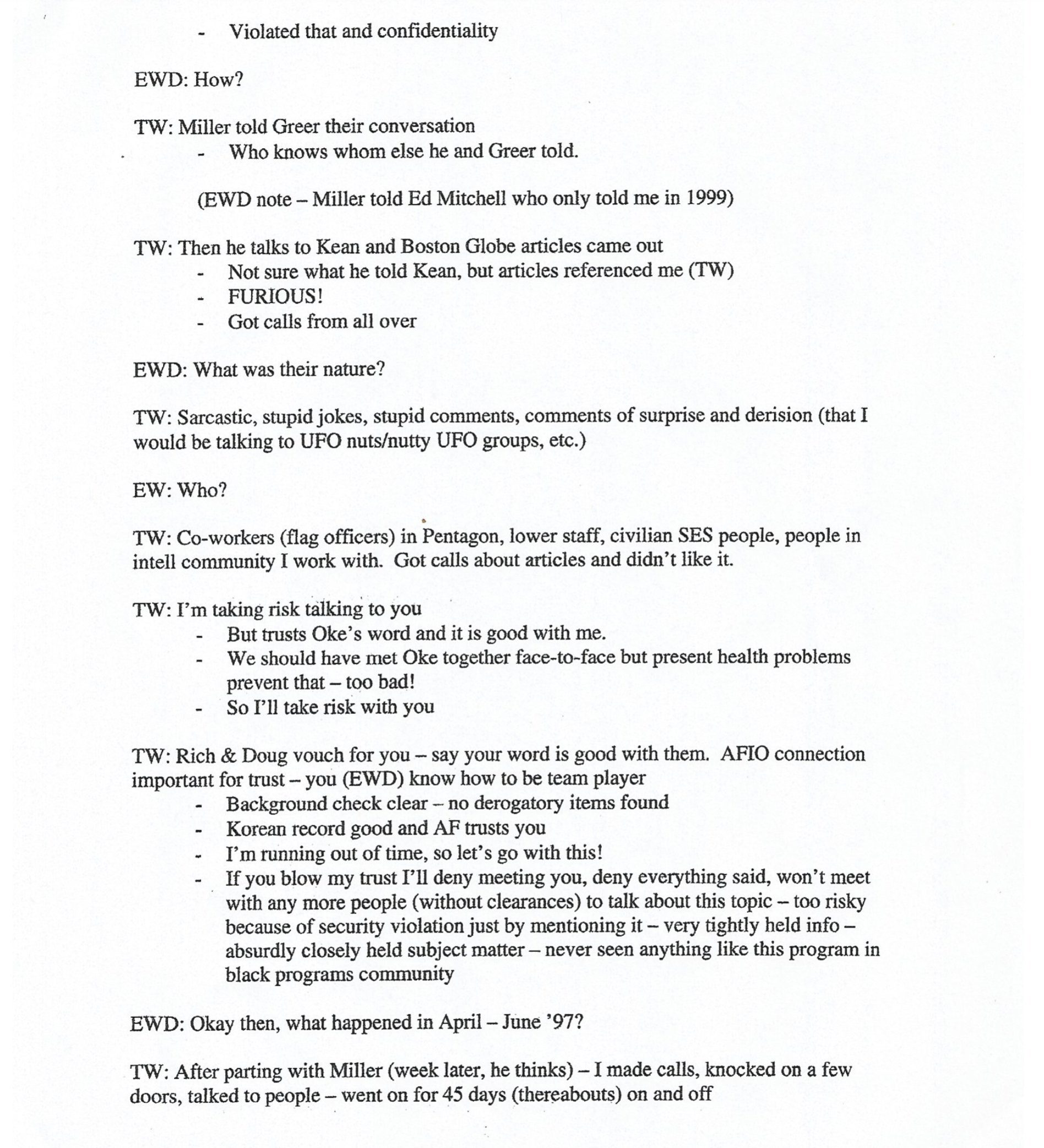
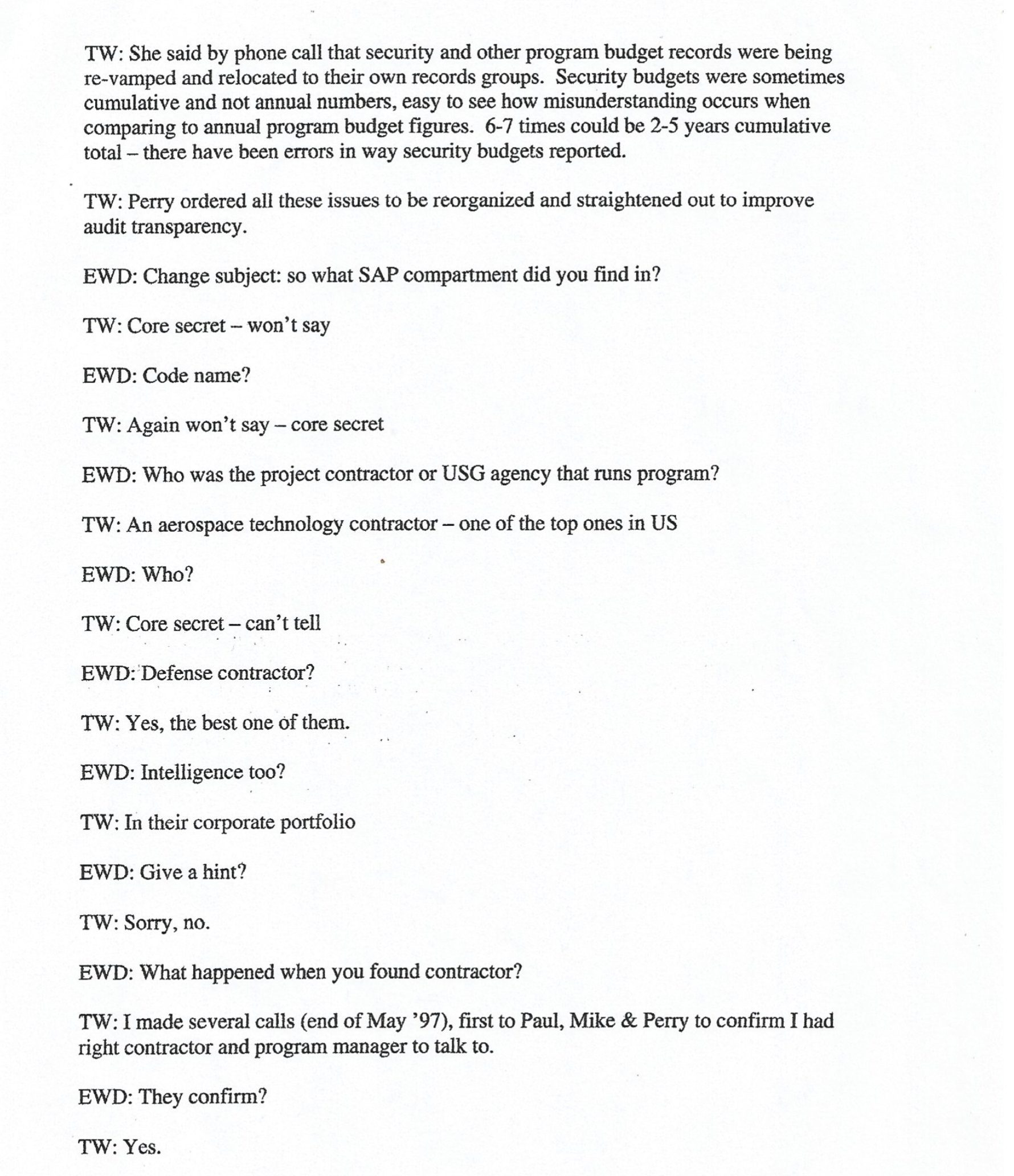
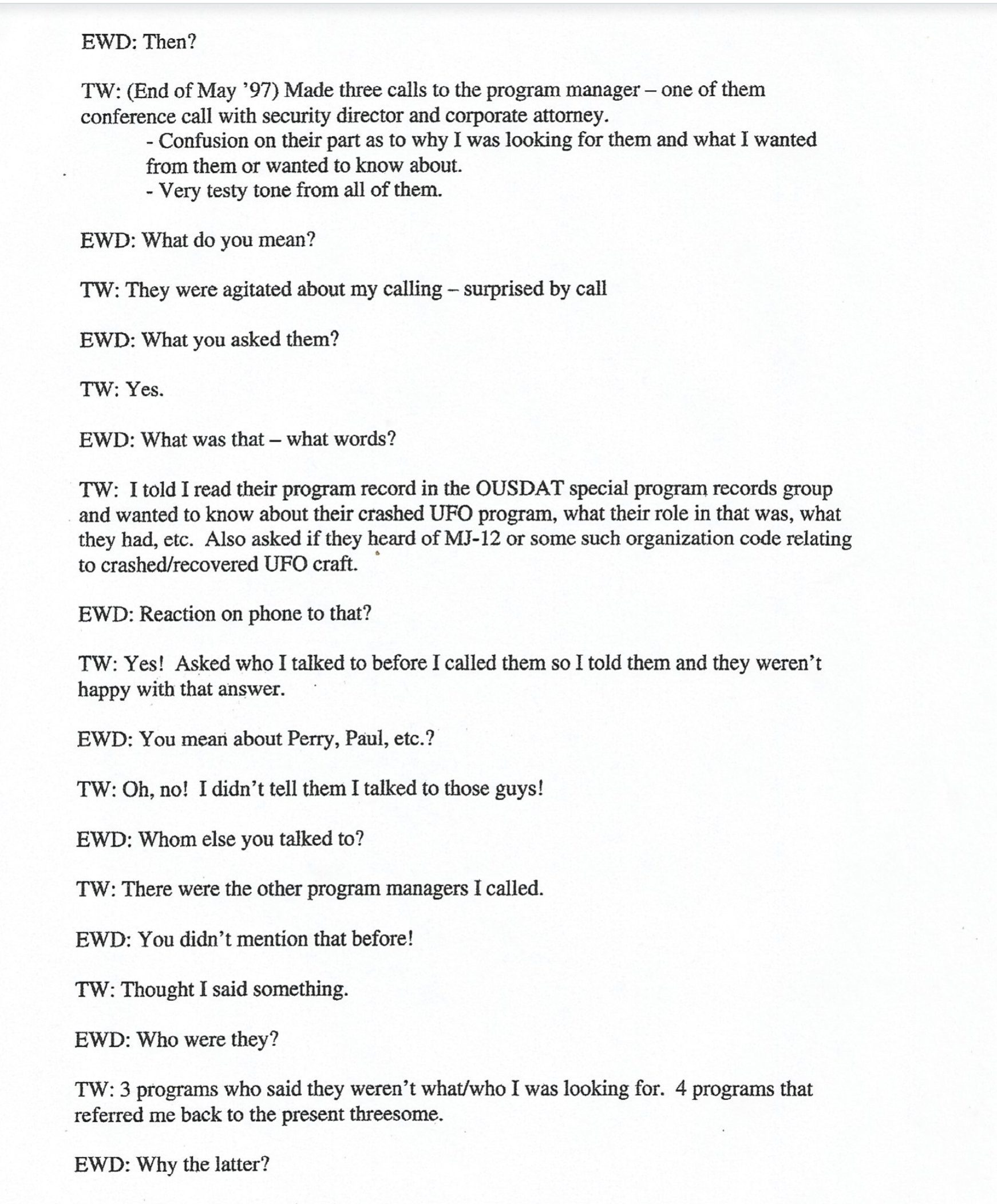
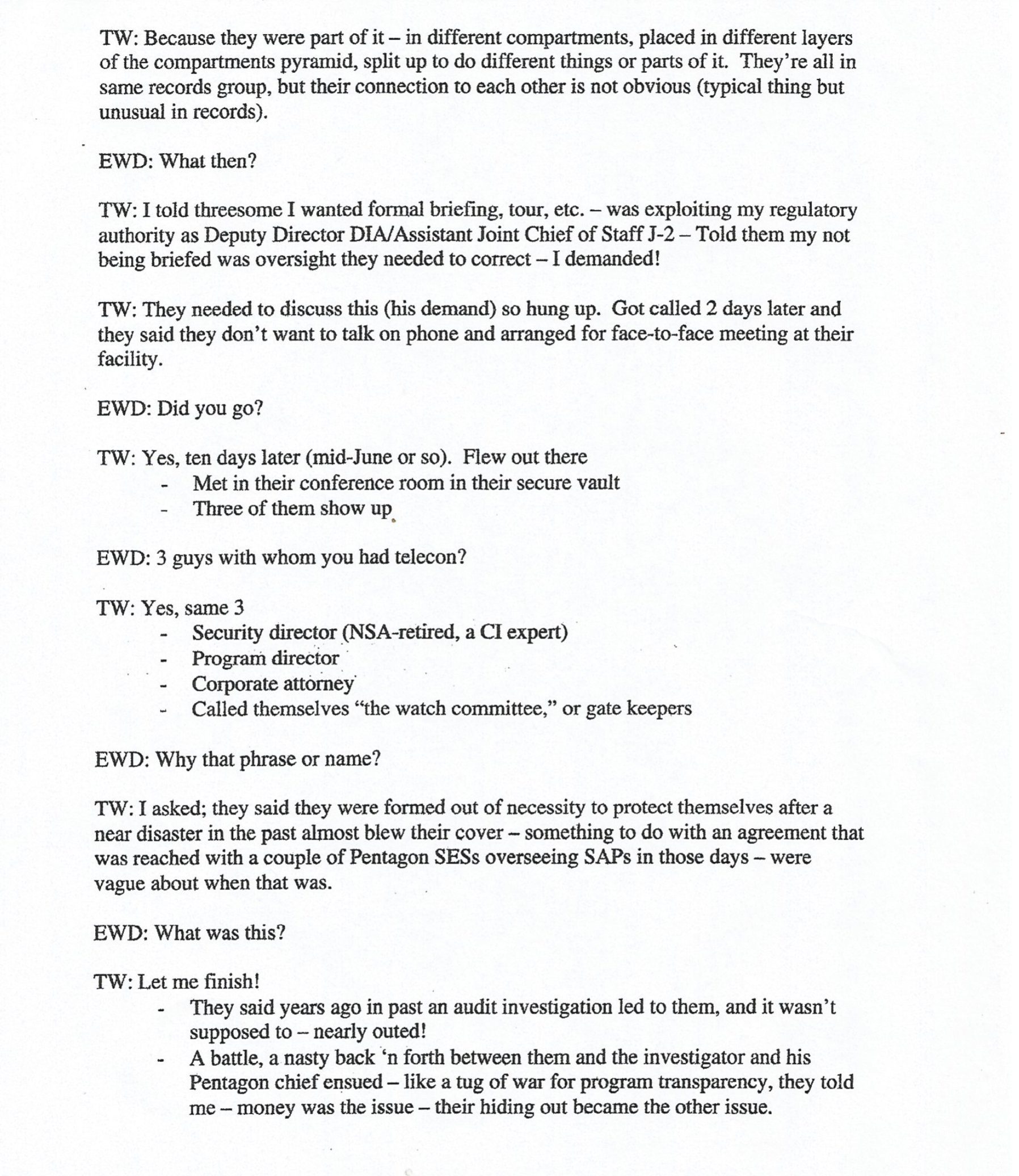
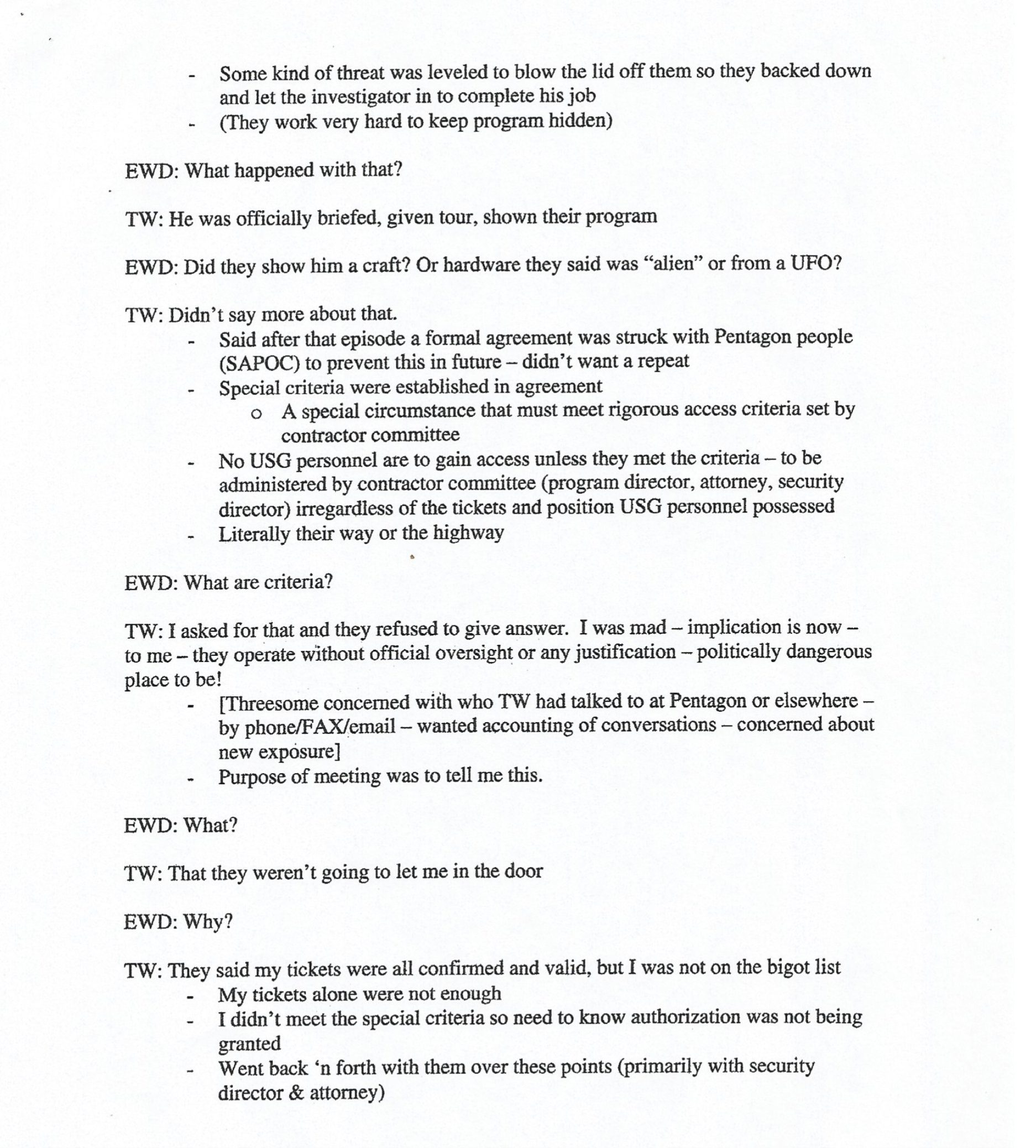
The memo itself reads less like polished fiction and more like someone desperately trying to preserve details before forgetting them. The writing is fragmented, conversational, nervous, and packed with obscure internal Pentagon terminology that would be difficult for outsiders to convincingly fabricate.
That alone does not prove authenticity. But it is one reason the document refuses to disappear.
The Alleged Discovery of the Hidden Program
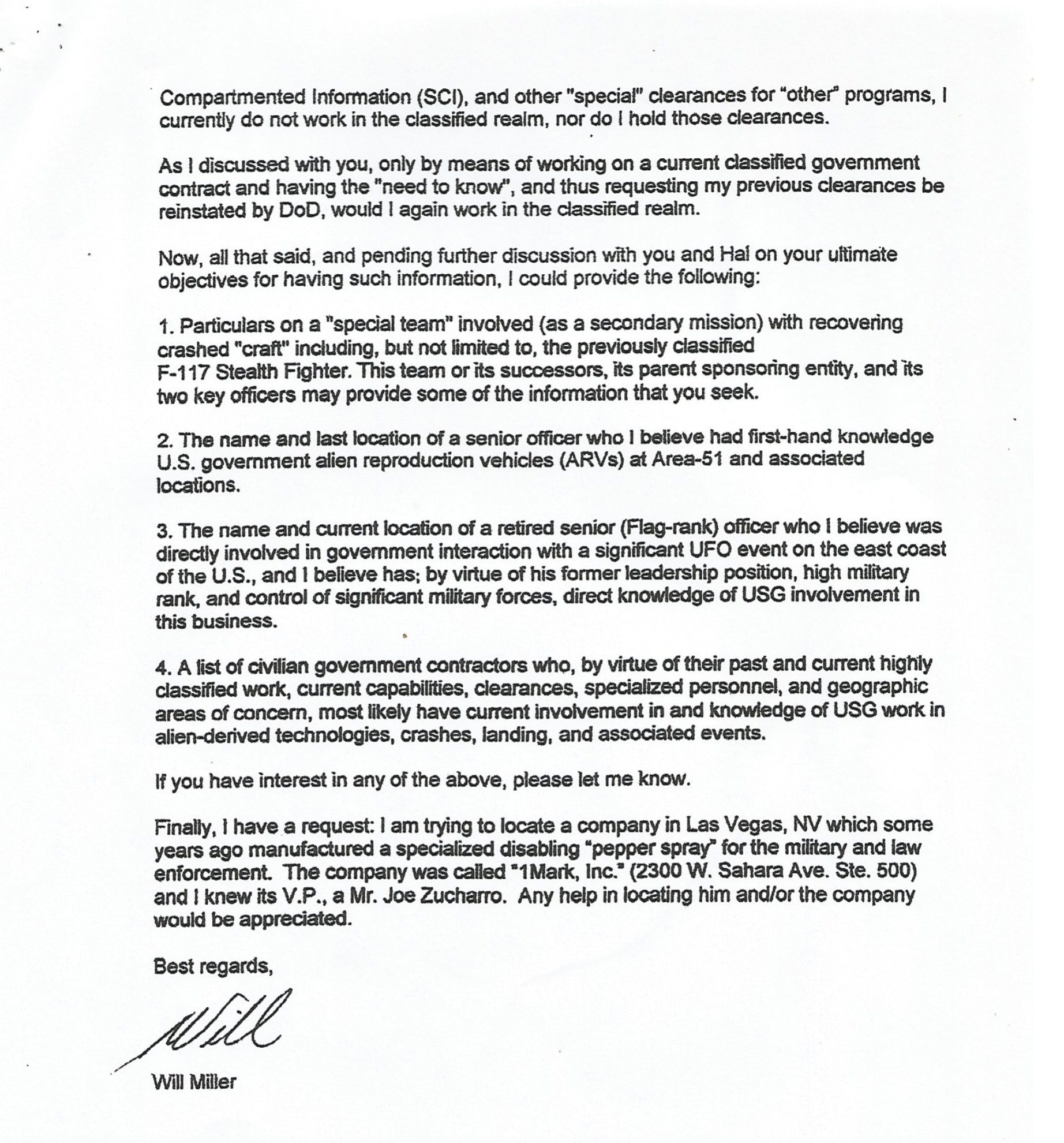
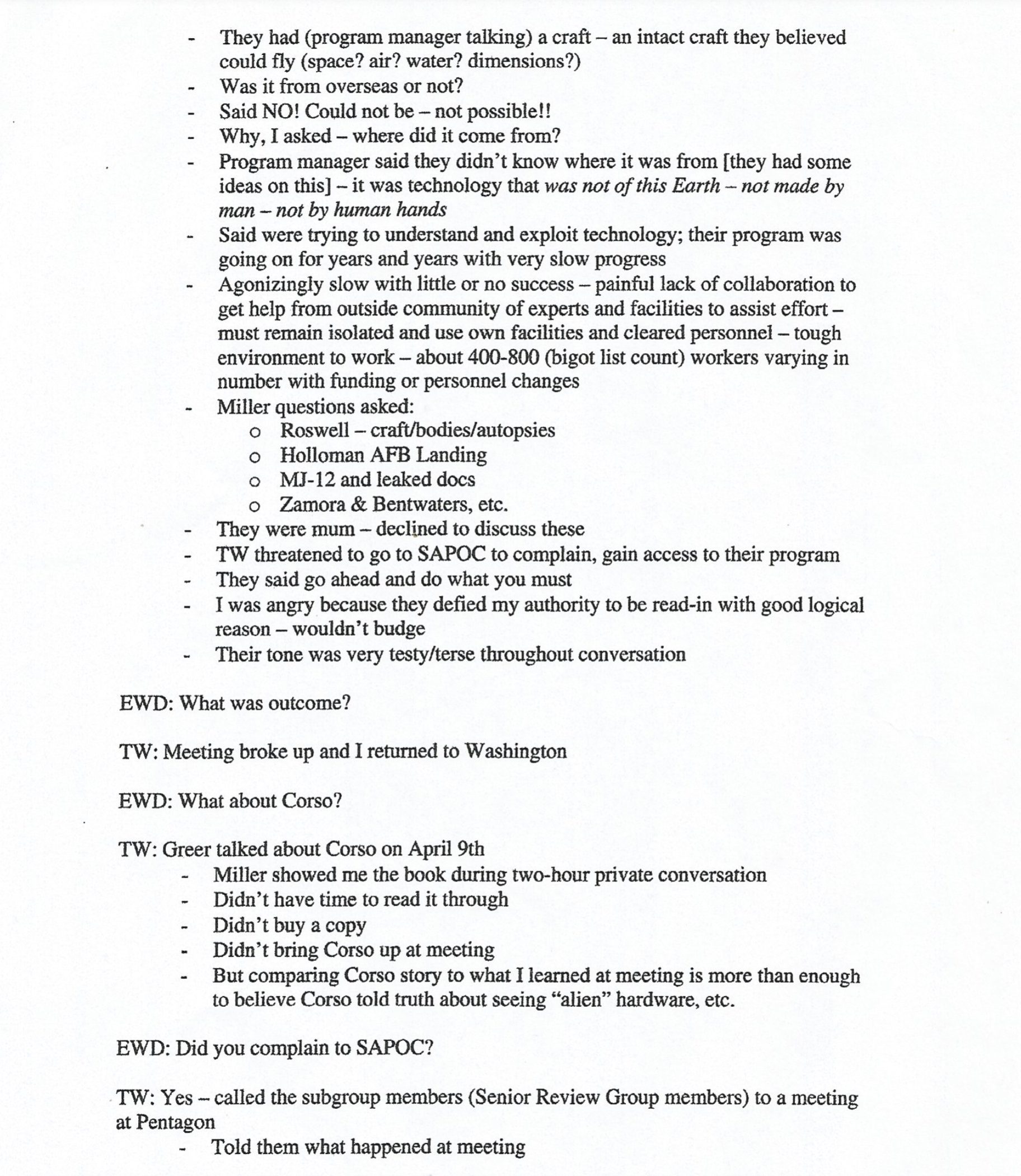
According to the memo, Wilson’s search began after the now famous April 9, 1997 Pentagon briefing organized by Dr. Steven Greer, Apollo 14 astronaut Edgar Mitchell, and Commander Willard Miller. That briefing is historically verified.
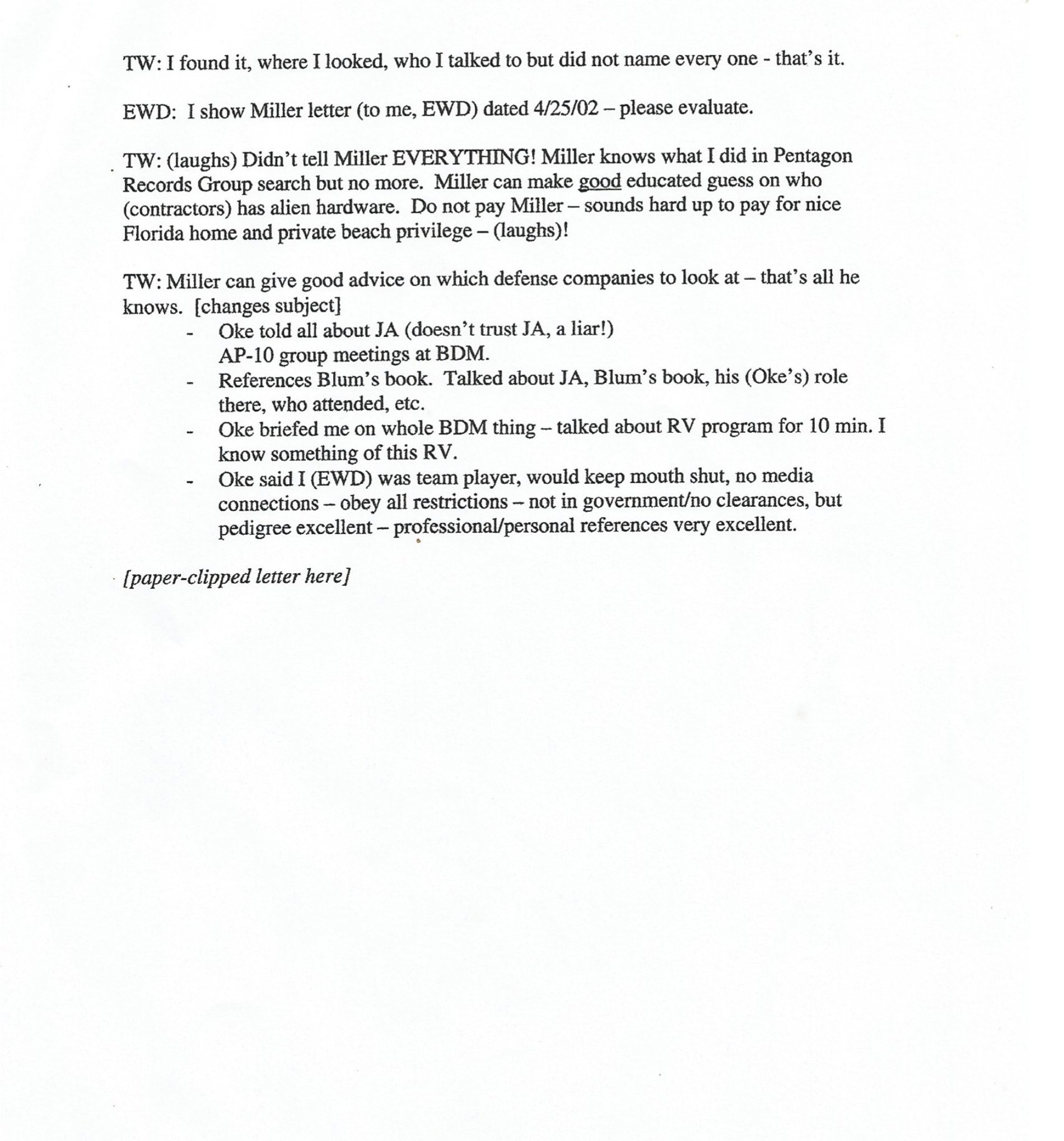
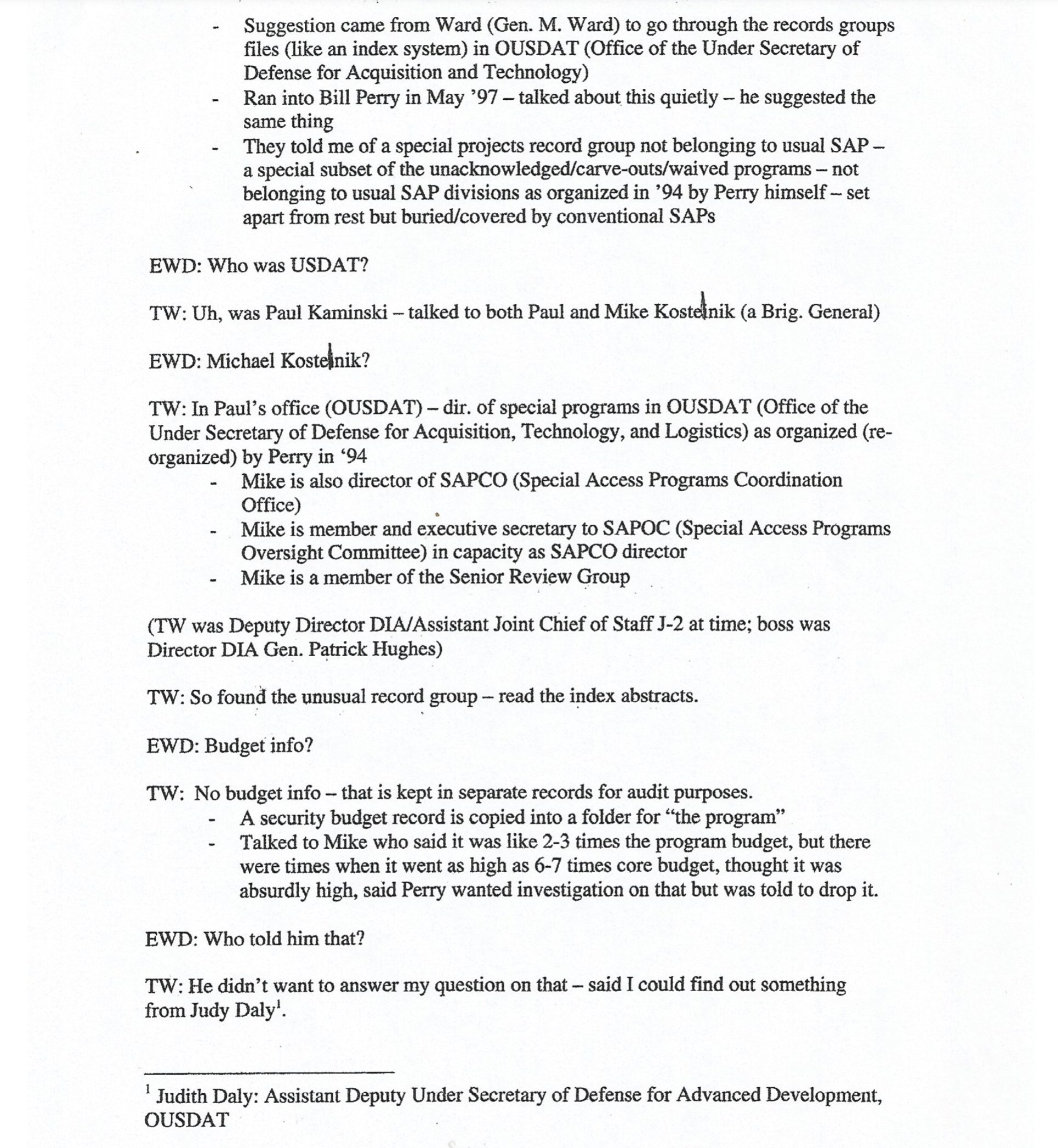
The group reportedly provided Wilson with names and leads tied to alleged UFO crash retrieval programs buried inside Special Access Programs. The memo claims Wilson later began digging through classified records inside the Office of the Under Secretary of Defense for Acquisition and Technology, OUSDAT, where he allegedly discovered references to a deeply buried “carve out” program hidden from conventional oversight structures. That discovery allegedly led him to a major aerospace contractor operating a reverse engineering effort involving recovered technology.
Then came the part that changed everything.
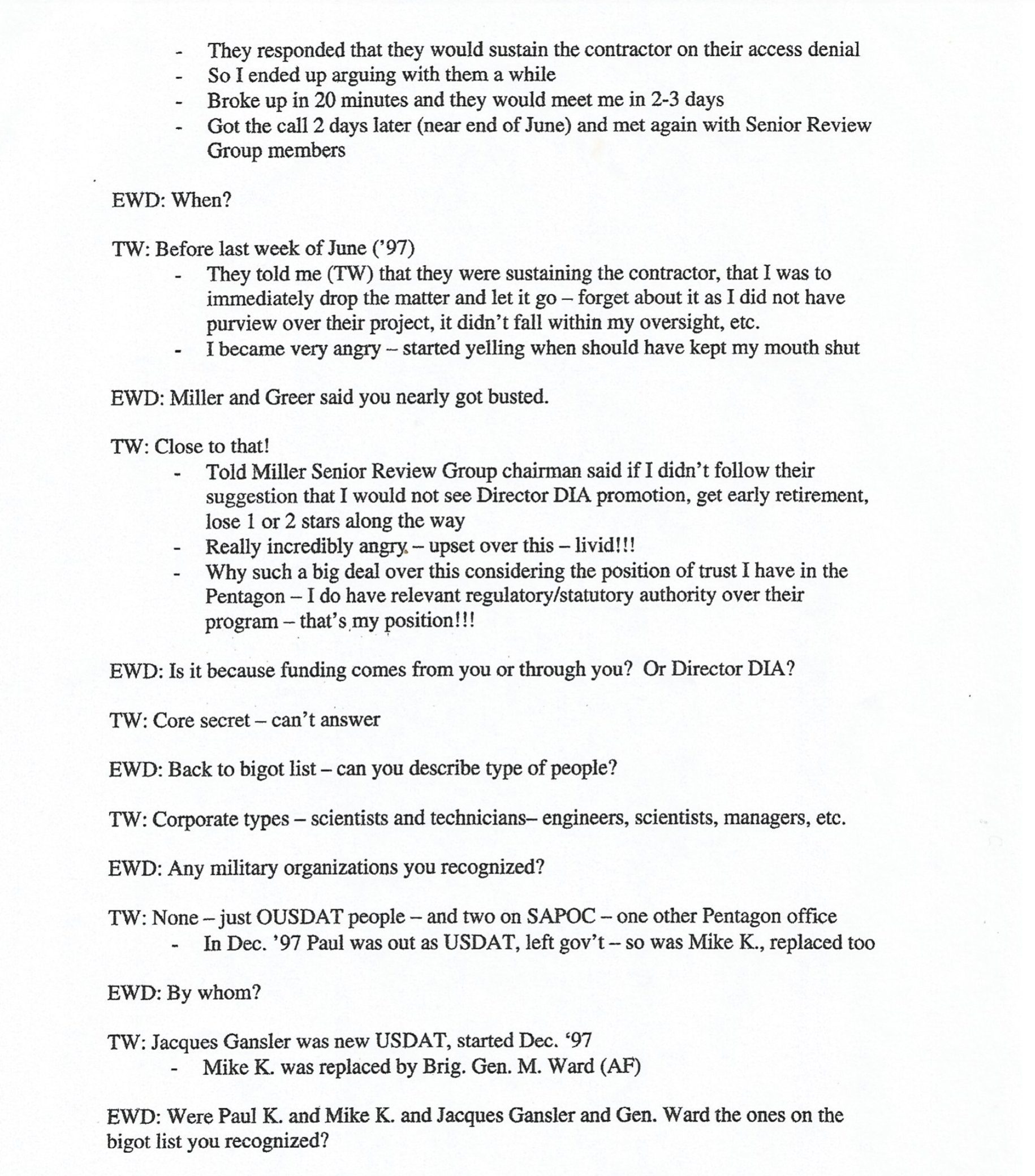
According to the memo, Wilson contacted the contractor and demanded access based on his authority as Deputy Director of the DIA and Joint Chiefs intelligence chief. Three corporate officials, described as a security director, program director, and corporate attorney, allegedly informed him that despite his rank and clearances, he lacked the required “need to know” because he was not on the compartmentalized “bigot list” controlling access to the program. When Wilson threatened escalation, the contractor allegedly contacted Pentagon oversight officials who then pressured Wilson to drop the matter entirely. According to the notes, Wilson was warned that continuing could damage his career, cost him promotions, and force early retirement.
One section of the memo captures Wilson’s anger directly:
“Why such a big deal over this considering the position of trust I have in the Pentagon?”
If accurate, the implications are almost beyond comprehension.
The Constitutional Nightmare Hidden Inside the Memo
Most UFO stories revolve around whether aliens exist. The Wilson, Davis Memo asks a far more dangerous question, who actually controls the deepest secrets of the United States government? The memo paints a picture of a hidden ecosystem where unelected corporate gatekeepers inside defense contractors allegedly operate beyond traditional congressional oversight while controlling programs so sensitive that even senior intelligence leadership cannot penetrate them. It describes a world where constitutional authority collides directly with black budget compartmentalization and loses.
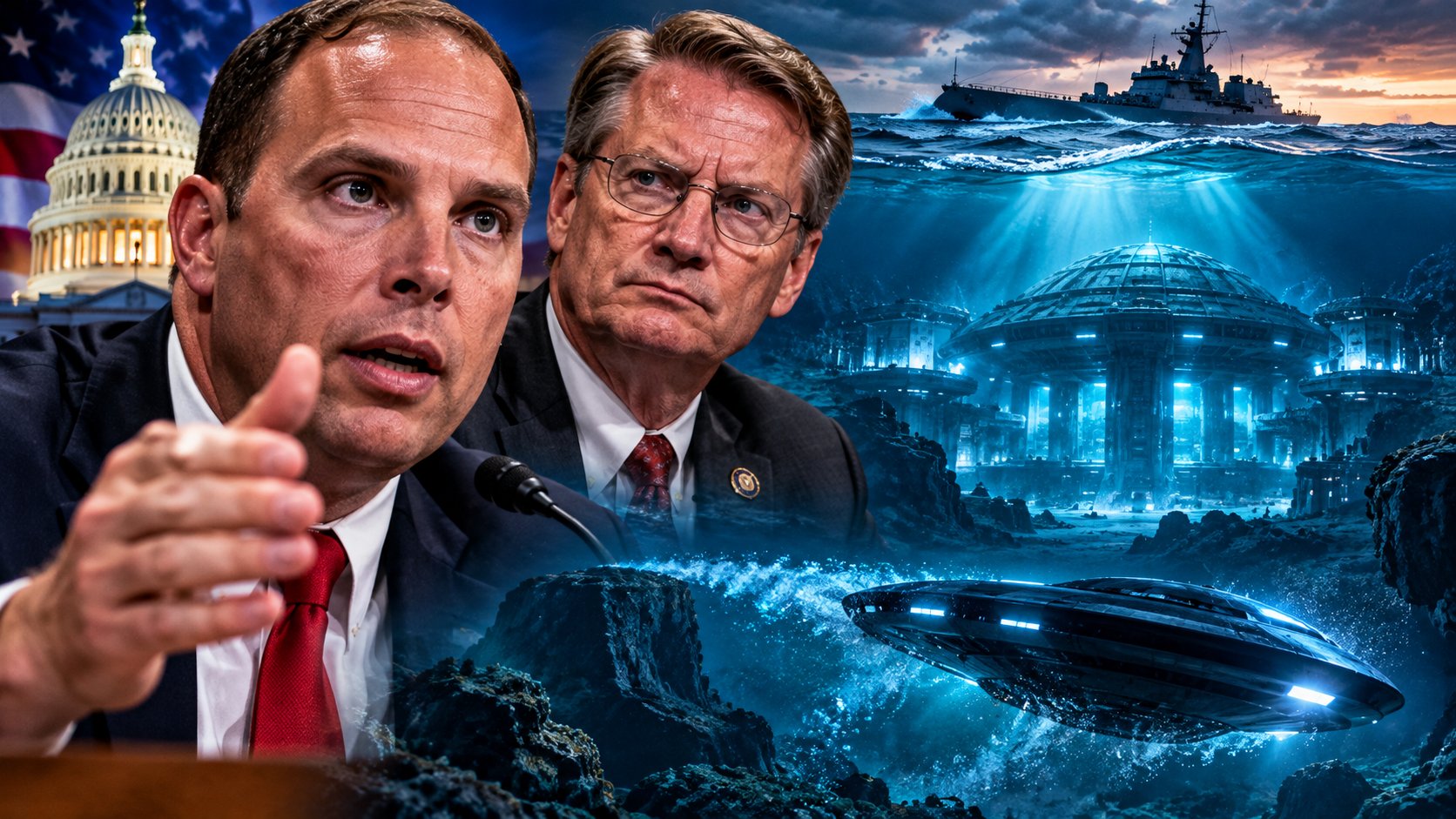
That idea sounds absurd at first glance. Until you realize Congress itself is now openly investigating almost the exact same allegation. Modern UAP whistleblower David Grusch made nearly identical claims under oath in 2023, alleging illegal crash retrieval and reverse-engineering programs hidden inside private aerospace contractors beyond lawful oversight mechanisms. The language inside the proposed UAP Disclosure Act, particularly references to “legacy programs” and “corporate-held technologies of unknown origin” reads eerily similar to the Wilson Memo’s central allegations. Suddenly the memo stopped looking like isolated UFO mythology. It started looking like an early warning flare.
The Discovery That Changed Everything
For years, the memo circulated quietly through intelligence and UFO research circles almost like contraband. Then came the discovery that transformed it from rumor into one of the most debated documents in modern disclosure history. In 2018, researchers discovered the notes inside the estate files of Apollo 14 astronaut Dr. Edgar Mitchell after his death.
That matters enormously. Mitchell was not a random conspiracy theorist. He was the sixth man to walk on the moon, a Navy captain, MIT-trained scientist, and longtime advocate for investigating UFO secrecy claims within government. The physical existence of the memo inside his personal archives gave the document a real world provenance chain that internet hoaxes rarely possess. Even more explosive was the reaction from figures connected to the memo itself.
The Strange Responses From the People Involved
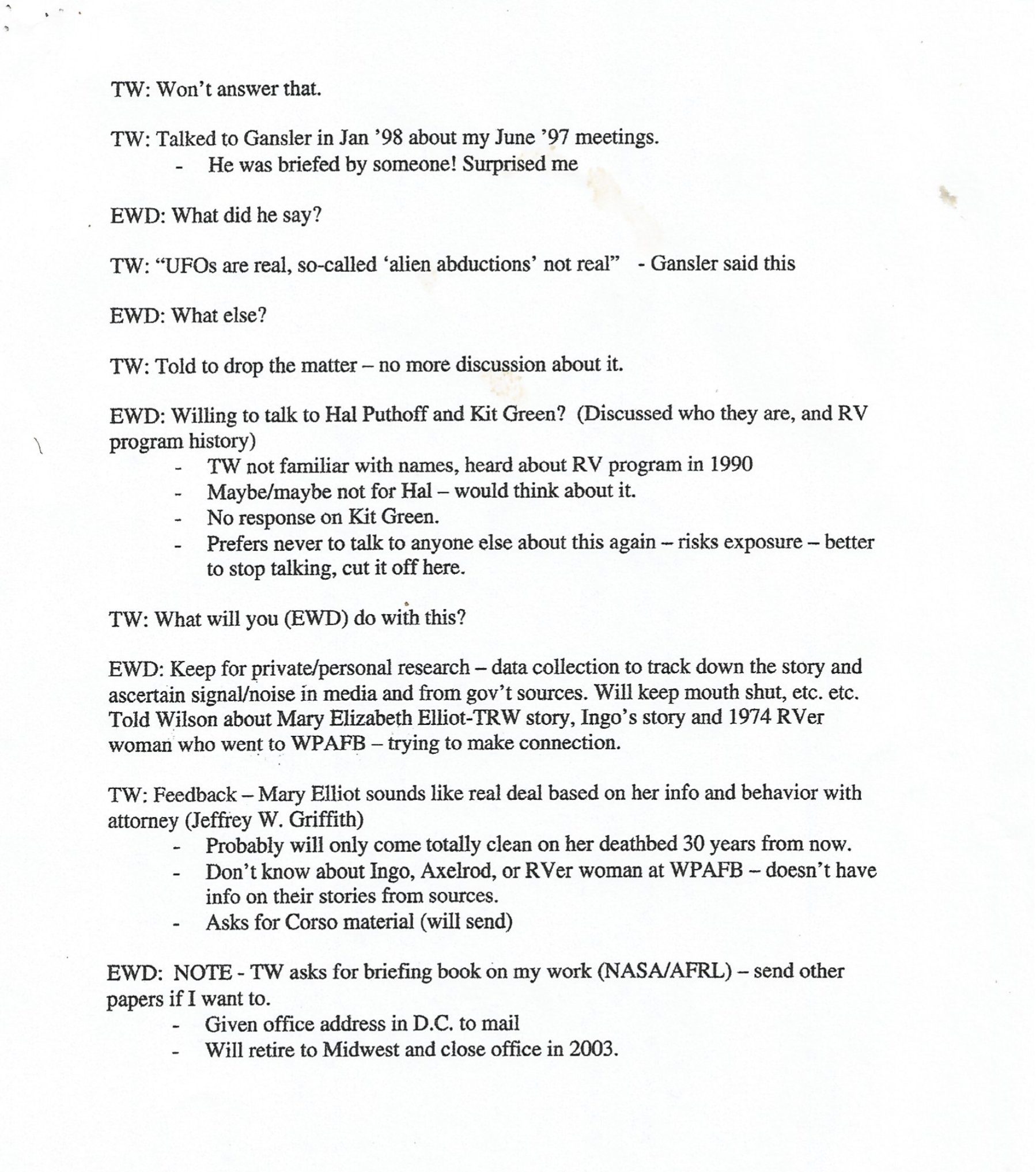
Vice Admiral Thomas Wilson has repeatedly denied the document publicly and directly. He insists the meeting never happened and that the notes are fabricated. On paper, that should end the story. Except nearly everyone surrounding the memo behaves strangely. Dr. Eric Davis has never definitively called it fake. Instead, he consistently retreats into variations of “no comment,” often implying he cannot publicly discuss classified matters without risking legal consequences tied to security clearances.
Then came Hal Puthoff. Puthoff, one of the most connected figures in the government UFO ecosystem, acknowledged the memo emerged from Mitchell’s files and reportedly stated that because it involved classified operational information, they could not discuss it publicly. That is not how people usually react to fabricated documents.
Even Commander Willard Miller, who attended the original 1997 Pentagon briefing, later indicated Wilson did in fact pursue hidden aerospace programs and encountered severe resistance. No one fully confirms it. No one fully kills it. And that ambiguity is precisely why the memo has become legendary.
The Memo’s Most Chilling Section
Buried deep inside the notes is the section many researchers consider the most important. Wilson allegedly claims the contractor told him they possessed an intact craft. Not Soviet. Not Chinese. Not human. The memo quotes program officials allegedly describing technology that was:
“Not made by human hands.”
According to the notes, the program had spent years attempting to reverse engineer the technology with painfully slow progress due to extreme compartmentalization and isolation from outside scientific communities. The memo also references Roswell, MJ-12, Holloman Air Force Base, crash retrievals, alien bodies, and reverse engineering operations hidden inside Special Access Programs.
Critics argue the document reads like sophisticated science fiction tailored to UFO believers. Supporters counter that the dense bureaucratic detail, internal Pentagon terminology, and obscure program structure descriptions are exactly what make it difficult to dismiss outright.
Congress Quietly Legitimized the Memo
One of the least discussed but most important developments occurred in 2022 when Representative Mike Gallagher entered the Wilson, Davis Memo into the Congressional Record during House Intelligence Committee proceedings tied to UAP investigations. That did not authenticate the memo. But it elevated it.
For decades, UFO documents lived almost entirely inside fringe culture and conspiracy communities. Now one of the most controversial alleged leak documents in UFO history had officially crossed into congressional proceedings during active UAP oversight debates. That is a seismic shift. The U.S. government no longer treats the possibility of hidden UAP programs as absurd. It is now actively legislating around them.
Why the Memo Still Matters
The Wilson, Davis Memo survives because it occupies a uniquely dangerous middle ground. It is too detailed to dismiss casually. Too controversial to confirm. Too connected to real officials, real programs, and real events to disappear. And its core allegations increasingly mirror the exact concerns now emerging from modern whistleblowers, congressional hearings, and disclosure legislation.
Even if every extraterrestrial claim inside the memo were false, the document would still expose something deeply troubling: the existence of massively compartmentalized defense structures operating with extraordinary secrecy, weak oversight, and immense corporate influence over national security systems. That alone would represent one of the biggest national security stories of the century. But if even part of the memo is true, the implications become civilization-altering. Because the Wilson, Davis Memo is not ultimately about aliens. It is about power. And who controls knowledge in the modern American state.
Sources
- U.S. Congress – UAP Hearing Archives
- Defense Intelligence Agency
- Congress.gov – UAP Disclosure Act Records
- The Black Vault – Wilson Memo Archive
- National Archives – Special Access Programs Overview








































Want to join the conversation?
Create an account or sign in to share your thoughts, vote,
and reply to other readers.
Showing 0 of 0 comments
Don't have an account?
Already have an account?