
Andrew and Tristan Tate Remain Jailed in Miami as November Extradition Hearings Approach, Bail Denied and Trump Administration Declines to Intervene
The controversial influencers have spent more than three months in federal custody while fighting extradition to Britain, where prosecutors have authorized 59 criminal charges involving seven complainants. With their release request denied, separate extradition hearings approaching and additional legal proceedings in Romania, the brothers face mounting legal pressure.
Tate Brothers Remain in Federal Custody as British Extradition Cases Move Forward
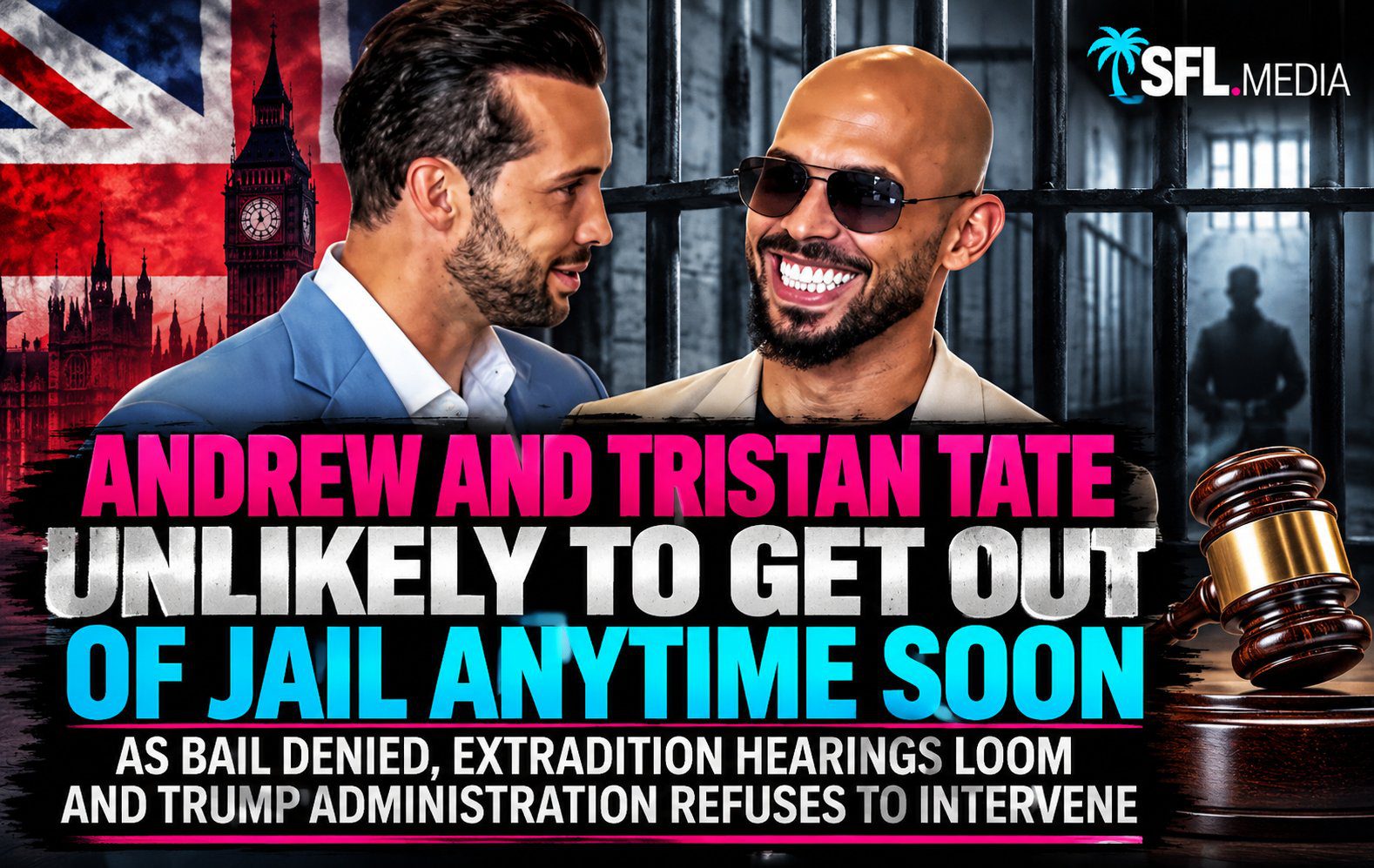
MIAMI, FLORIDA — Andrew and Tristan Tate remain incarcerated at the Federal Detention Center in Miami more than three months after their arrests on British extradition warrants, with a federal judge denying their request for release and separate November hearings approaching that could determine whether they are transferred to the United Kingdom to face serious criminal allegations.
The brothers, who became internationally prominent through social media content promoting wealth, masculinity and controversial views about women, were arrested by U.S. marshals on July 18 outside a Miami boxing event. British authorities are seeking their extradition in connection with allegations including rape, sexual assault, human trafficking and physical assault. The United Kingdom’s Crown Prosecution Service has authorized a combined 59 charges involving seven complainants, while the brothers have denied wrongdoing and maintain that the allegations against them are unfounded.
Andrew Tate, 39, is scheduled for an extradition hearing on November 19, while Tristan Tate, 38, is scheduled to appear the following day. Both proceedings will take place in federal court in Miami, where their attorneys have challenged the British requests and sought release pending the outcome. Those efforts have so far failed to secure their freedom.
The legal pressure extends beyond the American proceedings. Romanian prosecutors announced additional criminal allegations against the brothers in September, creating a complicated international legal situation involving proceedings in three countries. At the same time, the Trump administration has publicly indicated that it does not intend to intervene to prevent the British extradition process from moving forward.
The immediate legal question is whether British authorities have satisfied the requirements of the extradition treaty between the United States and the United Kingdom. The American court will not determine whether the brothers are guilty of the underlying criminal allegations. Instead, it must decide whether the legal conditions for extradition have been met.
Federal Judge Denies Release, Citing Flight Risk and International Resources
One of the most consequential setbacks for the brothers occurred September 9, when U.S. Magistrate Judge Lauren Louis denied their motions for release pending extradition proceedings. The ruling followed an August 27 hearing during which both brothers testified, denied the criminal allegations against them and argued that remaining in federal detention would interfere with their ability to prepare their defenses.
The judge concluded that the brothers had failed to demonstrate that they did not present a risk of flight or danger to the community, or that special circumstances justified release. Under American extradition law, detention is generally presumed appropriate while an extradition request is pending, and individuals seeking release face a demanding legal standard.
Prosecutors argued that the brothers possessed considerable international connections, financial resources and experience traveling between countries. They also cited public statements in which the Tates had boasted about wealth, multiple passports and their ability to move internationally. During the August hearing, prosecutors presented evidence involving a Mexican passport bearing Tristan Tate’s photograph and date of birth under another name.
Defense attorneys disputed the suggestion that the brothers were likely to flee, arguing that their enormous public visibility would make disappearing practically impossible. They also maintained that the extravagant wealth and lifestyle portrayed in their online videos were exaggerated elements of their social media personas rather than accurate representations of their actual financial circumstances.
Judge Louis rejected those arguments, describing the brothers as substantial flight risks because of their resources and history of international travel. The ruling left them in federal custody while their extradition cases proceed and created a significant obstacle for subsequent efforts to secure their release.
Importantly, the judge’s decision did not determine whether the brothers committed any crimes or whether they must ultimately be extradited. It addressed their eligibility for release during the proceedings, not the merits of the British criminal cases.
British Prosecutors Authorize 59 Charges Involving Seven Complainants
The criminal allegations underlying the extradition requests have expanded substantially since British authorities first pursued the brothers. In July, the Crown Prosecution Service announced 38 additional charges, bringing the combined total to 59 authorized counts involving seven complainants.
Andrew Tate faces allegations including rape, assault, human trafficking and controlling prostitution for financial gain, along with offenses involving indecent images of children and extreme pornography. The additional charges announced in July included seven rape counts, three counts involving arranging or facilitating trafficking for sexual exploitation, three assault counts and 19 offenses involving indecent images or extreme pornography.
Tristan Tate faces allegations involving rape, sexual assault, human trafficking and physical violence. His additional charges included two rape counts, one sexual assault count and three counts of arranging or facilitating trafficking for sexual exploitation.
The alleged conduct spans several years, with the latest British charging announcement identifying alleged offenses occurring between July 2010 and August 2017. Prosecutors have emphasized that the decision to authorize charges does not establish guilt and that both defendants retain the right to a fair trial.
The formal extradition proceedings are narrower than a criminal trial. British authorities must demonstrate that the relevant allegations satisfy the requirements of the extradition treaty, including applicable evidentiary and procedural standards. American courts do not conduct a full trial to determine whether the accused committed the alleged offenses before deciding whether extradition is legally permissible.
The brothers have denied the accusations, and none of the British allegations should be treated as established criminal conduct unless proved through the appropriate judicial process.
Why Andrew and Tristan Tate Are Fighting Extradition Instead of Returning to Britain
The Tates have chosen to challenge extradition rather than voluntarily return to the United Kingdom, a decision that has extended the American proceedings while their attorneys contest the legal basis for transferring them into British custody.
Under the extradition treaty between the United States and the United Kingdom, British authorities must provide the required documentation and supporting evidence. A federal judge must then determine whether the alleged offenses are covered by the treaty, whether the applicable evidentiary requirements have been met and whether other legal conditions permit extradition.
The defense may challenge whether those standards have been satisfied, raise applicable treaty objections and pursue available legal remedies. The proceedings are therefore not a trial on the underlying allegations of rape, assault or trafficking, and the judge is not being asked to render a verdict of guilt or innocence.
The brothers’ refusal to waive extradition cannot legally or fairly be interpreted as proof that they believe themselves guilty. Contesting extradition is a recognized legal right, and defendants may have legitimate procedural, evidentiary or strategic reasons for exercising that right.
However, the practical consequences of their decision are substantial. Because their request for release was denied, the brothers remain incarcerated while the proceedings continue. Additional legal challenges could extend that detention, although the duration of custody does not independently determine whether extradition will ultimately be approved. The defense must therefore balance its effort to challenge the British requests against the reality that the brothers have not secured permission to await the outcome outside federal custody.
November 19 and 20 Hearings Could Determine the Next Stage of Extradition
The brothers’ next major court appearances are scheduled for November 19 and November 20, when their extradition cases will be considered separately by Judge Louis. Andrew Tate’s hearing is scheduled for November 19, followed by Tristan Tate’s hearing the next day.
The judge declined to consolidate the proceedings, noting that the allegations against the brothers contain material differences requiring separate consideration. Although both men face allegations involving sexual offenses and trafficking, the specific accusations, supporting evidence and legal arguments are not identical.
During the hearings, federal prosecutors acting on behalf of the United States are expected to present the British extradition requests and supporting materials. Defense attorneys will have an opportunity to challenge the legal sufficiency of those requests and argue against certification.
If the judge determines that the requirements for extradition have been met, she may certify the cases and forward the matter to the executive branch. Such certification would represent an important step toward extradition, but it would not necessarily result in immediate transfer because additional legal proceedings and executive-branch review may remain available.
If the court determines that the requests do not satisfy the applicable legal standards, certification could be denied. The outcome will depend on the evidence and arguments properly before the court, not on the brothers’ public reputations or the amount of time they have already spent in detention.
The November hearings therefore represent a significant procedural milestone, but they are not criminal trials and will not decide whether either brother is guilty of the allegations made by British prosecutors.
Trump Administration Says It Does Not Plan to Block the Extradition Process
The political dimension of the case has attracted attention because both brothers have publicly supported President Donald Trump and developed connections within conservative political and social media circles. Their supporters have questioned whether the administration might intervene to prevent extradition, particularly given the brothers’ previous criticism of the criminal investigations against them.
However, the administration has publicly indicated that it does not intend to intervene in the pending proceedings.
In July, White House officials said the brothers should not expect assistance from the president. Secretary of State Marco Rubio also declined to involve himself in the cases, indicating that the matter was proceeding through the legal system and that he did not see a role for the State Department at that stage.
Those statements represent an important political development for the brothers, whose supporters had expressed hope that the administration might use its authority to prevent their transfer to British custody. The administration’s stated position leaves the matter proceeding through the courts without any announced presidential effort to halt extradition.
Nevertheless, the executive branch retains a formal role in American extradition law. If a federal court certifies an extradition request, the secretary of state ordinarily makes the final executive decision regarding surrender, subject to applicable legal requirements and any further judicial proceedings.
The administration’s current public position therefore should not be interpreted as an irrevocable legal commitment or a surrender of executive authority. It does, however, establish that Trump and Rubio have not publicly announced plans to intervene on the brothers’ behalf.
Congressional Democrats Demand Answers About Previous Administration Contacts
The administration’s stated intention not to interfere has not ended scrutiny of its previous contacts and actions involving the brothers. Congressional Democrats have raised questions about reports that American officials previously assisted or communicated with the Tates while they faced criminal proceedings abroad.
Representatives Jamie Raskin and Yassamin Ansari sought additional information from administration officials concerning reported efforts to assist the brothers and the government’s handling of their legal situation. Their inquiry also raised questions about whether American officials would comply with the United Kingdom’s extradition requests.
The lawmakers’ concerns reflect broader political questions about whether the brothers received unusual assistance because of their public support for Trump or their relationships within political circles associated with the administration. However, those inquiries do not establish that the administration improperly intervened in the current extradition proceedings. Allegations concerning previous assistance, reported communications and potential conflicts of interest remain distinct from proven misconduct.
The administration’s public position remains that the pending extradition cases should proceed through the legal process. Any determination that officials improperly influenced the proceedings would require additional evidence beyond the existence of congressional questions or political relationships.
Separate Romanian Criminal Proceedings Complicate the Legal Situation
The brothers’ legal problems extend beyond the United States and the United Kingdom. Romanian prosecutors announced new criminal allegations in September involving trafficking minors, money laundering and other offenses, adding to the complexity of the international proceedings.
Andrew Tate was accused of offenses including trafficking minors, sexual activity with a minor and money laundering, while Tristan Tate faced allegations of complicity in certain alleged crimes. Romanian prosecutors have described alleged conduct involving the recruitment and exploitation of young women, including minors, through online adult-content operations.
The brothers deny the Romanian allegations, which remain subject to that country’s judicial process. The filing of an indictment does not establish guilt, and the Romanian courts must determine whether the allegations can proceed to trial and whether prosecutors can prove them.
The existence of proceedings in multiple countries creates questions about jurisdiction, the timing of prosecutions and the practical difficulties of defending separate criminal cases simultaneously. During the Miami detention proceedings, the brothers argued that remaining in American custody interfered with their ability to participate effectively in their Romanian defense.
Their attorneys also emphasized that Romanian authorities had previously allowed them to remain free under judicial restrictions, arguing that this demonstrated their willingness to comply with court orders. Judge Louis considered those arguments but concluded that they did not justify release under the applicable American extradition standards. The Romanian proceedings remain relevant to the broader legal situation, but they do not automatically prevent the United States from considering a valid extradition request from Britain.
Can the Tate Brothers Still Obtain Release Before the November Hearings?
Although their initial request for release was denied, the brothers have not exhausted every available legal remedy. Their attorneys have pursued additional challenges to detention, including a federal habeas corpus petition seeking immediate release.
The petition challenges the lawfulness of their continued confinement and argues that their detention interferes with constitutional protections and their ability to prepare a defense. Such litigation is separate from the question of whether the British extradition requests satisfy the applicable treaty requirements.
A court considering a custody challenge may examine whether the government has lawful authority to continue detaining the brothers and whether any legal basis exists for ordering release. That inquiry does not require the court to decide whether the British criminal allegations are true.
The difficulty for the defense is that Judge Louis has already issued a detailed decision finding that the brothers failed to meet the standards necessary for release. A subsequent challenge must identify a legally sufficient reason for reconsidering their detention or granting another form of relief.
The approaching November hearings also limit the amount of time remaining before the extradition cases reach their next major stage. Unless a court issues a new order authorizing release, the brothers will remain in federal custody while those proceedings continue.
Legal Analysis: The Brothers Face Mounting Pressure, but Extradition Is Not Yet Certain
The Tate brothers’ legal position has become more difficult in several concrete respects. They have been detained since July, their initial release motion was denied, British prosecutors have authorized additional criminal charges, separate Romanian proceedings continue and the Trump administration has publicly declined to intervene in the American extradition process.
These developments create significant practical pressure. The brothers remain incarcerated while preparing their defenses, their international legal obligations have grown more complicated, and their next major hearings are approaching without any announced political intervention on their behalf. However, those circumstances do not establish that extradition is inevitable or that either brother is guilty. American extradition proceedings are governed by treaty requirements and judicial standards that must be satisfied independently of the defendants’ public reputations, political relationships or detention status.
The denial of release is particularly important to distinguish from the underlying extradition determination. Judge Louis concluded that the brothers had not met the legal standard for release pending the proceedings. She did not rule that the British government had already proved its entitlement to extradition.
Similarly, the number and seriousness of the British allegations do not eliminate the government’s obligation to satisfy the treaty. Each extradition request must be evaluated according to the applicable legal standards, and the defense retains the right to challenge certification. What has changed is the brothers’ immediate practical situation. They remain in custody, their efforts to secure release have not succeeded, and the proceedings are moving toward hearings that could determine whether their cases advance to the executive stage of the extradition process.
What Happens Next for Andrew and Tristan Tate?
Andrew Tate is scheduled to appear in federal court on November 19, followed by Tristan Tate on November 20. The hearings are expected to focus on whether the United Kingdom has satisfied the legal requirements for extradition under its treaty with the United States. If the court certifies extradition, the brothers may pursue additional legal remedies before any transfer takes place, and the executive branch would retain its role in the surrender process. If certification is denied, the consequences would depend on the legal grounds for the ruling and any further action available to prosecutors.
For now, the brothers remain in Miami federal custody while confronting 59 authorized British criminal charges, separate Romanian allegations and an extradition process that has already lasted more than three months. Their attorneys continue to maintain their innocence and challenge both detention and extradition. British prosecutors maintain that the allegations warrant criminal proceedings, while American courts must determine whether the legal requirements for transferring the brothers to Britain have been satisfied.
The central development is clear: Andrew and Tristan Tate remain behind bars, their initial attempt to secure release has failed, and their November extradition hearings are approaching without any announced intervention from the Trump administration. Whether those proceedings ultimately result in their transfer to Britain remains a question for the courts and the extradition process.

Sources & Further Reading
- U.S. District Court, Southern District of Florida — September 9, 2026, Order Denying Release Pending Extradition
- UK Crown Prosecution Service — Additional Sexual Offense Charges Authorized Against Andrew and Tristan Tate
- Reuters — Tate Brothers Lose Bid for Release From U.S. Jail Pending Extradition
- Forbes — Court Sets November Extradition Hearings for Andrew and Tristan Tate
- Associated Press — Tate Brothers Appear in Court Seeking Release During Extradition Fight
- Associated Press — Romanian Prosecutors Indict Andrew Tate on Trafficking Minors and Money Laundering
- Axios — Trump and Rubio Don’t Plan to Stop Tate Brothers’ Extradition
- The McBride Law Firm — Tate Brothers Case Updates and Defense Statements
- Criminal Lawyer Legal Breakdown — Andrew and Tristan Tate Extradition Proceedings
SFL Media Related Reporting on Andrew and Tristan Tate
1. Tate Brothers’ Lawyers Go on Piers Morgan, Give Full Legal Update on 59 UK Charges, Miami Jail Detention and Extradition Fight — September 22, 2026. Examines the brothers’ extradition strategy, denied release requests and ongoing criminal proceedings in Britain and Romania.
2. The Tate Brothers Legal Nightmare: Andrew and Tristan Face Rape, Trafficking, Child Sex and Money Laundering Charges Across Multiple Countries — September 10, 2026. An extensive breakdown of the allegations, international prosecutions and federal detention ruling.
3. Andrew and Tristan Tate Arrested in Miami on Major New UK Sex Crime Charges — July 18, 2026. SFL Media’s original coverage of the arrests, expanded British charges and extradition process.

















































Want to join the conversation?
Create an account or sign in to share your thoughts, vote,
and reply to other readers.
Showing 0 of 0 comments
Don't have an account?
Already have an account?