
Michio Kaku Says the Universe Is Stranger Than We Think, From UFOs and Alien Life to AI, Quantum Computers and the Multiverse
Theoretical physicist Michio Kaku has spent much of his career trying to explain some of the most difficult questions in science to the general public. In a wide ranging interview with Steven Bartlett on The Diary of a CEO, Kaku moved from UFOs and extraterrestrial life to artificial intelligence, quantum computing, black holes, consciousness, immortality and the possibility that the universe humans experience may represent only a fraction of physical reality.
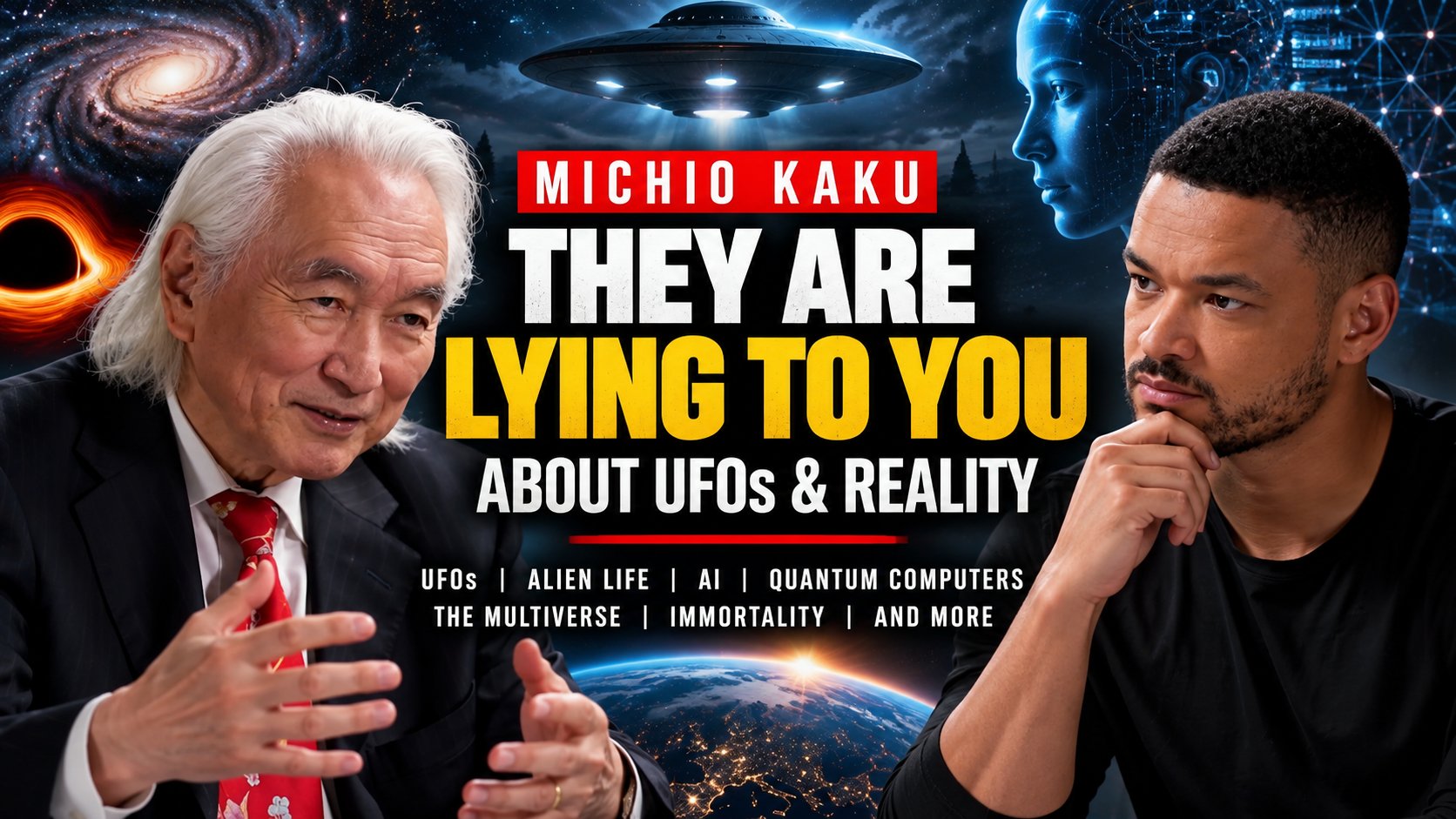
The May 21 interview has drawn millions of views, helped in part by a provocative title suggesting people are being misled about UFOs and reality. Kaku’s actual position is considerably more nuanced. He does not claim scientists have proved extraterrestrials are visiting Earth, nor does he present UFO reports as automatic evidence of alien spacecraft. Instead, he argues that the scientific discussion surrounding unidentified anomalous phenomena, or UAPs, has changed as governments have released information and sophisticated sensors have recorded objects that remain unexplained.
Kaku, a professor of theoretical physics at the City College of New York and a co-founder of string field theory, uses the interview to make a larger argument: human intuition evolved to navigate everyday life on Earth, not to comprehend quantum mechanics, curved spacetime, additional dimensions or the enormous scale of the cosmos. What people perceive as ordinary reality, he argues, may therefore be only a narrow window into a much stranger physical universe.
Kaku Says UFOs Deserve Investigation, Not Automatic Belief
One of the interview’s central subjects is the modern UFO debate. Kaku distinguishes between evidence that something unusual has been observed and evidence proving what that object actually is. That distinction is critical. Military pilots, radar systems, infrared cameras and other sensors have recorded UAP incidents that have not always been immediately explained, but “unidentified” does not mean extraterrestrial. Some cases can ultimately involve balloons, drones, aircraft, atmospheric phenomena, sensor effects or insufficient data, while others may remain unresolved.
Kaku argues that the availability of multiple forms of sensor data has made it harder to dismiss the entire subject as eyewitness error or fantasy. His position is essentially that scientists should examine high quality evidence without deciding in advance what the explanation must be. The U.S. government has reached a similarly cautious conclusion in its public assessments, acknowledging unresolved cases while saying investigations have not established evidence that the incidents represent extraterrestrial technology.
That leaves two very different questions that are frequently blurred together: whether unexplained objects have been observed and whether extraterrestrial spacecraft have visited Earth. Evidence exists for the first proposition. Publicly available evidence has not established the second.
Are Governments Hiding Evidence of Alien Life?
Bartlett also asks Kaku whether governments could conceal evidence of extraterrestrial intelligence. Kaku treats secrecy as possible in principle, particularly when observations involve military sensors, classified capabilities or national-security systems, but he stops short of claiming that a government possesses alien spacecraft or bodies.
The distinction matters because extraordinary claims require evidence beyond anonymous testimony or speculation. Congressional hearings, whistleblower allegations and Pentagon investigations have pushed UAPs into mainstream political and scientific discussion, but none has publicly produced independently verified physical evidence establishing that Earth has been visited by extraterrestrial beings.
Kaku nevertheless argues that dismissing every unusual observation simply because an extraterrestrial explanation sounds improbable is also unscientific. His preferred approach is measurement: obtain multiple sensor readings, determine an object’s velocity and acceleration, identify its trajectory and physical characteristics, and eliminate conventional explanations before considering more extraordinary ones.
Alien Life and Alien Visitation Are Two Very Different Questions
Kaku is much more confident about the possibility of life elsewhere in the universe than he is about claims of alien visitation. The observable universe contains hundreds of billions of galaxies and an enormous number of stars and planets. Astronomers have now confirmed thousands of exoplanets, demonstrating that planetary systems are common rather than exceptional. Given that scale, Kaku argues that it would be remarkable if Earth were the only location where life developed.
But life existing elsewhere does not mean extraterrestrials can easily reach Earth. Interstellar distances are enormous. Even the nearest star system is more than four light years away, and spacecraft traveling at speeds achievable with current technology would require thousands of years to make comparable journeys. Traveling throughout the galaxy would therefore require technologies far beyond conventional rockets.
Kaku points toward theoretical possibilities such as manipulating spacetime, wormholes or other exotic consequences of advanced physics, but these remain speculative concepts rather than demonstrated transportation technologies.
Reality May Be Much Bigger Than Human Perception
The UFO discussion ultimately feeds into one of Kaku’s broader themes: human beings should be careful about assuming that reality is limited to what their senses naturally perceive. Humans cannot directly see radio waves, X-rays, ultraviolet radiation or most of the electromagnetic spectrum, yet instruments demonstrate that those phenomena surround us. Modern physics has repeatedly revealed aspects of nature that appear counterintuitive when judged solely by everyday human experience.
Quantum mechanics describes particles behaving in ways that have no straightforward classical equivalent. Einstein’s relativity shows that time and space are not absolute. Gravity can bend light, clocks can run at different rates depending on velocity and gravitational fields, and matter itself can be described through quantum fields. Kaku argues that this history should make people cautious about declaring unfamiliar possibilities impossible simply because they conflict with intuition.
That does not mean every supernatural or paranormal claim becomes scientifically credible. It means the universe has repeatedly turned out to be stranger than ordinary human experience suggests.
The Search for a “Theory of Everything”
Kaku has spent decades working on one of physics’ greatest unresolved problems: reconciling Einstein’s theory of gravity with quantum mechanics. General relativity describes gravity and the universe on enormous scales extraordinarily well, while quantum mechanics describes atoms and subatomic particles with equally extraordinary precision. Yet the two frameworks become difficult to reconcile under extreme conditions, including the earliest moments of the universe and the centers of black holes.
String theory attempts to address that problem by proposing that the fundamental ingredients of nature are not point-like particles but extremely small vibrating strings. Different vibration patterns would appear as different particles, potentially placing matter and forces inside one mathematical framework. Kaku helped develop string field theory, a branch of that larger research program, and his work has long focused on the broader effort to unify the fundamental forces of nature.
String theory, however, has not been experimentally confirmed as the final theory of nature. Its mathematical possibilities have generated enormous interest in theoretical physics, but obtaining direct experimental evidence remains a fundamental challenge.
Did the Big Bang Have a Beginning Before the Beginning?
Kaku also explores one of cosmology’s most difficult questions: what caused the Big Bang? The conventional Big Bang model describes the universe evolving from an extraordinarily hot, dense early state approximately 13.8 billion years ago. It does not, by itself, provide a universally accepted explanation for why that state existed or whether asking what happened “before” it is physically meaningful.
Kaku discusses models in which universes could emerge from a larger cosmic structure, sometimes described metaphorically as bubbles forming within a much greater multiverse. Under some versions of inflationary cosmology, inflation could continue in other regions even after ending locally, potentially producing many separate universes. These ideas are serious subjects of theoretical research, but evidence for other universes has not been established. Kaku presents the multiverse as a possibility arising from theoretical physics rather than an experimentally confirmed fact.
Black Holes Could Hold Clues to Physics Beyond Einstein
Black holes provide another intersection between gravity and quantum mechanics. General relativity predicts regions where gravity becomes so intense that beyond an event horizon, nothing, including light, can escape to the outside universe. At the center of the classical description lies a singularity, where familiar equations cease to provide a complete physical description.
Kaku discusses more speculative possibilities in which black holes could be connected to other regions of spacetime or even other universes. Wormholes appear as mathematical solutions associated with general relativity, but there is currently no evidence that astrophysical black holes function as traversable gateways. For physicists, the significance of black holes goes beyond science fiction: understanding what happens to information associated with them and reconciling their gravitational behavior with quantum mechanics could provide clues toward a successful theory of quantum gravity.
Kaku Is Not Convinced Today’s AI Is Truly Intelligent
The conversation eventually turns from the universe to artificial intelligence, where Kaku takes a more skeptical position than some technology executives. Modern AI systems can generate sophisticated language, images, computer code and analyses, but Kaku questions whether those abilities should be equated with human understanding. Large language models learn complex statistical relationships from enormous datasets rather than experiencing the world through a biological body and evolutionary history.
He argues that human intelligence incorporates common sense, social understanding, goals, physical experience and forms of reasoning that current AI systems still struggle to reproduce reliably. That does not mean he considers AI unimportant. Kaku expects artificial intelligence to transform scientific research and the labor market, particularly as systems become capable of assisting researchers in identifying patterns across datasets too large for humans to analyze efficiently.
Quantum Computers Could Threaten Today’s Encryption
Kaku is particularly emphatic about quantum computing. Quantum computers exploit properties of quantum mechanics to process certain classes of problems differently from classical machines, and a sufficiently powerful, fault tolerant quantum computer could eventually threaten widely used public key cryptography protecting communications, financial systems and sensitive government information. The risk is serious enough that governments and technology companies are already preparing for it. The U.S. National Institute of Standards and Technology has standardized post quantum cryptographic algorithms specifically designed to resist attacks from future quantum computers.
That context is important when evaluating dramatic claims that quantum computers could “crack every bank account.” Existing quantum computers cannot simply break the world’s banking encryption today. The concern involves a future cryptographically relevant quantum computer powerful and stable enough to run algorithms capable of defeating vulnerable forms of encryption. The security industry is therefore attempting to replace or upgrade those systems before such machines exist.
Quantum Computing Could Also Revolutionize Science
Breaking encryption is only one possible application. Kaku argues that quantum computers could ultimately prove more transformative as scientific instruments. Nature itself operates quantum mechanically, and molecules, chemical reactions and materials emerge from interactions among quantum particles, making some systems extraordinarily difficult for conventional computers to simulate precisely.
Quantum computers could eventually model certain quantum processes much more naturally, opening potential applications in drug discovery, battery chemistry, new materials, fertilizer production, energy research and other problems requiring simulations of complicated molecular interactions. The technology remains in an early stage, however, and building large scale, fault tolerant quantum computers requires controlling extremely fragile quantum states while correcting errors without destroying the quantum information researchers are trying to manipulate.
Could Technology Make Humans Effectively Immortal?
Kaku also ventures into the future of medicine and what he describes as a potential route toward a form of immortality. His argument is not that scientists currently possess a treatment that prevents death. Instead, he points toward the accelerating ability to digitize information about human beings, including memories, personalities, behavior and, eventually, increasingly detailed representations of the brain.
In a sufficiently advanced future, Kaku has suggested that people could leave behind highly sophisticated digital representations capable of interacting with descendants long after biological death. More ambitious possibilities involving mapping or reproducing aspects of consciousness remain speculative and raise unresolved scientific and philosophical questions about whether a digital copy would actually constitute the same conscious person.
Meanwhile, advances in genetics, regenerative medicine, artificial organs and disease prevention could extend healthy human lifespans without solving the much deeper problem of biological immortality.
Consciousness Remains One of Science’s Deepest Mysteries
For all the progress in physics and computing, Kaku acknowledges that consciousness remains extraordinarily difficult to explain. Neuroscience can observe electrical activity, map brain regions and increasingly connect neural processes with perception, memory and behavior, yet explaining how those physical processes produce subjective experience remains an unresolved problem.
That gap becomes particularly relevant when discussing artificial intelligence. A machine can behave intelligently without necessarily possessing an inner experience comparable to human consciousness, and there is currently no scientific consensus that today’s AI systems are conscious. The question becomes even more complicated when discussing hypothetical digital immortality, because reproducing someone’s speech patterns, memories and personality would not necessarily demonstrate that their subjective consciousness had survived.
God, Religion and the Meaning of an Enormous Universe
The interview also moves into territory where physics intersects with philosophy and religion. Kaku distinguishes scientific questions about how the universe operates from philosophical questions about why anything exists at all. Physics can describe mathematical laws governing matter and energy, but questions about why those laws exist or whether they have any deeper meaning move beyond what current experiments can establish.
Kaku discusses religion partly through an evolutionary lens, considering whether belief systems, morality and social cooperation could have provided survival advantages to early human communities. At the same time, he does not present physics as having disproved every conception of God. For Kaku, the extraordinary mathematical structure of nature remains one of the most profound aspects of existence.
A Universe Stranger Than the Headline
The title of The Diary of a CEO episode “They Are Lying To You About UFOs & Reality” is considerably more provocative than Kaku’s scientific position throughout much of the conversation. His argument is not that alien visitation has been proved, that every UFO is extraterrestrial or that physicists have secretly discovered the true nature of reality. Rather, he argues that science has repeatedly demonstrated how incomplete ordinary human perception can be.
Unidentified objects should be investigated with instruments rather than dismissed or automatically labeled alien spacecraft. Quantum mechanics should not be rejected because it violates everyday intuition. Black holes and the Big Bang expose places where current theories reach their limits. String theory and multiverse models remain possibilities requiring evidence. Artificial intelligence can be revolutionary without necessarily possessing human consciousness, while quantum computers could become both powerful scientific tools and serious cybersecurity threats.
Underlying nearly every subject Kaku discusses is the same principle: distinguish what science has established from what theory permits and what remains unknown. After decades spent studying theoretical physics, Kaku appears less interested in claiming that humanity already possesses the answers than in emphasizing how many fundamental questions remain open. Are humans alone? What happened at the beginning of the universe? Can gravity and quantum mechanics be unified? What happens inside a black hole? What creates consciousness? Could other universes exist? And can civilization survive long enough to answer any of them? For Kaku, those unanswered questions are not evidence that science has failed. They are the reason to keep looking.

Sources & Further Reading
The Diary of a CEO — Full Michio Kaku Interview
City College of New York — Michio Kaku Faculty Profile
Michio Kaku — Official Website and Biography
NASA — Unidentified Anomalous Phenomena Independent Study
U.S. Department of Defense — All-domain Anomaly Resolution Office

















































Want to join the conversation?
Create an account or sign in to share your thoughts, vote,
and reply to other readers.
Showing 0 of 0 comments
Don't have an account?
Already have an account?