
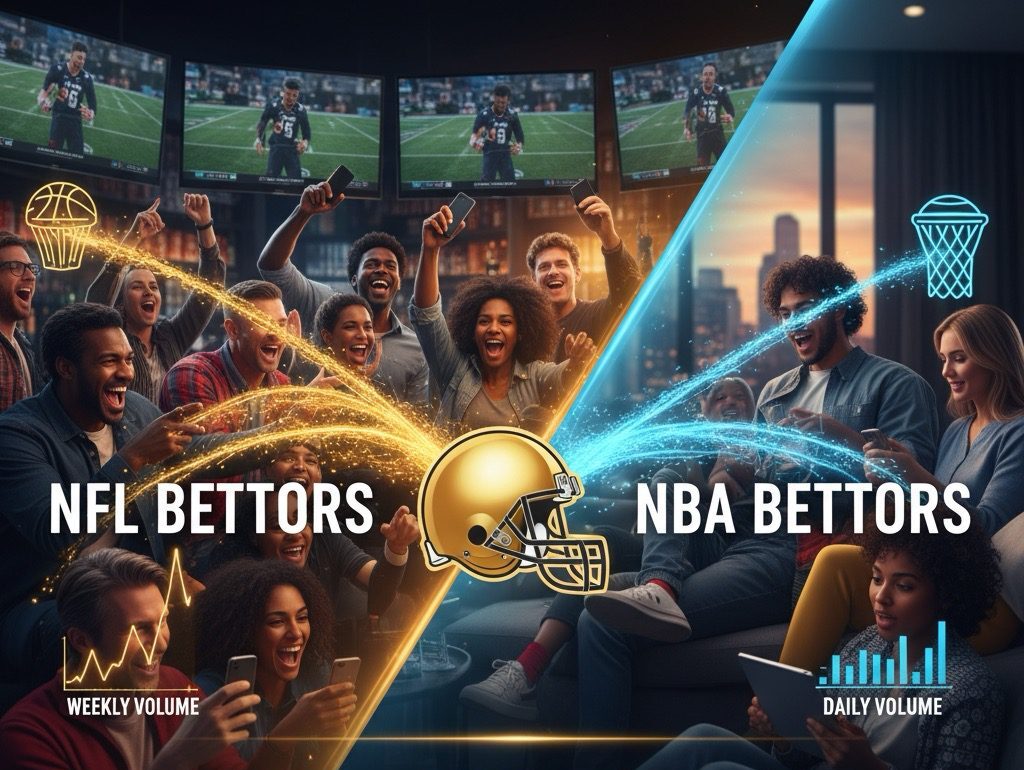
NFL vs NBA Bettors: Volume Patterns Tell Different Stories
Americans will bet around $30 billion on the NFL this season. That represents an 8.5% increase from last year’s $27.5 billion. Each NFL game generates massive handle (the total dollars wagered) concentrated into specific time windows. The NBA operates differently. Basketball attracts 52.7% of U.S. bettors, making it the most wagered sport by participation rate. Yet individual NBA games draw smaller handles than NFL contests.
The NFL dominates Sunday betting windows. Sportsbooks report average bet sizes of $83 for NFL games compared to $51 for NBA games. Football’s 17-game regular season creates scarcity. The NBA’s 82-game schedule spreads action across multiple nights weekly. U.S. sportsbooks processed over $70.1 billion in bets during the first eight months of 2025. Football drove most of that revenue during fall months.
Sharp Money Moves Markets at Different Times
Professional bettors attack NFL lines early in the week. Public money floods in Sunday morning, often pushing spreads multiple points on popular games. A DraftKings analyst noted that action builds throughout the week before Sunday’s surge of both sharp and recreational bets.
NBA sharps hunt for value when lines open. Late injury reports create overnight line swings. A BetMGM trader explained that markets can shift on a single social media post about a player sitting out. Professionals bet early. The public reacts to news near tipoff instead of anticipating roster changes.
Bankroll Protection Methods for NFL and NBA Seasons
Smart bettors protect their funds through deposit limits and promo codes across different platforms. NFL bettors often set weekly caps since games cluster on Sundays. NBA bettors need daily limits due to constant game schedules. Using codes like this BetMGM bonus code, DraftKings offers, or FanDuel promotions adds extra cushion to bankrolls without risking more personal funds.
The 82-game NBA season demands stricter bankroll discipline than the 17-game NFL schedule. Many bettors allocate 1–2% per NFL bet but drop to 0.5% for NBA games. Tracking software helps monitor spending patterns. Some use separate accounts for each sport to prevent crossover losses during overlapping seasons.
Injury Reports Create Profit Opportunities
NFL betting lines shift 2–4 points after quarterback injury confirmations. Weather alerts trigger similar movements. The Eagles-Cowboys season opener saw the total drop 1.5 points following defensive injury news. Books reported their largest public handle on a season opener in three years for that game.
NBA lines react faster to player availability. Lakers-Warriors and Celtics-Bucks games in September saw 3–5 point line movements within 15 minutes of morning injury reports. Load management creates mismatches between opening and closing numbers. Sportsbooks scramble to adjust while money pours in from both sides.
Public Favorites vs Underdog Value
NFL favorites covered the spread 49.8% of times recently. Underdogs hit 50.2%. Public bettors still hammer favorites and popular teams. Sharp money often targets road underdogs and inflated lines. Week 2 saw the Baltimore Ravens move from +3.5 to +1.5 after injury updates. Books reported 68% of public tickets on the favorite but 74% of sharp handle on Baltimore. The Ravens covered and won outright.
NBA underdogs perform better during regular-season play. Home dogs cover at rates above 51%. Public money backs stars and marquee franchises. This creates overinflated lines that professionals exploit. September’s Knicks-Warriors game opened with New York favored by 2.5 points. The line flipped to Warriors -1 after rest day speculation. Public bettors took 82% of tickets on Golden State at the new number. Sharps bought back the Knicks at +1, showing how professionals seek CLV (closing line value).
Age and Geography Shape Betting Patterns
NFL bettors typically range from 35 to 54 years old. Men dominate this demographic. Pennsylvania, Texas, Michigan, and the New York Metro areas generate the highest NFL betting volumes. These states contain successful franchises and large fan bases.
NBA bettors skew younger. Urban markets like New York, California, and Illinois show elevated basketball activity. Mobile betting accounts for a higher percentage of NBA wagers. NFL betting still draws brick-and-mortar traffic on Sundays.
Books Manage Risk Through Different Strategies
Sportsbooks maintained a 10.1% hold rate (the percentage of handle retained as revenue) through 2025 so far. That marks an increase from 9.2% in 2024. NFL concentration on Sundays allows books to manage exposure through careful line movement. Single large bets can affect NFL markets due to limited game inventory.
NBA markets resist individual bet influence better. The volume spread across nightly games creates stability. Sharp syndicates can still exploit injury news faster than books adjust. Both leagues report increased threats toward athletes and officials from frustrated bettors.
Regional Advantages Matter
States with multiple professional teams generate 19% more handle than single-team markets. New Jersey, Illinois, and Pennsylvania lead both NFL and NBA betting volumes. DraftKings and FanDuel dominate market share across regions. The 2025 NFL season opening weeks outpaced NBA playoff handle from the previous spring.
Operator data shows distinct regional preferences. Southern states favor NFL betting heavily. West Coast markets split more evenly between sports. Midwest states show strong NFL bias except in basketball-heavy cities like Chicago and Milwaukee.
NFL vs NBA Betting at a Glance
Factor | NFL Bettors | NBA Bettors |
Avg. Bet Size | $83 | $51 |
Game Frequency | 17-game season (weekly scarcity) | 82-game season (daily action) |
Sharp Timing | Early week, before public flood | Opening lines & pre-tipoff injury news |
Injury Sensitivity | Quarterbacks/weather major swings | Frequent, rapid load management shifts |
Bankroll Approach | 1–2% per wager (weekly caps) | ~0.5% per wager (daily limits) |
FAQs on NFL vs NBA Bettors
- Why do NFL games attract larger betting handles than NBA games?
NFL games are fewer in number, highly concentrated on Sundays, and carry higher average bet sizes, which naturally create larger betting volumes. - How do injury reports impact betting lines in each sport?
NFL injuries, especially to quarterbacks, can shift lines by several points. NBA injuries and load management cause faster and more frequent line movements, often within minutes of announcements. - What are the main bankroll strategies for NFL vs NBA betting?
NFL bettors typically risk 1–2% per game due to the short schedule, while NBA bettors often lower unit size to around 0.5% because of daily betting opportunities. - Do public bettors and sharp bettors behave differently in each league?
Yes. In the NFL, sharp bettors strike early while the public bets closer to kickoff. In the NBA, sharps act at line openings or after injury news, while the public follows big names and marquee matchups. - Which regions of the U.S. show the highest betting activity?
Pennsylvania, New Jersey, Illinois, Texas, and New York lead NFL activity, while urban states like California and New York drive NBA betting due to younger and mobile-focused demographics.
What Bettors Can Learn From NFL vs NBA Differences
The contrast between NFL and NBA betting highlights how schedules, injury reports, bettor demographics, and market structures shape wagering behavior. NFL betting thrives on scarcity, concentrated weekends, and early sharp money, while NBA betting revolves around daily opportunities, late-breaking injury news, and younger, mobile-driven participation.
For sportsbooks, the differences dictate how lines are managed and risk is balanced. For bettors, they determine how bankroll discipline, timing, and strategy must adapt from one league to the other. Understanding these differences not only helps players avoid common pitfalls but also sharpens their ability to find long-term value in both markets.
As legal sports betting continues to grow, NFL and NBA wagering will remain dominant forces. Those who adjust their strategies to each sport’s unique rhythms—while betting responsibly—will stand the best chance of staying competitive in an increasingly data-driven industry.















































Want to join the conversation?
Create an account or sign in to share your thoughts, vote,
and reply to other readers.
Showing 0 of 0 comments
Don't have an account?
Already have an account?