
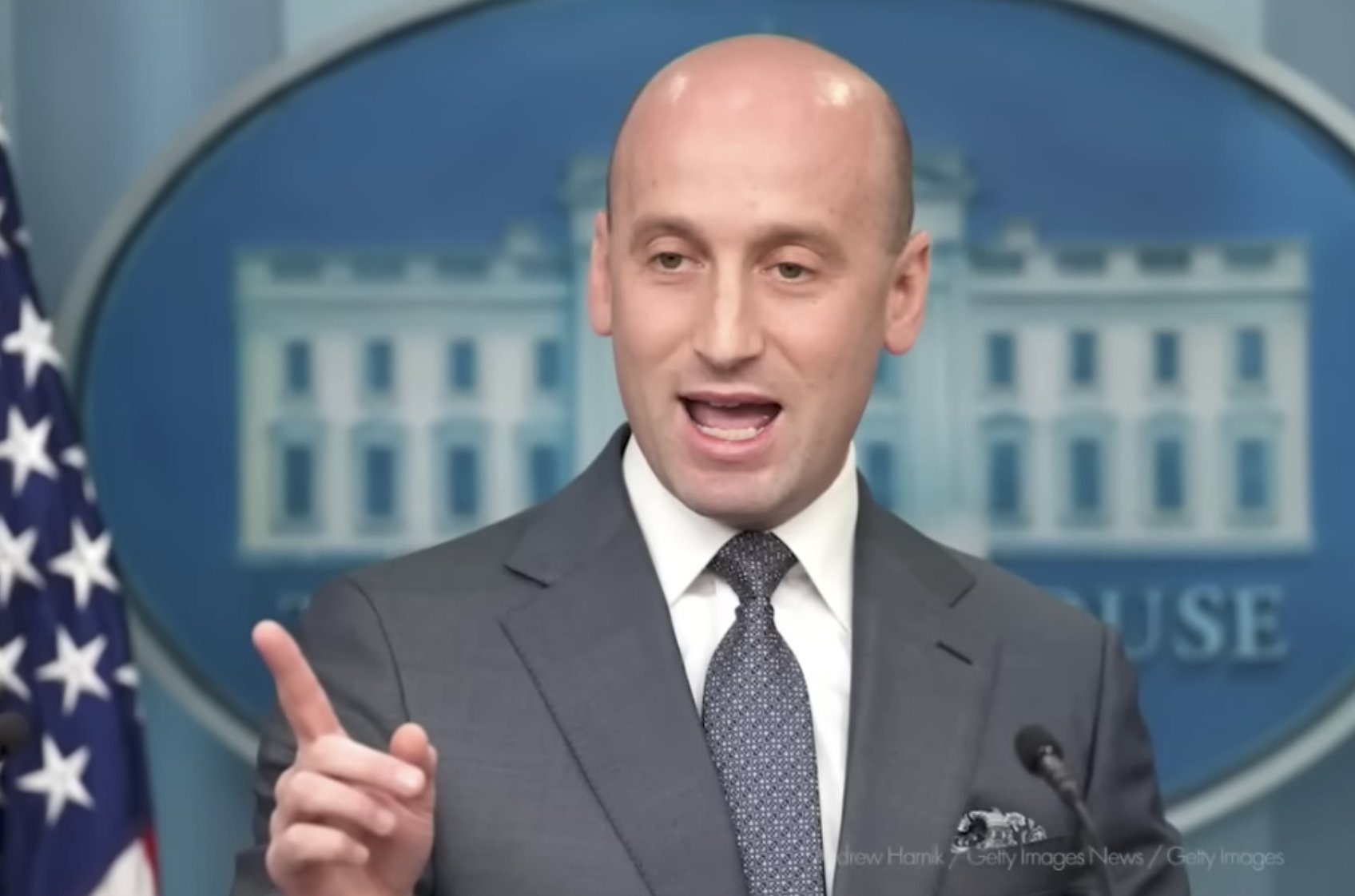
Trump Hall of Shame: Stephen Miller and the Politics of Cruelty
Few figures in modern American politics have left a deeper imprint on the Trump movement than Stephen Miller. While Donald Trump provided the slogans, rallies, and television spectacle, Miller became one of the chief architects behind the policies that transformed those campaign promises into government action.
For nearly a decade, Miller has served as the ideological engine driving some of the most controversial immigration, civil rights, and executive power initiatives in modern American history. His critics argue that he helped normalize cruelty as a governing strategy, while supporters view him as one of the most effective policy minds in conservative politics. Regardless of perspective, few individuals outside the president himself have exerted more influence over the direction of Trump-era governance. His fingerprints can be found on family separations at the border, travel bans targeting Muslim majority nations, efforts to dismantle diversity initiatives, attempts to end birthright citizenship, and proposals to dramatically expand presidential authority.
For those reasons, Stephen Miller earns a place in South Florida Media’s Trump Hall of Shame.
The Architect Behind Family Separation
Among the most controversial policies of the first Trump administration was the 2018 “Zero Tolerance” immigration strategy. Under the policy, federal authorities criminally prosecuted nearly every adult who crossed the border illegally. Because children could not legally accompany parents into federal detention facilities, thousands of children were separated from their families.
The images shocked the world. Children were housed in temporary facilities while parents were transferred into federal custody. Medical experts, religious leaders, and international human rights organizations condemned the practice. Multiple reports later identified Miller as one of the strongest internal advocates for the policy. While some administration officials worried about public reaction, reports indicated Miller viewed the harsh consequences as a feature rather than a flaw. The suffering itself was intended to deter future migration.
Years later, federal agencies still struggle to reunite families separated under the policy.
The Muslim Ban and Executive Power
Miller also played a central role in crafting Trump’s travel restrictions on several Muslim majority countries. The rollout was chaotic. Travelers were detained at airports. Families were stranded overseas. Federal courts immediately intervened. Massive protests erupted across the country. Although revised versions eventually survived legal challenges, the original order became one of the defining moments of Trump’s first presidency. The episode revealed a recurring Miller strategy: push aggressive executive action first, force legal battles afterward, and use public controversy to energize political supporters.
Turning America Away From Refugees
Historically, the United States has accepted refugees fleeing war, persecution, and humanitarian crises. Under Miller’s influence, refugee admissions fell to their lowest levels in modern history. Programs that had existed for decades were dramatically reduced. Asylum standards were tightened. Refugee ceilings were repeatedly slashed. Miller was also a major force behind the “Remain in Mexico” policy, which forced asylum seekers to wait outside the United States while their cases proceeded through immigration courts. Human rights groups documented dangerous conditions facing migrants forced into makeshift camps near the border. Critics argued the policy intentionally made seeking asylum so difficult that people would simply give up.
Birthright Citizenship and the Constitution
One of Miller’s longest running goals has been ending birthright citizenship. The Fourteenth Amendment states that individuals born in the United States are citizens. The principle has been settled law for more than a century. Miller repeatedly pushed for executive actions designed to challenge that interpretation. Legal scholars across the political spectrum argued such efforts would almost certainly face constitutional barriers. Nevertheless, Miller continued advocating for policies that would fundamentally alter one of the nation’s most established constitutional protections.
The Leaked Emails
In 2019, hundreds of emails exchanged between Miller and Breitbart editors became public. The communications painted a picture that alarmed even some conservatives. The emails showed Miller promoting “The Camp of the Saints,” a novel frequently cited within white nationalist circles. He also circulated material from VDARE and American Renaissance, publications widely criticized for promoting racist and ethnonationalist views. The revelations intensified concerns that Miller’s policy agenda was driven not simply by border security concerns but by a broader ideological opposition to demographic change in America. The controversy became so significant that numerous civil rights organizations renewed calls for Miller’s removal from government service.
“The President Will Not Be Questioned”
Perhaps no single quote better captures concerns surrounding Miller than remarks he delivered during a 2017 television appearance. Defending Trump’s executive authority, Miller declared:
“The powers of the president to protect our country are very substantial and will not be questioned.”
The statement immediately generated backlash from constitutional scholars and political observers. The American system was specifically designed around questioning government power. Checks and balances exist precisely because the founders distrusted concentrated authority. To critics, Miller’s statement revealed a worldview that placed executive power above democratic accountability.
The War Against Diversity
After leaving the White House, Miller co-founded America First Legal. The organization quickly became one of the most aggressive legal forces attacking diversity, equity, and inclusion programs across the country. The group filed complaints against major corporations, universities, government agencies, and nonprofit organizations. Scholarship programs, hiring initiatives, and workplace diversity efforts became frequent targets. Miller framed these efforts as defending civil rights. Critics saw something different. To opponents, the campaign represented an effort to dismantle decades of progress aimed at expanding opportunities for historically marginalized communities.
Project 2025 and Expanding Presidential Power
Miller also became a major contributor to Project 2025, the conservative blueprint for a future Republican administration. The plan proposes sweeping changes throughout the federal government. Career civil servants could be replaced with political appointees. Independent agencies would face greater White House control. Presidential authority would expand dramatically throughout the executive branch. Supporters argue these changes would improve accountability. Critics warn they would erode institutional independence and consolidate unprecedented power within the presidency. Few individuals have advocated more aggressively for these changes than Miller.
A Lifetime of Division
Reports from classmates, professors, family members, and former colleagues reveal that Miller’s confrontational political style did not suddenly emerge in Washington. At Santa Monica High School, classmates recalled repeated controversies involving race, immigration, and multiculturalism. At Duke University, Miller became known for provocative writings attacking affirmative action and diversity initiatives.
Perhaps most notably, his own uncle publicly condemned his immigration policies. Writing in Politico, Dr. David Glosser described how their Jewish family escaped violent persecution in Eastern Europe and found refuge in America. He argued that Miller’s policies contradicted the very history that allowed their family to survive. The essay became one of the most devastating public critiques ever leveled against a senior Trump advisor.
The Legacy of Stephen Miller
History will likely remember Stephen Miller not as a background policy aide, but as one of the most influential political operatives of the Trump era. While cabinet secretaries came and went, Miller remained. While scandals consumed other advisors, Miller endured. His influence stretched across immigration policy, civil rights enforcement, education, executive authority, and the broader nationalist movement reshaping American politics.
Supporters celebrate him as a defender of borders and national sovereignty.
Critics view him as the architect of some of the most punitive and divisive government policies of the twenty first century.
What cannot be disputed is his impact. Millions of lives were affected by policies he designed, promoted, and defended. Families were separated. Refugees were turned away. Civil rights protections were challenged. Executive authority was expanded. In the Trump movement, few figures have done more to transform ideology into government action. For better or worse, Stephen Miller helped define an era. And for that reason, his place in the Trump Hall of Shame is firmly secured.












































Want to join the conversation?
Create an account or sign in to share your thoughts, vote,
and reply to other readers.
Showing 0 of 0 comments
Don't have an account?
Already have an account?