
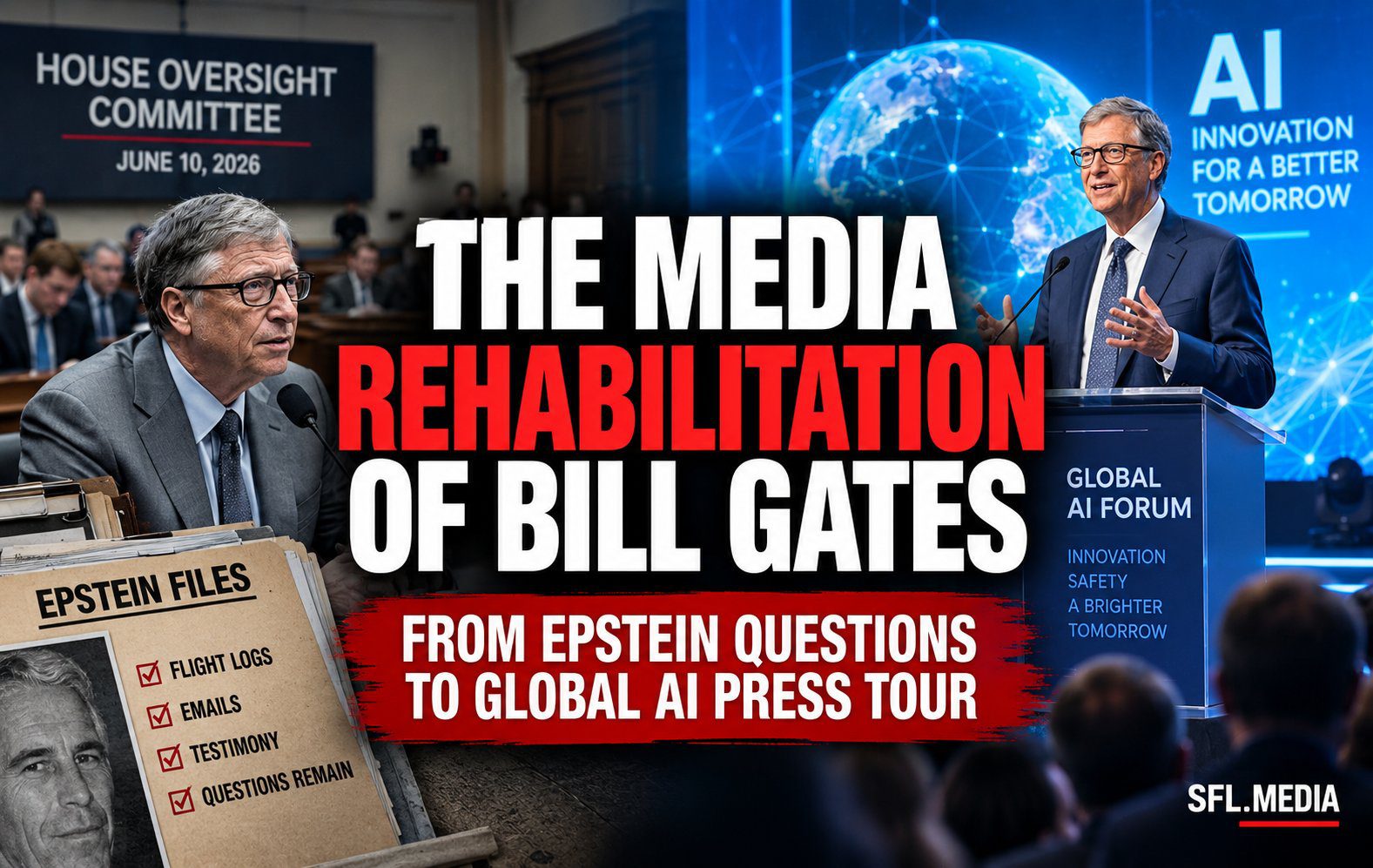
The Media Rehabilitation of Bill Gates: From Six Hours of Epstein Questions to a Global AI Press Tour
Bill Gates would rather talk about artificial intelligence. That is understandable. Artificial intelligence returns the Microsoft co-founder to familiar territory: technology, philanthropy, global policy, scientific progress and warnings about humanity’s future. Jeffrey Epstein presents a much less comfortable subject, a documented relationship with a convicted sex offender that Gates now calls a “huge mistake” and a “grave error in judgment,” that troubled Melinda French Gates during their marriage, and that resulted in Gates spending hours answering questions before congressional investigators in June 2026.
By late summer, however, Gates was again occupying his familiar role as global technological statesman. He released a sweeping essay warning that humanity had entered a turbulent new era of artificial intelligence and conducted major interviews about automation, unemployment, cyberattacks, biological threats and AI regulation. All of those issues are legitimate news, and Gates remains one of the world’s most consequential technology figures. Yet the timing created an unavoidable contrast: only weeks earlier, the House Oversight Committee had questioned one of the world’s richest and most influential men about why he repeatedly interacted with Epstein years after Epstein had already pleaded guilty in Florida to offenses involving prostitution and a minor.
Calling this a coordinated media conspiracy to “scrub” Gates would go beyond the available evidence. In fact, some journalists interviewing Gates during his AI push have directly questioned him about Epstein. The more defensible, and arguably more revealing, story is how reputation rehabilitation can occur without any conspiracy at all. A powerful public figure emerges from a damaging news cycle, introduces a consequential new subject on which he possesses unquestioned expertise, grants interviews about the future and gradually begins appearing in headlines for what he wants to discuss rather than what investigators recently asked him to explain.
Gates’s Relationship With Epstein Is Established Fact, Not Internet Speculation
The basic relationship between Gates and Epstein is firmly established through public records, correspondence, testimony and Gates’s own admissions. Gates told the House Oversight Committee that he first met Epstein on January 31, 2011, several years after Epstein’s Florida conviction, and subsequently participated in a series of meetings with him through 2014. Gates testified that the attraction was philanthropic: Epstein claimed he could connect Gates with extremely wealthy individuals capable of contributing billions of dollars to global health projects. Gates said he eventually realized Epstein could not deliver what he promised and ended the relationship.
The meetings were not limited to one accidental encounter. Gates acknowledged multiple interactions with Epstein, including dinners and discussions about philanthropy. He nevertheless denied that Epstein ever formally advised the Gates Foundation or played the sweeping role in its restructuring that some outside accounts have suggested. The Gates Foundation commissioned an external review by WilmerHale in 2026 that involved more than 50 interviews and extensive document review. According to the foundation’s published summary, the investigation found no evidence that Epstein was paid by the foundation and no evidence that foundation personnel participated in or knew about Epstein’s ongoing sex trafficking operation.
There is also documentary evidence that Gates flew aboard Epstein’s aircraft. Flight records identify Gates as a passenger on a March 1, 2013 flight aboard N909JE from Teterboro, New Jersey, to Palm Beach International Airport in Florida. That fact has frequently been distorted online into claims that Gates repeatedly flew to Epstein’s private Caribbean island. The available flight records do not establish that. Gates testified that he never visited Little St. James, Epstein’s ranch or Epstein’s Florida residence, and no credible public evidence reviewed for this article establishes otherwise.
That distinction is essential. Gates unquestionably chose to associate with Epstein after Epstein was already a convicted sex offender. That decision deserves scrutiny. But association with Epstein is not evidence that Gates participated in Epstein’s sex trafficking operation, and no public evidence has established that Gates committed sexual crimes with Epstein. Serious reporting should be capable of aggressively examining Gates’s judgment without transforming suspicion into evidence.
The 2013 Flight Raises an Obvious Question, but Not the One the Internet Usually Asks
The March 2013 flight is important precisely because the underlying record is stronger than many of the exaggerated claims surrounding it. Gates did not merely appear as a mysterious name on an unexplained internet spreadsheet. Records surrounding the trip include travel logistics coordinating his transportation to Teterboro and onward travel aboard Epstein’s aircraft to Palm Beach. Epstein’s longtime pilot, Larry Visoski, was also questioned during Ghislaine Maxwell’s federal trial about prominent passengers aboard Epstein’s planes.
But Palm Beach International Airport is not Little St. James. A passenger manifest showing Gates flying to Florida cannot legitimately be converted into evidence that he traveled to Epstein’s island. That leap has fueled years of misinformation and ultimately makes legitimate scrutiny of Gates easier to dismiss.
The stronger question is simpler: Why was Bill Gates, one of the world’s most sophisticated businessmen with access to armies of advisers, security personnel and researchers, traveling and meeting with Jeffrey Epstein after Epstein’s criminal history was already public? Gates’s answer is philanthropy. He believed Epstein could help him reach wealthy donors and generate enormous sums for global health. Gates now says believing that was a major mistake.
Then Came Epstein’s Explosive Draft Emails
The 2026 release of additional Epstein records intensified scrutiny because the files contained two extraordinary July 18, 2013 draft emails Epstein wrote to himself. The documents included lurid allegations about Gates’s private life, including claims involving sexual encounters with Russian women, a sexually transmitted infection and antibiotics supposedly intended to conceal the matter from Melinda French Gates. Another draft, written from the perspective of Gates adviser Boris Nikolic, contained similarly inflammatory accusations.
Those claims should not be reported as established facts. The drafts were written by Epstein, apparently never sent, and the sensational allegations contained within them have not been independently proven. Gates and his representatives have categorically denied the STD and medication allegations, calling Epstein’s claims false and absurd.
The congressional testimony nevertheless produced a more complicated picture than a blanket dismissal of everything Epstein knew about Gates. Gates acknowledged to investigators that Epstein was aware of genuine extramarital affairs and said he believed Epstein attempted to exploit that information after Gates sought to distance himself from him. Gates testified that Epstein never issued an explicit blackmail threat but described Epstein’s communications as combining truths with falsehoods in what Gates believed was an effort to pressure him back into contact.
That is an important distinction. The most sensational allegations in Epstein’s drafts remain unverified and denied. At the same time, Gates himself testified that Epstein possessed genuine compromising information concerning previous affairs and appeared willing to use it as leverage. The public record therefore supports neither extreme. It does not establish that every allegation Epstein wrote about Gates was true. It also does not support dismissing the entire relationship as a handful of harmless philanthropic dinners that generated nothing more serious than bad optics.
Gates Says Epstein Was Trying to Blackmail Him
Perhaps the most important development from Gates’s 2026 testimony was his description of what happened when the relationship deteriorated. According to the transcript, Gates believed Epstein wanted to remain connected to him and became frustrated when Gates withdrew. Gates told investigators that Epstein appeared to use knowledge of his extramarital affairs as a way of attempting to pull him back into the relationship.
Gates stopped short of describing an explicit threat. That distinction matters legally and journalistically. But the testimony is nevertheless remarkable: one of the world’s most powerful businessmen told Congress that he believed Jeffrey Epstein had obtained genuine compromising information about his personal life and was attempting to exploit it.
That raises broader questions about Epstein’s relationships with powerful people. Epstein’s extraordinary access to billionaires, academics, politicians and celebrities has generated years of speculation about whether collecting sensitive information was itself part of how he maintained influence. Gates’s testimony does not prove any larger blackmail operation, but it provides an unusually direct account from a prominent Epstein associate who believed personal information was being used against him.
Melinda French Gates Had Already Sounded the Alarm
Some of the most consequential criticism of Gates’s judgment came not from partisan opponents or internet investigators but from his former wife. Melinda French Gates publicly said years before the 2026 congressional testimony that she strongly disliked her husband’s meetings with Epstein and made her position clear. She said she met Epstein herself on one occasion because she wanted to understand who he was and came away deeply disturbed, later describing him as “evil personified.”
When asked about the collapse of her marriage, Melinda French Gates said Epstein was not the only factor but acknowledged that Bill Gates’s meetings with him were among the issues involved. Gates has separately acknowledged that he had an affair with a Microsoft employee during his marriage, and his 2026 congressional testimony addressed other extramarital relationships while rejecting Epstein’s more sensational sexual allegations. None of those affairs establishes participation in Epstein’s crimes. They are relevant because Gates himself says Epstein knew about them and attempted to use that information as leverage. They also provide context for why his relationship with Epstein created such serious problems inside his marriage.
The timeline therefore presents a difficult question that has never entirely disappeared: if people close to Gates recognized Epstein as dangerous, why did one of the world’s most experienced executives continue pursuing the relationship? Gates’s explanation remains that he believed the potential philanthropic payoff could be enormous. With hindsight, he has repeatedly said that judgment was badly mistaken.
Six Hours of Questions on Capitol Hill
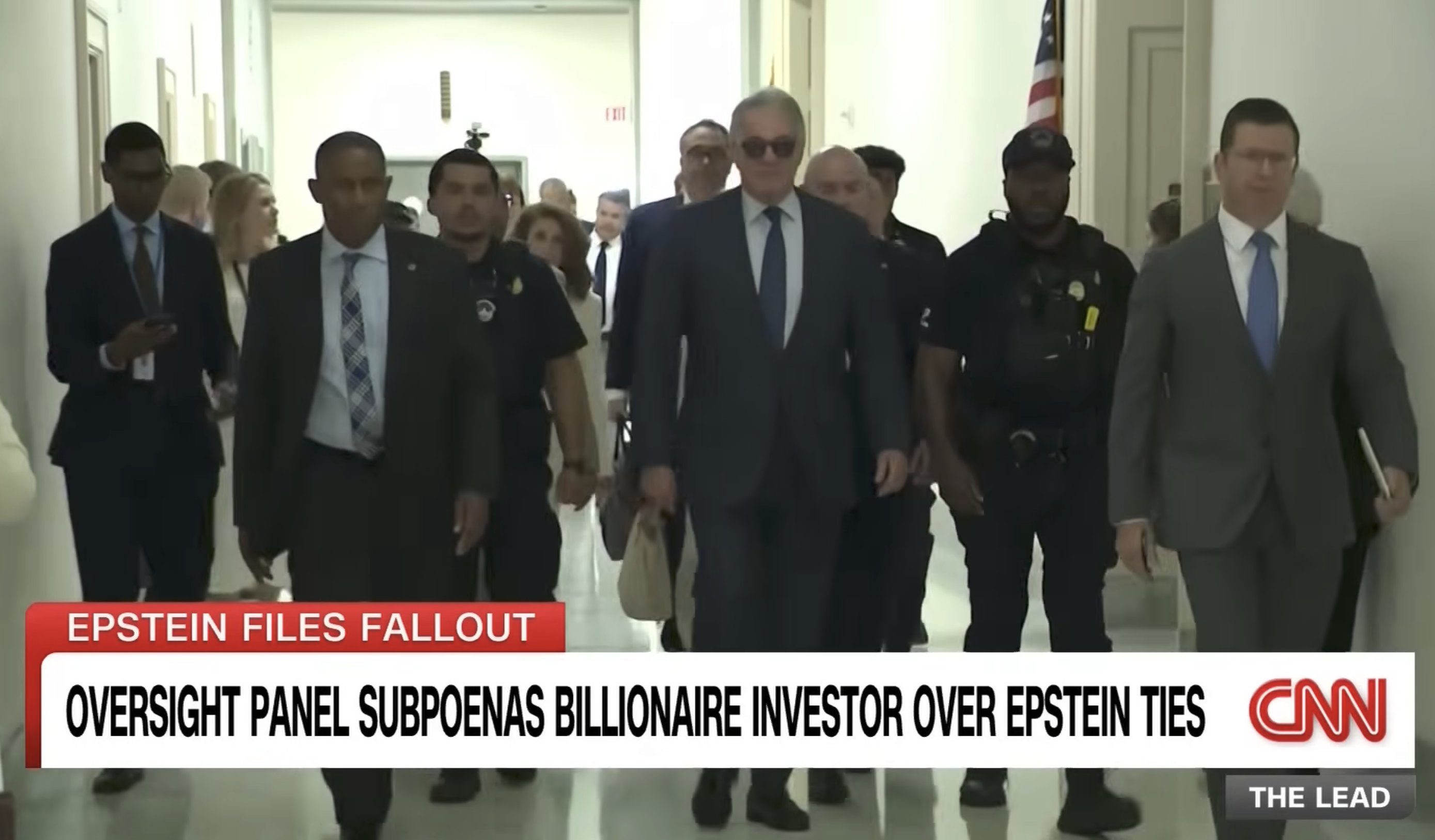
On June 10, 2026, Gates appeared for a closed door transcribed interview with the House Committee on Oversight and Government Reform as part of its investigation into the government’s handling of Jeffrey Epstein and Ghislaine Maxwell. The interview lasted for hours, and the committee subsequently released the transcript publicly on June 23.
Gates arrived with a prepared statement saying he supported release of the Epstein files and hoped the investigation could contribute to justice for survivors. He told lawmakers that he never victimized anyone, never visited Epstein’s island, ranch or Florida residence and never witnessed or received indications that Epstein was engaged in ongoing criminal activity during their interactions. Investigators then questioned him extensively about his meetings with Epstein, travel, personal relationships, philanthropic discussions and the disturbing emails discovered in Epstein’s records.
The transcript is important because it allows the public to move beyond selectively leaked allegations and examine Gates’s answers directly. He denied major accusations, acknowledged other uncomfortable facts and attempted to explain why Epstein might have produced documents containing a mixture of accurate personal information and allegations Gates says were fabricated. The hearing did not establish that Gates participated in Epstein’s sex crimes. It did, however, establish something reputationally damaging in its own right: Gates was sufficiently entangled with Epstein’s world that, more than a decade later, he spent a substantial portion of a day before congressional investigators explaining how the relationship began, why it continued and what happened when it ended.
The Foundation Ordered Its Own Review and Found Serious Judgment Failures
Another important development deserves more attention than it has received. In March 2026, the Gates Foundation commissioned WilmerHale to conduct an external review of its historical interactions with Epstein. The review involved more than 50 interviews with current and former employees and examination of extensive written records. Its findings, released in July, said there was no evidence that Epstein received payment from the foundation and no evidence that foundation employees participated in or knew about his ongoing trafficking operation.
But an absence of criminal involvement did not mean the review declared everything acceptable. The foundation publicly acknowledged regret that any employees interacted with Epstein and adopted recommendations intended to strengthen safeguards and decision-making. That conclusion reinforces the central issue surrounding Gates’s Epstein relationship: the strongest substantiated criticism is not that investigators have proven Gates participated in Epstein’s crimes, because they have not. It is that extremely sophisticated people and institutions continued engaging with a convicted sex offender because they believed he might provide access, money or influence.
For an organization built around global risk assessment and evidence based decision making, that is not a minor contradiction.
Then Gates Returned to a Much Friendlier Subject: Saving Humanity From AI
By August, Gates was again dominating headlines for something completely different. He published a major essay arguing that society had entered a turbulent AI era and warning that artificial intelligence was advancing faster than governments and institutions were preparing for its consequences. Gates predicted enormous disruption across white collar and blue collar employment, warned about cybersecurity and biological threats, questioned whether existing economic systems were prepared for large scale automation and proposed ideas including reserving certain jobs for humans.
The arguments were substantial enough to generate legitimate global coverage. Gates has spent half a century watching computing transform society, and his opinions on artificial intelligence deserve serious consideration regardless of his personal controversies. But the transition in public narrative was striking. In June, Gates was the billionaire walking into a congressional interview about Jeffrey Epstein. By August, he was once again the technological oracle explaining what humanity must do before artificial intelligence transforms civilization. For any public relations professional, that is approximately the best possible change of subject.
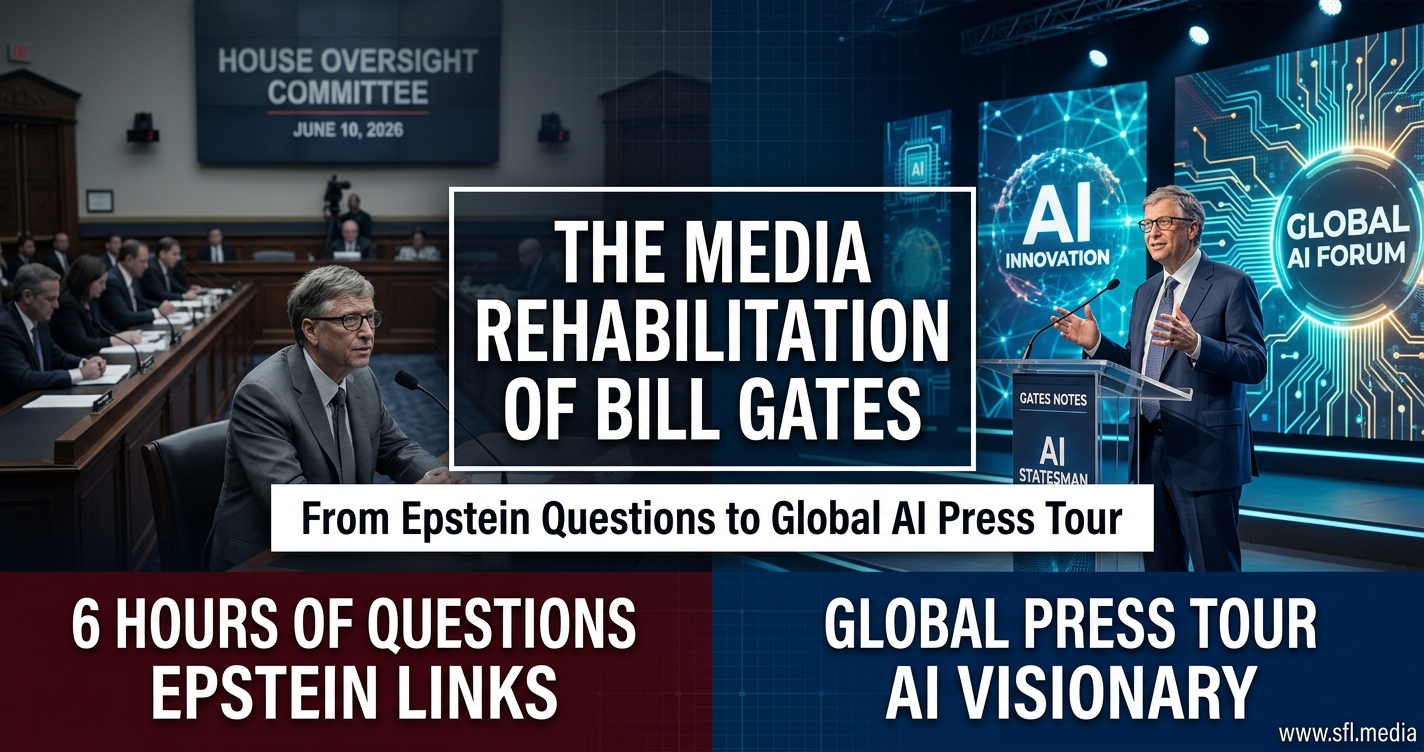
Is the Media Really “Scrubbing” Bill Gates?
There is not sufficient evidence to claim that major media organizations collectively agreed to rehabilitate Gates or suppress questions about Epstein. In fact, some of the strongest evidence against that theory comes from Gates’s own recent press tour. Axios directly asked him whether the Epstein scandal could damage his credibility as he attempted to influence debates over AI and global health. Gates called the association a “huge mistake,” said he had changed and told the outlet that the public could judge him based on the record. The Atlantic also questioned him about what he had misjudged in his dealings with Epstein during an interview largely focused on artificial intelligence.
That is not a media blackout.
The more interesting problem is that reputation rehabilitation does not require one.
Modern news cycles naturally favor novelty. A billionaire can generate new headlines by publishing a major essay, giving interviews, appearing at conferences, announcing philanthropic initiatives or warning about an emerging technological crisis. Each new story pushes older controversies farther down the page. No editor needs to receive instructions. No secret agreement needs to exist. Attention simply moves. Gates is particularly capable of benefiting from that dynamic because he can legitimately generate news on subjects of enormous importance. When he talks about AI replacing jobs, pandemic preparedness or global health, journalists have genuine reasons to cover him. The result can nevertheless function as reputational rehabilitation even when nobody consciously intends it.
One version of Gates is defensive, answering why he repeatedly associated with Jeffrey Epstein after Epstein’s conviction. The other is authoritative, telling governments how to prepare for artificial intelligence. Guess which version is easier to put on television.
AI Is an Almost Perfect Reputation Reset Topic
Artificial intelligence offers Gates something few other subjects could provide: a controversy large enough to compete with Epstein for public attention while simultaneously restoring Gates’s preferred identity as a visionary technologist.
Instead of answering questions about private dinners, flight records and Epstein’s draft emails, Gates can discuss whether AI will eliminate millions of jobs, whether governments should tax robots, whether certain professions should remain human only and whether advanced systems could enable cyberattacks or biological threats. These are not manufactured distractions; they are genuinely consequential questions. That is precisely why they work so effectively as a change of subject.
Gates does not need journalists to ignore Epstein completely. He merely needs the majority of each interview to concern AI. One difficult question can be answered, acknowledged and survived before the conversation returns to the future. That is not necessarily unethical journalism. But it demonstrates how enormously powerful public figures can recover control of their narratives. They do not have to erase the past. They can simply produce enough important news about the future to compete with it.
Gates’s AI Arguments Should Be Judged on Their Merits But So Should His Judgment
There is a danger in taking the criticism too far. Gates’s association with Epstein does not make his analysis of artificial intelligence automatically wrong. Expertise does not evaporate because someone exercised terrible personal judgment, and arguments about AI should ultimately be evaluated against evidence rather than the biography of the person making them.
At the same time, credibility matters when extraordinarily powerful private citizens seek influence over public policy. Gates is not merely commenting on technology from the sidelines. His wealth, foundation, relationships and international access give him extraordinary opportunities to influence governments, universities, health organizations, technology companies and public debate. When someone operating at that level asks society to trust his judgment about global risks, examining his previous failures of judgment is entirely legitimate.
Epstein therefore remains relevant not because Gates has been proven to have participated in Epstein’s trafficking crimes, he has not, but because Gates knowingly continued interacting with a convicted sex offender while pursuing ambitious philanthropic objectives and later testified that Epstein appeared to exploit genuine compromising information about his private life.
For a public figure whose modern identity rests heavily on judgment, judgment about vaccines, pandemics, climate change, philanthropy, global health and now artificial intelligence, that history is not irrelevant.
The Public Record Should Follow Gates Into the Next Interview
Bill Gates has every right to talk about artificial intelligence. Journalists have every reason to interview him about it. The world probably should hear what one of the architects of modern personal computing thinks about a technological revolution that could fundamentally alter employment, medicine, education, warfare and society. But journalism does not require choosing between AI and Epstein.
A serious Gates interview can ask how automation will transform the workforce and why he continued meeting Jeffrey Epstein after Epstein’s conviction. It can discuss bioterrorism and ask about the 2013 flight. It can examine “human reserved” jobs and ask Gates what he meant when he told Congress that Epstein appeared to combine genuine information with false allegations while attempting to pressure him. It can discuss global health while remembering that Gates himself now describes the Epstein relationship as a profound mistake. That is not guilt by association. It is accountability through context.
The public record does not establish that Bill Gates participated in Jeffrey Epstein’s sex trafficking crimes. It does establish that Gates repeatedly interacted with Epstein after Epstein became a convicted sex offender, flew aboard Epstein’s aircraft in 2013, continued the relationship despite concerns within his marriage, became the subject of disturbing and disputed allegations written by Epstein, believed Epstein later attempted to exploit knowledge of his affairs and ultimately spent hours answering congressional investigators about the relationship. Now Gates is asking the world to listen as he warns about one of humanity’s most consequential technological transformations.
Perhaps we should. But journalism should not require amnesia.

Sources & Further Reading
- U.S. House Committee on Oversight and Government Reform — Gates and Groff Transcripts — Official committee release confirming Gates’s June 10, 2026 transcribed interview and publication of the testimony.
- U.S. House Oversight Committee — Full Bill Gates Interview Transcript — Primary-source transcript covering Gates’s meetings with Epstein, philanthropic discussions, personal affairs and questioning over Epstein’s communications.
- ABC News — Gates Told Congress Epstein Appeared to Be Plotting to Blackmail Him — Detailed reporting on Gates’s testimony concerning Epstein’s alleged attempt to exploit knowledge of his extramarital affairs.
- Gates Foundation — Findings of External Epstein Review — Foundation summary of WilmerHale’s investigation, including more than 50 interviews and its findings concerning foundation interactions with Epstein.
- U.S. Department of Justice — Epstein Library — Federal repository containing DOJ and congressional Epstein-related disclosures.
- CBS News — What the Released Epstein Documents Say About Bill Gates — Reporting on Epstein’s unsent 2013 draft emails and the disputed allegations involving Gates.
- FactCheck.org — What Epstein Flight Records Actually Show About Bill Gates — Review of the documented March 2013 flight and debunking of claims that flight records show Gates repeatedly traveled to Epstein’s island.
- Axios — Gates Confronts the Epstein Questions Hanging Over His AI Push — August 2026 interview directly addressing whether the Epstein controversy could undermine Gates’s credibility.
- Axios — Bill Gates Sounds the Alarm on the AI Transition — Coverage of Gates’s 2026 AI proposals, warnings about employment disruption, cybersecurity and biological risks, and calls for new governance structures.
- The Atlantic — Bill Gates on the Dangers of AI — Extended interview examining Gates’s changing views on artificial intelligence while also questioning him about his relationship with Epstein.
- Bill Gates — Remarks to the House Oversight Committee — Gates’s own prepared statement denying that he witnessed Epstein’s criminal conduct and stating that he never visited Epstein’s island, ranch or Florida home.











































Want to join the conversation?
Create an account or sign in to share your thoughts, vote,
and reply to other readers.
Showing 0 of 0 comments
Don't have an account?
Already have an account?