
Trump Kept His Campaign Promises for Himself and His Inner Circle
Donald Trump returned to office promising to fight corruption, lower costs, protect democracy, and put “America First.” What followed instead was a presidency defined by self enrichment, personal protection, and rewards for loyalists, while many of his headline promises to voters either stalled, reversed, or never materialized. Below is a clean, fact based accounting of what Trump delivered for himself and his inner circle and what failed to materialize for the public.
What Trump Delivered for Himself and His Family
Personal Legal Protection and Retaliation
Trump repeatedly used the power and visibility of the presidency to attack prosecutors, judges, and potential witnesses connected to his criminal and civil exposure. Rather than distancing himself from ongoing legal matters, he publicly criticized those involved, framing investigations into his conduct as illegitimate and politically motivated.
At the same time, Trump pressed the Justice Department to explore investigations into his political adversaries while demanding heightened scrutiny of officials who had previously investigated him. He openly suggested that former Justice Department and FBI officials tied to earlier probes should themselves face prosecution, signaling a willingness to use government power as a tool of retaliation rather than restraint.
Financial and Business Benefits
Trump-owned properties once again became hubs for political activity, hosting fundraisers, donor events, and visits tied to political allies. These events routed money directly into Trump hotels, clubs, and resorts, continuing a pattern that ethics experts have long warned blurs the line between public office and private profit.
Campaign committees and allied political groups also continued spending heavily at Trump businesses, effectively recycling political donations into Trump-controlled enterprises. Trump further promoted his social media platform, Truth Social, boosting the value and visibility of Trump Media & Technology Group — a company he controls and from which he personally benefits financially.
Family Positioning and Influence
Trump’s sons, Donald Trump Jr. and Eric Trump, retained operational influence within the Trump Organization while simultaneously maintaining high-profile political roles. This dual positioning allowed the family business to remain closely aligned with Trump’s political brand rather than being meaningfully separated from it.
During Trump’s presidency, the Trump brand continued pursuing licensing opportunities and international business discussions, reinforcing concerns that governance and private commercial interests were overlapping. Family members and loyal associates were granted access, visibility, and influence, rather than being sidelined to avoid conflicts of interest.
Protection of Loyalists
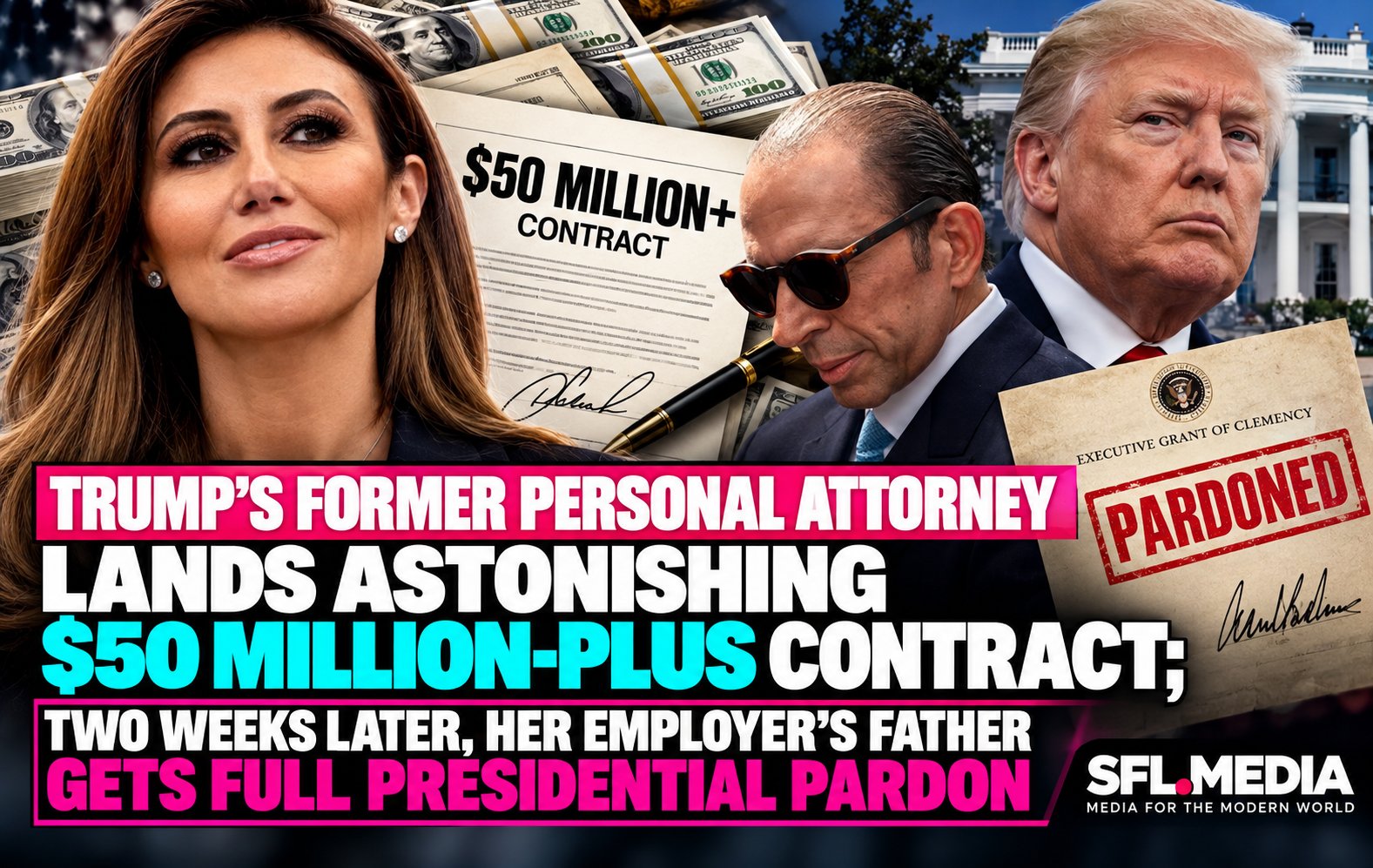
Trump repeatedly signaled support for pardons or legal relief for allies facing criminal exposure related to January 6 or election interference efforts. His public statements made clear that loyalty — not legality — was a defining factor in who received his protection.
He also defended and elevated individuals who had been sanctioned, indicted, or accused of undermining democratic processes, reinforcing a governing philosophy in which allegiance to Trump outweighed institutional norms or accountability.
Lower Costs and Inflation Relief
Trump campaigned on promises of immediate relief from rising costs but offered no comprehensive policy framework to lower housing prices, healthcare expenses, or insurance premiums. Despite sweeping rhetoric, concrete measures aimed at reducing everyday costs for Americans failed to materialize.
Instead, tariff threats and trade instability prompted warnings from economists that Trump’s approach risked increasing consumer prices, rather than easing inflationary pressure.
Draining the Swamp
Trump pledged to eradicate corruption in Washington but staffed key agencies with loyalists who often carried significant conflicts of interest. Rather than strengthening oversight, his administration weakened ethics rules and sidelined independent watchdogs. Inspectors general were removed or marginalized, while lobbyists and major political donors retained privileged access. Accountability mechanisms eroded as loyalty replaced transparency as the dominant operating principle.
Protecting Democracy
Trump promised to restore trust in elections while continuing to falsely claim the 2020 election was stolen. Those claims persisted despite repeated court rulings and official findings rejecting allegations of widespread fraud. He supported efforts to weaken voting protections and defended individuals involved in election subversion, while his rhetoric consistently undermined confidence in courts, democratic institutions, and the rule of law.
Infrastructure and Healthcare
Despite years of promises, Trump failed to deliver a comprehensive infrastructure overhaul that materially benefited working Americans. High-profile announcements were not matched by sustained legislative outcomes. Similarly, Trump’s long-promised replacement for the Affordable Care Act never emerged. Drug price reductions were limited in scope and did not meaningfully restructure the healthcare system, leaving systemic costs largely untouched.
National Unity
Trump ran on a message of unity but governed through confrontation. He regularly used the presidency to attack critics, the press, and political opponents, framing disagreement as disloyalty. Rather than lowering the national temperature, his rhetoric and actions repeatedly escalated political and social tensions, deepening divisions instead of bridging them.
The Pattern Is the Point
Trump’s second presidency has reinforced a central reality of his political brand: power flows inward, not outward. Promises made to voters were framed broadly, prosperity, fairness, strength, but the tangible benefits accrued narrowly, concentrating around Trump himself, his family, and his most loyal allies. Accountability mechanisms weakened, while personal protection and financial advantage strengthened.
This was not a failure of execution. It was a success of intent.
Trump did keep his promises, just not to the people who voted for him. What remains is a presidency defined less by public service than by personal insulation, where government authority is treated as an extension of private interest and loyalty is the currency that matters most.













































Want to join the conversation?
Create an account or sign in to share your thoughts, vote,
and reply to other readers.
Showing 0 of 0 comments
Don't have an account?
Already have an account?