
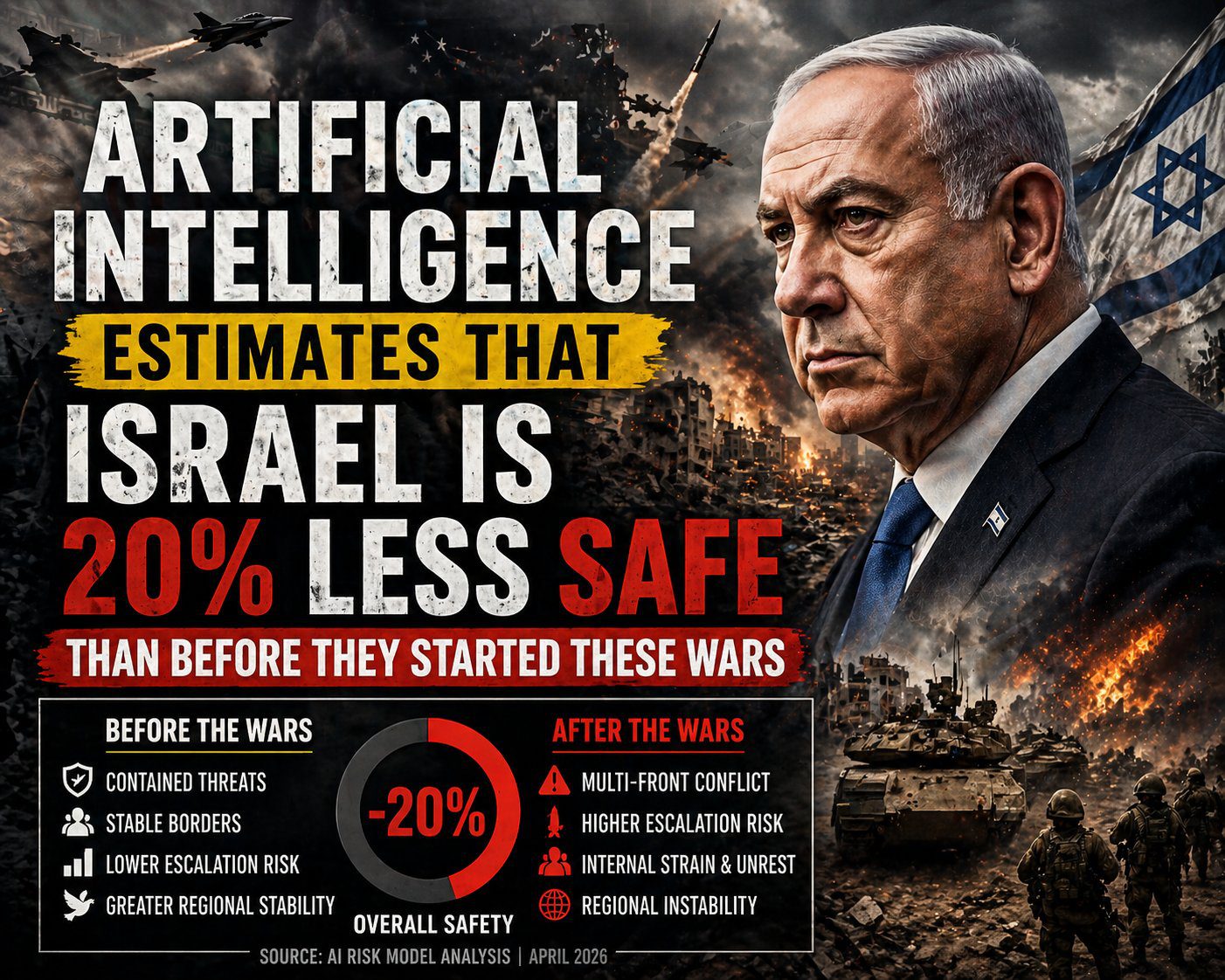
Israel’s Security Paradox: Stronger on the Battlefield, Way More Exposed Across the Region
Israel has reshaped the battlefield since October 2023. Hamas has been battered, its infrastructure degraded, and its ability to carry out large scale attacks sharply reduced. On paper, that looks like a decisive shift toward safety. But step back, and the reality is far more complicated.
Israel today is operating from a position of military strength inside a significantly more dangerous strategic environment. The country is not simply fighting a war anymore, it is managing a multi-front pressure system with regional implications that did not exist three years ago. Israel paid a massive price to neutralize an immediate threat, only to emerge in a more dangerous, multi-front reality.
Tactical Gains: Hamas Degraded, Immediate Threat Reduced
There is no serious dispute that Israel has achieved major tactical objectives in Gaza. The operational capacity of Hamas has been severely diminished. Tunnel systems have been destroyed at scale. The group’s ability to launch sustained, coordinated rocket barrages has been disrupted. The probability of another October 7-style incursion is significantly lower.
From a purely military perspective, Israel imposed control over the immediate threat environment. That matters and it buys time.
Strategic Shift: From Containment to Regional Conflict
But that time came at a cost. Before October 2023, Israel’s primary threat environment was largely contained. Gaza was volatile, but predictable. The broader conflict with Iran remained mostly indirect, operating through proxies and shadow warfare. That framework is gone.
Israel is now engaged in a multi-front reality involving persistent tension with Hezbollah and an elevated risk of direct confrontation with Iran itself. The battlefield has expanded geographically, politically, and militarily. And when the battlefield expands, so does exposure.
The Multi-Front Reality: A Constant State of Pressure
Israel is no longer managing a single conflict zone. It is balancing overlapping threats. Gaza remains unstable, with insurgent style attacks continuing. The northern border faces sustained tension and periodic escalation risks. Iran represents a long range strategic threat capable of targeting critical infrastructure. This is not a temporary posture, it is a structural shift toward continuous, mid-intensity conflict.
Analysts increasingly describe this as a permanent mobilization model, a society functioning under constant strategic pressure.
The Price of a Wider War
Since October 2023, the costs have been staggering financially, militarily, and socially.
Israel’s direct war spending has reached tens of billions of dollars, fueled by sustained combat operations, reserve mobilization, and the heavy use of missile defense systems. The broader economic toll, lost productivity, business disruption, and reduced tourism adds billions more in indirect damage.
On the battlefield, the human cost is undeniable. Hundreds of Israeli soldiers have been killed, with thousands wounded, many facing permanent injuries. Civilian casualties from attacks inside Israel, including the October 7 massacre and subsequent strikes, have left lasting scars across communities, with entire regions near Gaza and the northern border still partially evacuated or under threat.
This is the often overlooked reality: even successful military campaigns carry long-term consequences that extend far beyond the battlefield.
Internal Strain: The Cost of Permanent War Readiness
Security is not only defined by external threats. It is also measured by internal resilience. Here, the strain is growing. Extended reserve mobilization has placed pressure on the economy and workforce. Border regions remain high risk zones. Domestic protests tied to war strategy and leadership decisions have intensified.
The result is a country that remains functional, but under sustained stress. That matters because long term security depends not just on military strength, but on societal endurance.
Measuring the Shift: How Much Less Safe?
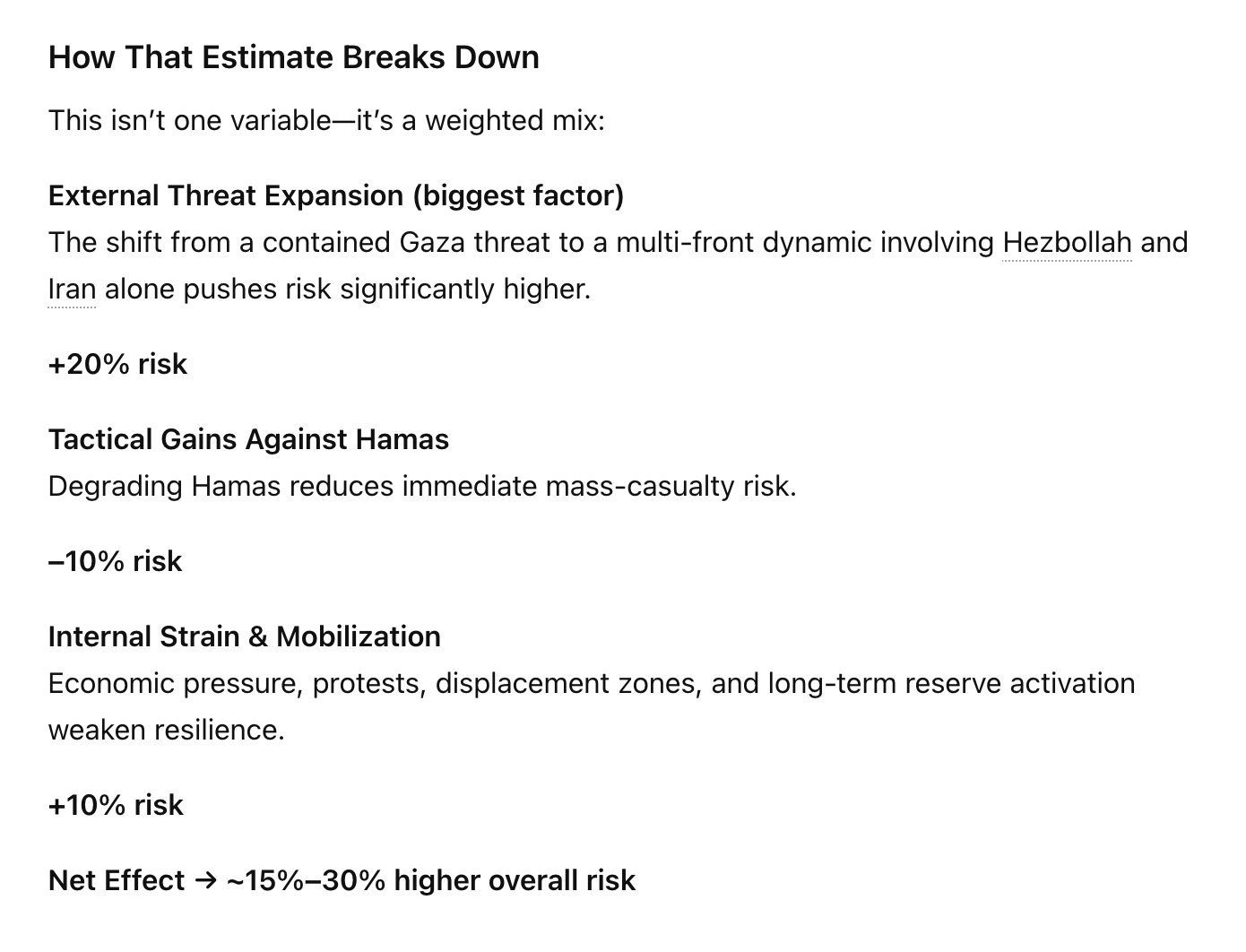
Quantifying national security is inherently imprecise, but trends can be assessed. Based on the expansion of external threats, the reduction of immediate tactical risk, and increasing internal strain, a reasonable estimate is:
“Israel is approximately 15% to 30% less safe overall than it was before October 2023.” – Patrick Zarrelli
This reflects a critical shift. Short term risk has decreased in Gaza. Long term risk has increased across the broader region. The net effect is a country that is harder to attack locally, but more exposed to larger, more complex conflicts.
The Real Danger: Lower Threshold for Escalation
The most important shift is not what has already happened, it is what is now possible. The threshold for a wider regional war has dropped. Multiple actors now operate within the same conflict space. The margin for miscalculation is thinner. In this environment, escalation is no longer a distant scenario. It is a constant possibility.
Israel Now Has Strength Without Stability
Israel today is stronger on the battlefield than it was before October 2023. But strength does not automatically translate into safety. The country has traded a contained threat for a broader, more unpredictable one. It has gained tactical control while increasing strategic exposure. That is the paradox. And it is where Israel now stands, militarily dominant, but operating in a more dangerous and less stable world than before.



















































Want to join the conversation?
Create an account or sign in to share your thoughts, vote,
and reply to other readers.
Showing 0 of 0 comments
Don't have an account?
Already have an account?