
40 Years Later Freddie Mercury is About to Take Over IMAX
The new Queen Budapest trailer promotes a newly restored 4K version of Queen’s legendary July 27th, 1986 concert at Budapest’s Népstadion, now being brought to theaters and IMAX beginning October 7, 2026, for a limited theatrical run. Sony Music Vision says the release will reach more than 2,000 cinemas across more than 50 territories.
What makes this especially interesting is that this isn’t just another Queen compilation assembled from whatever footage somebody could find in a basement. The original concert was shot on 35mm film using 17 cameras, with roughly 25 miles of film recorded. The new version has been restored in 4K using the original material, with the restoration work involving Peter Jackson’s Park Road Post Production. The original multitrack recordings have also been remixed into a new, much more immersive audio presentation.
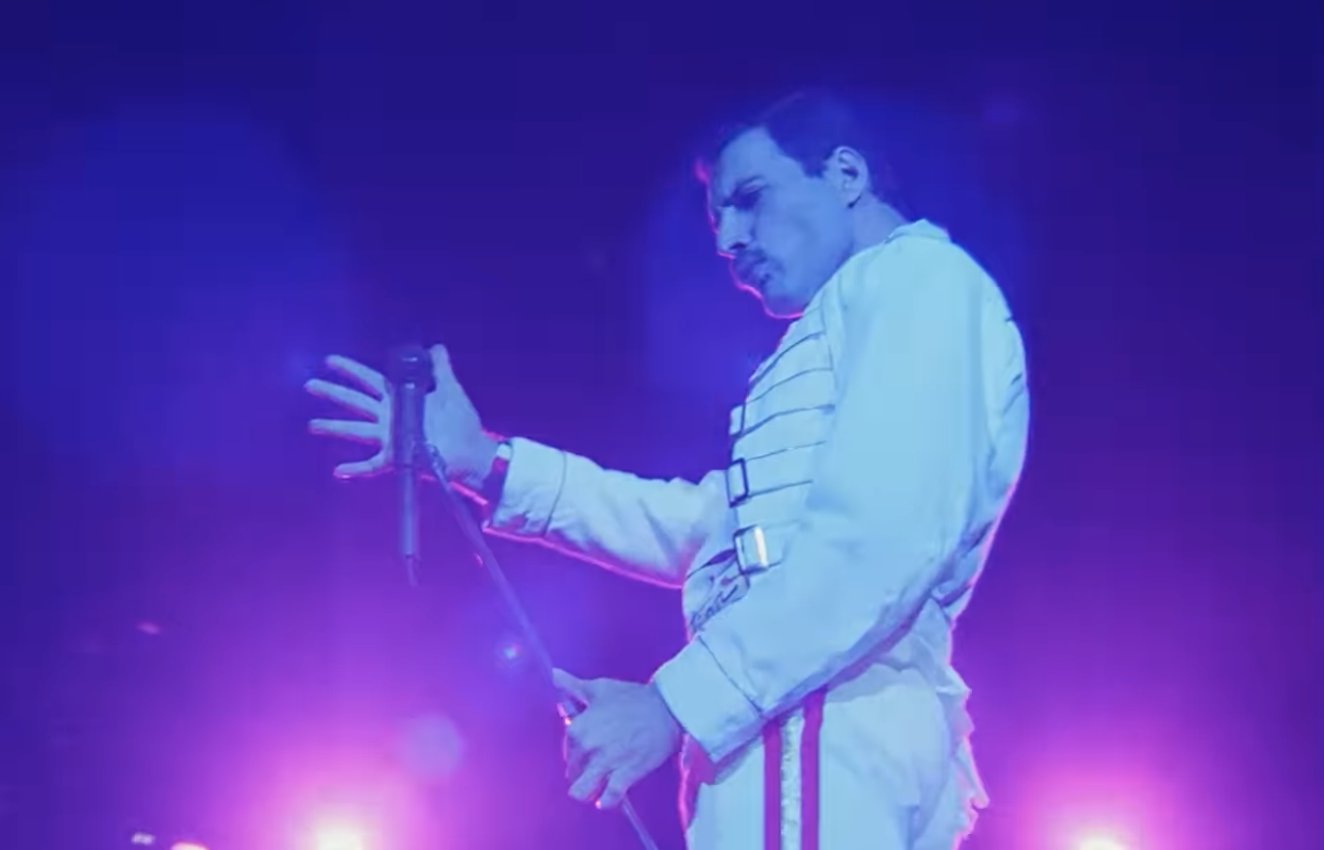
And that’s exactly where IMAX becomes an interesting idea. Queen were already one of the most theatrical live bands ever. Put Freddie Mercury on an enormous screen, throw 80,000 people behind him into the picture, restore the original film to modern 4K quality and give the audience a powerful multichannel sound system, and suddenly you’re not really watching a 1986 concert film. You’re getting something much closer to sitting inside the stadium.
The concert was part of The Magic Tour, Queen’s final tour with Freddie Mercury. The band would play only five more shows after Budapest, finishing the tour at Knebworth Park in England on August 9, 1986. Mercury would die in November 1991, making the Budapest footage particularly important because it represents the final filmed Queen live performance with Mercury.
The Historical Part is Almost as Important as the Music
The Budapest concert happened while Hungary was still behind the Iron Curtain, three years before the fall of the Berlin Wall. Queen became the first Western stadium-rock band to perform a major stadium concert behind the Iron Curtain. Around 80,000 people filled the stadium, with reports of tens of thousands more gathering outside.
That makes the concert considerably more significant than simply “Queen played Budapest.”
Western rock music had an enormous underground following in Eastern Europe, but getting an international superstar band into a communist country for a gigantic stadium concert was something else entirely. Queen’s music had already reached fans through records, radio and, in some cases, unofficially copied cassettes. Suddenly those fans were standing in a stadium watching Freddie Mercury, Brian May, Roger Taylor and John Deacon perform in person.
And then Mercury did something that has become one of the most famous moments from the entire concert.
He sang the Hungarian folk song “Tavaszi Szél Vizet Áraszt” to the crowd. Mercury had learned the Hungarian lyrics phonetically, and thousands of people joined him. It was an extraordinary moment where an English rock band, a British singer and a Hungarian audience came together in the middle of the Cold War.
The new movie reportedly runs about 97 minutes and includes performances of Queen staples including “Bohemian Rhapsody,” “We Are the Champions,” “We Will Rock You,” “Radio Ga Ga,” “A Kind of Magic,” “Crazy Little Thing Called Love,” “Under Pressure,” “Who Wants to Live Forever” and “Hammer to Fall.”
The History of Queen
Queen formed in London in the early 1970s around Freddie Mercury, Brian May, Roger Taylor and John Deacon. What made the band unusual almost immediately was that they didn’t really behave like a conventional rock group. Brian May brought his distinctive guitar sound, Roger Taylor brought the hard-rock drumming, Deacon supplied the bass and songwriting, and Mercury turned the entire operation into something much bigger.
Mercury wasn’t merely a singer. He was essentially a theatrical weapon disguised as a frontman.
Queen’s breakthrough came with albums such as Sheer Heart Attack and particularly A Night at the Opera, which produced “Bohemian Rhapsody.” That song was bizarre by the standards of mainstream rock at the time: an operatic middle section, multiple musical movements, heavy rock and an unusually ambitious structure. It somehow became a massive hit anyway, because apparently the public occasionally makes excellent decisions.
Queen subsequently produced an extraordinary run of hits including “We Will Rock You,” “We Are the Champions,” “Somebody to Love,” “Don’t Stop Me Now,” “Another One Bites the Dust,” “Crazy Little Thing Called Love,” “Under Pressure,” “Radio Ga Ga,” “I Want to Break Free” and “A Kind of Magic.”
The band also became one of the greatest live acts in rock history. Their 1985 performance at Live Aid is probably the single performance most responsible for cementing Mercury’s reputation as an all-time great frontman. But the 1986 Magic Tour demonstrated that Queen were still capable of commanding enormous stadium audiences on their own.
And that is why Budapest matters.
It captures Queen before Mercury’s illness became publicly known, at the end of the final tour he would ever undertake. There is an unavoidable historical sadness to watching it today, because everyone knows what happened afterward. But the footage itself isn’t melancholy. Quite the opposite. Mercury is commanding an enormous stadium, the band is operating at full strength, and the audience is completely losing its mind.
Why This Particular Concert Deserves the IMAX Treatment
There are plenty of old concerts that probably don’t need to be blown up onto an IMAX screen. Some footage is best left where it was found. Budapest is different.
The original production was unusually ambitious for its time. Hungarian filmmakers understood that they were documenting something historically important, and the concert was filmed extensively. The new restoration is therefore working from substantial original material rather than trying to manufacture a modern-looking concert from degraded footage.
The result is essentially a time capsule of Queen, Freddie Mercury and Cold War-era Eastern Europe. You get the spectacle of Queen, the historical significance of the Iron Curtain, the enormous Hungarian audience, Mercury at the peak of his powers and the final Queen tour with its original frontman.
That makes Queen Budapest considerably more interesting than another nostalgia screening. It is a piece of rock history being given the technological treatment that Queen themselves would probably have loved. And there is something particularly fitting about putting Freddie Mercury’s gigantic personality on an IMAX screen. The man spent his career trying to fill arenas. Forty years later, somebody apparently decided that the arenas weren’t large enough.
Queen Budapest opens in cinemas and IMAX on October 7, 2026, in a limited theatrical engagement.












































Want to join the conversation?
Create an account or sign in to share your thoughts, vote,
and reply to other readers.
Showing 0 of 0 comments
Don't have an account?
Already have an account?