Leon Black’s $158 Million Epstein Payments: Billionaire Defies Congressional Subpoena as Investigators Probe the Financier’s Money, Secrets and Powerful Connections
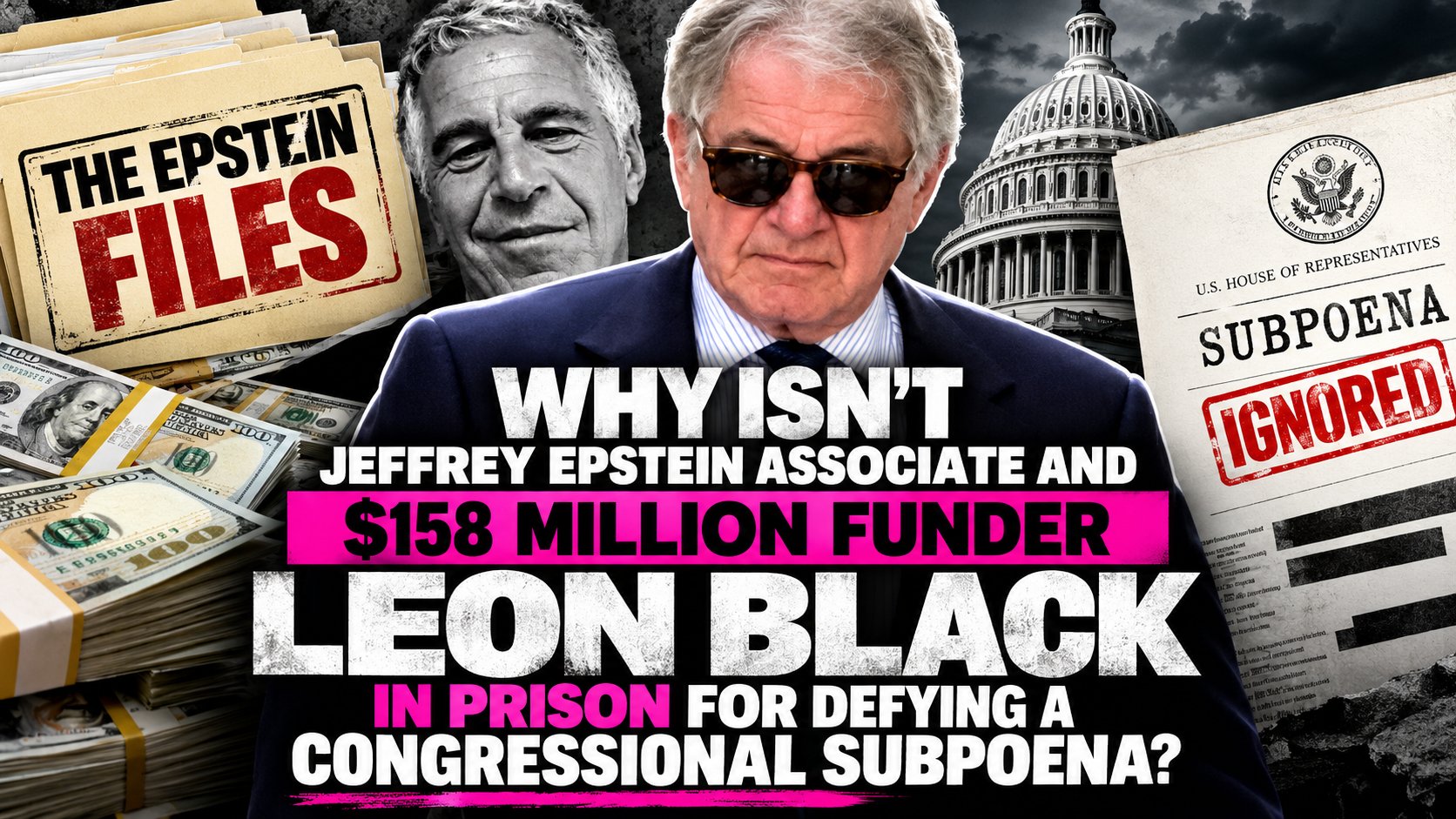
The billionaire co-founder of Apollo Global Management paid convicted sex offender Jeffrey Epstein $158 million for purported tax and estate planning services years after Epstein’s 2008 conviction. Now, as Congress demands documents and testimony about their relationship, Black is challenging a congressional subpoena in federal court. The confrontation raises difficult questions about the financial network that sustained Epstein, the accountability of his wealthy associates and whether investigators have fully traced the origins and ultimate destinations of his fortune.
WASHINGTON, D.C. — Billionaire financier Leon Black, whose financial relationship with Jeffrey Epstein continued for years after the disgraced money manager became a convicted sex offender, is now engaged in a legal confrontation with Congress over efforts to investigate the financial arrangements, confidential agreements and relationships surrounding one of America’s most notorious sexual abuse scandals.
Black, the billionaire co-founder of private equity giant Apollo Global Management, paid Epstein approximately $158 million between 2012 and 2017, according to an independent review commissioned by Apollo. The payments were purportedly for sophisticated tax advice, estate planning, trust structures and philanthropic services. They were made despite Epstein’s 2008 Florida conviction involving prostitution related offenses, including an offense involving a minor, and his status as a registered sex offender.
The financial arrangement has troubled lawmakers and investigators for years. Epstein was not known as a conventional tax attorney or licensed accountant, yet Black paid him fees that dwarfed the compensation of many of the country’s most accomplished financial professionals. Black has maintained that the advice generated extraordinary financial benefits, potentially saving his family more than $1 billion in taxes. An independent investigation found no evidence that Black or his family office employees participated in or knew about Epstein’s sex trafficking activities, but the financial relationship nevertheless contributed to Black’s departure from Apollo’s leadership in 2021.
The controversy has now returned to Washington. According to an October 2026 WPLG Local 10 report, Black failed to appear for a subpoenaed deposition before the House Oversight Committee and instead filed a federal lawsuit challenging the panel’s demands for testimony and documents. His attorneys characterized the investigation as an improper and overly broad inquiry, while lawmakers initiated steps toward possible contempt proceedings.
The confrontation presents a question extending far beyond Black’s personal reputation: How did Epstein continue collecting extraordinary sums from some of America’s wealthiest individuals after his criminal conduct was publicly known, and have federal investigators fully established what services, financial transactions and relationships those payments represented?
Leon Black’s $158 Million Relationship With Jeffrey Epstein
Black’s financial relationship with Epstein became a major corporate governance controversy after public reporting revealed the extent of their dealings. In January 2021, Apollo disclosed the findings of an independent review conducted by the law firm Dechert LLP at the request of a committee of its board of directors. The review examined payments made by Black and related entities to Epstein between 2012 and 2017 and the nature of the services Epstein purportedly provided.
Investigators identified approximately $158 million in payments, an extraordinary figure for an individual financial adviser. According to the review, Epstein worked on complicated tax, estate planning and family office matters involving Black’s considerable wealth, including trusts and strategies intended to reduce future tax liabilities. Black maintained that Epstein possessed unusual expertise in these areas and that the potential financial benefits justified the substantial compensation.
The timing was especially controversial. Epstein had pleaded guilty in Florida in 2008 and served a jail sentence under a widely criticized arrangement that allowed him significant work release privileges. His criminal history was publicly known when Black continued paying him millions of dollars. Although doing business with a convicted offender is not itself a crime, the scale of the relationship raised questions about Black’s judgment and the extent to which Epstein’s financial network continued operating after his conviction.
The Dechert review concluded that it found no evidence Black or employees of his family office participated in or knew about Epstein’s sexual abuse and trafficking activities. That finding is an important part of the record, but it does not eliminate the legitimate public interest in understanding the financial arrangements. An investigation commissioned in connection with corporate governance concerns is not a substitute for a complete government examination of all potentially relevant financial records, tax transactions and communications.
Why Would a Billionaire Pay Epstein So Much for Tax Advice?
The explanation offered for the payments has been central to the controversy. Black and those defending the arrangement have maintained that Epstein’s advice helped produce extraordinary tax savings through sophisticated estate planning structures. In that context, even a nine figure advisory fee could theoretically be economically rational if the advice legitimately preserved substantially more wealth.
But a claim of enormous tax savings requires careful examination. Investigators would need to distinguish between projected tax benefits, actual savings realized, legal structures created, services personally performed by Epstein and work completed by attorneys, accountants or other professionals. They would also need to determine how fees were calculated, what agreements governed the payments and whether comparable services could have been obtained elsewhere.
A large payment, even one that appears unusual, does not independently establish money laundering, bribery, blackmail or financing of criminal activity. Those conclusions require evidence showing that a transaction was designed to conceal unlawful proceeds, purchase improper influence or facilitate another offense. Nevertheless, the unusually large sums make the relationship a legitimate subject for congressional inquiry, particularly because Epstein’s financial activities have never been fully explained in the public record.
The larger issue is whether Epstein’s extraordinary access to wealthy clients reflected genuine financial expertise, personal relationships, the value of his connections or some combination of those factors. Investigators should pursue the documentary evidence rather than assume that the most sensational explanation must be correct.
Black Challenges Congress After Missing Subpoenaed Deposition
According to the WPLG report, the House Oversight Committee sought testimony and documents from Black concerning his financial and legal relationships with Epstein. Black had previously participated in a voluntary appearance before the committee in June, but disputes remained over additional materials, including records associated with nondisclosure agreements. The committee subsequently issued compulsory demands. Black did not appear for the scheduled deposition and filed a lawsuit challenging the congressional subpoenas. His legal position, as described in the report, was that lawmakers were conducting an excessively broad inquiry rather than a properly limited investigation serving a legitimate legislative purpose.
Congress possesses substantial investigative authority, including the power to seek testimony and documents relevant to legitimate legislative objectives. That authority, however, is not unlimited. Congressional subpoenas can be challenged in court on constitutional, procedural and other legal grounds, and witnesses retain applicable privileges and protections. Black’s decision to sue does not itself constitute proof of criminal wrongdoing. Individuals and corporations are entitled to seek judicial review of government demands, including congressional subpoenas. At the same time, filing litigation does not automatically eliminate the obligation to comply with a legally valid subpoena. The outcome depends on the court’s rulings, any applicable stays and the committee’s subsequent actions.
Lawmakers reportedly began contempt proceedings following Black’s failure to appear. A contempt recommendation or committee action is not equivalent to a criminal conviction, and the specific consequences depend on the congressional process and any subsequent enforcement proceedings. The dispute is significant because investigators are attempting to examine financial arrangements connected to a convicted sex offender whose activities involved wealthy and influential individuals. Whether Congress ultimately obtains the requested records could affect how much of Epstein’s financial history becomes publicly understood.
Congress Escalates the Dispute With a Bipartisan Contempt Vote
The confrontation moved beyond threats of enforcement on September 15, 2026, when the House Oversight Committee voted 41-0 to advance a resolution recommending that the full House hold Black in contempt of Congress. The unanimous vote reflected bipartisan frustration with his refusal to appear for a September 3 deposition and the committee’s contention that he had withheld subpoenaed nondisclosure agreements.
Committee Chairman James Comer, a Kentucky Republican, said the investigation was examining how federal authorities had failed Epstein’s victims and how Epstein used influential relationships to avoid scrutiny. The committee reported that Black had produced only one nondisclosure agreement despite indications that additional agreements existed. Its report recommended referral for possible prosecution under the federal contempt of Congress statute.
That recommendation does not establish a criminal conviction or necessarily mean that prosecutors have filed charges. The full House and the Justice Department have separate roles in the process, and Black continues to have the right to challenge the subpoenas in court. The committee’s September action, however, is an important development: lawmakers from both parties formally concluded that Black’s noncompliance warranted escalation.
The Senate’s Earlier Investigation Raised Questions About Epstein’s Actual Financial Work
The House investigation is not the first congressional inquiry into Black’s payments. In July 2023, Senator Ron Wyden, then chairman of the Senate Finance Committee, disclosed findings from an investigation into Black’s tax planning and financial dealings with Epstein. The inquiry began in June 2022 after committee investigators identified inconsistencies and unanswered questions involving the Dechert review.
The Senate committee focused on transactions that potentially kept billions of dollars outside Black’s taxable estate. One arrangement involved partnership interests held in a trust and questions about whether Black had received income from assets he had previously represented as no longer belonging to him. Investigators also examined a transaction reportedly intended to produce approximately $600 million in future gift and estate tax savings.
One of the most consequential findings concerned Epstein’s actual contribution to that transaction. According to the committee, Black’s attorneys acknowledged that the underlying strategy was already publicly known and originated with other legal advisers, even though Epstein had been paid $20 million for his purported role. The committee said it had not received an adequate explanation of the value Epstein personally contributed. That discrepancy does not prove the payment was illegal. But it challenges the simple explanation that every dollar represented compensation for uniquely valuable financial advice. It also creates a clear investigative path: compare the contracts, invoices, work product, advice supplied by other professionals and actual tax outcomes to determine whether the compensation corresponded to identifiable services.
The Senate investigation also raised potential gift and estate tax issues, including whether particular transactions had been properly reported. Those questions are distinct from allegations of involvement in Epstein’s sexual abuse and must be evaluated on their own evidence.
The Nondisclosure Agreements May Be Central to Understanding Epstein’s Network
The House committee’s insistence on obtaining Black’s nondisclosure agreements is especially significant because confidentiality arrangements can contain information about settlements, disputes, payments and the individuals involved. Such agreements are common in legitimate business and personal matters, and their existence does not automatically indicate misconduct. However, they can become important evidence when investigators are examining whether powerful individuals used legal and financial arrangements to conceal wrongdoing.
The committee has sought agreements involving Black, including materials that refer to Epstein or Ghislaine Maxwell. According to congressional records, Black refused to answer questions concerning such agreements during his June interview and later challenged the demands for their production. His attorneys maintain that the committee is seeking private information beyond the legitimate scope of its inquiry.
The dispute therefore concerns more than the public embarrassment of a billionaire financier. It goes to whether lawmakers can examine potentially relevant records while investigating how Epstein maintained relationships with wealthy individuals and whether government institutions failed to protect victims.
Investigators must still distinguish agreements concerning ordinary private disputes from those relevant to alleged abuse, financial misconduct or interference with investigations. The existence of a confidentiality agreement is not evidence that the underlying allegations are true, but withholding potentially responsive documents can prevent investigators from making that determination.
Les Wexner and the Earlier Financial Network That Helped Epstein Accumulate Wealth
Black was not the only extraordinarily wealthy businessman whose relationship with Epstein attracted scrutiny. Retail billionaire Les Wexner, the founder of L Brands, gave Epstein unusually broad authority over aspects of his personal financial affairs during their long association. Epstein’s relationship with Wexner was important to his rise into elite financial and social circles. Wexner entrusted him with substantial responsibilities, and their association became central to questions about how Epstein accumulated wealth, acquired expensive properties and established relationships with powerful individuals.
Wexner later accused Epstein of misappropriating substantial sums from him and said he had severed their relationship. Those allegations should not be confused with a finding that Wexner participated in Epstein’s trafficking operation. The financial relationships involving Wexner and Black raise related but distinct questions. In Wexner’s case, investigators have examined the degree of control Epstein obtained over another billionaire’s assets and how that authority contributed to his financial position. In Black’s case, the central question concerns exceptionally large payments for purported professional services after Epstein had already become a convicted sex offender.
Neither relationship independently proves that the money was connected to intelligence operations, blackmail or trafficking. Both demonstrate why tracing Epstein’s financial activities is necessary to understand how he sustained his wealth and influence despite his criminal history.
Was Jeffrey Epstein Connected to Intelligence Agencies?
Questions about possible intelligence relationships have followed Epstein for years, fueled by his access to influential figures, his international connections, his opaque financial activities and the history of people within his social network. Among the frequently discussed connections is Ghislaine Maxwell’s father, Robert Maxwell, the British media magnate who was the subject of longstanding reporting and allegations concerning relationships with Israeli intelligence. Epstein also maintained connections with former Israeli Prime Minister Ehud Barak, whose visits and business dealings attracted scrutiny after Epstein’s crimes became widely known.
Those relationships are legitimate subjects for historical investigation, but they do not establish that Epstein operated as an agent of Israel’s Mossad or any other intelligence service. Nor do they demonstrate that payments from Black, Wexner or other wealthy individuals were intended to finance intelligence operations. The religious or ethnic identity of a businessman is not evidence of an intelligence connection. Any allegation involving foreign intelligence financing would require specific evidence such as instructions from an intelligence organization, financial transfers linked to operational activities, corroborated communications or testimony supported by reliable records.
Claims that Epstein maintained an intelligence linked blackmail operation have circulated widely, but the publicly established record does not prove that he was a formally directed Mossad operative. An investigation should examine credible documentary leads without converting speculation into fact or treating associations as evidence of criminal participation. The relevant question is whether Epstein’s financial records, communications and documented relationships reveal actual intelligence activity. Until that evidence is established, allegations of state directed operations remain unproven.
The House Has Already Found Leon Black in Contempt of Congress
The September 15 committee vote was followed by an even more consequential action on September 16, when the full U.S. House of Representatives approved a resolution holding Black in contempt of Congress. The measure passed by unanimous consent, meaning no member objected, and the matter was referred to the Justice Department for consideration of possible prosecution.
The full House action is important because it establishes that the controversy has advanced beyond a preliminary committee recommendation. Congress formally exercised its contempt authority after Black refused to comply with the disputed subpoenas. However, congressional contempt and criminal conviction are different legal outcomes. The Justice Department must determine whether to pursue prosecution, and any criminal case would require proof of the applicable offense.
Black’s lawsuit challenging the subpoenas remains a separate legal matter. His attorneys contend that congressional investigators exceeded their authority by demanding documents unrelated to a legitimate legislative purpose. Lawmakers maintain that the information is necessary to investigate Epstein’s relationships, financial arrangements and possible efforts to avoid scrutiny. As of the reporting reviewed for this article, no confirmed final criminal judgment against Black arising from the contempt referral was identified.
Sexual Abuse Allegations Against Black and the Latest October 2026 Court Decision
The congressional investigation also unfolds against a history of civil sexual misconduct allegations against Black, which he has repeatedly and emphatically denied. Several women have brought civil claims accusing Black of sexual misconduct, including allegations involving encounters allegedly arranged through Epstein. Black has denied the accusations, disputed the credibility of the claims and pursued legal action against attorneys who represented some of his accusers. The existence of these lawsuits does not establish that the alleged assaults occurred.
On October 16, 2026, The Guardian reported that a federal judge had dismissed a lawsuit brought by a woman identified as Jane Doe, who had accused Black of sexually assaulting her in 2002 after an introduction through Epstein. The plaintiff requested dismissal because she said continuing the litigation posed severe psychiatric risks and that she was medically unable to proceed. She did not characterize the decision as a retraction of her allegations. Black denied the allegations and did not oppose the dismissal. The case was dismissed with prejudice, preventing the plaintiff from bringing the same claim again. Black’s representatives maintained that the lawsuit lacked merit and emphasized that the dismissal did not involve a settlement or inducement.
The distinction matters for accurate reporting. The dismissal ended the lawsuit, but it was not a trial verdict establishing whether the alleged assault occurred. Black has not been convicted of a sex offense in connection with Epstein.
The $62.5 Million U.S. Virgin Islands Settlement
Black’s Epstein related financial exposure has extended beyond congressional investigations and civil allegations. In 2023, it emerged that he had agreed to pay $62.5 million to the U.S. Virgin Islands to resolve potential claims associated with Epstein’s activities. The agreement was intended to avoid potential litigation and did not constitute an admission of wrongdoing. It nevertheless represented another substantial financial consequence arising from Black’s association with Epstein and the broader effort to address harm connected to Epstein’s trafficking operation.
For investigators, the settlement is part of the larger financial history, but it must not be treated as evidence that Black personally committed trafficking offenses. Settlement payments can reflect litigation risk, the costs of defending claims and the desire to resolve potential disputes without trial.
Epstein’s Final Fortune: The 1953 Trust and Karyna Shuliak
Another major financial mystery concerns what Epstein intended to happen to his wealth after his death.
Two days before his death in federal custody in August 2019, Epstein signed documents establishing an estate arrangement known as the 1953 Trust, named after his birth year. The trust was structured to distribute assets among designated beneficiaries, with significant provisions for individuals who had been close to him.
Documents made public in 2026 revealed that Epstein intended to leave approximately $100 million to Karyna Shuliak, his longtime companion. The arrangement included a proposed $50 million annuity and provisions involving valuable property and personal possessions. Epstein’s longtime attorney Darren Indyke and accountant Richard Kahn were also among the major intended beneficiaries.
The disclosure is significant because it shows how Epstein intended to distribute his fortune shortly before his death, including the substantial financial benefits he planned for people outside his immediate family. However, intended distributions under an estate plan are not equivalent to money actually received. Epstein’s estate has been reduced by taxes, legal expenses and compensation for victims, and the eventual distributions may differ considerably from the original documents.
The trust also named numerous other potential beneficiaries, meaning the financial arrangements were more complicated than a simple transfer of the entire estate to one individual.
Does Epstein’s Estate Establish an Intelligence Connection?
The circumstances surrounding Epstein’s final estate plan have generated speculation, particularly because of the amount of money he intended to leave Shuliak and other longtime associates. But there is no credible evidence in the reviewed reporting establishing that Shuliak was a Mossad operative or that the trust was designed to fund an Israeli intelligence operation.
A large inheritance, a foreign birthplace or a close relationship with Epstein cannot establish intelligence affiliation. Determining whether any estate assets were intended for covert activities would require evidence of actual financial transfers, operational relationships, instructions or other corroborated records. The more concrete investigative questions concern the origin of Epstein’s assets, the legal structure of the trust, the role of the estate’s executors, any transactions benefiting associates and whether the rights of victims were adequately protected.
The unusual timing of the estate documents makes them worthy of scrutiny, but timing alone cannot establish a covert operation. The available evidence supports examining the estate’s finances and administration, not declaring its beneficiaries intelligence agents.
Why Epstein’s Financial Network Remains a National Accountability Issue
The extraordinary financial relationships surrounding Jeffrey Epstein reveal a disturbing feature of the scandal: his criminal conviction did not prevent him from maintaining access to influential individuals or receiving enormous sums of money. Black’s payments illustrate that reality with particular clarity. Between 2012 and 2017, Epstein received approximately $158 million from a billionaire financier who maintained that the compensation reflected legitimate financial services. Senate investigators subsequently questioned aspects of those services and the underlying tax transactions. Congress later sought additional testimony and confidentiality agreements, leading to a legal confrontation that culminated in the House finding Black in contempt.
Those developments warrant serious examination, but they do not justify treating every wealthy associate as a participant in Epstein’s crimes. Financial transactions, social relationships, civil allegations and criminal offenses require different forms of proof. Investigators must follow the evidence wherever it leads while protecting the rights of victims and avoiding unsupported accusations.
The unresolved financial questions are substantial. How much of Epstein’s wealth came from legitimate advisory services? What financial benefits did his clients actually receive? Were any payments improperly characterized for tax purposes? Did confidentiality agreements conceal information relevant to criminal investigations? And did government institutions fail to investigate financial arrangements that could have revealed more about Epstein’s activities?
These questions are particularly important because Epstein’s trafficking operation depended on access, money, secrecy and the repeated failure of powerful institutions to protect vulnerable people. Financial records may help explain how that operation survived, even where they do not establish criminal wrongdoing by a particular client. The House’s contempt finding against Black demonstrates that lawmakers are no longer treating every request for records as optional. Whether that action produces additional testimony, meaningful document disclosures or a criminal prosecution remains uncertain.
For Epstein’s survivors, the central issue is not the embarrassment of wealthy individuals whose names appear in investigative files. It is whether the government will finally establish a complete and credible account of the financial and institutional systems that enabled Epstein’s crimes. The public deserves to know where Epstein’s money came from, what it purchased, who benefited from his financial arrangements and whether any criminal conduct remains unaddressed. Wealth and influence should not prevent those questions from being answered, but neither should suspicion replace evidence.

Sources & Further Reading
Congressional records and government investigations
-
U.S. House Oversight Committee — Full House Finds Leon Black in Contempt of Congress — September 16, 2026.
-
House Oversight Committee — Bipartisan Contempt Proceedings and Subpoena Dispute — September 15, 2026.
-
U.S. House of Representatives — Official Report on Leon Black’s Noncompliance With Congressional Subpoenas.
-
Senate Finance Committee — Investigation Into Leon Black’s Tax Planning and Epstein Payments — July 25, 2023.
National and investigative reporting
-
Associated Press — Leon Black Skips Epstein Deposition and Sues House Committee — September 2026.
-
CBS News — House Votes to Hold Leon Black in Contempt — September 16, 2026.
-
CBS News — Leon Black’s Congressional Testimony, Nondisclosure Agreements and Epstein Relationship.
-
The Guardian — Federal Judge Dismisses Civil Sexual Assault Lawsuit Against Leon Black — October 16, 2026.
-
Reuters — Earlier Civil Sexual Assault Allegations and U.S. Virgin Islands Settlement — February 2024.
-
Le Monde — Karyna Shuliak and Epstein’s Estate Arrangements — February 2026.
-
WPLG Local 10 News — Leon Black Skips Epstein Deposition and Sues House Panel — Video report supplied for this investigation.
Relevant coverage can be found through the SFL Media Jeffrey Epstein reporting archive. Individual article URLs were not independently verified in this research, so none have been invented or presented as confirmed related articles.



























Loading comments…