
Love it or Hate it. There is now an Electric Ferrari. The Reviews Coming Out are not Postitive
The idea of an electric Ferrari once sounded almost impossible. Ferrari has always been about screaming V12 engines, emotional driving experiences, Formula 1 DNA, and the kind of sound that makes people stop talking when one rips down the street. But in 2026, Ferrari officially stepped into the electric era with the debut of the Ferrari Luce (pronounced loo-chay, Italian for “light”), the company’s first fully electric production vehicle. The reveal instantly became one of the most talked about car launches of the year. And not just because it marks Ferrari’s entry into the EV world, but because many fans think Ferrari may have gone too far in reinventing itself. While the Luce delivers jaw-dropping performance numbers and futuristic technology, it has also triggered some of the harshest criticism Ferrari has seen in years.
Check Out the Specs and the Price
On paper, the Ferrari Luce sounds like science fiction. The car reportedly produces around 1,050 horsepower using four electric motors (one at each wheel) making it an all wheel drive performance monster with extraordinary traction and torque delivery. Ferrari claims the Luce can accelerate from 0 to 62 mph in approximately 2.5 seconds and hit a top speed near 193 mph, putting it firmly into supercar territory despite being larger and heavier than traditional Ferraris. Underneath sits a massive 122-kWh battery pack capable of delivering an estimated driving range of around 330 miles (about 530 kilometers), while ultra-fast 350-kW charging means owners can replenish power significantly faster than earlier-generation EVs. Ferrari engineers also integrated advanced torque vectoring, four-wheel steering, active suspension systems, and software that adjusts handling in real time to preserve the sharp driving dynamics Ferrari customers expect.
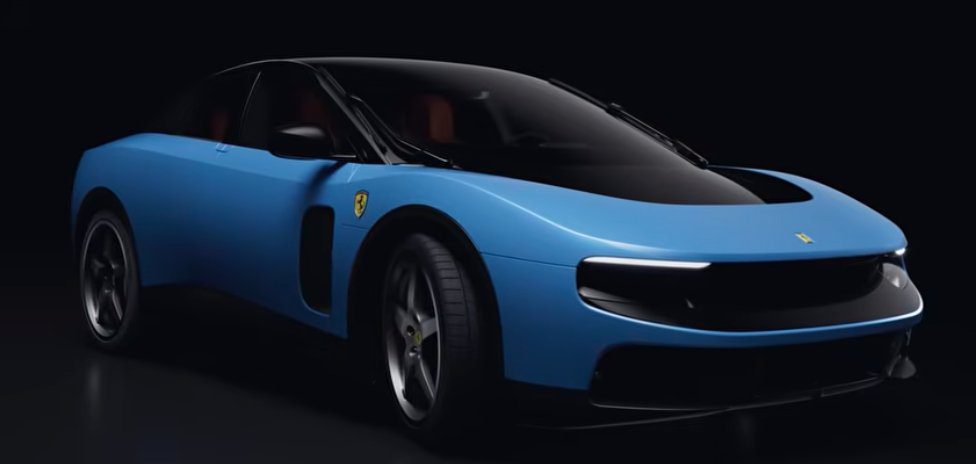
The Luce is not just Ferrari’s first EV. It is also one of the most practical Ferraris ever made. Instead of a traditional two-seat supercar layout, Ferrari designed the Luce as a four-door, five-seat grand touring vehicle aimed at wealthy buyers who want Ferrari performance but with more comfort and everyday usability. The cabin pushes technology in a very different direction than many modern EVs. Interestingly, Ferrari worked with legendary former Apple designer Jony Ive and his design firm LoveFrom, giving the car an interior focused on physical controls, tactile materials, lighting effects, and minimal touchscreen overload. Ferrari says this helps drivers stay focused while preserving a more emotional connection to the car. Early reactions to the interior have actually been much more positive than reactions to the exterior styling.
Then comes the price, which is exactly what you would expect from Ferrari. Reports suggest the Luce starts at roughly $640,000 before customization, taxes, and Ferrari’s famously expensive personalization options. Realistically, many buyers could easily spend far more by adding bespoke paint, carbon-fiber trim, luxury interior materials, and one off design requests through Ferrari’s custom programs. That makes the Luce one of the most expensive electric vehicles in the world and places it above many already ultra-exclusive Ferrari models in price.
Let the Backlash Begin
To understand why the backlash has been so strong, it helps to understand Ferrari’s history. Ferrari built its reputation on machines that became cultural icons. The legendary Ferrari F40 is still considered by many enthusiasts to be one of the purest driver-focused supercars ever made, combining brutal turbocharged performance with almost no electronic assistance. The beautiful Ferrari Enzo brought Formula 1 technology to the street and became one of the defining dream cars of the early 2000s. Later came hybrid masterpieces like the LaFerrari, which proved Ferrari could adopt electrification without losing speed or excitement. Modern performance stars such as the Ferrari SF90 Stradale and the wildly fast Ferrari Purosangue continued Ferrari’s reputation for blending outrageous power with unmistakable styling and emotional drama. Ferrari fans became used to low-slung proportions, sharp lines, dramatic exhaust notes, and aggressive styling that practically screamed speed even while parked.
That history explains why the Luce shocked people. Online reactions have ranged from disappointment to outright outrage. Critics say the car simply does not look like a Ferrari. Some compared it to a futuristic crossover, a luxury appliance, or even an oversized Apple product rather than an Italian supercar. Memes spread quickly across social media, with jokes suggesting the car looked like an iPhone on wheels or a high-end computer mouse. Even longtime Ferrari figures voiced concern. Former Ferrari chairman Luca Cordero di Montezemolo publicly criticized the direction of the car and warned Ferrari risked damaging part of its legendary image, comments that quickly went viral among enthusiasts. Much of the criticism centers on styling: people feel the Luce lacks the aggressive stance, emotional drama, and unmistakable “Ferrari energy” associated with iconic models of the past.
Car communities online have also criticized the price-to-performance equation. While nobody questions whether the Luce is fast, skeptics argue that competing EVs now offer incredible acceleration, long range, and high tech features at dramatically lower prices. Others argue that Ferrari’s greatest appeal has never simply been horsepower but rather emotional experience, engine sound, theater, and exclusivity. A silent electric Ferrari forces fans to rethink what a Ferrari even means. Ferrari attempted to solve this by engineering an artificial acoustic experience and simulated engagement systems meant to preserve some emotional feedback during spirited driving, but opinions remain deeply divided on whether software can ever replace the roar of a naturally aspirated Ferrari engine.
Still, it would be a mistake to declare the Luce a failure before customers actually live with it. Ferrari has a long history of controversial designs aging remarkably well, and some automotive writers who experienced the car in person praised its interior, technology, handling philosophy, and ambition. Ferrari is also betting that ultra-wealthy younger buyers, particularly in markets such as Asia, Silicon Valley, and technology focused luxury communities, may embrace a Ferrari that feels modern, sustainable, and different from tradition. In that sense, the Luce may end up being remembered not as the Ferrari that broke the rules, but as the Ferrari that forced the company into its next chapter. Whether fans eventually see it as visionary or sacrilegious remains one of the biggest questions in the automotive world right now.



















































Want to join the conversation?
Create an account or sign in to share your thoughts, vote,
and reply to other readers.
Showing 0 of 0 comments
Don't have an account?
Already have an account?