
Is it Fair That the US Takes a Huge Chunk of the Earnings?
Spain’s celebration after winning the 2026 FIFA World Cup may be short-lived when it comes to the financial rewards. After defeating Argentina 1-0 in the championship match, Spain earned FIFA’s record-setting $50 million first-place prize. However, because the tournament was primarily hosted in the United States, the Internal Revenue Service (IRS) is expected to claim a significant share of those winnings under U.S. tax law. The situation has sparked controversy in both the United States and abroad, with some lawmakers calling the tax burden a “rip-off” and arguing that it sends the wrong message to international sporting events.
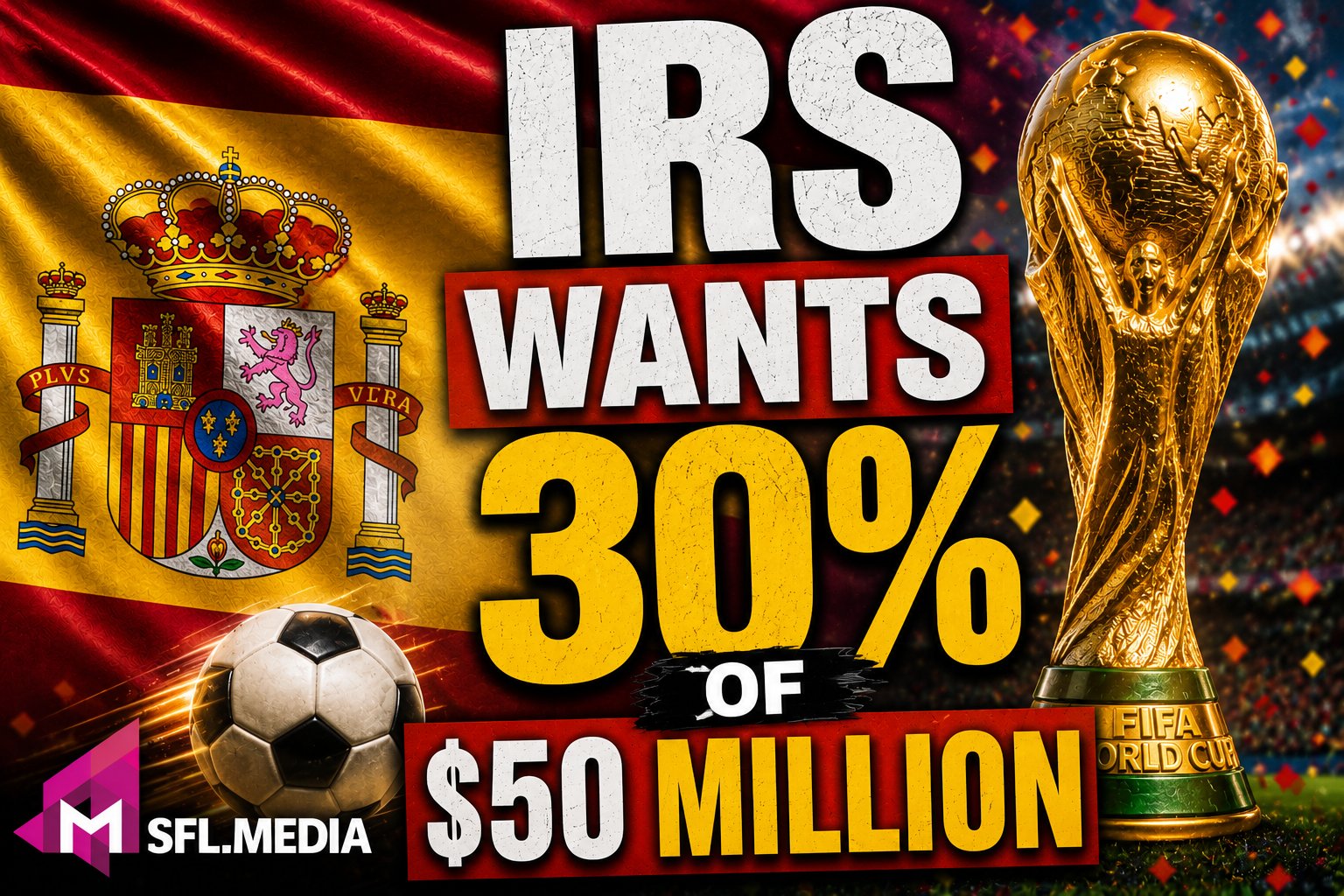
The biggest deduction comes from the federal withholding tax imposed on nonresident foreign athletes and organizations earning income in the United States. Under current tax law, payments made to foreign individuals and certain foreign entities for services performed in the U.S. are generally subject to a 30% federal withholding tax unless a tax treaty or specific exemption applies.
If the full 30% rate were applied to Spain’s $50 million championship prize, the IRS could withhold as much as $15 million, reducing the payout to approximately $35 million before any additional taxes or adjustments. While Spain does have a tax treaty with the United States that could reduce some tax liabilities depending on how the money is distributed, experts note that the treaty does not automatically eliminate every tax obligation.
How This is All Broken Down
The federal withholding is only part of the picture. Individual players, coaches, trainers, team staff, referees, and others who earned compensation while working in the United States may also owe taxes on their share of the prize money. In addition, many players receive appearance fees, endorsement bonuses, sponsorship income, and performance incentives tied to the World Cup, all of which may be considered U.S.-source income if they were earned while participating in the tournament. Those earnings can create separate federal tax obligations beyond the team’s prize money.
State taxes could further reduce what participants ultimately take home. The World Cup was played across multiple U.S. states, each with different tax laws. While states such as Florida, Texas, and Washington do not impose a state income tax, others do. The championship match was played in New Jersey, which levies a state income tax and does not recognize international tax treaties for state tax purposes. This means players and team personnel who earned income from the final could also be subject to New Jersey’s so-called “jock tax,” requiring them to pay state income tax on money earned while competing there. Similar taxes may apply for matches played in other states that impose income taxes.
Both Sides of the Aisle in the US Criticize the Taxes
The tax issue has generated criticism from lawmakers on both sides of the political aisle. Representative Tim Burchett of Tennessee called the policy “a rip-off,” arguing that the United States should encourage international visitors rather than taking a substantial portion of their earnings. Representative Jonathan Jackson also questioned whether taxing foreign athletes so heavily sends the right message as the U.S. continues to host major international sporting events.
Supporters of the current tax system counter that American athletes are also taxed on income earned at home and abroad, making it unfair to exempt foreign competitors simply because they are participating in an international tournament.
Ultimately, Spain will not necessarily lose exactly 30% of its prize money. The final tax bill will depend on how FIFA distributes the funds, how Spain’s football federation allocates the prize money to players and staff, applicable provisions within the U.S.-Spain tax treaty, deductible expenses, and whether foreign tax credits or other adjustments apply. Still, tax experts agree that the IRS will receive a significant share of the tournament’s prize pool simply because the income was generated on American soil. It is not just Spain that faces this reality. Every nation that earned prize money during the 2026 FIFA World Cup is expected to face some level of U.S. taxation, making the IRS one of the tournament’s biggest financial winners.



















































Want to join the conversation?
Create an account or sign in to share your thoughts, vote,
and reply to other readers.
Showing 0 of 0 comments
Don't have an account?
Already have an account?