
It is Hard to Believe What the Mayor Has Done… I Had to do a Double-Take
New York City politics found itself in the middle of another cultural firestorm after Mayor Zohran Mamdani has come under intense criticism over an official-looking map highlighting New York City’s immigrant neighborhoods that noticeably omitted some of the city’s most historic ethnic communities, including the “world famous” Little Italy, while emphasizing many others. And deservedly so!
The map quickly went viral on social media, with Italian-American organizations, community leaders, historians, and everyday New Yorkers questioning why one of the city’s most iconic immigrant neighborhoods had seemingly been erased. Critics also pointed out that traditional Irish and Jewish neighborhoods appeared to receive little or no recognition, leading many to accuse Mamdani’s campaign of selectively celebrating New York’s immigrant history. Wait until you see the map and who Mamdani did make sure to include.
Mamdani Straight Lied About the Map… Blamed Former Mayor Eric Adams
The controversy intensified when Mamdani initially suggested that the omission stemmed from work completed under the administration of former Mayor Eric Adams, implying that the previous administration was responsible for the map’s design. That explanation quickly came under scrutiny after critics noted that the map had been published and promoted by Mamdani’s own transition effort, making it difficult to shift responsibility elsewhere.
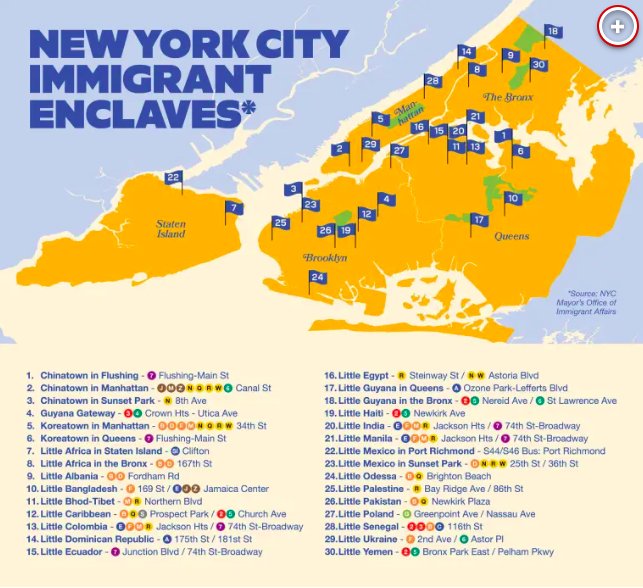
Opponents accused him of attempting to deflect blame rather than acknowledging the mistake outright. As criticism mounted, Mamdani eventually announced that Little Italy would indeed be recognized by his administration, effectively reversing course after days of backlash.
Why Little Italy is Important
The dispute resonated because Little Italy is far more than a tourist attraction. Beginning in the late 1800s, hundreds of thousands of Italian immigrants settled in lower Manhattan, building churches, businesses, restaurants, social clubs, and family neighborhoods that became synonymous with the American immigrant experience.
Although the physical size of Little Italy has shrunk considerably over the decades as neighboring Chinatown expanded, its cultural importance remains enormous. Annual events such as the San Gennaro Feast continue to celebrate the neighborhood’s Italian heritage and attract visitors from around the world. Many Italian-Americans viewed its omission not simply as an oversight but as a symbolic dismissal of generations who helped build New York City.
The criticism did not stop with Little Italy. Many observers questioned why historically Irish neighborhoods and long-established Jewish communities also appeared to receive comparatively little recognition on the map. Irish immigrants were instrumental in constructing much of New York’s infrastructure during the 19th century, while Jewish immigrants transformed neighborhoods throughout Manhattan, Brooklyn, Queens, and the Bronx through commerce, education, culture, and public service. Together with Italians, these communities helped define modern New York, leading critics to ask why a map intended to celebrate immigrant heritage appeared to overlook several of the city’s foundational immigrant populations.
Some People Actually Support This Guy… A Whole Bunch Do Not
Supporters of Mamdani argued that the map was intended to highlight the city’s current immigrant landscape rather than serve as a comprehensive historical record. They noted that New York today is home to thriving communities from Latin America, South Asia, East Asia, Africa, the Caribbean, and the Middle East, all of which deserve recognition. However, opponents countered that celebrating newer immigrant communities should not come at the expense of erasing older ones that played an equally significant role in shaping the city’s identity. You can try to talk it all away. At the end of the day, you don’t leave out Little Italy just because you want to add Little Pakistan.
Former Long Island resident / mobster, Tony Galeota (who has attended the San Gennaro Feast over 10 times) was not happy with Mamdani’s decision. He went on record saying, “What is this mamaluke doing? Little Italy has been here for so long, and it hasn’t been a problem for anybody. This guy comes and decides to mess with my people’s heritage and our part of town, and for what? On my Godson’s eyes, he better put Little Italy back on his little map, or we Italians aren’t gonna play nice about this. You’re gonna tell me that Little Italy isn’t allowed, but Little Palestine is? Get the f*ck outta here!”
The political damage was only compounded by Mamdani’s handling of the controversy. Rather than immediately acknowledging the omission as an error, his initial effort to push responsibility to the Adams administration fueled accusations that he was attempting to avoid accountability. Once evidence showed the map was associated with his own transition materials, the explanation drew additional criticism. His subsequent promise to include Little Italy in the future did little to satisfy many critics, who argued that the correction only came after widespread public outrage.
*****Editor’s note*****
The debate has gotten red hot. Especially on social media. It has touched on larger questions of historical memory, political messaging, and who gets recognized in New York City’s constantly evolving story. For many Italian-Americans, Irish-Americans, and Jewish New Yorkers, the issue was not whether newer immigrant communities should be celebrated. Of course they should, but honoring one group’s contributions does not require overlooking another’s. Athat is what this clown seems to be doing. Personally, this writer thinks this whole stunt was on purpose. Mamdani does not like white people. (In my opinion) Can you look me in the eye and say it’s a mere coincidence that Italians. Irish and Jews (all white) have been left out?
I don’t think you can, and take yourself seriously. This is not about giving praise to other areas. It’s about not forgetting the one’s that are already here when you do extend praise. We should all agree on that. The move is so gauche. No class at all. Racist even.
New York’s identity has always been built by wave after wave of immigrants from every corner of the globe. (Italians being some of the very first) To many observers, accurately reflecting that rich history means acknowledging every community that helped transform the city into one of the world’s great cultural melting pots, regardless of when they arrived. Bottom line Mamdani…put Little Italy back on your map!!!




















































Want to join the conversation?
Create an account or sign in to share your thoughts, vote,
and reply to other readers.
Showing 0 of 0 comments
Don't have an account?
Already have an account?