
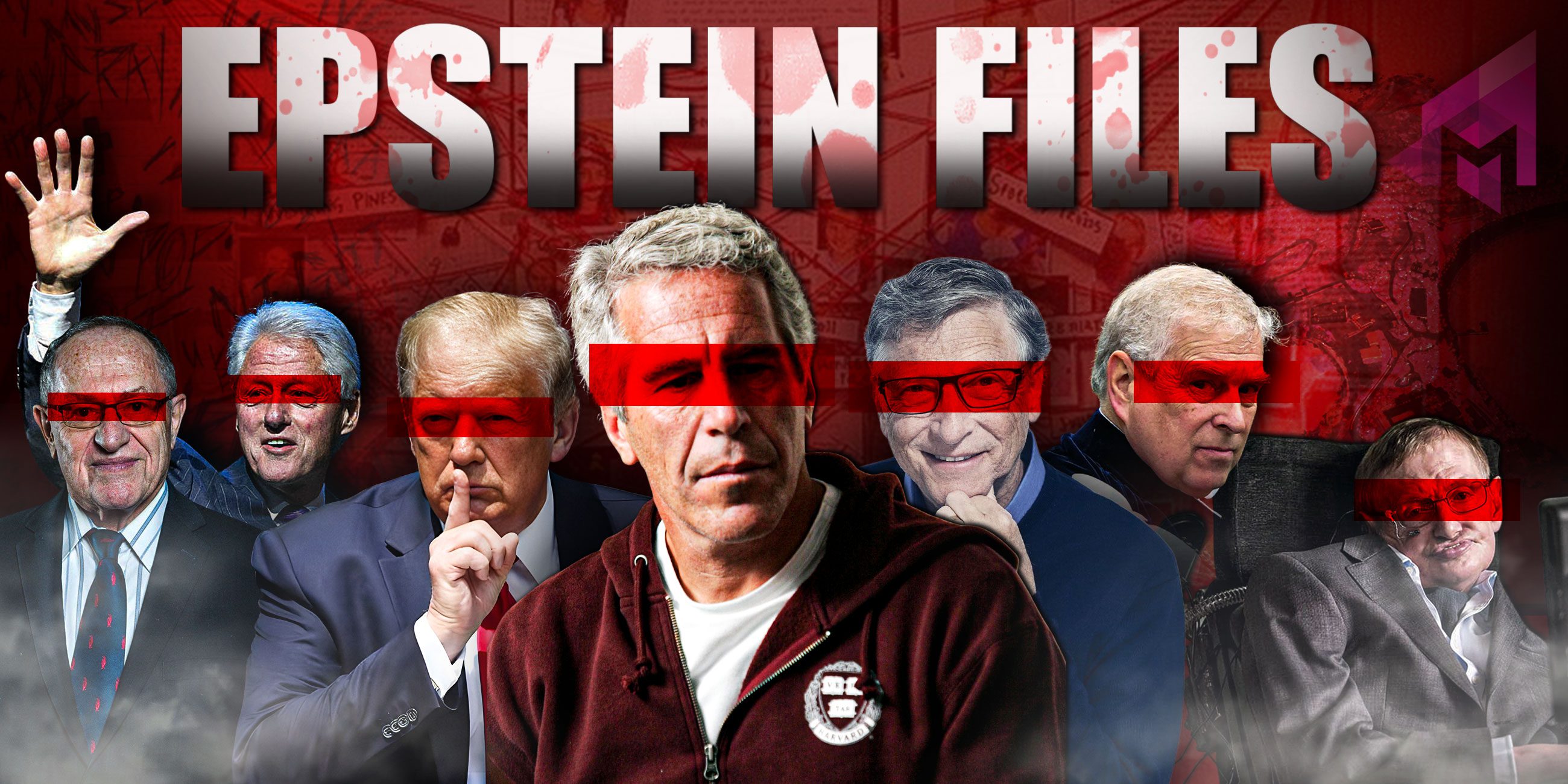
Cut Off the Money: Why Congress Must Bar Criminally Compromised Epstein Elites From Taxpayer Funds
The Epstein scandal was not just a criminal case. It was a window into how power protects itself.
Financiers, politicians, academics, tech executives, and foreign leaders circulated in the orbit of a convicted sex trafficker long after his 2008 plea deal. Years later, billions in U.S. taxpayer money continue flowing into networks that overlap with individuals referenced in released investigative materials.
The American public has a right to ask: If someone has committed crimes connected to trafficking, exploitation, or corruption, or if credible investigative materials show post-conviction association with Jeffrey Epstein should they be eligible for federal contracts, subsidies, or foreign aid relationships? Congress has the authority to answer that question. It just hasn’t.
The Money at Stake
Space and Defense Contractors
SpaceX has received:
• A NASA Commercial Crew contract valued at approximately $4.9 billion.
• Additional NASA and Department of Defense launch obligations that bring total federal awards into the tens of billions of dollars over time, according to federal spending databases.
These are not symbolic grants. These are national security launch systems.
Recent reporting on released Epstein-related materials includes references to emails discussing potential visits involving Epstein and high-profile technology leaders. There is no public evidence confirming criminal conduct tied to those references. But the mere existence of post-conviction contact references raises governance questions when national security contracts are involved. Taxpayers funded those rockets. Taxpayers deserve integrity screening.
Data and Intelligence Systems
Palantir Technologies has received more than $1.9 billion in federal contract obligations since 2008, including work tied to the Department of Defense and intelligence agencies. If any executive of a company operating in classified-adjacent environments were to be convicted of crimes related to exploitation or trafficking, current federal rules allow suspension and debarment. But there is no codified automatic review trigger tied specifically to documented post-conviction association with Epstein. That gap exists.
Electric Vehicle Subsidies and Loans
Tesla received:
• A $465 million Department of Energy loan (repaid early).
• Billions in consumer EV tax credits structured under federal law.
• A Nevada incentive package estimated at $1.3 billion in abatements and infrastructure support over two decades.
These are public policy choices. But Congress has never required disclosure certification from subsidy beneficiaries regarding documented post-conviction contact with convicted traffickers.
Foreign Aid: Billions in Military Financing
Israel
The United States committed $38 billion in military assistance over a ten-year framework (FY2019–FY2028):
• $33 billion in Foreign Military Financing
• $5 billion in missile defense funding
That averages roughly $3.8 billion per year.
Former Israeli Prime Minister Ehud Barak has acknowledged contact with Epstein after Epstein’s conviction and expressed regret. There is no criminal charge tying Barak to Epstein-related crimes. But when billions flow to a government whose former leadership was publicly documented as associating with a convicted trafficker, Congress is within its rights to demand disclosure and integrity review standards.
Current Prime Minister Benjamin Netanyahu has not been charged with crimes related to Epstein. However, the broader Epstein-related political context has intersected with Israeli political discourse. Aid goes to governments, not individuals, but leadership integrity affects diplomatic credibility.
Egypt
Egypt receives approximately $1.3 billion annually in Foreign Military Financing.
Aid to Egypt has historically been conditioned on human rights certifications, though waivers are common. If Congress can condition aid on human rights metrics, it can condition aid on leadership integrity disclosures tied to major criminal investigations.
What the Law Should Do
This is where the challenge becomes more complex. In many elite corruption and trafficking cases, criminal convictions against powerful figures are rare. The absence of conviction does not automatically mean the absence of misconduct; it may reflect evidentiary barriers, prosecutorial discretion, statute limitations, or the inherent difficulty of pursuing well-resourced defendants. If reform depends solely on courtroom verdicts, the accountability mechanism may never meaningfully activate.
That is why Congress must think beyond conviction-based disqualification alone. Instead of presuming guilt, the law can require heightened disclosure, mandatory ethics review, and counterintelligence assessment when credible investigative materials document post-conviction association with a convicted trafficker. This approach respects due process while recognizing a political reality: public trust collapses when billions in taxpayer funds flow to networks repeatedly referenced in one of the most notorious criminal investigations in modern history. Smart oversight does not assume guilt. It assumes risk and manages it accordingly.
A serious reform package would include:
Permanent debarment from federal contracts or subsidies for individuals convicted of trafficking-related offenses.
Mandatory disclosure of post-conviction association with Jeffrey Epstein for senior executives and federal contractors.
Automatic ethics and counterintelligence review for sensitive national security contractors when such associations are documented.
Foreign aid certification requirements confirming that sitting leadership receiving U.S. assistance has not been convicted of exploitation-related crimes.
A publicly accessible eligibility registry codifying debarments.
That is due process. That is constitutional. That is enforceable.
Why Investigation and Codification Matter
The Epstein case fractured public trust in a way few scandals ever have. It was not simply the horror of the crimes that shook the country it was the social architecture surrounding them. Financiers, academics, political figures, technology executives, and global leaders circulated in proximity to a convicted sex offender long after warning signs were public. The perception that formed, whether every individual deserved it or not, was that elite networks operated by a different set of rules. That reputational damage did not stay confined to one man. It spread to institutions.
When the public sees powerful individuals facing few visible consequences while ordinary citizens face swift accountability for far lesser offenses, confidence erodes. And when billions of taxpayer dollars continue flowing into those same institutional ecosystems without enhanced safeguards, it reinforces the belief that status insulates power. The issue is not whether every person referenced in investigative materials is guilty of wrongdoing. The issue is that the current system relies heavily on discretionary judgment, informal norms, and case-by-case interpretation. In high-profile scandals involving wealth and influence, discretion is precisely what the public no longer trusts.
The only way to restore confidence is to reduce discretion and codify consequences. Clear statutory standards, triggered by conviction, by verified post-conviction association, or by documented integrity risks in sensitive national security sectors, remove ambiguity. Codified eligibility rules prevent backroom exceptions. Transparent review mechanisms prevent selective enforcement. Public reporting requirements prevent quiet reinstatement. Institutional repair does not come from outrage; it comes from structure.
If the Epstein era revealed anything, it is that informal social consequences are not enough. Governance must be rule-based, not reputation-based. When public money and public office are involved, standards must be written, objective, and enforceable. That is how trust is rebuilt, not by rhetoric, but by codification.
If someone committed crimes connected to trafficking or exploitation, they should not:
• Hold federal office.
• Receive federal contracts.
• Benefit from federal subsidies.
• Represent foreign governments receiving U.S. military financing without disclosure review.
Congress already bars fraudsters and corrupt contractors. Trafficking-related crimes should carry at least equal disqualification weight.
Closing the Chapter
You do not close a dark chapter by pretending it did not implicate powerful networks. You close it by codifying standards. History is clear on this point. Scandals that involve concentrated power, from political corruption to financial collapse, are not resolved by outrage alone. They are resolved when lawmakers translate public anger into durable rules that prevent repetition. Without structural reform, scandal becomes spectacle. And spectacle fades.
The Epstein case was not only a criminal prosecution; it was an exposure of proximity, proximity between wealth, influence, global leadership, academia, finance, technology, and politics. Whether every individual referenced bears responsibility is not the threshold question for governance. The threshold question is whether our public funding systems contain safeguards strong enough to withstand elite misconduct. If they do not, then reform is not optional, it is necessary.
Codified standards restore symmetry. They replace discretion with criteria. They replace personal judgment with enforceable thresholds. They ensure that taxpayer dollars are not distributed based on access, reputation, or political convenience, but on compliance with clear integrity rules. When eligibility standards are transparent and uniformly applied, power loses its insulation.
Closing this chapter means more than moving on. It means building guardrails so the next network of influence cannot operate in the same gray zones. It means acknowledging that public trust, once fractured, must be rebuilt through structure, not slogans. It means making clear that federal contracts, subsidies, foreign aid relationships, and public office are privileges tied to accountability.
An Epstein-free future is not achieved by erasing the past. It is achieved by ensuring the rules are strong enough that no future scandal can exploit the same weaknesses. Codify the standards. Enforce them without exception. And make it clear that public money will flow only where public integrity stands.
That is how a country closes a dark chapter, not by denial, but by design.
By ensuring that:
• Convicted offenders cannot leverage public money.
• Sensitive contractors face integrity review.
• Foreign aid frameworks include transparency certification.
• National security contracts are insulated from reputational vulnerability.
This is not about vengeance. It is about institutional repair. If Congress is serious about moving beyond the Epstein era, it must draw a clear line: Taxpayer dollars and public office are privileges, not entitlements. Integrity is the price of entry. That is how a country moves forward.




















































Want to join the conversation?
Create an account or sign in to share your thoughts, vote,
and reply to other readers.
Showing 0 of 0 comments
Don't have an account?
Already have an account?