

Free South Florida news from SFL Media covers Broward, Miami-Dade, Palm Beach and Monroe counties, including the Florida Keys. Residents can follow county decisions, housing, transportation, drinking-water protection and hurricane preparedness without a paywall. The coverage area includes mainland coastal communities, island municipalities and public lands within Everglades and Biscayne national parks.
South Florida Free News
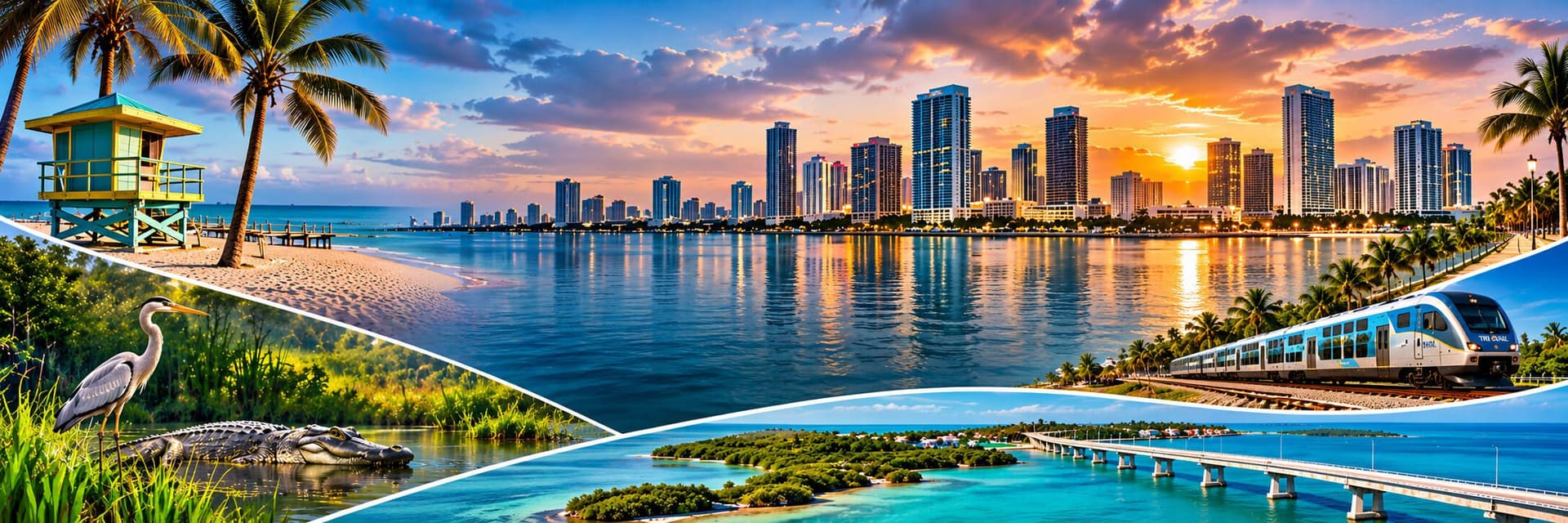
South Florida News and Local Information
The four counties had a combined 6,221,207 residents in the 2020 U.S. Census, calculated from their individual county counts.
What You Should Know About South Florida
- SFL Media’s regional coverage includes Broward, Miami-Dade, Palm Beach and Monroe counties, including the Florida Keys
- Miami-Dade recorded 2,701,767 residents in the 2020 Census, the largest population among these four counties
- Broward voters approved the county charter in 1974, with charter government taking effect in 1975
- Tri-Rail connects Palm Beach, Broward and Miami-Dade, with county transit systems supporting local journeys
- Monroe County uses phased evacuation zones that differ from the zones used for hurricane re-entry
- The Biscayne Aquifer supplies Miami-Dade drinking water and is susceptible to saltwater intrusion
- SFL Media’s regional news coverage is free to read, with no paid subscription or paywall
What Is South Florida Known For?
South Florida is known for its Atlantic coastal communities, the Florida Keys and the protected wetlands of Everglades National Park. SFL Media’s coverage joins Broward, Miami-Dade, Palm Beach and Monroe counties, where mainland transit networks and island evacuation planning create different practical concerns for residents.
According to the U.S. Census Bureau, Miami-Dade County had 2,701,767 residents in 2020. Its transportation department operates Metrobus, Metrorail and Metromover. Those services connect local travel with the wider mainland network, while county decisions on housing and drinking water affect life beyond the transit system.
The Biscayne Aquifer is Miami-Dade’s primary source of drinking water, and the county identifies saltwater intrusion as a threat to that supply. Its conservation measures include efficient plumbing fixtures and irrigation restrictions. Water protection connects the region’s coastal setting with choices made in homes and new construction.
Broward, Miami-Dade, Palm Beach and Monroe also cooperate through the Southeast Florida Regional Climate Change Compact. The partnership works on adaptation, climate resilience and reducing greenhouse-gas emissions. The partnership operates alongside separate county governments responsible for their budgets and public decisions.
Want South Florida news without a paywall? Subscribe to SFL Media free and get local updates in the inbox.
Which Counties Does SFL Media Cover in South Florida?
SFL Media covers Miami-Dade, Broward, Palm Beach and Monroe counties in South Florida. The first three form the mainland portion of this reporting area, while Monroe includes the Florida Keys. The grouping follows county boundaries rather than treating the region as one city or one government.
According to the U.S. Census Bureau, Broward County had 1,944,375 residents in 2020. County transit includes buses, express services, community shuttles and paratransit. The network serves local journeys alongside Tri-Rail connections with the neighboring mainland counties, providing several options for regional commuters.
According to the U.S. Census Bureau, Palm Beach County had 1,492,191 residents in 2020. Palm Tran provides county bus services, including Route 1 along US-1 between Palm Beach Gardens and Boca Raton. Its route directory and schedules help residents plan the local portion of a mainland journey.
- Miami-Dade County – Metrobus, Metrorail and Metromover serve local journeys. Regional coverage also follows county housing decisions and protection of the Biscayne Aquifer, which supplies the county’s drinking water.
- Broward County – County transit and charter government shape regional coverage here. The Governmental Center is on South Andrews Avenue in Fort Lauderdale, and county information is available through 311.
- Palm Beach County – Palm Tran and Tri-Rail serve different parts of residents’ travel needs. The county’s historical account also records railroads opening the area to tourism and interstate trade.
- Monroe County – Florida Keys coverage includes county decisions, island communities and hurricane preparation. Phased evacuation planning requires residents to distinguish evacuation zones from the separate system used for re-entry.
According to the U.S. Census Bureau, Monroe County had 82,874 residents in 2020. Adding that count to the three mainland county totals gives 6,221,207 residents. The combined figure uses a single census year and describes this reporting area, rather than every possible definition of the region.
What Is the History of South Florida’s Regional Connections?
South Florida’s regional connections developed through railroads, public-land protection and cooperation among separate county governments. Palm Beach County’s historical account describes late nineteenth-century rail service opening the area to tourism and interstate trade. Transportation helped connect communities before today’s commuter networks existed.
According to the National Park Service, Everglades National Park was established on December 6, 1947, protecting 1.5 million acres. Its wetlands include sawgrass marshes, freshwater sloughs and mangrove swamps. The park’s creation secured protection for part of the ecosystem alongside the region’s growing communities.
Broward voters approved the county charter on November 5, 1974, according to the county’s charter history. Charter government took effect on January 1, 1975. Those dates mark a change in one county’s governing framework, separate from later projects connecting residents across county boundaries.
Tri-Rail began passenger service on January 9, 1989. The system now connects Palm Beach, Broward and Miami-Dade counties, with schedules and a trip planner available from the operator. Regional rail gives mainland residents a way to cross county lines while connecting with local transportation services.
The four-county climate compact emerged in late 2009 as local governments discussed shared climate threats. Its members collaborate on adaptation and resilience while retaining separate governments. The partnership added regional cooperation to connections already shaped by transportation, conservation and local government.
South Florida
South Florida at a Glance
- 6,221,207
How Does Government Work Across South Florida?
South Florida government operates through separate counties and municipalities rather than one regional commission. In Monroe County, commissioners adopt budgets, levy taxes and consider ordinances at public hearings. The county commission also authorizes bonds for capital improvements and establishes policies carried out through the county administrator.
Monroe’s meetings and agendas portal links current proceedings with supporting packets, recordings and minutes. The county says agendas are posted a week before meetings. Residents following a Keys proposal can read the condensed agenda first, then open the packet for the material supporting an individual item.
Miami-Dade residents can reach non-emergency government assistance through the 311 Contact Center at 311 or 305-468-5900 from outside the county. The center assists callers in English, Spanish and Haitian Creole. Its services include questions about county programs and requests involving potholes, missed garbage collection and other neighborhood concerns.
- Identify the government – Match the concern with its responsible county, municipality or transit operator.
- Find the notice – Confirm Monroe’s listed meeting date and location through its portal.
- Read the packet – Review the supporting material for the Monroe agenda item.
- Check participation – Follow the county’s current instructions for speaking and requesting accommodations.
- Follow the outcome – Use Monroe’s recorded video and published minutes after the meeting.
Broward’s Governmental Center is at 115 South Andrews Avenue in Fort Lauderdale, with county information available through 311. Palm Beach provides a department directory through its county website. Residents should contact the government serving the location for help with a property or public service.
What Local Issues Does SFL Media Cover in South Florida?
SFL Media covers South Florida housing and land use, drinking-water protection and regional transit connections. Miami-Dade’s housing directory, aquifer conservation measures and county transportation services give residents specific places to seek assistance. Reporting follows the decisions affecting those services across Broward, Miami-Dade, Palm Beach and Monroe.
Miami-Dade’s affordable housing resources include developments built or rehabilitated with county funding. Owners maintain their own application requirements and waiting lists. A property appearing in that directory therefore requires a separate availability check, rather than an assumption that a listed apartment can be rented immediately.
Miami-Dade’s water conservation program includes rebates for efficient fixtures in homes and businesses. County rules require Florida-Friendly landscaping in new construction and rights-of-way. These measures connect development and household water use with preserving freshwater supplies under pressure from demand and sea level rise.
Regional transportation coverage includes how county services connect with mainland rail travel. Broward’s transit network includes accessible paratransit, while Miami-Dade provides Special Transportation Service alongside its bus and rail systems. Changes to routes, transfers and accessibility can affect residents making local trips as well as those crossing county boundaries.
Have a South Florida story worth investigating? Send SFL Media a news tip about a local decision or concern.
How Do You Get Around South Florida?
Getting around South Florida by public transportation can involve regional trains, county buses and Miami-Dade’s local rail services. Tri-Rail’s trip planner provides schedules and a fare calculator. A journey involving a county bus connection also requires checking that operator’s route information, rather than relying on the train schedule alone.
Tri-Rail passengers traveling to or from MiamiCentral generally transfer at Metrorail Transfer Station to a connecting train. The operator identifies X301 and X302 express trains as exceptions. Confirm the scheduled service before choosing a connection beyond the main regional rail corridor.
Broward County Transit provides a trip planner, maps, schedules and rider alerts. Palm Tran’s route directory lists bus routes and service information for Palm Beach County. Check each operator’s schedule when combining regional rail with a bus ride at either end of a mainland journey.
Miami-Dade’s transportation department offers trip planning, service alerts and real-time bus and train tracking. Its website lists elevator and escalator status for accessible station connections. These updates help residents assess local travel conditions before leaving for a bus stop or rail station.
How Does South Florida Prepare for Hurricanes and Flooding?
South Florida hurricane preparation depends on the county and location, with Monroe using phased evacuation for the Florida Keys. The county evacuation guide tells residents to identify their zone before an evacuation becomes necessary. Its plan allows instructions to address affected areas without automatically requiring every zone to leave.
Monroe’s evacuation boundaries run from the Lower Keys toward the mainland, using mile markers and road junctions. Re-entry uses Upper, Middle and Lower Keys designations instead. Residents should distinguish the systems when checking an order or preparing documentation for returning after a hurricane.
The Keys evacuation checklist advises choosing a destination and mapping the route before driving. It calls for fuel, medications, important documents and a pet plan. Emergency bus pickup information is provided when evacuation is ordered, so residents needing assistance should check current county instructions.
Miami-Dade’s transportation department manages a stormwater utility supporting flood prevention, water quality and secondary canal maintenance. Public works responsibilities also include swales and roads. Flooding concerns can therefore involve infrastructure maintenance alongside the emergency instructions issued ahead of a storm in the county.
What Parks, Schools and Programs Does South Florida Offer?
South Florida offers Everglades and Biscayne national park programs and separate Broward and Palm Beach school district resources. Park calendars identify scheduled activities, while school directories help families find district information. These institutions serve outdoor recreation and education needs across mainland and coastal communities.
Everglades National Park provides information about hiking, paddling, camping and ranger programs. Its visitor guide also covers entrances and accessibility. Residents planning a day outdoors should check the destination and seasonal safety information, including advice about heat and mosquitoes, before choosing an activity.
Biscayne National Park offers a different setting, with most of the park covered by water. Elliott Key, its largest island, has camping, picnicking, wildlife watching and a hiking trail. The park’s visitor resources include directions, accessibility information and a calendar of programs.
Broward County Public Schools provides school directories, calendars and parent resources through its district website. Its education options include technical colleges and adult education. Families can also find school board meeting information, allowing them to follow district decisions separately from Broward county commission business.
The Palm Beach County school district offers registration information, boundary maps and a Find My School tool. Its family resources also include transportation information and school calendars. Residents checking a child’s school assignment should use district resources rather than infer attendance boundaries from a city’s name.
South Florida at a Glance
South Florida facts and resident resources:
| Topic | Details | Official resource |
|---|---|---|
| Coverage | Broward, Miami-Dade, Palm Beach, Monroe | County resources above |
| Population | 6,221,207 combined, 2020 Census | Census links above |
| Government | Separate county and municipal governments | County portals above |
| Regional transit | Tri-Rail and county systems | Tri-Rail planner |
| Keys preparedness | Phased evacuation | Monroe guidance |
Why Follow South Florida News on SFL Media?
South Florida news on SFL Media is free to read, with coverage of public decisions and resident concerns across Broward, Miami-Dade, Palm Beach and Monroe. Housing, transportation, water protection and hurricane preparation connect that coverage to daily life. Readers can follow these subjects without purchasing a subscription.
A Broward transportation change and a Monroe evacuation instruction affect different communities within the same reporting area. SFL Media brings those concerns together with Miami-Dade and Palm Beach developments. County details identify the responsible agency, location and public decision behind a regional story.
The South Florida news feed displays published reporting, with more stories in the regional archive. Residents can return for subsequent coverage without paying to open each article. County and agency links connect readers with official assistance on subjects ranging from housing to storm preparation.
Want to follow South Florida decisions for free? Subscribe to SFL Media updates through the newsletter form.
Frequently Asked Questions About South Florida
Which counties does this regional coverage include?
South Florida coverage on SFL Media includes Broward, Miami-Dade, Palm Beach and Monroe counties, with the Florida Keys included through Monroe. This grouping connects mainland communities and island municipalities in a reporting area whose residents use different county services, local transit networks and emergency resources. The four county governments remain separate, so a housing question, public meeting or service request should go to the agency responsible for the particular location.
Where can residents follow county meetings?
South Florida residents should use the meeting portal for the county handling the matter, such as Monroe’s linked meetings and agendas page for Keys county business. That portal provides condensed agendas, supporting packets, meeting video and access to published minutes, allowing residents to review a proposal and check the outcome afterward. Confirm the listed date, location and participation instructions before planning to attend, since a regional news page does not replace the county’s meeting notice.
How can residents plan a mainland transit trip?
South Florida mainland transit trips can combine Tri-Rail with Broward County Transit, Palm Tran or Miami-Dade services, depending on the destination and connection. Start with the relevant operator’s current planner and schedule, then check the local bus or rail service needed at either end, including any accessibility or service alerts. For MiamiCentral journeys, Tri-Rail identifies a transfer at Metrorail Transfer Station except on the X301 and X302 express trains, so the selected train matters.