
Vintage Culture Takes Over Pacha New York With Massive 3.5 Hour Affairs Set
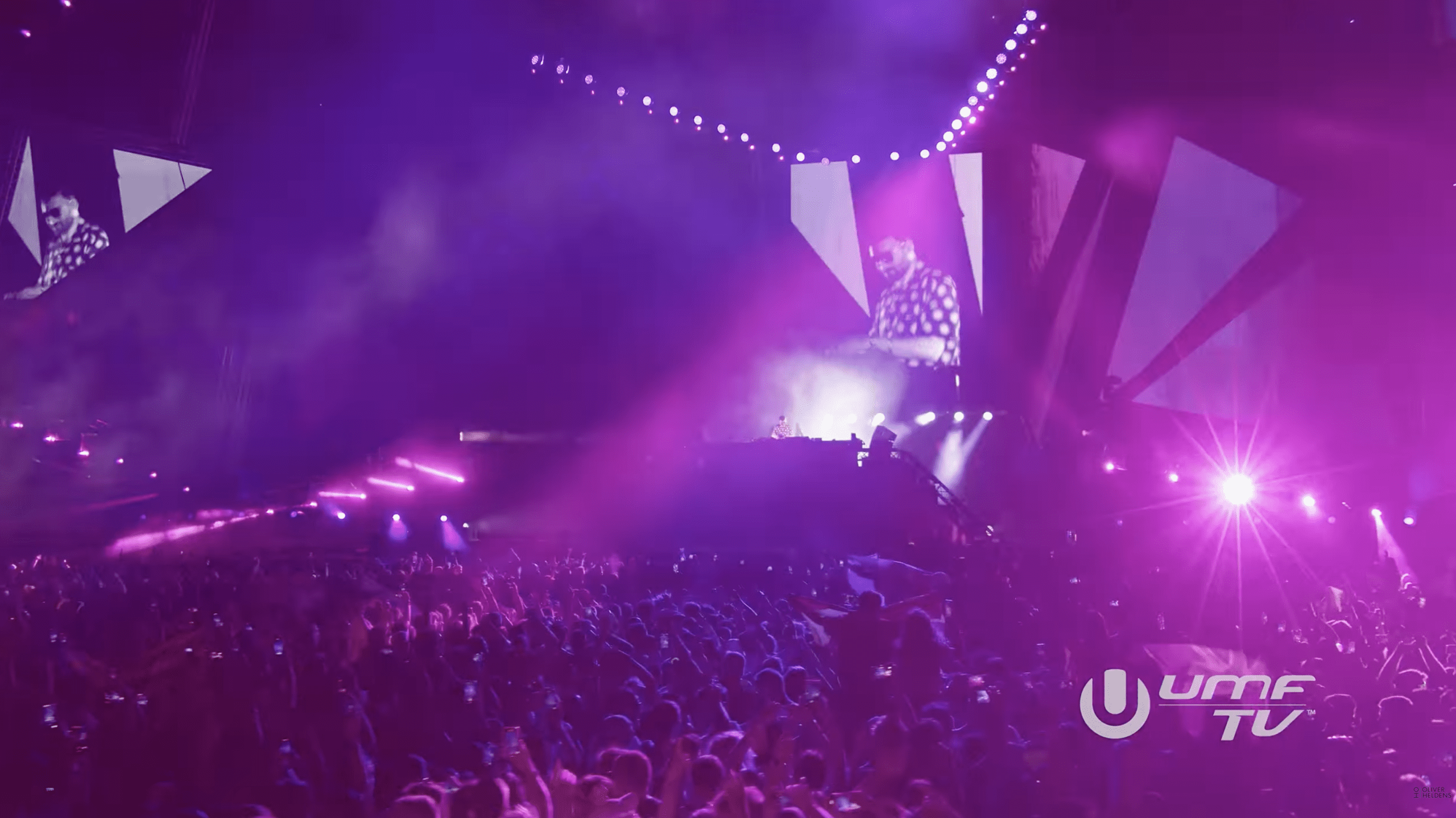
Brazilian electronic music superstar Vintage Culture brought his Affairs concept to Pacha New York for a marathon performance that stretched nearly three and a half hours, moving through deep house, tech house, classic vocal reworks and increasingly aggressive peak hour club music. The full 4K recording, published online July 20, 2026, runs approximately three hours and 28 minutes and offers something increasingly rare in an era dominated by abbreviated festival sets and social media clips, the opportunity to hear an elite DJ construct an entire night from beginning to end.
Vintage Culture’s July 3 appearance was part of an official Affairs takeover at Pacha New York, with Doozie and CID also appearing on the lineup. The sold out event brought one of electronic music’s biggest international artists into one of New York’s most closely watched new nightlife venues, while also marking another major expansion of the Affairs concept Vintage Culture has been developing around the world.
The resulting set is more than a collection of festival ready drops. Vintage Culture spends the night moving between contemporary house production and decades of dance-music history, repeatedly pulling recognizable vocals, classic records and cultural references from the past before rebuilding them for a modern New York dance floor.
Vintage Culture Builds the Set Instead of Rushing It
The most immediate advantage of the performance is its length. Vintage Culture doesn’t need to unload his biggest records during the opening 20 minutes because he has more than three hours to work with. The opening stretch establishes the room through rolling percussion, thick basslines, restrained vocal samples and darker house grooves before the performance gradually becomes more aggressive.
That pacing separates a proper extended club set from the compressed performances that dominate major festivals. A one-hour festival slot often forces a DJ to chase immediate reactions, but a three-and-a-half-hour nightclub performance allows the music to develop naturally. Vintage Culture can introduce a groove, stay inside it, reduce the intensity and then rebuild the room without sacrificing the momentum of the night.
The approach also highlights the musical balance that has helped make Vintage Culture a global crossover act. His selections remain accessible enough for casual listeners to recognize major vocals and familiar melodies, but he can also disappear into long stretches of percussion-heavy house and tech house without relying on a famous hook every few minutes.
From Brazil to the Top Tier of Global House Music
Vintage Culture is the stage name of Brazilian DJ and producer Lukas Ruiz, whose career has grown from Brazil’s electronic scene into international festival headlining, global club residencies and major releases. His sound has evolved alongside that rise, incorporating elements of deep house, tech house, melodic electronic music and vocal-driven club records while maintaining an emphasis on the groove and pacing of traditional DJ sets.
His career has increasingly expanded beyond simply touring as a headline performer. In 2025, Vintage Culture launched Affairs as his own label and creative platform, giving him a larger vehicle for developing music, events and collaborations around his particular interpretation of contemporary house music.
By 2026, Affairs had developed into a broader international event concept. Vintage Culture established an Affairs residency at Pacha Ibiza before bringing the project across the Atlantic to New York, connecting two cities with enormous histories in global nightclub culture.
Affairs Moves From Ibiza to New York
The Pacha New York performance arrived almost immediately after Vintage Culture’s Affairs residency in Ibiza. The Ibiza run featured lineups with artists including Eric Prydz, WhoMadeWho, Franky Rizardo and Mochakk, placing the project alongside some of the strongest names operating across contemporary house, melodic electronic music and underground club culture.
Rather than building Affairs exclusively around enormous stage production, the concept has emphasized the relationship between the DJ, the music and the dance floor. That philosophy becomes particularly apparent during the New York recording because the extended runtime allows Vintage Culture to demonstrate how he actually controls a club rather than simply presenting a sequence of his most commercially recognizable records.
The July 3 New York event ran during Pacha’s first summer of operation and ultimately sold out. That timing gave the performance additional significance. Vintage Culture wasn’t simply arriving for another American tour date. He was bringing a developing international club concept into a venue attempting to establish its own place in the next chapter of New York nightlife.
Pacha New York Opens a New Chapter in the City’s Nightlife
Pacha New York opened in June 2026 at 140 Stewart Avenue in Brooklyn, bringing the internationally recognized Pacha brand back into the New York nightlife market. The venue occupies the site associated with the former Brooklyn Mirage, placing enormous expectations on the operation from the beginning.
The location carries both cultural significance and baggage. The Brooklyn Mirage became one of America’s most recognizable electronic-music venues, but its later years were overshadowed by operational controversies and safety concerns. Pacha’s arrival therefore represents more than a simple rebranding of a nightclub. The operators are attempting to establish a new identity for one of the city’s best known electronic-music properties while convincing artists and fans that the venue can begin a different chapter.
Vintage Culture arrived only weeks into that transition, making the full recording an interesting snapshot of both an artist and a venue in periods of expansion. Pacha New York was establishing itself while Vintage Culture was simultaneously exporting Affairs from Ibiza into another major global nightlife market.
Vintage Culture Turns Familiar Music Into Club Weapons
One of the defining characteristics of the set is Vintage Culture’s ability to use recognizable vocals without allowing the performance to become a nostalgia exercise. Instead of simply playing familiar records, he repeatedly extracts recognizable elements and places them inside contemporary house and tech house arrangements.
Around 47 minutes into the recording, a “Billie Jean” rework introduces Michael Jackson’s instantly recognizable vocal world inside a significantly darker club framework. Roughly ten minutes later, Vintage Culture reaches toward Soul II Soul’s “Back to Life,” again taking a familiar vocal reference and repositioning it over a modern dance-floor foundation. By approximately 1:02 into the set, the classic “house is a feeling” message emerges, reinforcing the performance’s connection to earlier generations of club culture.
These selections work because Vintage Culture doesn’t treat them as interruptions. The vocals become part of the architecture of the set, providing moments of immediate recognition between longer stretches of less familiar underground material. Instead of abandoning the groove to deliver a nostalgic singalong, he uses nostalgia to strengthen the groove.
The Paradise Garage Tribute Connects the Set to New York’s Club History
One of the performance’s most interesting moments arrives at approximately 1:18, when the set turns toward the legacy of Paradise Garage. For any house DJ performing in New York, that reference carries considerable historical weight.
Paradise Garage and legendary DJ Larry Levan helped establish ideas about sound systems, extended DJ performances, musical freedom and dance-floor community that would influence generations of house and electronic music. The club operated in an entirely different era from the internationalized electronic-music industry surrounding Pacha and Vintage Culture today, but the musical lineage between those worlds remains unmistakable.
That makes the tribute particularly effective. A Brazilian DJ performing inside a globally recognized nightclub brand in Brooklyn pauses within a 2026 set to acknowledge one of the institutions that helped define New York dance culture decades earlier. The moment gives the performance a sense of place that many touring DJ sets lack. Vintage Culture isn’t simply playing his standard show in New York; portions of the set appear deliberately constructed around the musical history of the city hosting him.
Classic Vocals Keep Resetting the Dance Floor
As the performance moves deeper into its second half, Vintage Culture continues using recognizable vocals as strategic energy resets. Around 1:34, the “Been a Long Time” vocal emerges before the set returns to heavier percussion. At approximately 1:57, The Killers’ “Somebody Told Me” is transformed into a peak-time electronic rework, taking one of the most recognizable alternative-rock vocals of the 2000s and dropping it into an entirely different musical environment.
That type of selection can easily become gimmicky when recognition is the only objective, but Vintage Culture uses familiar material more carefully. After extended periods of groove-driven house, a recognizable vocal gives the crowd an immediate point of connection. Once that connection has been established, the set can move back toward darker or less familiar territory.
The technique helps explain Vintage Culture’s unusually broad appeal. He can perform for serious house audiences without completely abandoning listeners who came to hear something recognizable. The set continually moves between those worlds rather than choosing one over the other.
The Final Hour Pushes Into Peak Time Territory
By the time the performance crosses the two-hour mark, Vintage Culture has established enough musical territory to begin pushing the room significantly harder. Around 2:12, a strange “micro dose” spoken-word sequence appears over minimal electronic production, adding another unusual vocal texture before the performance moves into a more melodic section around 2:20.
By approximately 2:31, the set begins its final sustained peak time movement. The percussion becomes more forceful, the transitions become increasingly direct and the overall energy shifts away from the patient development of the opening hours toward the release expected from the closing stretch of an extended nightclub performance.
Around 2:48, an “I Came to Party Hard” vocal captures the increasingly aggressive mood. By approximately 3:10, the recording reaches another spoken-word passage built around being “born to be a DJ,” an appropriate statement near the end of a performance fundamentally centered on the relationship between the person selecting the records and the crowd responding to them.
Why Three and a Half Hour DJ Sets Still Matter
The explosion of electronic music on streaming platforms and social media has created a strange contradiction. Fans have access to more DJ performances than ever before, but many of the most visible performances have become shorter, faster and increasingly optimized for isolated moments.
Festival schedules often limit artists to approximately an hour. Social platforms reward individual drops and instantly recognizable hooks. Short form video removes tracks from the larger context of a performance altogether. The result can reduce DJing to a highlight reel when the art form historically depended on something much more difficult: controlling a room over time.
A three-and-a-half-hour set operates under completely different rules. No DJ can realistically maintain maximum intensity for more than three consecutive hours without exhausting the dance floor. Energy has to rise and fall. Familiar records have to be balanced against unfamiliar selections. Transitions have to accomplish more than simply connecting two tracks; they have to move the crowd between different emotional and rhythmic environments. That is what makes the Pacha recording compelling. It documents Vintage Culture doing the actual work of an extended nightclub DJ set rather than presenting only the most commercially explosive moments.
Vintage Culture Lives Between the Underground and the Mainstream
Vintage Culture’s international success becomes easier to understand when hearing him across a performance of this length. He occupies a difficult space between underground credibility and mainstream accessibility, two audiences that do not always want the same thing from a DJ.
His sets contain enough recognizable vocals and dramatic moments to connect with large festival audiences, but he remains willing to spend substantial periods inside darker, percussion-driven house music. He can move from Michael Jackson and The Killers vocal references into stripped-down tech house without making the transitions feel completely disconnected.
That versatility has become one of his most valuable strengths. Vintage Culture isn’t purely an underground house DJ, and he isn’t simply a commercial EDM headliner. His sound operates between those categories, allowing him to headline festivals while still delivering the kind of extended club performance captured at Pacha New York.
Vintage Culture Delivers a Set Built for the Entire Night
The Pacha New York recording ultimately works because it preserves something that electronic-music culture has historically struggled to document: the progression of an entire night. This isn’t a 30 second phone clip of the biggest drop, a festival recap or a carefully edited promotional video. Across approximately three hours and 28 minutes, listeners can hear Vintage Culture establish the room, gradually increase the pressure, introduce classic vocals, acknowledge New York’s dance music history, experiment with spoken-word samples and eventually drive the performance into its final peak hour stretch.
For Pacha New York, booking Vintage Culture during the venue’s opening summer was a major statement. For Vintage Culture, bringing Affairs to New York immediately after developing the concept at Pacha Ibiza represented another step toward turning the project into an international club brand.
For everyone else, the full recording offers the simplest explanation for why Vintage Culture remains one of the biggest names in modern house music. The individual tracks matter, but the real performance is what happens between them.
Sources
Vintage Culture @ Pacha New York City, Affairs 2026 — Full 4K Set
https://www.youtube.com/watch?v=TDuFnUAo4II
Pacha New York — Vintage Culture, July 3, 2026
https://pacha-nyc.com/event/vintage-culture-03-07-2026
Pacha — Vintage Culture Artist Profile
https://pacha.com/artist/vintage-culture
The Nocturnal Times — Vintage Culture Brings Affairs Concept to Pacha NYC
https://www.thenocturnaltimes.com/vintage-culture-brings-his-affairs-concept-to-pacha-nyc-following-ibiza-residency/
Ibiza Spotlight — Affairs at the Heart of Vintage Culture’s Pacha Ibiza Residency
https://www.ibiza-spotlight.com/magazine/2026/06/affairs-heart-vintage-culture-swoons-pacha-ibiza
The New Yorker — At Pacha New York, an Infamous Nightclub Is Reborn
https://www.newyorker.com/magazine/2026/07/06/at-pacha-new-york-an-infamous-night-club-is-reborn







































Want to join the conversation?
Create an account or sign in to share your thoughts, vote,
and reply to other readers.
Showing 0 of 0 comments
Don't have an account?
Already have an account?