
Japanese Fans’ Tradition of Cleaning Up After Themselves at the World Cup Continues to Inspire the World…A Truly Viral “Feel-Good” Story
We here at SFL.media will highlight a sad difference between the cultures of Japan and the United States. Who knew it would take sports to shed light for the whole world to see?
Every four years, the FIFA World Cup delivers unforgettable moments. There are stunning goals, shocking upsets, controversial referee decisions, and emotional celebrations. But one of the most remarkable traditions associated with the tournament doesn’t happen on the field at all. It happens after the final whistle, when most fans are heading for the exits.
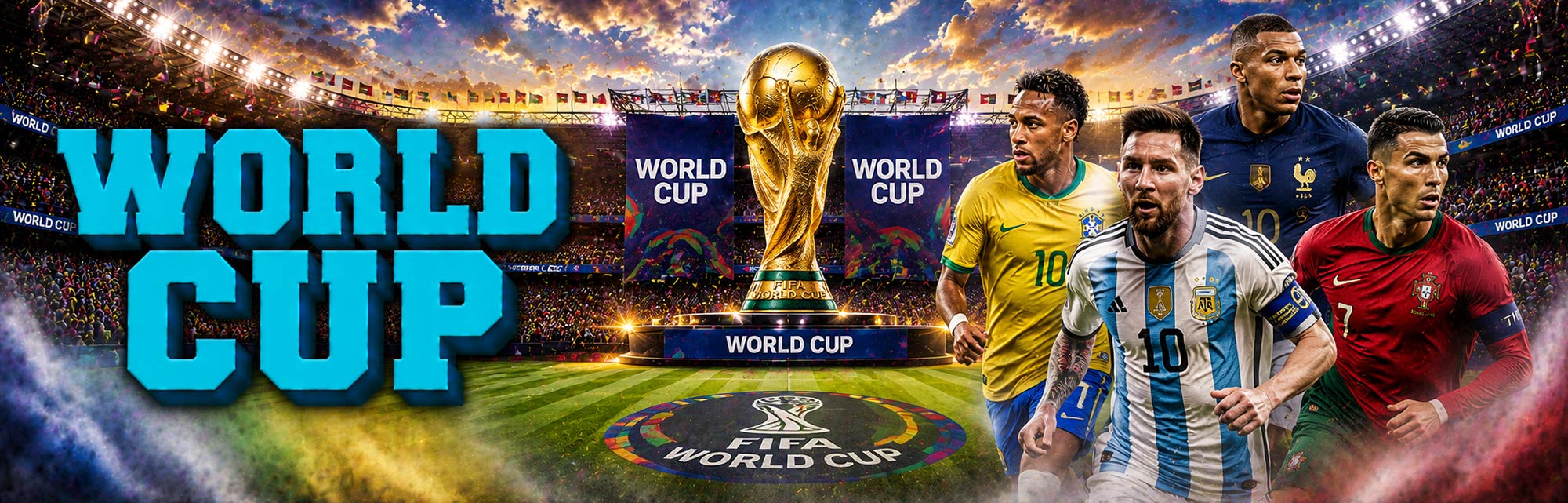
Japanese supporters once again captured the world’s attention during the 2026 FIFA World Cup by staying behind after matches to clean up the stadium sections where they had been sitting. Following Japan’s thrilling 2-2 draw against the Netherlands in Texas, thousands of Japanese fans remained in the stands collecting trash, filling blue garbage bags, and leaving the stadium spotless. What has become a familiar sight at World Cups around the globe continues to earn admiration from soccer fans and non-soccer fans alike.
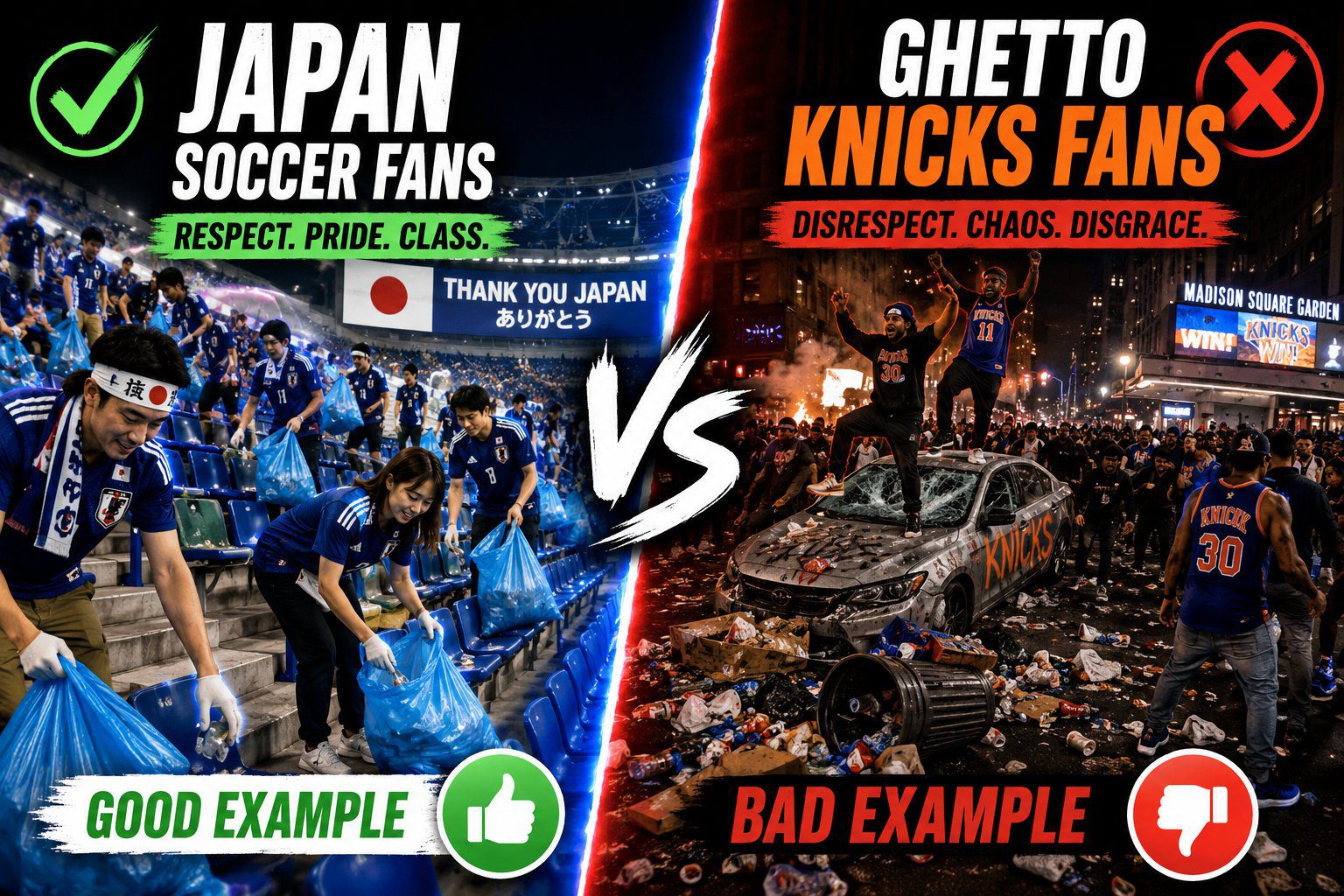
For many people seeing the videos for the first time, the reaction is usually the same: disbelief. In an era where many sporting events end with mountains of trash left behind for stadium workers to clean up, watching fans voluntarily stay behind to pick up litter seems almost unimaginable. Yet for Japanese supporters, it is simply a normal part of attending an event.
This is Nothing New. The Japanese Have Been Doing This for Years.
What makes the story even more remarkable is that this tradition is not new. Public attention was first drawn to Japanese fans cleaning stadiums during the 1998 FIFA World Cup in France, which was Japan’s first-ever World Cup appearance. Since then, the practice has been repeated at every tournament, from Germany to South Africa, Russia, Qatar, and now the United States, Canada, and Mexico in 2026.
The roots of this behavior run deep within Japanese culture. Children in Japan are taught from an early age to take responsibility for shared spaces. Unlike many schools around the world that rely heavily on janitorial staff, Japanese students often participate in cleaning classrooms, hallways, and common areas themselves. The practice reinforces the idea that maintaining a clean environment is everyone’s responsibility, not someone else’s job. That lesson follows many Japanese citizens into adulthood.
One Japanese fan interviewed after the Netherlands match explained it simply: “We have to think about everyone.” Another described being taught that when you leave a place, you should try to leave it cleaner than you found it. These are values rooted in collective responsibility and respect for others.
A Tradition That Extends Beyond
The tradition extends beyond the fans. Japanese national team players have also become known for leaving locker rooms immaculate after matches. During previous World Cups, Japanese players famously cleaned their dressing rooms and left handwritten thank-you notes for tournament staff, even after heartbreaking defeats. In Qatar during the 2022 World Cup, Japanese supporters left messages of appreciation in multiple languages on their garbage bags while cleaning the stadium.
This year’s tournament produced another memorable moment when former NFL quarterback and current Fox Sports correspondent Jameis Winston joined Japanese supporters in cleaning up after the Japan-Netherlands match. Videos of Winston helping collect trash quickly spread across social media, earning praise from fans who viewed it as a gesture of respect toward another culture.
Social media users across the world have responded with admiration. Reddit discussions, sports forums, and comment sections were filled with praise for the Japanese supporters’ discipline and sense of community. Many users pointed to the cleanup effort as proof that cultural values learned early in life can have a lasting impact on society. Others contrasted the scenes with the aftermath of sporting events elsewhere, where cleanup responsibilities are often left entirely to stadium workers.
The most powerful aspect of the tradition may be its simplicity. Japanese fans are not cleaning up for publicity. They have been doing it for nearly three decades, long before smartphones and viral social media videos made such moments global news. The cleanup effort is not a performance. It is simply a reflection of values that emphasize respect, gratitude, and responsibility.
In a world often dominated by stories of conflict, division, and bad behavior, the sight of thousands of soccer fans quietly picking up trash after a match offers a refreshing reminder that small acts of kindness and civic responsibility still matter. The scoreboard may determine who wins the game, but year after year, Japanese supporters continue to show the world what good sportsmanship looks like.
To see the other side of the coin, we go from Dallas to New York City, as Knicks fans destroy a city. And the worst part is that they do it at the behest of the mayor of the city, who had the police “stand down” and let the entire celebration be a “free-for-all” of violence, arson, destruction, chaos, and garbage everywhere!
Mamdani’s NYC Collapses as Knicks Fans Take Control of Times Square
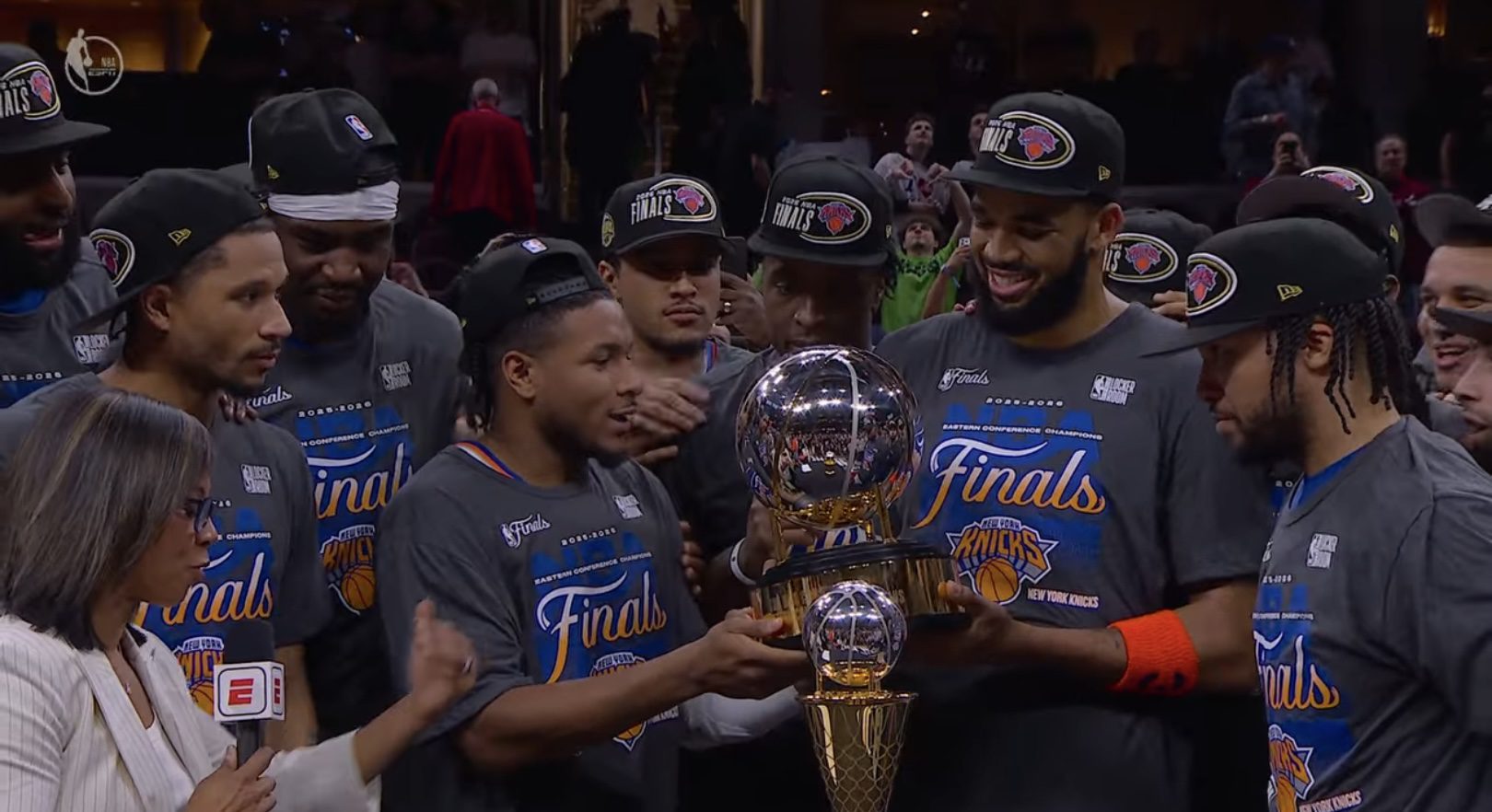
If there was ever a moment that perfectly captured the state of New York City in 2026, it may have been what happened after the New York Knicks finally won their first NBA championship in 53 years. What should have been a historic celebration quickly turned into a spectacle that left many Americans asking a simple question: Who is actually in charge of New York City?
The Knicks’ championship victory over the San Antonio Spurs unleashed a tidal wave of emotion throughout the five boroughs. For a fanbase that has endured decades of heartbreak, bad ownership decisions, playoff collapses, and endless ridicule, the long-awaited championship felt like a dream come true. Millions of fans poured into Manhattan to celebrate, turning Midtown and Times Square into a sea of orange and blue.
But the celebration also revealed how quickly public order can disappear when massive crowds decide the rules no longer apply.
Viral Videos all Over the Internet Embarrass the US
Videos circulated across social media showing fans climbing on vehicles, flooding streets, blocking traffic, setting off fireworks, and taking over large sections of Midtown Manhattan. In some locations, crowds reportedly attempted to flip vehicles, while others danced on top of buses and trucks. Earlier playoff celebrations had already resulted in vandalism, fires, and multiple arrests as authorities struggled to keep up with the sheer size of the crowds.
Perhaps the most striking images came not during the celebration itself, but after the crowds dispersed.
As daylight returned to parts of Manhattan, streets were reportedly littered with mountains of trash. Plastic bottles, food containers, beer cans, paper products, confetti, broken signs, and discarded clothing were scattered throughout sections of Midtown. Photos and videos shared online showed sidewalks and roadways covered in debris left behind by revelers who had spent the night celebrating the Knicks’ historic victory.
Conservative news outlet Gateway Pundit described the aftermath as resembling a “dystopian city,” pointing to footage of overflowing garbage, debris-covered streets, and public spaces that appeared completely overwhelmed by the crowds. The comparison quickly spread across social media as critics contrasted the images with New York’s reputation as one of the world’s most iconic cities.
Whether the term “dystopian” is fair may depend on one’s political perspective. Large sporting celebrations often leave significant cleanup challenges in their wake. Similar scenes have occurred following championship celebrations in cities ranging from Philadelphia to Los Angeles. However, critics argued that the scale of the mess reflected deeper concerns about civic pride, public behavior, and leadership in New York City.
The images also created a stark contrast with another sports story that recently captured international attention. During the FIFA World Cup, Japanese soccer fans once again made headlines by staying behind after matches to clean up entire sections of stadiums before leaving. While New York sanitation workers faced the task of removing mountains of trash after the Knicks celebrations, Japanese supporters were being praised worldwide for leaving venues cleaner than they found them.
For critics of Mayor Zohran Mamdani, the optics could not have been worse.
Does the Mayor Even Care? Why so Nonchalant About All of This?
Mamdani, one of America’s most high-profile progressive politicians, has promoted a vision of New York focused on public services, community investment, and government solutions. Yet the viral images of garbage-strewn streets gave opponents a powerful visual symbol of what they view as the city’s growing disorder. Social media users flooded platforms with side-by-side comparisons showing Times Square packed with jubilant fans one night and covered with debris the next morning.
At the same time, supporters of the mayor argued that no city on Earth could host celebrations involving hundreds of thousands, if not millions, of people without generating significant amounts of waste. They pointed out that sanitation crews immediately began cleanup operations and that large-scale public events routinely leave similar conditions behind.
Still, perception often matters more than reality in politics.
The visual of one of the world’s most famous intersections buried under piles of garbage proved difficult to ignore. For many Americans watching from outside New York, the images seemed to reinforce existing narratives about urban decline, public disorder, and a city struggling to maintain basic standards of cleanliness and control.
Meanwhile, the mayor’s lengthy appearance during the championship festivities became another point of criticism. Opponents accused him of embracing the spotlight, while others focused on the practical challenges created by the massive celebration.
Lost in much of the political debate was the simple fact that Knicks fans had finally received the championship they had waited more than half a century to see. For one unforgettable night, basketball mattered more than politics, ideology, or policy disputes.
Yet the aftermath reminded everyone that celebrations have consequences.
The championship parade and fan gatherings produced unforgettable memories, historic photographs, and emotional moments that New Yorkers will cherish for generations. They also produced images of overflowing garbage, damaged property, and streets that some observers compared to scenes from a post-apocalyptic movie.
Whether those images represent a temporary consequence of an extraordinary celebration or evidence of deeper problems facing New York City remains a matter of fierce debate.
What is certain is that the photographs of Times Square covered in trash became almost as viral as the videos of Knicks fans celebrating in the first place. And for Mayor Mamdani, those images may end up lasting far longer than the championship party itself.
What do you think? Which culture would you prefer to be a part of?


















































Want to join the conversation?
Create an account or sign in to share your thoughts, vote,
and reply to other readers.
Showing 0 of 0 comments
Don't have an account?
Already have an account?