
Elon Musk Faces Potential Criminal Charges After Bipartisan Election Board Finds Probable Cause for Alleged Voter Bribery
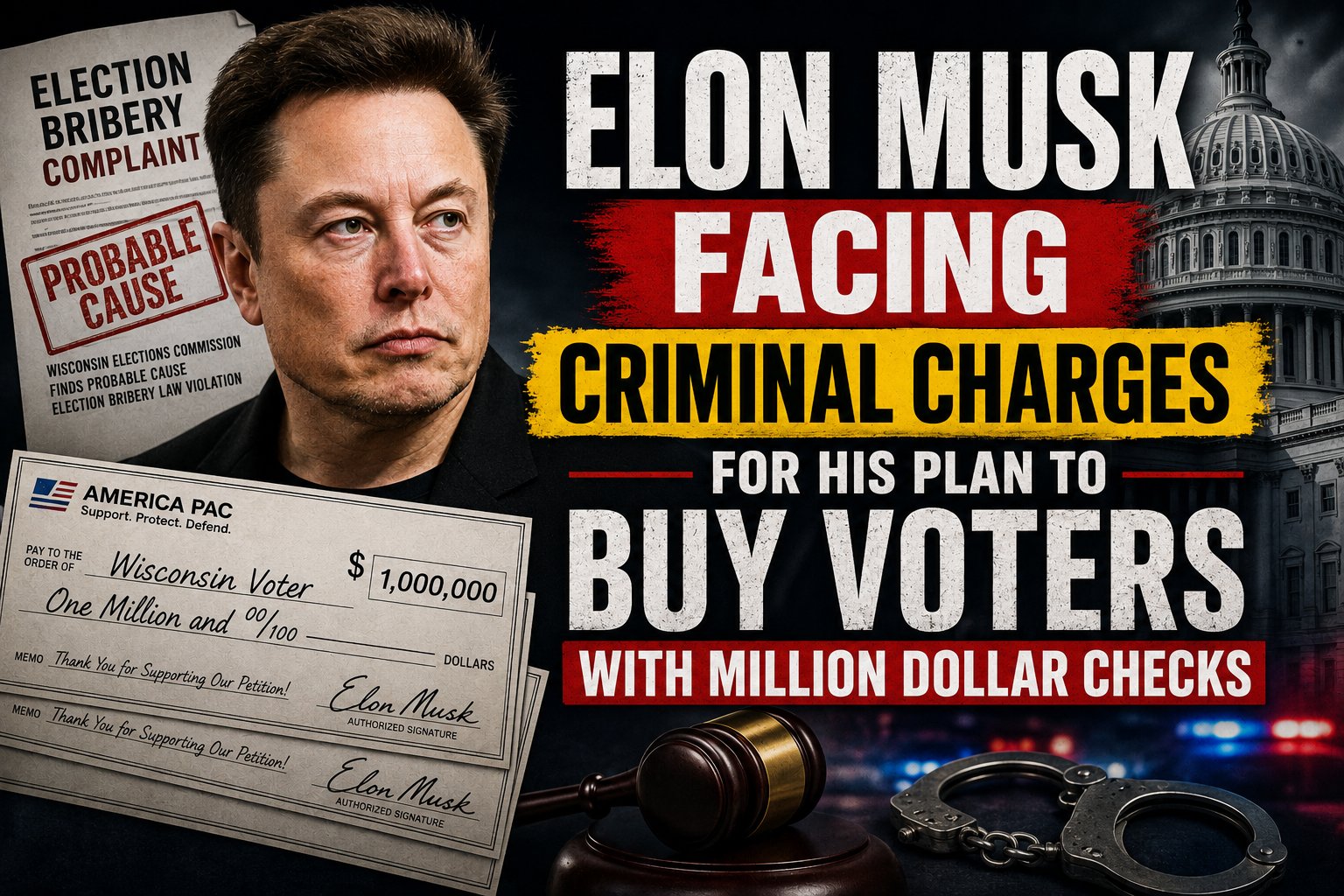
The legal scrutiny surrounding Elon Musk’s controversial $1 million voter giveaways has entered a new phase after Wisconsin’s bipartisan elections commission concluded there is probable cause to believe the billionaire violated the state’s election bribery law. In a 5-1 vote, the Wisconsin Elections Commission referred two complaints against Musk to the Brown County District Attorney, who now has 40 days to determine whether criminal charges should be filed. The referral marks the first time a bipartisan government body has formally concluded there is sufficient evidence that Musk may have committed election-related crimes stemming from his cash giveaways during Wisconsin’s 2025 Supreme Court election. (AP News)
A Political Stunt That Became a Criminal Investigation
What began as an unprecedented campaign tactic has evolved into one of the highest profile election law cases involving a private citizen in modern American politics. Musk, through his political organization America PAC, spent tens of millions of dollars attempting to influence Wisconsin’s 2025 Supreme Court race. Among the campaign’s most controversial tactics were public promises of $1 million payments to select voters and $100 incentives tied to petition drives opposing what Musk described as “activist judges.”
At a campaign rally in Green Bay just days before the election, Musk personally handed oversized $1 million checks to voters while urging participation in the election supporting conservative candidate Brad Schimel. Schimel ultimately lost decisively to Democratic backed Judge Susan Crawford despite Musk’s massive financial investment in the race.
Why Investigators Believe the Giveaways May Have Broken the Law
The Wisconsin Elections Commission’s finding centers on one key legal question: whether Musk offered something of value in exchange for voting.
Wisconsin law prohibits offering or promising “anything of value” to induce someone to vote, register to vote, or participate in an election. According to the commission’s findings, Musk’s own social media posts offering $1 million payments “to individuals who voted” in the Wisconsin Supreme Court election constituted probable cause that the payments were intended to induce voter participation, potentially satisfying the elements of the state’s election bribery statute. (https://www.wbay.com)
The commission’s decision is significant because it came from a bipartisan body evenly divided between Republicans and Democrats, with only one commissioner dissenting.
A Strategy Years in the Making
The Wisconsin controversy did not emerge in isolation. Musk first unveiled the million dollar giveaway strategy during the closing weeks of the 2024 presidential election. America PAC announced it would award $1 million each day to registered voters in swing states who signed petitions supporting the First and Second Amendments.
The campaign immediately drew warnings from election law experts and the U.S. Department of Justice, who questioned whether paying registered voters violated federal election laws. Philadelphia District Attorney Larry Krasner filed suit seeking to halt the program, arguing it amounted to an illegal lottery and unlawful inducement aimed at voters.
During that litigation, Musk’s attorneys acknowledged that the recipients were not selected randomly. Instead, they argued the winners had been pre-selected as paid spokespeople for America PAC rather than lottery winners, an explanation that allowed the program to continue through Election Day but generated new allegations that the public had been misled about how winners were chosen. (The Washington Post)
Multiple Legal Fronts Continue to Grow
The Wisconsin criminal referral is only one of several legal challenges Musk continues to face over the giveaway programs. A civil lawsuit filed by the Wisconsin Democracy Campaign seeks a permanent injunction preventing Musk and America PAC from offering similar cash incentives in future elections, alleging the payments violated state bribery laws and constituted unauthorized lotteries. (AP News)
Meanwhile, federal litigation in Texas continues over the 2024 presidential election giveaways. Plaintiffs allege America PAC falsely advertised the sweepstakes as random drawings while secretly selecting recipients through a separate vetting process. A federal magistrate judge has recommended allowing portions of the fraud claims against Musk to proceed, although other claims were dismissed and the case remains pending before a district judge.
Musk’s Defense: Protected Political Speech
Musk’s legal team has consistently maintained that the giveaways constituted constitutionally protected political speech rather than illegal vote buying. His attorneys argue the petition campaigns were designed to encourage civic engagement and build grassroots support for constitutional issues rather than purchase votes for any particular candidate. They have also argued that recipients were selected as representatives or spokespeople for the organization, not as random prize winners or individuals paid simply to cast ballots. Those arguments persuaded courts to allow the giveaways to proceed during both the 2024 presidential campaign and the Wisconsin Supreme Court race, though those rulings did not determine whether the conduct ultimately violated election laws.
What Happens Next
The criminal investigation now shifts to Brown County District Attorney David Lasee. Under Wisconsin procedure, prosecutors have 40 days to review the Elections Commission’s findings and decide whether criminal charges should be filed. If charges are brought, the case would become one of the most significant election bribery prosecutions involving a major political donor in recent American history.
It is important to note that the Elections Commission’s finding of “probable cause” is not a determination of guilt. It means the commission concluded there is sufficient evidence to justify further criminal review, while the ultimate decision on charges rests with prosecutors and any criminal liability would have to be proven in court.
A Landmark Test of Election Law
Regardless of whether prosecutors ultimately pursue charges, the case is poised to become a landmark test of where courts draw the line between protected political advocacy and unlawful financial inducements directed at voters. The outcome could shape future campaign practices involving wealthy political donors, super PACs, and independent organizations seeking to mobilize voters through financial incentives. It may also establish important legal precedent regarding how election bribery statutes apply in an era of increasingly unconventional political campaigning.


























Want to join the conversation?
Create an account or sign in to share your thoughts, vote,
and reply to other readers.
Showing 0 of 0 comments
Don't have an account?
Already have an account?