

Consumer Warning: Cash App Freezes Funds and Suggests Police Reports, The Hidden Risk in “Instant Money”
When Americans send money through peer-to-peer apps, they expect speed, simplicity, and certainty. What many are discovering instead is a system where transactions can be halted without warning, funds can become temporarily inaccessible, and support responses can escalate routine financial activity into something that feels far more serious. A recent experience involving a long-time member of Cash App illustrates the growing tension between financial technology innovation and consumer protection, and why reliance on these platforms for urgent payments carries real risk.
When a Personal Emergency Payment Becomes a Compliance Case
The situation began with a simple act of support. A modest payment, roughly $150, was sent to a friend dealing with the death of a parent and an immediate financial need. There was nothing commercial about the transaction, no pattern of suspicious behavior, and no indication that either party had ever engaged in fraudulent activity. Yet the transfer did not go through normally.
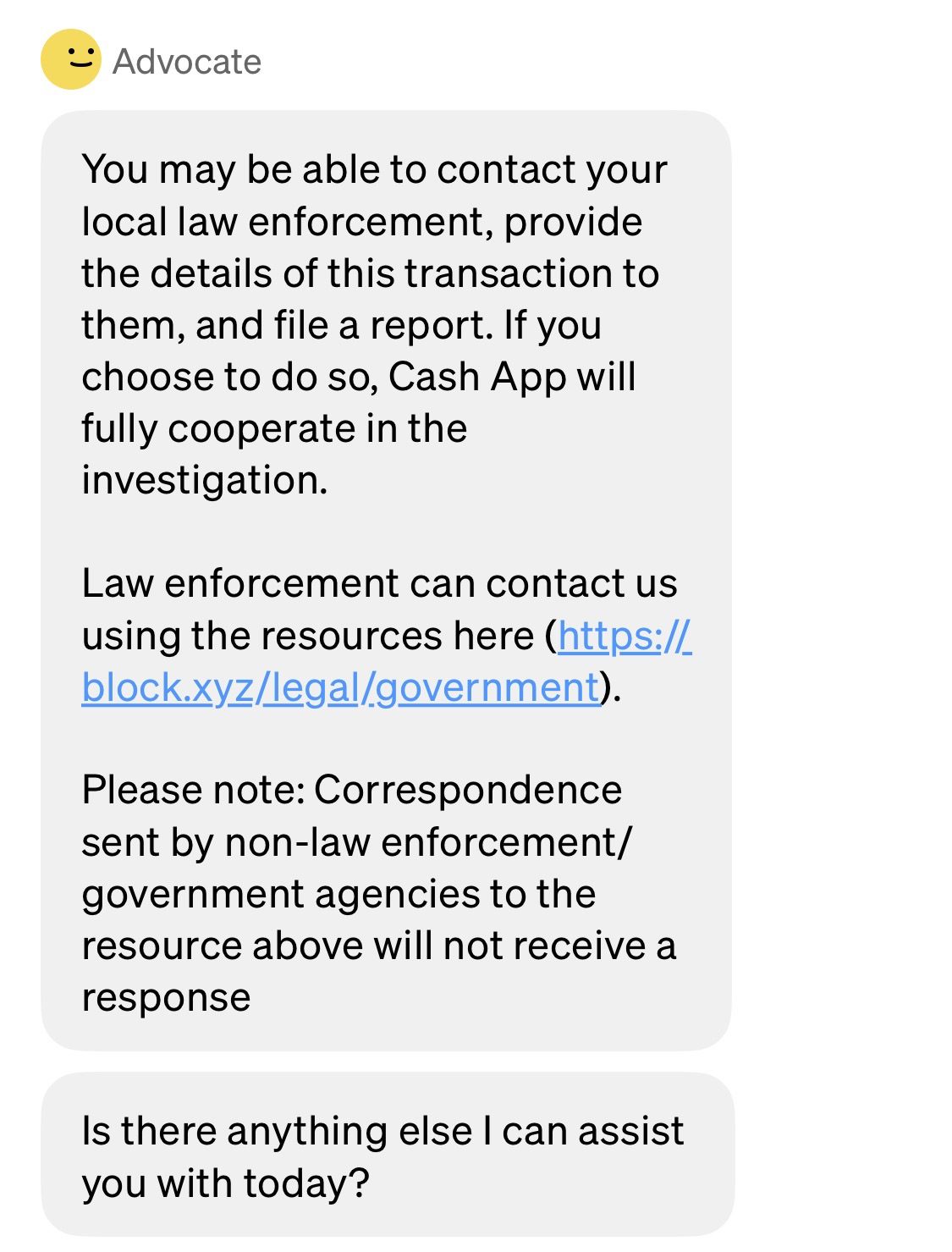
Instead, the platform froze the funds and warned the sender that the transaction could be held for up to 14 days while it investigated potential links to international financial crime. In follow up messaging, support suggested the user could consider contacting local law enforcement and filing a report.
For many consumers, that kind of escalation feels deeply disproportionate. It introduces anxiety, confusion, and a sense that normal financial behavior is suddenly being interpreted through the lens of criminal enforcement, even when no allegation has actually been made.
The Rise of Algorithmic Banking Without the Safeguards
The reality is that modern fintech platforms operate in a regulatory environment that is far more aggressive than most users realize. Anti-money-laundering rules, fraud detection mandates, and pressure from financial authorities have pushed companies toward highly automated monitoring systems designed to flag anything that deviates from expected patterns. These systems analyze transaction timing, account behavior, device usage, recipient history, and network associations in real time. Their goal is not customer comfort, it is regulatory compliance. When uncertainty arises, the safest move from a corporate perspective is often to freeze first and investigate later.
This approach can protect companies from legal exposure, but it can leave customers feeling powerless. Unlike traditional banking relationships, where local branches or dedicated representatives might intervene, fintech support structures are typically centralized and scaled for volume. Human discretion is often limited. At Cash App, automated enforcement systems often feel out of control and unnamed, while customer service lacks the authority to resolve issues. For many users, the process appears fundamentally broken.
A Customer Experience Gap That Is Becoming More Visible
As peer-to-peer apps evolve into quasi-banking tools, the gap between user expectations and institutional reality is becoming harder to ignore. Consumers increasingly store balances, receive income, and manage everyday expenses through these platforms. When access is disrupted, even temporarily, the consequences can be immediate and personal.
Reports from users across multiple forums and complaint channels describe similar patterns: sudden account restrictions, delayed transfers, unclear explanations, and difficulty reaching decision-makers who can resolve the issue quickly. In emotional situations funerals, medical emergencies, travel disruptions the stress of losing access to funds can feel compounded by impersonal communication.
Public trust indicators also reflect this friction. Listings tied to the Better Business Bureau have historically shown large volumes of complaints connected to payment disputes, frozen balances, and customer service responsiveness. While such ratings do not determine a platform’s legitimacy, they can highlight recurring themes in user dissatisfaction.
The Psychological Cost of Compliance Language
Perhaps the most overlooked impact of these experiences is reputational and emotional. Being told a routine financial action could be linked to criminal investigation frameworks, even in generic compliance language, can create lasting discomfort. Users may begin to question whether their accounts are secure, whether future payments will go through, or whether their financial history is being judged by systems they do not understand. For professionals, entrepreneurs, and individuals with public reputations, the implications can feel even more severe. Financial platforms are no longer just tools, they are extensions of personal credibility and operational stability.
Convenience Has a Trade-Off
Cash App remains one of the most widely used payment platforms in the United States, owned by Block, a major fintech firm operating at massive scale. Millions of transactions are completed successfully every day. The platform’s growth reflects genuine consumer demand for fast, low-friction financial services. But speed changes the rules.
Instant payments mean instant enforcement.
Automation means limited negotiation.
Convenience means reduced control.
Some consumers continue to favor bank integrated systems like Zelle or traditional transfer methods for critical payments because they perceive clearer accountability and dispute pathways. Whether that perception always reflects reality is debatable, but it influences real financial behavior.
Should You Use Cash App? Can You Trust It?
Cash App is not a scam, and its challenges are not unique in the fintech landscape. Yet stories like this highlight why users must approach peer-to-peer payment platforms with caution.
Funds can be frozen without warning.
Investigations can take weeks or longer.
Customer support may not provide immediate clarity or even make sense.
Transaction history or account age does not guarantee protection.
For urgent situations, financial professionals often recommend slower but more predictable alternatives such as direct bank transfers, wires, or certified payment methods. The promise of frictionless finance is powerful. But when access to your own money depends on systems you cannot see or influence, the real cost of convenience becomes impossible to ignore.















































Want to join the conversation?
Create an account or sign in to share your thoughts, vote,
and reply to other readers.
Showing 0 of 0 comments
Don't have an account?
Already have an account?